Western rare earth refiners require price floors against China dumping
Analysts urged Western governments Nov. 26 to adopt contractual floors after yttrium oxide traded at $1,650 per kilogram against $9 inside China.
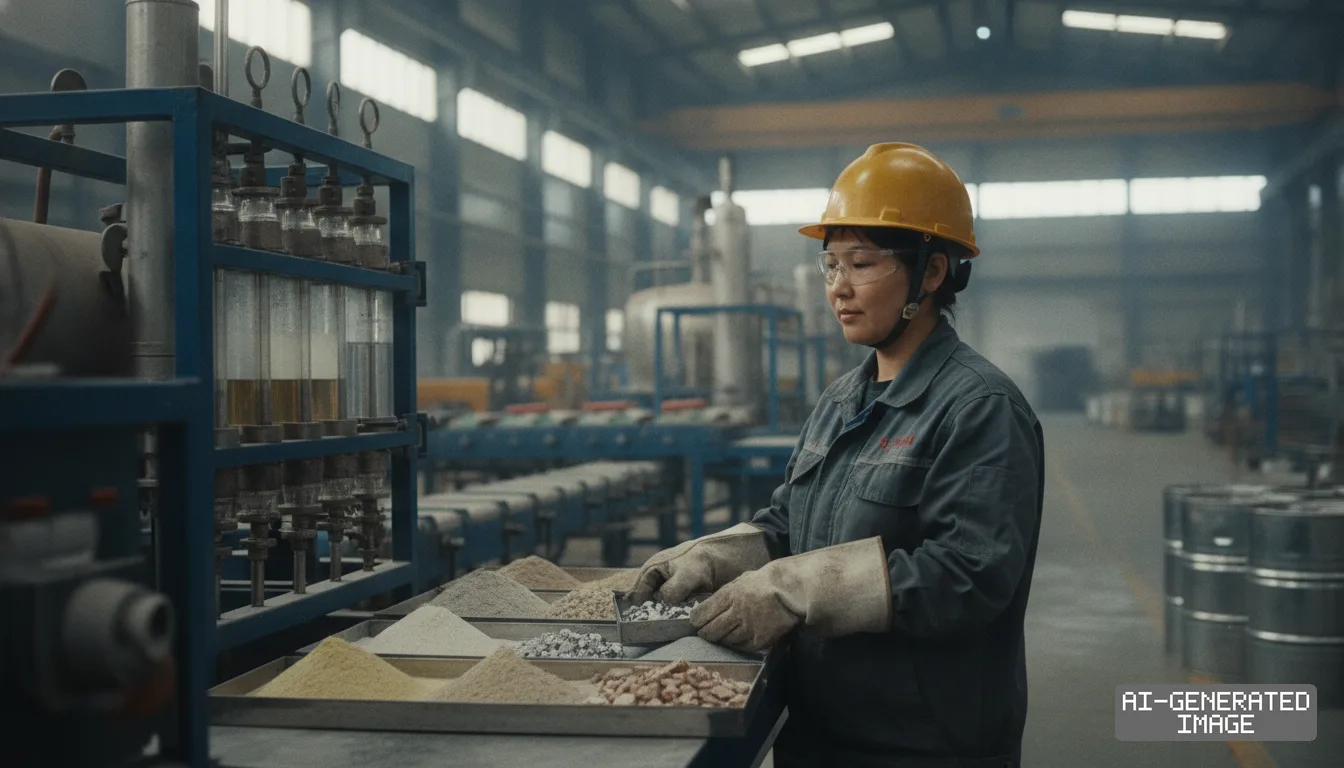
Resource finance and mining analysts urged Western governments Nov. 26 to institute contractual price-floor mechanisms to shield non-Chinese rare earth processing refineries from predatory state-backed dumping and cyclical cash-flow insolvencies.
The proposals address severe spot market dislocations where Western separation operating costs exceed terminal selling prices in China. North American spot yttrium oxide traded at $1,650 per kilogram, roughly 185 times China's domestic benchmark of $9 per kilogram.
European dysprosium oxide showed a parallel disparity, trading at $4,875 per kilogram compared to $220 per kilogram in China. Commercial debt syndicates refuse project financing for non-Chinese processing assets without structural guarantees against unexpected price collapses.
The mechanism uses a contract-for-difference structure rather than direct production subsidies. When spot commodity prices drop beneath an agreed breakeven threshold, the contracting state buyer reimburses the operator for the revenue shortfall on each kilogram sold.
If global prices rise above the negotiated ceiling, the government recoups public funds by taking a predetermined share of the operator's surplus revenue. The structure limits state treasury outlays during market rallies while preventing private refiner liquidations during supply gluts.
The United States Department of Defense established the operating template for this model in July 2025 with MP Materials. The Pentagon signed a binding 10-year contract guaranteeing a $110 per kilogram price floor for neodymium-praseodymium oxide.
The agreement covers neodymium-praseodymium oxide and related concentrates whether sold directly to commercial markets or stockpiled for strategic reserves. If market quotes rise above $110 per kilogram, the Department of Defense collects 30% of the upside.
The Pentagon also invested $400 million in newly issued convertible preferred stock and warrants, acquiring an equity interest of roughly 15% in MP Materials. The agency committed to a 10-year offtake pact purchasing 7,000 metric tons of finished magnets annually.
That guaranteed revenue stream allowed commercial lenders JPMorgan Chase and Goldman Sachs to extend $1.0 billion in private debt financing. MP Materials used the liquidity to construct its 10X Facility, a plant engineered to produce 10,000 metric tons of magnets yearly.
Japan Australia Rare Earths, a procurement joint venture funded by state-owned JOGMEC, adopted an equivalent funding architecture in March 2026. The Japanese entity revised its long-term supply pact with Australia's Lynas Rare Earths.
Under that 12-year agreement, Japan Australia Rare Earths established a $110 per kilogram floor for 5,000 metric tons of annual neodymium-praseodymium supply running through 2038. The Japanese side also secured rights to 50% of Lynas' separated heavy rare earth oxide production.
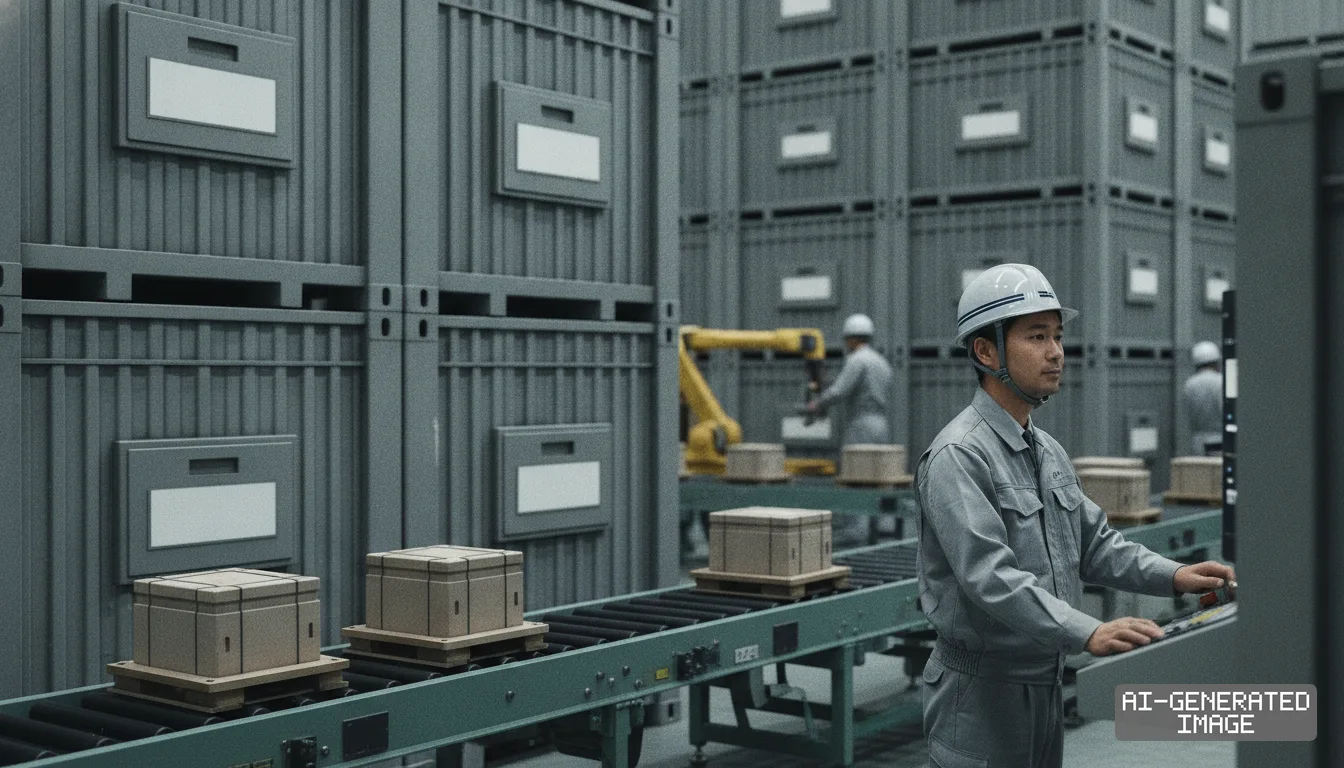
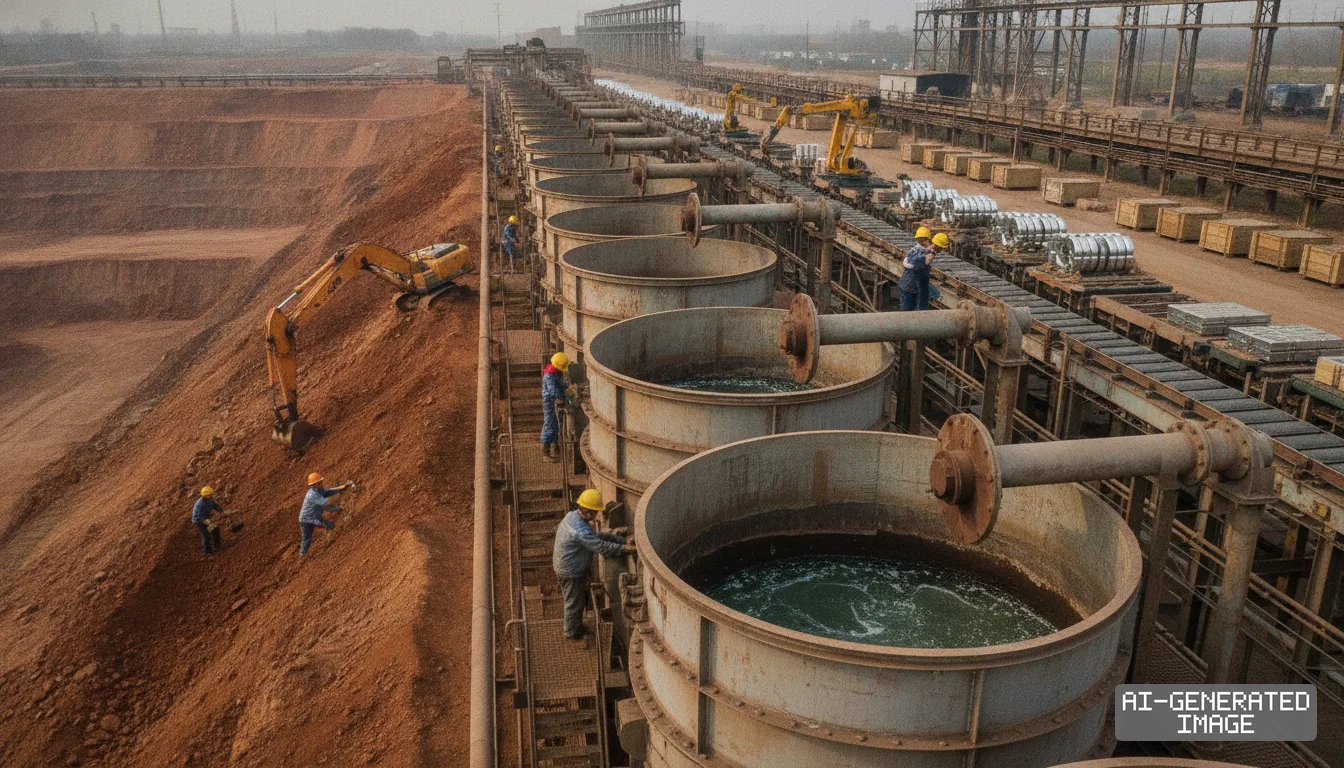
The pricing model directly shields intermediate processing nodes established across the Asia-Pacific corridor. Australian extraction projects ship semi-processed chemical concentrates to downstream metallization and reduction plants operating in South Korea.
Energy Fuels expanded into this processing channel in August 2026 by acquiring Australian Strategic Materials. The transaction transferred ownership of the Korea Metals Plant located in Ochang, South Korea.
The Ochang facility operates an active capacity of 1,300 metric tons per year of neodymium-iron-boron strip alloy. The company is installing advanced strip-casting machinery to expand Ochang's annual alloy output to 3,600 metric tons.
Commercial tolling plants remain vulnerable to upstream spot volatility when processing unhedged non-Chinese feedstock. Without long-term purchase floors, metal converters in South Korea must absorb substantial inventory devaluations whenever Chinese exporters dump low-cost material.
Resource economists argue that sovereign price guarantees function as capital insurance rather than trade barriers. Private commercial banks cannot model credit risk on critical mineral projects whose terminal market clearing price is set by subsidized Chinese state enterprises.
Establishing multilateral floors across the Minerals Security Partnership would align Western allied procurement. Standardized floor formulas would prevent American, European, Japanese and South Korean manufacturers from competing against one another for scarce non-Chinese feedstocks.
Energy Fuels expects to commission the expanded 3,600-ton alloy line at its Ochang plant in early 2027. MP Materials scheduled commercial commissioning of its 10,000-ton 10X magnet plant in the United States for 2028.
Western export credit agencies have not published standardized underwriting rules for cross-border price floor guarantees. Allied trade ministries have not disclosed whether future difference payments will be financed through national security budgets or shared multilateral reserve facilities.
Impact map
How this development propagates across the region and out to global buyers.
| Event | Korea | China | Japan | Global impact |
|---|---|---|---|---|
| rare earth price floors | Energy Fuels expands Ochang alloy plant to 3,600 metric tons per year, securing Western oxide conversion | state refiners face diminishing pricing power as Western buyers lock in $110 per kg floor contracts | JARE underwrites 5,000 metric tons per year of NdPr through 2038 to shield domestic auto magnets | allied magnet BOM stabilizes under long-term contract-for-difference models backed by defense agencies |
| rare earth price floors | Energy Fuels expands Ochang alloy plant to 3,600 metric tons per year, securing Western oxide conversion | state refiners face diminishing pricing power as Western buyers lock in | — | — |
| rare earth price floors | Energy Fuels expands Ochang alloy plant to 3,600 metric tons per year, securing Western oxide conversion | state refiners face diminishing pricing power as Western buyers lock in $110 per kg floor contracts | JARE underwrites 5,000 metric tons per year of NdPr through 2038 to shield domestic auto magnets | allied magnet BOM stabilizes under long-term contract-for-difference models backed by defense agencies |
In this story
- Companies
- MP MaterialsLynas Rare EarthsEnergy Fuels
- Tickers
- MPLYC.AXUUUU
- Exposed
- Goldman SachsJPMorgan Chase
- Policy
- SubsidiesProcurement Rules
- Impact
- PricingCapexSupply Chain
Track every Subsidies development → Track every Procurement Rules development →
Related briefings
- Korea Zinc Secures US Backing for $7.4B Tennessee Smelter Also on JPMorgan Chase, Subsidies
- Shipyards Fill VLCC Slots as Crude Tanker Rates Hit Records Also on JPMorgan Chase, Pricing
- Korea doubles US rare earth imports to counter China quotas Also on Energy Fuels, MP Materials, Pricing
- GM cancels rare earth magnet supply pact with Vacuumschmelze Also on Energy Fuels, MP Materials, Subsidies
Sources
Primary documents
Reporting
Confidence: high — how we grade this
The documents behind this briefing are linked above. East Asia Brief produces its English text with AI assistance under human editorial review, and does not translate or republish other outlets' articles. See our methodology and AI policy. Spotted an error? Tell us.
The Morning Brief
What changed in Korean, Chinese and Japanese industry overnight — and what it means for your supply chain. One email, weekday mornings, US time. Free.
The Morning Brief is in preparation. Leave your address and we will write to you once — when the first issue is ready. Nothing before that.