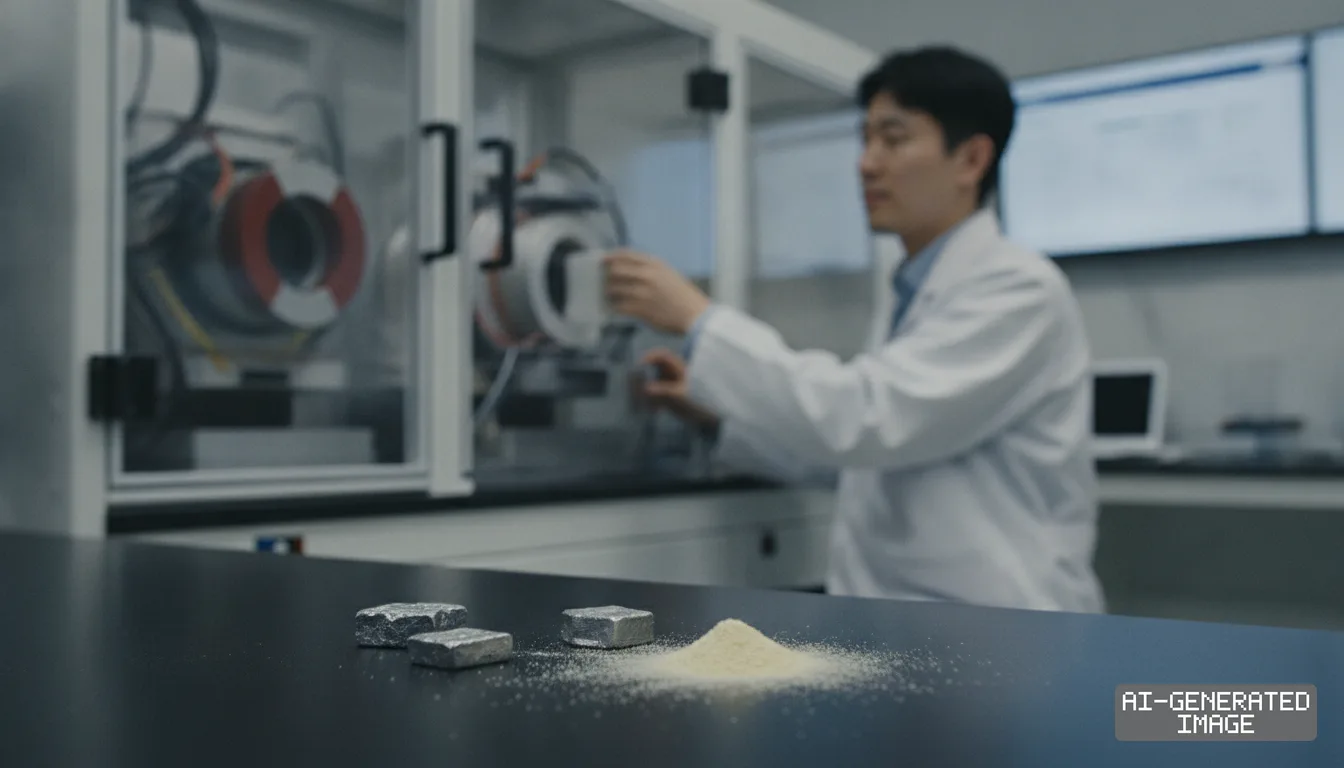
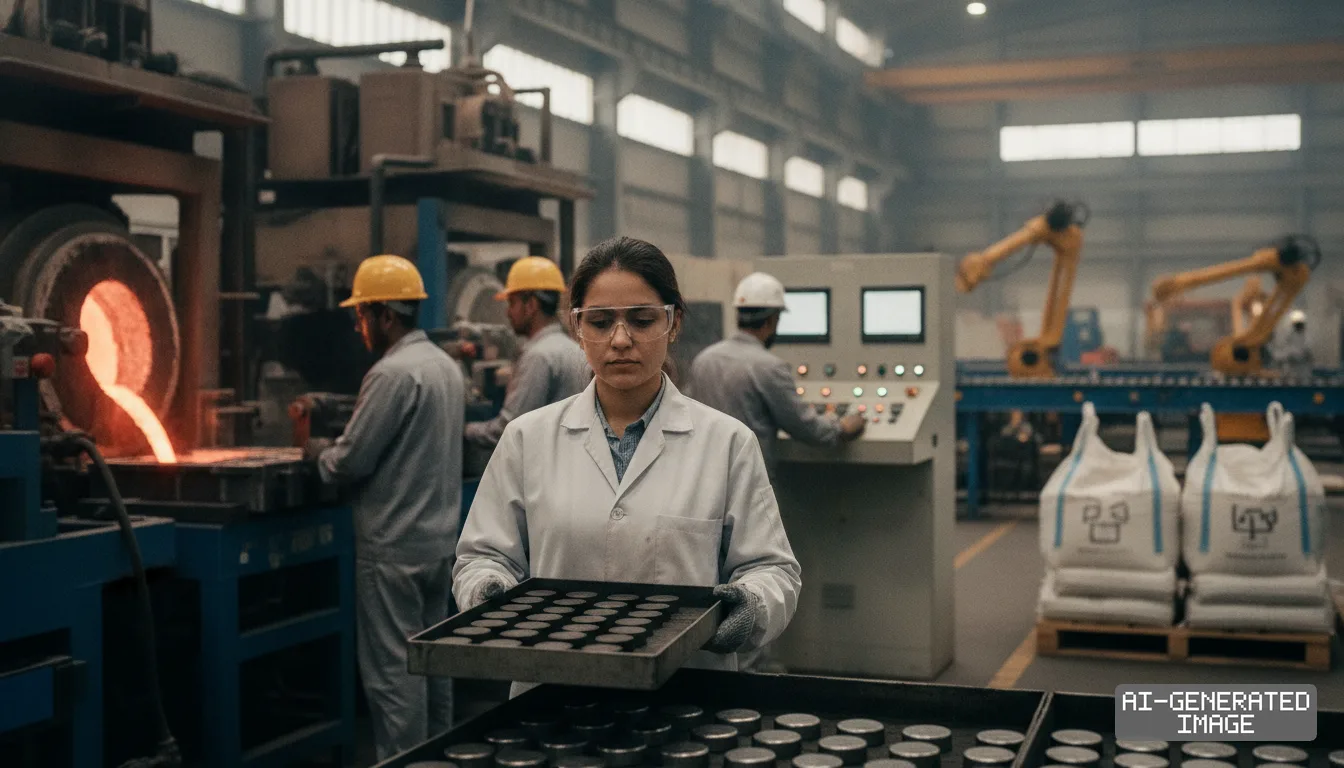
Chinese rare earth export curbs cut US monthly shipments by 75%
Mandatory licensing on seven critical elements cut American monthly inbound cargo to 19.3 metric tons from 76.8 metric tons prior to the restriction schedule.
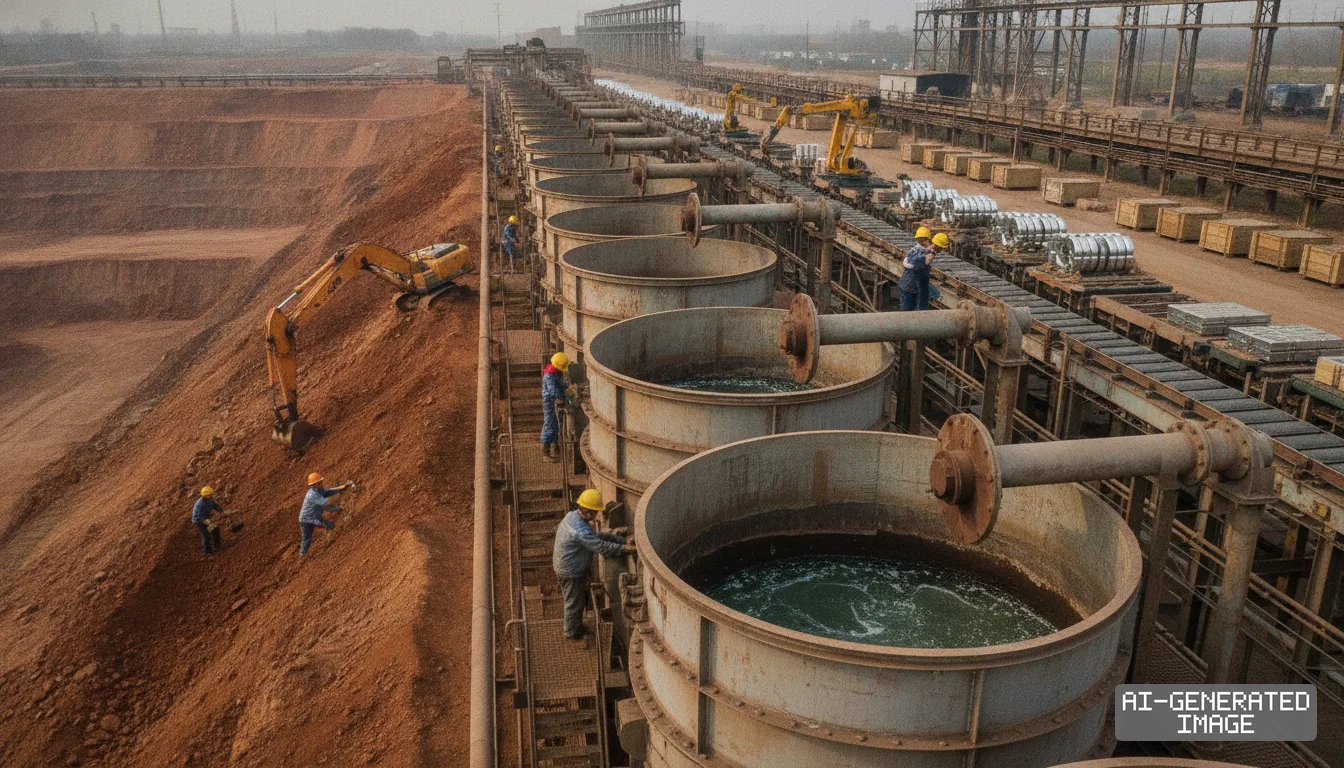
China's Ministry of Commerce confirmed on Nov. 26, 2026 that its export licensing controls on critical minerals remain fully in force, leaving Western industrial manufacturers facing prolonged supply bottlenecks.
The dual-use licensing regime regulates seven medium and heavy rare earths, including dysprosium, terbium and yttrium, alongside finished permanent magnets essential for electric vehicle propulsion and advanced defense electronics.
The regulatory friction reduced average monthly U.S. imports of Chinese rare earth compounds and metals to 19.3 metric tons between November 2025 and September 2026, down 74.9% from 76.8 metric tons prior to the restrictions.
The Ministry of Commerce and the General Administration of Customs enacted the current rules on April 4, 2025 under Announcement No. 18, requiring individual transaction licences for all exports of the designated minerals.
Ministry spokesperson He Yadong said during a regular press briefing in Beijing that China administers the control lists according to statutory regulations to uphold international non-proliferation standards and national security.
The ministry statements followed threats from the United States Trade Representative to impose tariffs of 20% to 40% under Section 301, complicating ongoing diplomatic efforts to ease bilateral trade and supply restrictions.
Exporters must submit six distinct sets of compliance documentation for each export permit application, including verifiable identification of the foreign recipient, technical specifications and end-use statements detailing final assembly processes.
Processing times routinely exceed 45 days as provincial and central trade officials review end-user credentials, creating two-month shipping delays at primary Chinese coastal ports including Shanghai, Tianjin and Qingdao.
The ministry's Department of Industry Security automatically denies permits destined for foreign defense programs, while industrial applications for automotive drivetrains and robotics undergo protracted administrative verification procedures.
The European Association of Automotive Suppliers reported that Chinese regulators approved only about 25% of submitted rare earth export applications during the initial months of the program, paralyzing sub-tier component manufacturing across Europe.
Ford Motor Company encountered assembly line stoppages at European facilities that assemble electric drive systems, as suppliers of high-grade dysprosium-doped neodymium magnets failed to secure authorized shipments through Chinese customs checkpoints.
In Japan, Suzuki Motor Corporation suspended production across domestic automobile lines after running out of imported permanent magnets, demonstrating the vulnerability of Japanese assembly plants to Chinese export clearance schedules.
U.S. imports of specific refined compounds suffered severe contractions under the case-by-case regime. Inbound shipments of Chinese yttrium dropped from 333 metric tons across an eight-month baseline to 17 metric tons under the controls.
Trade negotiators reached an earlier understanding in Busan to pause broader secondary restrictions under Announcement No. 70, which proposed to penalize foreign products containing more than 0.1% Chinese controlled rare earth material.
The temporary suspension of those extraterritorial rules was extended from Nov. 10, 2026 to Jan. 10, 2027, aligning the grace period with the expiration of broader bilateral tariff arrangements.
The extension of the secondary measures did not lift the mandatory April 2025 licensing requirements, meaning that individual shipments of raw metals, oxides and sintered magnets still require explicit ministry approval.
Procurement bottlenecks widened the price gap between internal Chinese markets and overseas destinations, pushing European dysprosium spot valuations up to six times domestic prices recorded on Chinese regional metals exchanges.
Alternative refining infrastructure remains scarce outside China, where state-backed facilities account for 90% of global rare earth separation capacity and produce 98% of the world's sintered neodymium-iron-boron permanent magnets.
The Ministry of Commerce has not published specific approval guidelines for dual-use applications, nor does it release statistical data on the number of export permit requests rejected or held in review.
Chinese customs inspectors retain authority to seize consignments and revoke dual-use trading privileges if exported materials deviate in purity, mass or customer documentation from the specific parameters registered in the permit.
Global manufacturers now operate under continuous procurement uncertainty, submitting fresh documentation for every cargo while awaiting individual ministerial approvals before Chinese customs authorities clear goods for maritime transit.
Impact map
How this development propagates across the region and out to global buyers.
| Event | Korea | China | Japan | Global impact |
|---|---|---|---|---|
| China rare earth export licensing | Automakers maintain 90-day magnet stockpiles while securing alternative Australian and Vietnamese processing links | Northern Rare Earth and China Rare Earth Group allocate oxide feedstocks directly to domestic magnet plants | Suzuki Motor halted domestic assembly lines as magnet delivery delays exceeded 45 days | Western EV and defense motor producers face European dysprosium spot prices six times higher than Chinese domestic levels |
In this story
- Companies
- Ford Motor CompanySuzuki Motor Corporation
- Tickers
- F7269.T
- Policy
- Export Controls
- Impact
- Supply ChainPricingCompliance
Track every Export Controls development →
Related briefings
- Ford nets CAD 759M Oakville aid while shipping Michigan LFP cells Also on Ford Motor Company, Compliance
- Ford taps Korean vendors DH and Hana for Michigan battery pilot line Also on Ford Motor Company, Compliance
- SK On wins Ford Q1 status for its 30 GWh Hungarian plant Also on Ford Motor Company, Compliance
- SK On assumes $1.5 billion debt from US battery subsidiary Also on Ford Motor Company, Compliance
Sources
Primary documents
Reporting
Confidence: high — how we grade this
The documents behind this briefing are linked above. East Asia Brief produces its English text with AI assistance under human editorial review, and does not translate or republish other outlets' articles. See our methodology and AI policy. Spotted an error? Tell us.
The Morning Brief
What changed in Korean, Chinese and Japanese industry overnight — and what it means for your supply chain. One email, weekday mornings, US time. Free.
The Morning Brief is in preparation. Leave your address and we will write to you once — when the first issue is ready. Nothing before that.