HD Hyundai reserves Mipo dock slots for eight gas carriers
The drydock program dedicates Ulsan berths to 1.42 trillion won in gas vessels, shifting medium-tonnage berths away from container feeder construction through 2030.
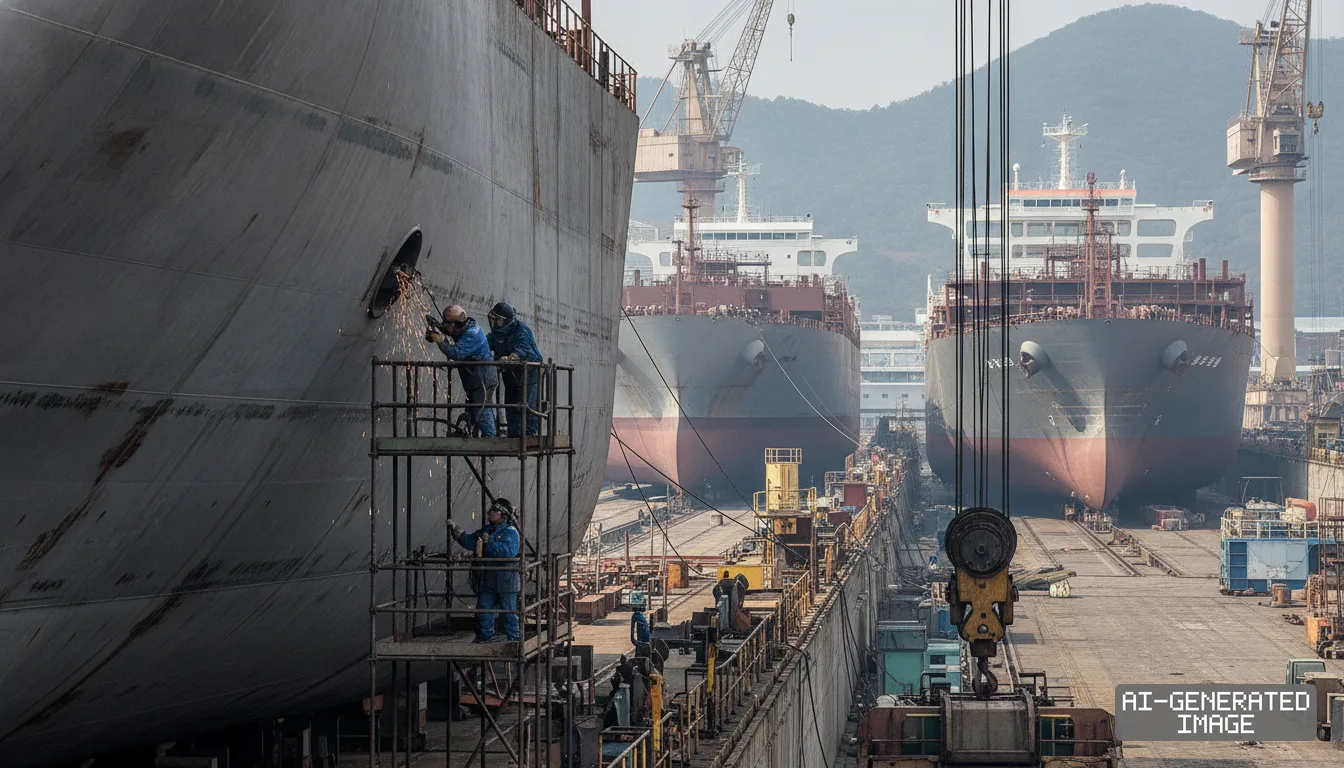
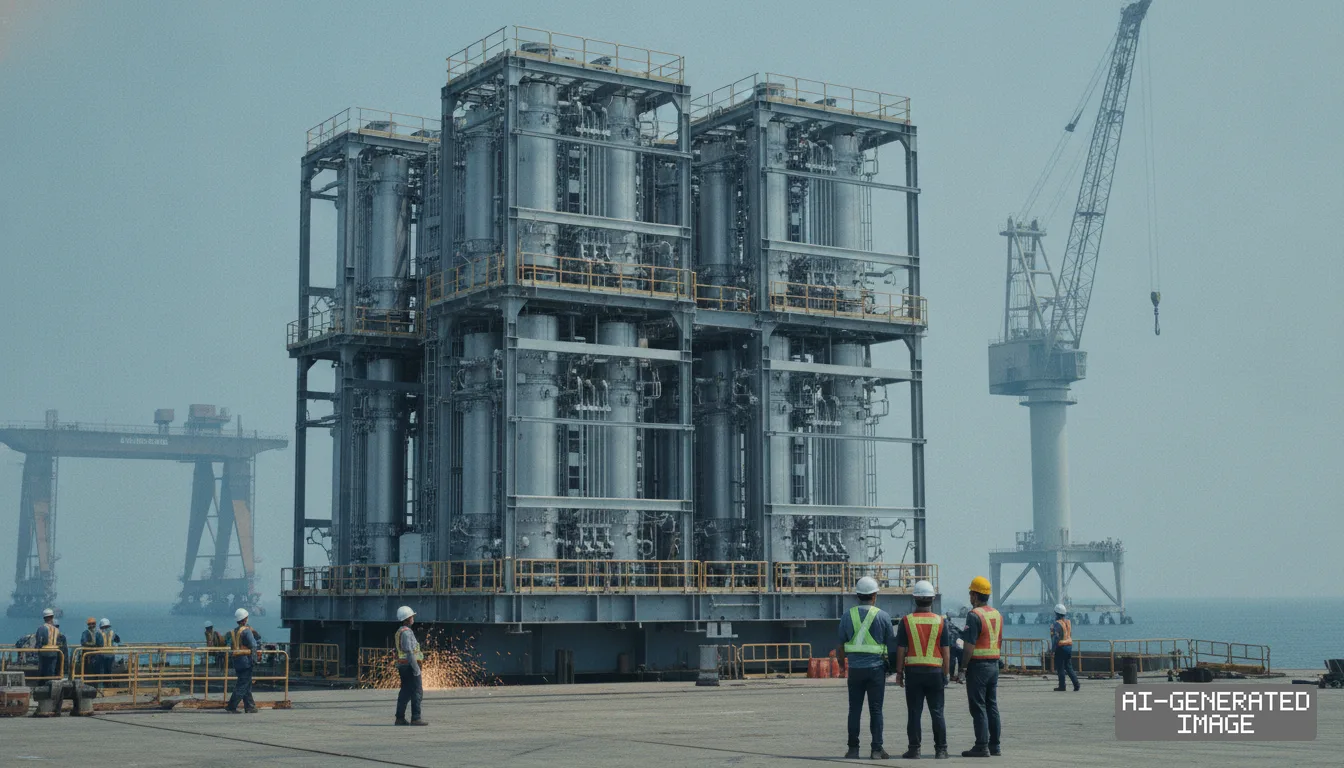
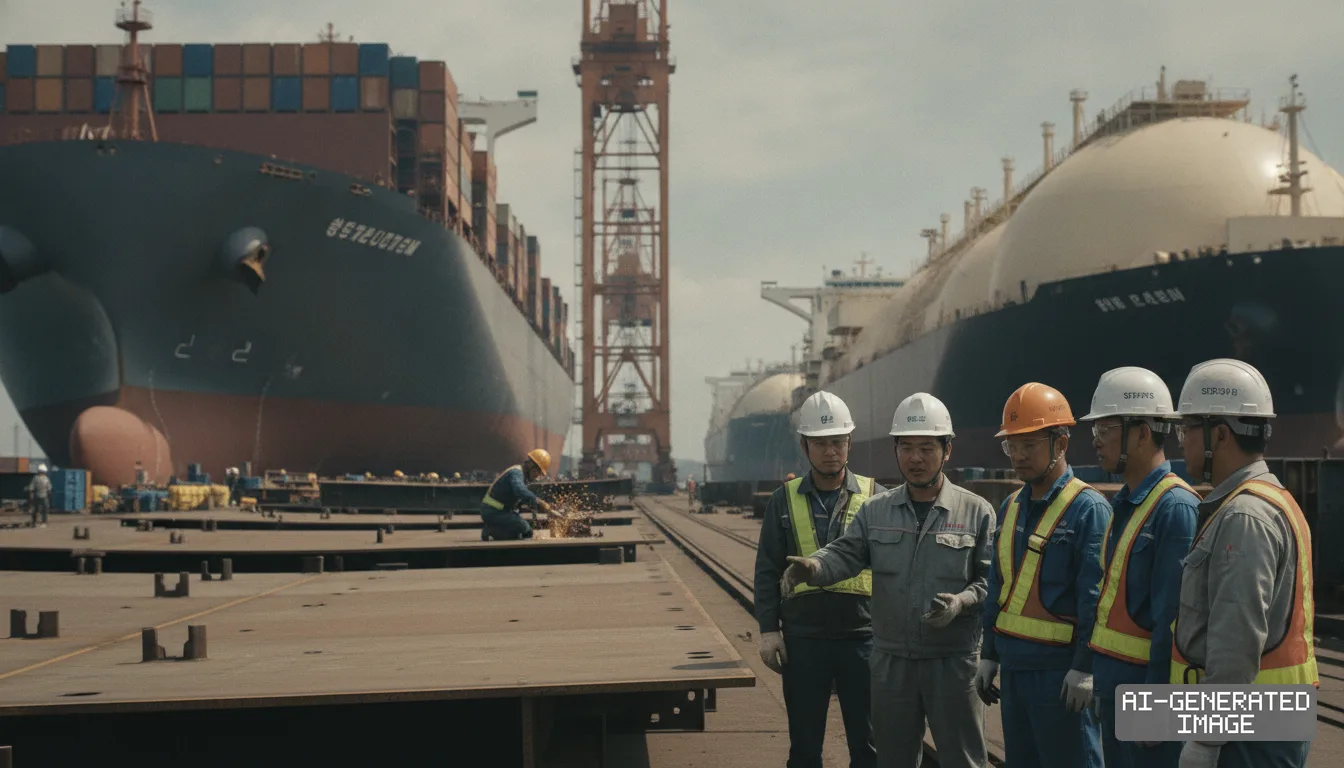
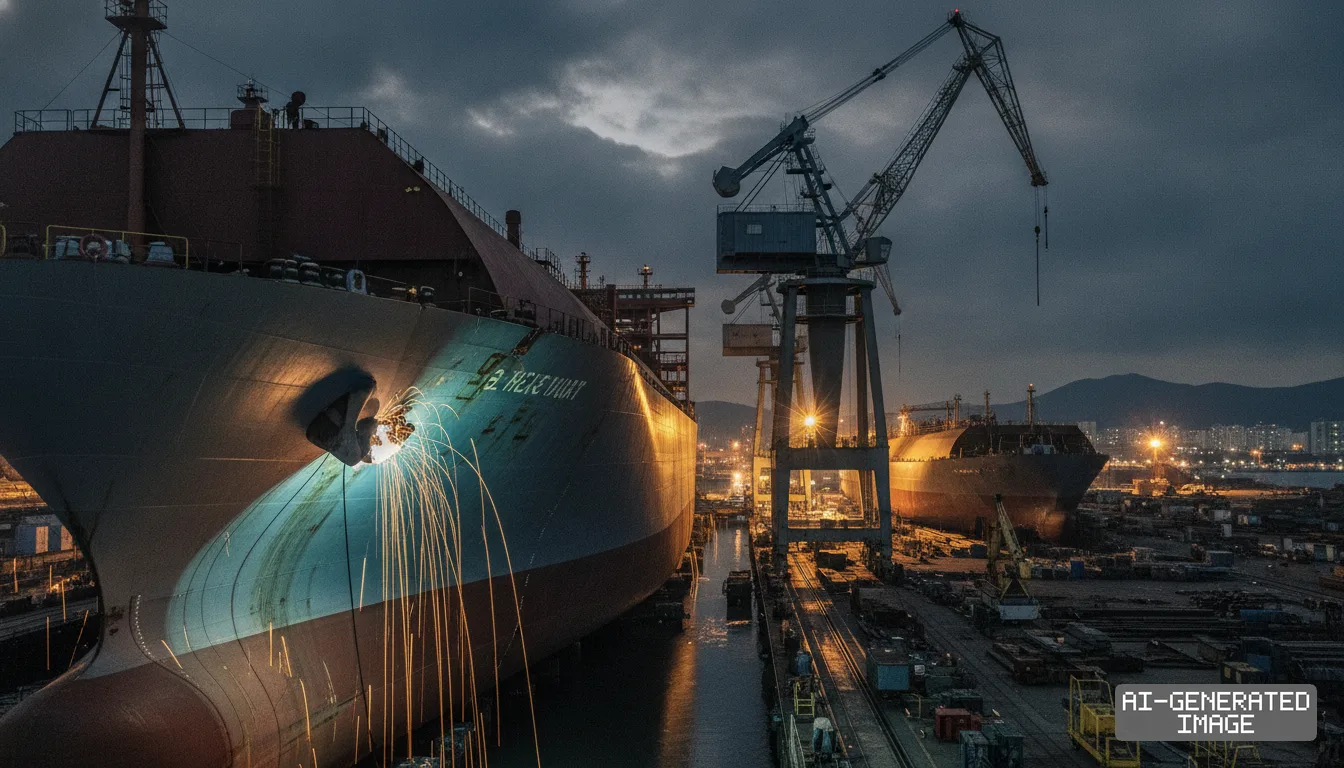
HD Hyundai Heavy Industries committed drydock capacity at its Ulsan Mipo yard on Oct. 6, 2026, reserving consecutive construction slots for an eight-vessel gas carrier program through June 2030.
The berths belonged to HD Hyundai Mipo before the unit merged into HD Hyundai Heavy Industries in December 2025. The yard now operates as the shipbuilder's naval and medium-ship business division.
The eight-vessel gas program carries a total contract value of 1.4161 trillion won ($1.05 billion). That figure equals 8.05% of HD Hyundai Heavy Industries' 2025 consolidated revenue.
Intermediate holding firm HD Korea Shipbuilding & Offshore Engineering disclosed the order in June. The deal helped the group reach 60.8% of its $23.31 billion annual order target.
Reserving eight consecutive drydock slots locks up medium-tonnage capacity through the end of the decade. Major Korean shipbuilders face filled delivery schedules for large liquefied natural gas carriers.
Mainline berths at major domestic shipyards remain committed past 2028 for 174,000-cubic-meter LNG carriers. That queue pushed fleet operators to secure gas tonnage at specialized secondary docks.
HD Hyundai Heavy Industries directed the 90,000-cubic-meter very large gas carriers to Mipo yard instead of its main Ulsan docks. The allocation represents the first very large gas carrier program assigned to Mipo.
Mipo yard previously built medium-range product tankers and feeder container vessels under 3,000 twenty-foot equivalent units. The new gas program displaces standard commercial vessels from those drydocks.
BW LPG ordered the eight vessels to replace aging tonnage across its operating fleet of approximately 50 gas carriers. The Asian shipowner plans to receive the hulls between 2029 and mid-2030.
Equipment manufacturers gained immediate production visibility from the yard allocation. Nord Gas Solutions confirmed in late September that it will supply fuel and cargo handling systems for all eight vessels.
The ships will carry dual-fuel propulsion engines capable of burning liquefied petroleum gas. Advanced fuel containment systems lift the equipment value of each construction slot above standard product tanker levels.
Global newbuilding price indexes climbed steadily above 185 points this year, according to Clarksons Research. Contract values for 90,000-cubic-meter gas carriers reached approximately $115.6 million per hull.
Consecutive series production protects the shipyard from unexpected engineering changes and material scrap costs. Assembling identical gas hulls in sequence reduces labor hours across repetitive dock cycles.
Feeder container operators face declining berth availability across Korean shipyards as gas carriers take Mipo slots. Regional carriers had relied on the facility for methanol-capable container feeder hulls.
Commodities trader Trafigura ordered four 45,000-cubic-meter ammonia carriers at Mipo in 2024 for $71.5 million each. Assembly of those hulls begins in the second half of 2026.
Ammonia shipping demand grows as regional utility operators test co-firing fuels for thermal power plants. Mid-sized and very large carriers form the primary transport link for overseas clean fuel trades.
Merging Mipo into HD Hyundai Heavy Industries unified dock management across adjacent yards in Ulsan. Operations teams now transfer pre-assembled hull blocks between basins to balance yard crane workloads.
Dedicated welding teams for cryogenic cargo tanks rotate between specialized commercial berths and naval docks. That workforce mobility preserves build schedules when external equipment deliveries encounter supply friction.
The shipbuilder prioritized complex gas vessels to protect operating margins against lower-cost standard shipbuilders in China. Series construction of high-pressure fuel systems generates higher returns than conventional product tankers.
Chinese competitors increased berth space for container ships and bulk carriers but maintain fewer references for cryogenic tanks. Korean yards hold the primary global backlog for high-specification gas transport vessels.
Regulatory filings do not confirm any new contract signed on Oct. 6, and HD Hyundai has not published separate notices for feeder gas carriers.
HD Hyundai Heavy Industries must deliver all eight gas carriers by June 30, 2030, according to the regulatory filing. Construction work on the first hull begins in late 2027 ahead of basin assembly.
Impact map
How this development propagates across the region and out to global buyers.
| Event | Korea | China | Japan | Global impact |
|---|---|---|---|---|
| Mipo yard gas carrier dock allocation | HD Hyundai Heavy Industries locks 8.05% of revenue into gas carrier berths | Jiangnan Shipyard faces tighter price competition on mid-sized LPG export orders | Kawasaki Heavy Industries maintains small ammonia carrier niche without matching berth scale | BW LPG secures eight 90,000 cbm berths, lifting fleet renewal before 2030 IMO milestones |
In this story
- Companies
- HD Hyundai Heavy IndustriesHD Korea Shipbuilding & Offshore Engineering
- Tickers
- 329180.KS009540.KS
- Exposed
- BW LPGTrafiguraNord Gas Solutions
- Policy
- Economic Security
- Impact
- Order BookCapexSupply Chain
Track every Economic Security development →
Related briefings
- LG Energy Solution locks US lithium supply in Smackover pact Also on Trafigura
- Fanuc previews 11-kg welding cobots for shipyards at Fabtech 2026 Also on HD Korea Shipbuilding & Offshore Engineering, HD Hyundai Heavy Industries, Order Book
- HD Hyundai wins ABS approval for 100MW floating power barge Also on HD Korea Shipbuilding & Offshore Engineering, HD Hyundai Heavy Industries, Order Book
- Asyad Shipping orders two MR product tankers at HD Hyundai Also on HD Korea Shipbuilding & Offshore Engineering, HD Hyundai Heavy Industries, Order Book
Sources
Primary documents
Reporting
Confidence: high — how we grade this
The documents behind this briefing are linked above. East Asia Brief produces its English text with AI assistance under human editorial review, and does not translate or republish other outlets' articles. See our methodology and AI policy. Spotted an error? Tell us.
The Morning Brief
What changed in Korean, Chinese and Japanese industry overnight — and what it means for your supply chain. One email, weekday mornings, US time. Free.
The Morning Brief is in preparation. Leave your address and we will write to you once — when the first issue is ready. Nothing before that.