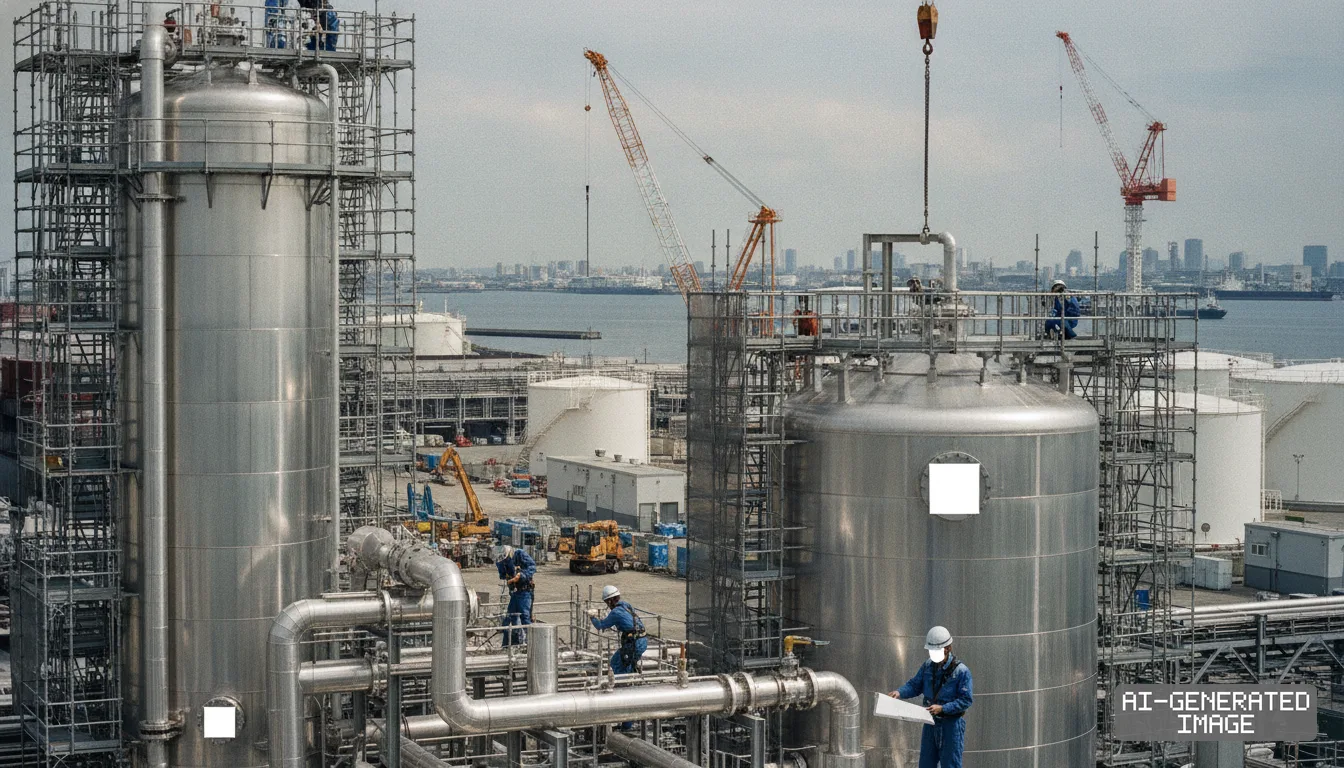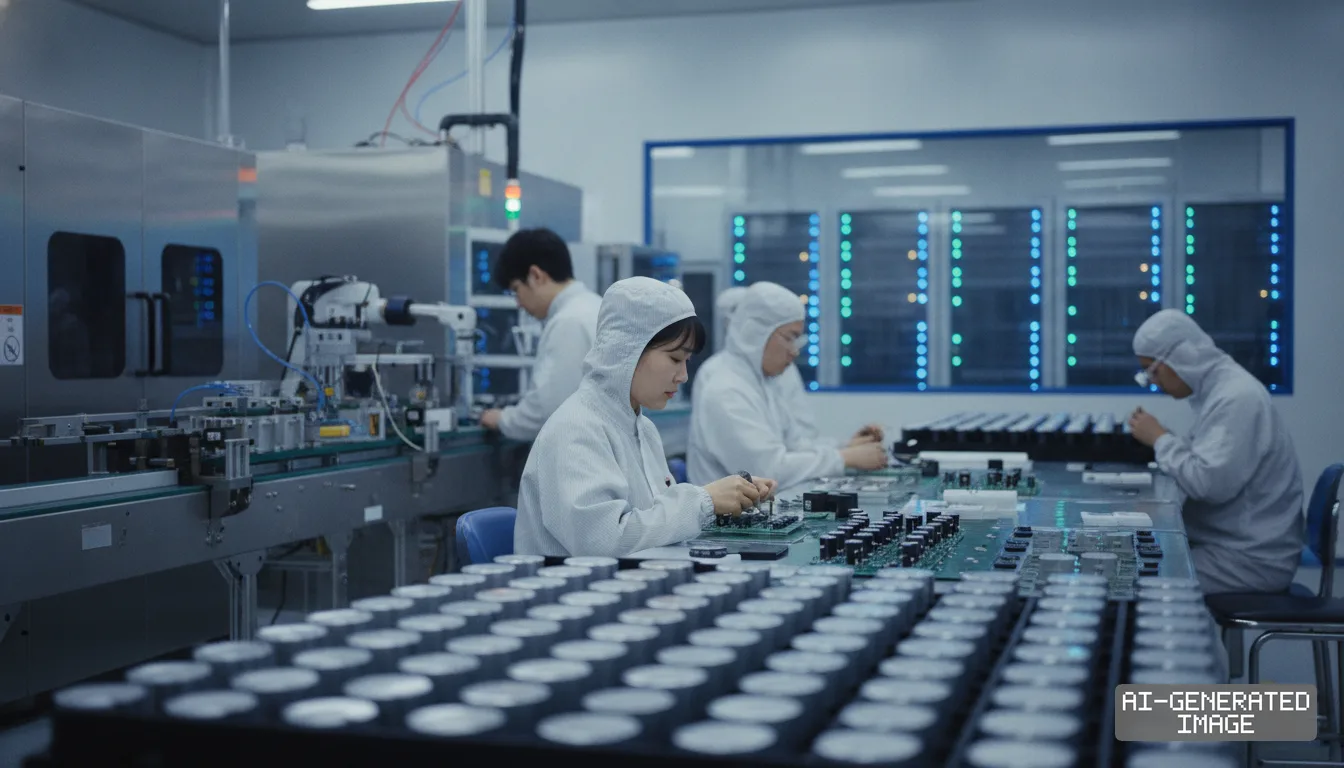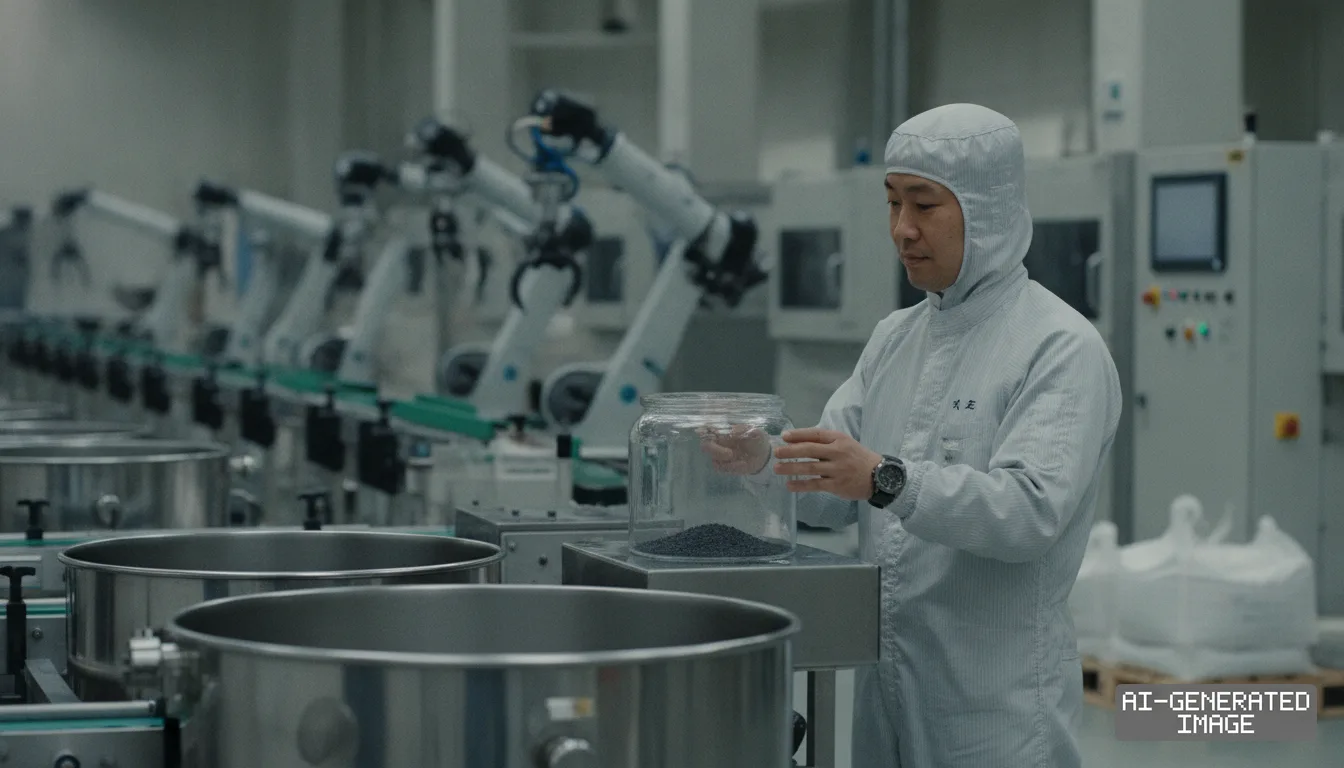
IQE warns China export curbs choke indium phosphide supplies
Wafer prices surged 250% to $5,000 as the British epiwafer maker flagged raw material permit delays while posting a 43% jump in first-half revenue.
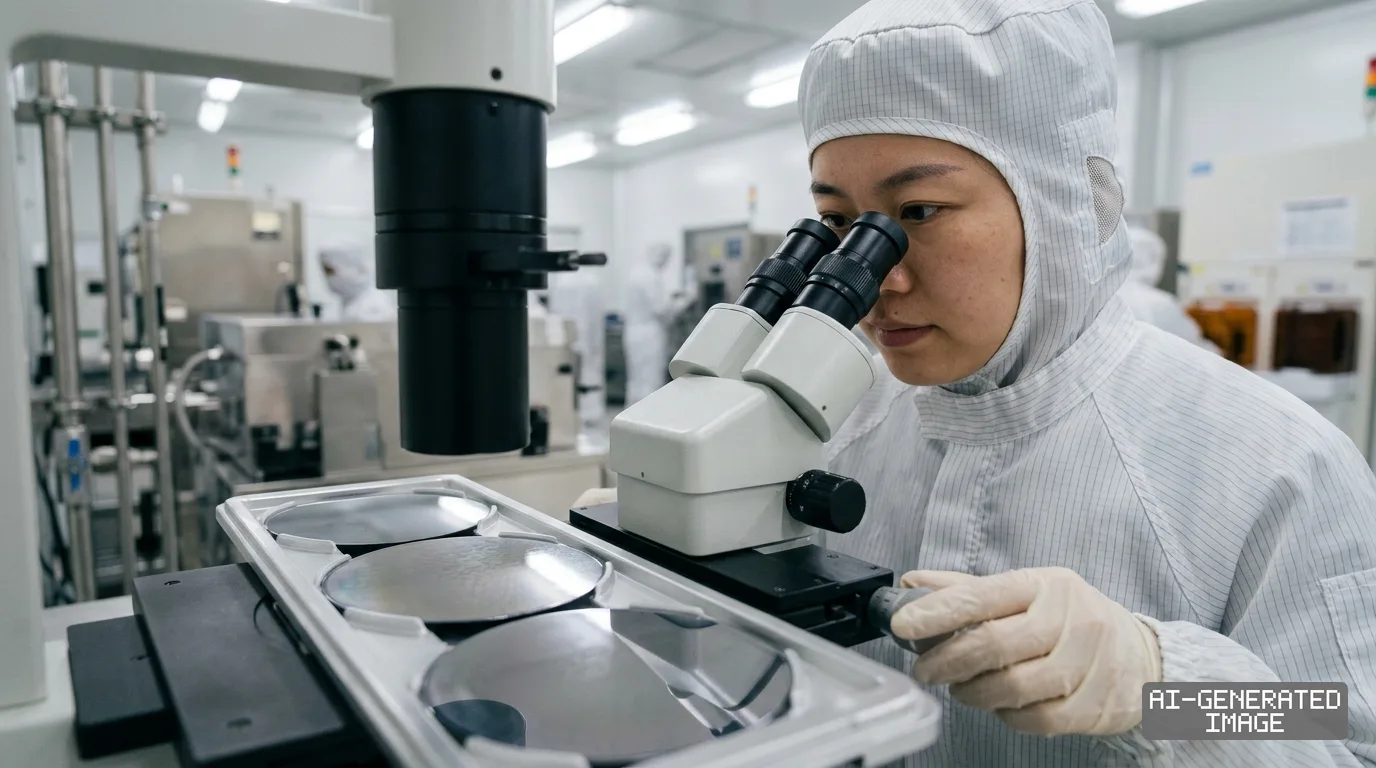
British wafer manufacturer IQE warned on Sept. 7, 2026 that Chinese export controls on critical minerals are creating severe supply risks for indium phosphide substrates across the global semiconductor industry.
Access to indium phosphide — a compound semiconductor that emits and detects light for high-speed data transmission — has tightened sharply as cloud computing operators build out artificial intelligence clusters.
Chief Executive Officer Jutta Meier said Sept. 7 that administrative delays in securing Chinese export licenses represent a material operational risk. The company has factored those supply constraints into its second-half projections, Meier said.
Spot prices for 6-inch indium phosphide wafers have surged roughly 250% since early 2025, rising from $1,400 to about $5,000 per wafer, according to compound semiconductor pricing data.
China accounts for roughly 70% of global primary indium production, giving Beijing effective control over the specialized smelting output required to manufacture optical substrates outside East Asia.
China's Ministry of Commerce and the General Administration of Customs added indium phosphide, trimethylindium and related compounds to China's dual-use export control catalog on Feb. 4, 2025.
The directive, issued as Decision No. 10 of 2025, requires exporters in China to obtain state licenses for each international customer order. Approvals require commercial documentation, end-user statements and ministry review.
Permit processing delays have created persistent bottlenecks for optical component manufacturers such as Coherent and Lumentum. The supply deficit for indium phosphide substrates could exceed 30%, industry executives said.
The supply friction coincides with surging demand for light-based networking hardware. IQE reported Sept. 7 that its first-half 2026 revenue increased 43% year-on-year to £64.6 million ($85.2 million).
Adjusted earnings before interest, taxes, depreciation and amortization rose to £6.0 million ($7.9 million) for the six months ended June 30, up from an operating loss a year earlier, IQE reported.
Revenue gains were driven by shipments of indium phosphide epiwafers used to produce optical transceivers. Those transceivers route data packets between graphics processors inside hyperscale computing centers, the company said.
IQE said Sept. 7 that it will convert existing wafer fabrication lines to indium phosphide production during the second half of 2026 to fulfill customer purchase agreements.
The Cardiff-based company also confirmed plans to move its listing from London's junior AIM market to the Main Market of the London Stock Exchange, the board said.
IQE has transitioned from short-term spot purchases toward multi-year master supply agreements. Key partners under those long-term contracts include chipmakers MACOM Technology Solutions and Tower Semiconductor, the company said.
Commercial crystal growers depend on Chinese refiners for high-purity indium metal reaching 99.9999% purity. Very few non-Chinese smelters possess the refining capacity needed to process semiconductor-grade feedstocks, trade filings show.
Indium phosphide is essential for building optical modulators operating above 800 gigabits per second. Silicon electronics generate excessive thermal resistance and signal loss at those speeds, engineering benchmarks show.
American substrate manufacturer AXT reported in March that permit delays in China reduced fourth-quarter shipments from its Beijing processing facility, highlighting ongoing licensing friction across the supply chain.
China's Ministry of Commerce has not announced new statutory restrictions on indium exports in September. Existing licensing reviews continue to govern current container shipments leaving Chinese ports, customs data show.
Beijing implemented the mineral controls following United States restrictions on shipments of advanced lithography equipment and artificial intelligence processors to Chinese foundries, according to ministry briefings.
Surging wafer prices have increased packaging costs for transceiver manufacturers. Those cost increases are now transferring to server assembly firms and data center operators, according to component procurement notices.
Diversifying substrate refining outside China requires extensive capital expenditure and technical qualification cycles. Western processing plants are not expected to deliver commercial-scale replacement volumes before 2028, industry filings show.
IQE said on Sept. 7 that commercial discussions with raw material suppliers will continue through the fourth quarter of 2026 to secure substrate inputs for scheduled customer deliveries.
Impact map
How this development propagates across the region and out to global buyers.
| Event | Korea | China | Japan | Global impact |
|---|---|---|---|---|
| InP export controls | optical module cost pressure | mineral export permits delayed | compound substrate supply tight | 6-inch wafer prices surge 250% |
In this story
- Companies
- IQE plc
- Tickers
- IQE.L
- Exposed
- CoherentLumentum HoldingsMACOM Technology SolutionsTower SemiconductorAXT Inc
- Policy
- Export Controls
- Impact
- Supply ChainPricingCapex
Track every Export Controls development →
Related briefings
- FIC Global triples Malaysia optical capacity for AI networks Also on Coherent
- Japan optical suppliers scale laser diodes and engines for AI co-packaged optics Also on Tower Semiconductor
- Foundries Standardize 300mm Silicon Photonics PDKs for AI Optical Interconnects Also on Tower Semiconductor
- Samsung and SK hynix upgrade China memory fabs to 286 layers Also on Export Controls, Pricing
Sources
Reporting
Confidence: medium — how we grade this
The documents behind this briefing are linked above. East Asia Brief produces its English text with AI assistance under human editorial review, and does not translate or republish other outlets' articles. See our methodology and AI policy. Spotted an error? Tell us.
The Morning Brief
What changed in Korean, Chinese and Japanese industry overnight — and what it means for your supply chain. One email, weekday mornings, US time. Free.
The Morning Brief is in preparation. Leave your address and we will write to you once — when the first issue is ready. Nothing before that.