Japan offers U.S. chip investment to win semiconductor tariff relief
Economy Minister Ryosei Akazawa met Commerce Secretary Howard Lutnick to protect Japanese chip suppliers using Tokyo's $550 billion capital package.
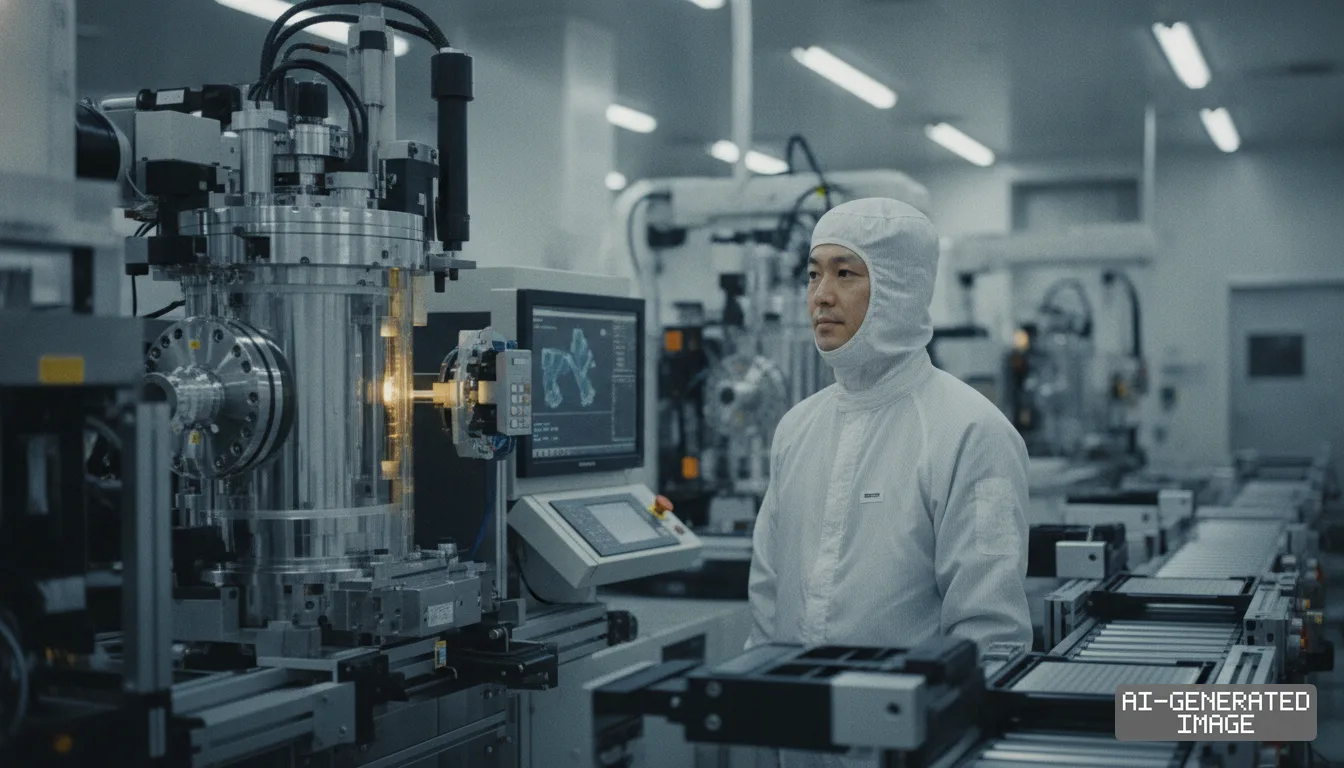
Japan’s Economy Minister Ryosei Akazawa concluded trade talks in Washington on Sept. 4, 2026, offering new capital commitments to exempt Japanese semiconductors from proposed American import tariffs.
The meetings targeted plans outlined by U.S. Commerce Secretary Howard Lutnick to impose selective import duties on foreign chips. Tokyo wants full exemption from any new semiconductor levies.
Akazawa met Lutnick for 90 minutes in Washington on Sept. 3. He then held a separate session with U.S. Trade Representative Jamieson Greer on Sept. 4.
Lutnick warned earlier in the week that Washington would impose targeted tariffs on foreign semiconductor imports. Foreign companies would pay a price if they did not manufacture inside the United States, Lutnick said.
That warning threatens Japanese producers of specialty chips, silicon wafers and fabrication machinery. The Ministry of Economy, Trade and Industry, which directs Japanese industrial policy, sought immediate protections for those exporters.
To secure tariff carve-outs, Akazawa offered to accelerate Japanese capital spending across American industrial sectors. Tokyo is linking chip exemptions directly to its bilateral investment vehicle.
Under that framework, Japan committed $550 billion (¥85.9 trillion) in investments, commercial loans and state-backed financing to the United States. The bilateral pact requires funds to flow before January 2029.
Akazawa presented proposals for a third tranche of projects during the Washington talks. The package prioritizes energy facilities for artificial intelligence data centers and semiconductor manufacturing supplies.
Earlier tranches approved under the $550 billion initiative totaled $36 billion. Those projects funded a gas power plant in Ohio, a Texas crude oil terminal and a synthetic diamond facility in Georgia.
Synthetic industrial diamonds serve as thermal substrates for advanced semiconductors. SoftBank Group, Toshiba and Westinghouse participated in discussions for related power and infrastructure tranches.
Under the bilateral agreement, a U.S. committee chaired by the commerce secretary recommends projects for Japanese financing. Japan then has 45 business days to review and begin funding selected initiatives.
Failure to fund approved projects allows Washington to reinstate punitive duties. Tariffs could rise as high as 25% if capital transfers stall, according to agreement terms.
Akazawa also used the Washington meetings to demand relief from existing duties. The Trump administration imposed a 12.5% additional tariff on Japanese imports in July under Section 301 of the Trade Act of 1974.
Tokyo contends that the July measures breached prior trade understandings. A bilateral accord struck last year lowered duties on Japanese automotive exports from 27.5% to 15%.
The July Section 301 actions raised effective tariff burdens on Japanese goods once again. Akazawa told American officials that overlapping duties undermine Japanese corporate willingness to deploy long-term capital.
The talks carry direct consequences for Japanese semiconductor equipment makers. Tokyo Electron and other domestic tool suppliers face shrinking margins if Washington slaps duties on incoming components and tools.
Advanced packaging materials and silicon wafer shipments also face exposure under Lutnick's tariff structure. Japanese chemical houses supply more than half of several specialized inputs used in global chip fabrication.
The threat extends beyond Japan. South Korea faces identical pressures as Lutnick prepares semiconductor tariff decrees, prompting parallel lobbying by Korean trade officials.
South Korea is deploying its own $350 billion U.S. investment package to shield Samsung Electronics and SK hynix from upcoming duties. Both Asian allies want explicit treaty-level exemptions.
For buyers in North America, Japanese semiconductor tariffs would raise hardware assembly costs. American technology firms depend on Japanese silicon wafers and photoresists to operate domestic wafer fabs.
Akazawa sought written confirmation that Japanese suppliers would retain duty-free access under existing trade mechanisms. Washington officials did not sign an exemption accord during the two-day visit, Japanese officials said.
Negotiators instead agreed to continue working-level consultations through September. The discussions will review specific tariff codes and verify Japanese corporate contributions to American manufacturing capacity.
The talks also addressed supply chain cooperation for critical minerals. Japan offered joint development programs for rare earth magnets to reduce reliance on Chinese processing facilities.
China produces more than 80% of global neodymium magnets, while Japan controls roughly 15%. Securing non-Chinese magnetic materials remains a stated defense priority for both Washington and Tokyo.
Prime Minister Sanae Takaichi faces domestic political scrutiny over the scale of foreign spending. Japanese industrial groups have demanded tangible tariff rollbacks in exchange for billions deployed abroad.
METI confirmed on July 24 that prior bilateral tariff limits must be respected. Akazawa reiterated that baseline during his discussions with Greer and Lutnick.
Neither METI nor the U.S. Department of Commerce released a formal readout following the meetings. USTR has not published a comment timeline for proposed semiconductor duties.
Impact map
How this development propagates across the region and out to global buyers.
| Event | Korea | China | Japan | Global impact |
|---|---|---|---|---|
| U.S.-Japan semiconductor tariff talks | monitors U.S. bilateral exemptions | faces continued isolation | equipment makers and chip firms seek carve-outs | tariff risks for chip supply chain |
In this story
- Companies
- SoftBank GroupToshibaWestinghouse
- Tickers
- 9984.T6502.T
- Exposed
- Tokyo Electron
- Policy
- TariffsExport ControlsSubsidies
- Impact
- Supply ChainCapexPricingCompliance
Track every Tariffs development → Track every Export Controls development → Track every Subsidies development →
Related briefings
- Kioxia Rejects SK hynix Flash Alliance to Guard SanDisk Ties Also on Toshiba, Pricing, Subsidies
- Rapidus forms 17-firm design alliance to back 2nm chip ramp Also on SoftBank Group, Subsidies
- White House keeps chip export controls after Xi-Trump summit Also on Tokyo Electron, Tariffs, Export Controls
- TSMC revenue rises 53% on AI demand to record NT$514 billion Also on Tokyo Electron, Export Controls, Pricing
Sources
Primary documents
Reporting
Confidence: high — how we grade this
The documents behind this briefing are linked above. East Asia Brief produces its English text with AI assistance under human editorial review, and does not translate or republish other outlets' articles. See our methodology and AI policy. Spotted an error? Tell us.
The Morning Brief
What changed in Korean, Chinese and Japanese industry overnight — and what it means for your supply chain. One email, weekday mornings, US time. Free.
The Morning Brief is in preparation. Leave your address and we will write to you once — when the first issue is ready. Nothing before that.