China Consolidates State Antimony and Gallium Refining to Lock Down Metal Value Chain
Provincial smelting hubs face centralized operational quotas to guarantee domestic high-purity processing before export clearance.
China has ordered the consolidation of regional antimony and gallium refining operations under centrally managed state enterprises, accelerating a structural overhaul designed to retain high-purity processing capacity within domestic industrial hubs before granting export licenses.
The directive, coordinated by the Ministry of Industry and Information Technology (MIIT) alongside the Ministry of Commerce and the State-owned Assets Supervision and Administration Commission (SASAC), establishes unified operating quotas and mandatory technological standards across major processing corridors in Hunan, Guangxi, Shanxi, and Guizhou provinces. By integrating fragmented private smelters into designated state-controlled entities principally China Minmetals Corporation, Aluminum Corporation of China (Chalco), and regional state-backed groups such as Hunan Gold Group the central government is shifting its critical minerals apparatus from upstream extraction limits to strict control over midstream refining and downstream functional materials.
The operational consolidation follows the rollout of export licensing requirements for gallium and germanium compounds implemented in August 2023, as well as the antimony export restrictions enacted in September 2024. While initial export curbs targeted raw forms, unrefined metals, and primary oxides, overseas buyers continued to source semi-finished inputs and intermediate compounds processed by independent provincial refiners. Under the new restructuring program, provincial authorities must revoke operational permits for merchant smelters processing antimony trioxide, crude antimony metal, and crude gallium that fail to meet tiered purity thresholds or lack direct state equity participation.
For foreign industrial consumers, the practical consequence is an immediate narrowing of qualified supply channels and longer lead times for specialized grades. Antimony is a non-substitutable input for military munitions, infrared optics, tungsten carbide armor-piercing penetrators, and antimony-doped glass, alongside its commercial role as a flame retardant in high-performance polymers and a clarifying agent in photovoltaic glass. Gallium is indispensable for wide-bandgap compound semiconductors, including gallium nitride (GaN) for advanced phased-array radars and radio-frequency power amplifiers, as well as gallium arsenide (GaAs) wafers for optoelectronics and defense communications.
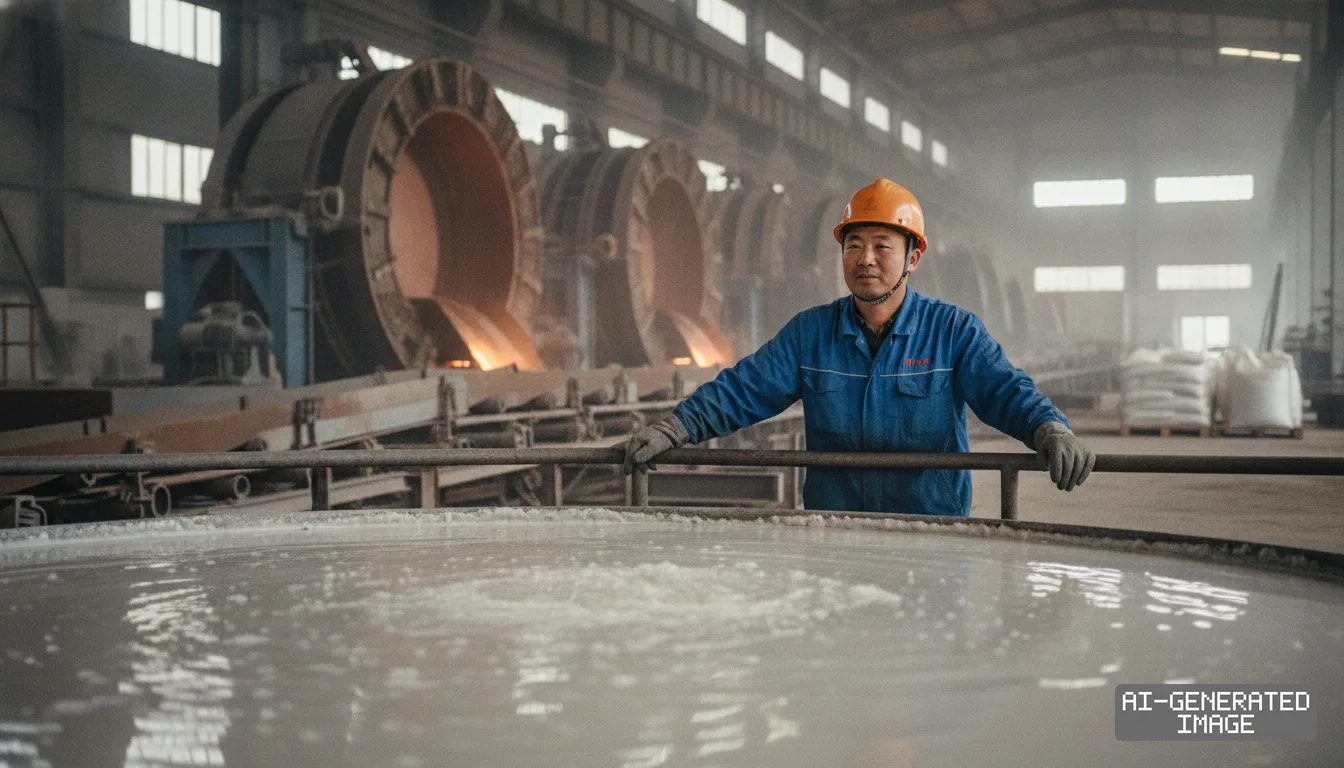
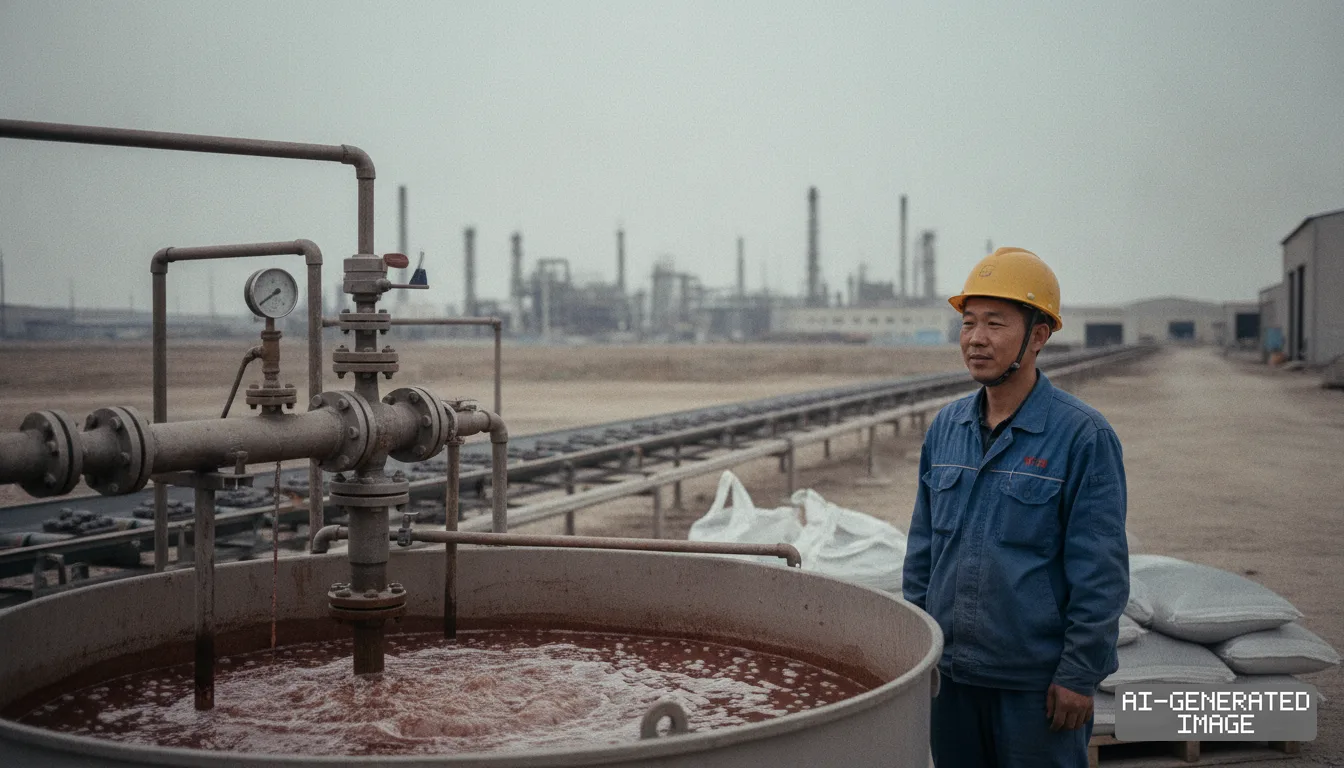
Under the restructured framework, all crude gallium extracted as a byproduct from bauxite refining during alumina production must flow exclusively to three centralized high-purity refining hubs operated by Chalco and its designated joint ventures. Chalco controls the majority of domestic alumina extraction circuits from which gallium is recovered as a secondary stream during the Bayer process. By centralizing the refining of 4N (99.99 percent) crude gallium into 6N (99.9999 percent) and 7N (99.99999 percent) semiconductor-grade material, MIIT has effectively eliminated independent domestic brokers who previously supplied merchant trading houses in Japan, South Korea, and Europe.
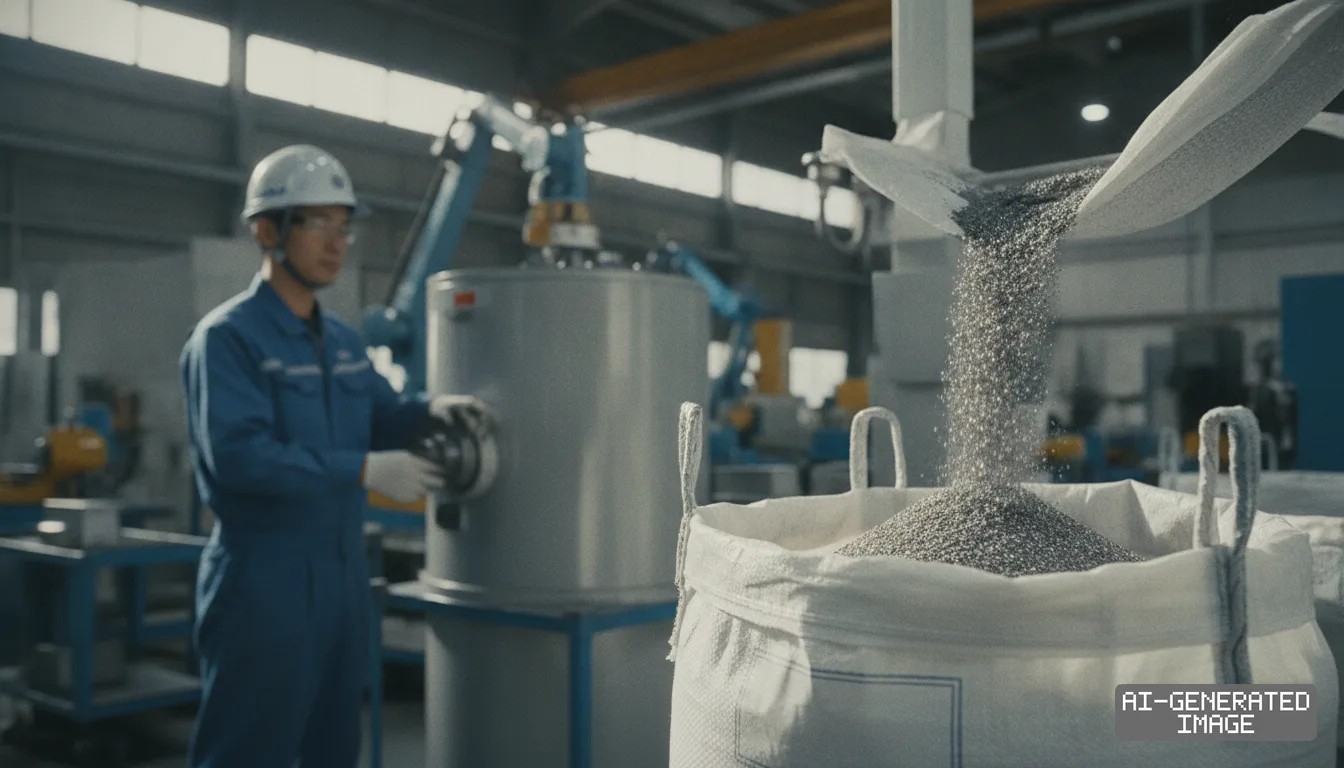
In the antimony sector, the restructuring centers on Hunan province, which historically accounts for the single largest concentration of antimony reserves and smelting capacity worldwide, centered around the Xikuangshan deposit in Lengshuijiang. The Hunan provincial government, executing the SASAC guideline, has completed the operational transfer of eight merchant pyrometallurgical and hydrometallurgical facilities into the direct management structure of Hunan Gold Group and China Minmetals. The facilities are being retrofitted to prioritize the production of ultra-pure antimony metal, high-purity sodium antimonate for high-end solar glass, and specialized antimony alloys, while standard commercial antimony trioxide output is subjected to strict monthly ceilings.
This restructuring creates a single-desk allocation model inside China for both critical elements. Private alloy manufacturers and merchant chemical compounders that previously operated under municipal licenses must now submit comprehensive end-use declarations to the newly established provincial Critical Metals Allocation Committees before receiving raw feedstocks from state-run centralized refiners. The refiners themselves must log all product batch numbers and purity certifications into the National Rare and Minor Metals Traceability Platform, an internal regulatory database administered by MIIT.
The regulatory architecture binds export permit approvals directly to these centralized refining hubs. When foreign buyers submit applications to the Ministry of Commerce for dual-use export licenses, the ministry verifies whether the underlying material originated from an accredited state refining center and whether the requested purity level corresponds to certified domestic inventory. In practice, this dual-gate mechanism prevents private domestic processors from tolling intermediate grades for international trading entities looking to circumvent end-user checks.
For semiconductor wafer fabricators in Japan, South Korea, and the United States, the direct exposure centers on the supply of semiconductor-grade gallium metal. Companies including Sumitomo Chemical, Dowa Holdings, and Freiberger Compound Materials rely on high-purity gallium inputs to manufacture single-crystal GaN and GaAs wafers. Although non-Chinese alumina refiners produce small volumes of primary gallium, China still accounts for more than 85 percent of global low-purity gallium extraction and over 75 percent of global secondary refining capacity. The consolidation under Chalco means foreign wafer producers must either absorb price premiums from non-Chinese secondary refiners or navigate the administrative clearance process of China's state allocation system.
For defense contractors and defense procurement agencies across the NATO alliance and its partner countries, the antimony bottleneck affects supply chains for small arms ammunition, artillery shell primers, military night-vision glass, and lead-acid batteries for naval vessels and tactical vehicles. Antimony ingots (grade Sb99.65 and above) and high-purity antimony oxide have seen global market spreads widen significantly compared to domestic Chinese spot prices since the implementation of export controls. The closure and absorption of independent Hunan refiners limits the spot material available to third-party processing hubs in Southeast Asia and India, which historically imported unrefined Chinese concentrates and crude metal to produce refined oxides for Western defense supply networks.
The consolidation also shifts the economics of domestic battery and solar manufacturing inside China. Domestic photovoltaic glass producers, including Xinyi Solar and Flat Glass Group, require high-purity sodium antimonate as a solar glass de-foaming agent. By prioritizing domestic allocations to strategic state projects and primary downstream industries, the state allocation framework stabilizes raw material costs for Chinese green technology manufacturers while restricting the volume of high-specification inputs released to external buyers.
South Korean advanced electronics manufacturers, led by Samsung Electronics and SK hynix, maintain direct exposure through their procurement of high-frequency power semiconductors and advanced packaging materials that incorporate minor metal additives. While memory fabs do not consume large volumes of raw gallium directly, their sub-tier component suppliers of radio-frequency modules, optical transceivers, and specialized sensors operate on narrow inventory buffers. The centralization of refining in Shanxi and Guizhou introduces extended review cycles for Korean procurement teams seeking material certifications.
In response to the Chinese centralization program, secondary recycling initiatives and alternative extraction projects outside China are accelerating, though their commercial volumes remain insufficient to offset centralized Chinese output in the near term. Critical mineral developers in Canada, Australia, and the United States are working to restart idled antimony mines, such as the Stibnite Gold Project in Idaho, and install gallium recovery circuits at existing bauxite and zinc refining operations in Europe and Australia. However, building downstream chemical separation and 7N high-purity refining facilities requires two to four years of construction and environmental permitting.
The structural transition of China's minor metals sector from raw export producer to closed-loop advanced materials refiner is now an operational reality across both supply chains. The Ministry of Industry and Information Technology has scheduled the final phase of provincial asset transfers for the fourth quarter of 2026, when all remaining regional smelting lines with capacities below 3,000 metric tons per year will be permanently decommissioned or integrated into state holding entities.
Impact map
How this development propagates across the region and out to global buyers.
| Event | Korea | China | Japan | Global impact |
|---|---|---|---|---|
| State Minor Metals Consolidation | RF and sensor supply lead times widen | SOEs absorb refining assets and control allocation | semiconductor wafer substrate costs rise | defense ammunition and high-purity wafer bottlenecks |
In this story
- Companies
- China Minmetals CorporationAluminum Corporation of ChinaHunan Gold Group
- Tickers
- 601600.SS002155.SZ
- Exposed
- Sumitomo ChemicalDowa HoldingsFreiberger Compound MaterialsXinyi SolarFlat Glass GroupSamsung ElectronicsSK hynix
- Policy
- Export ControlsEconomic SecuritySubsidies
- Impact
- Supply ChainOrder BookCost StructureCompliance
Track every Export Controls development → Track every Economic Security development → Track every Subsidies development →
Related briefings
- Sumitomo Chemical shifts aramid separator lines to Korea as battery thermal rules tighten Also on Sumitomo Chemical, Cost Structure
- Sojitz and NRS agree to build Tata fab chemical supply chain in India Also on Sumitomo Chemical, Compliance
- SK hynix subsidiary Solidigm weighs NAND fab in New York Also on SK hynix, Samsung Electronics, Export Controls
- CXMT starts pilot HBM3E production as China accelerates AI chip self-reliance Also on SK hynix, Samsung Electronics, Export Controls
Sources
This briefing carries no sources block. It was written from our desks’ working knowledge of the sector rather than from documents retrieved for this piece. Read it as orientation and check any figure you intend to act on — how we source briefings.
This briefing carries no linked sources: it was written from our desks' working knowledge of the sector rather than from documents retrieved for this piece. East Asia Brief publishes no citation it cannot link. Our English text is produced with AI assistance under human editorial review. See our methodology and AI policy. Spotted an error? Tell us.
The Morning Brief
What changed in Korean, Chinese and Japanese industry overnight — and what it means for your supply chain. One email, weekday mornings, US time. Free.
The Morning Brief is in preparation. Leave your address and we will write to you once — when the first issue is ready. Nothing before that.