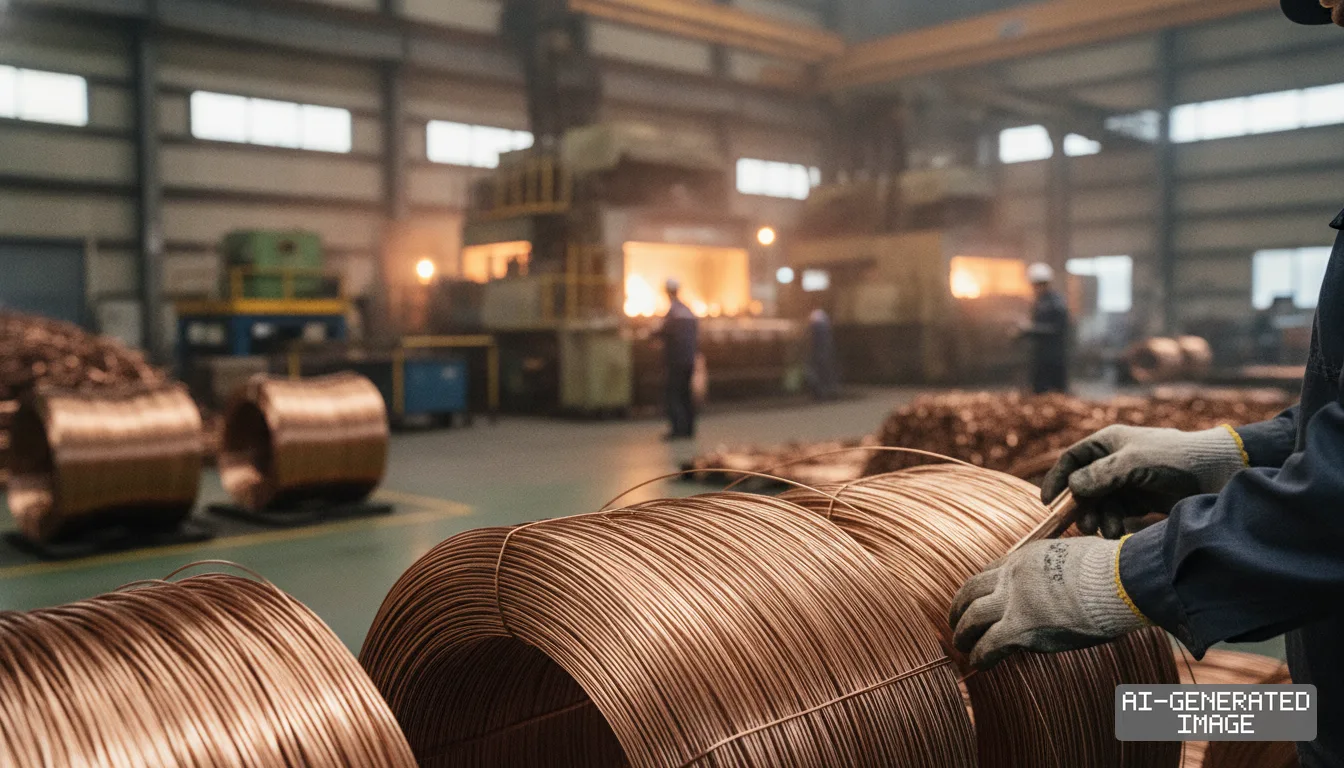
China rare earth suppliers hold shipments to US contractors
Delays mount across American defense motor supply chains as Chinese exporters withhold heavy rare earths and permanent magnets ahead of a November deadline.
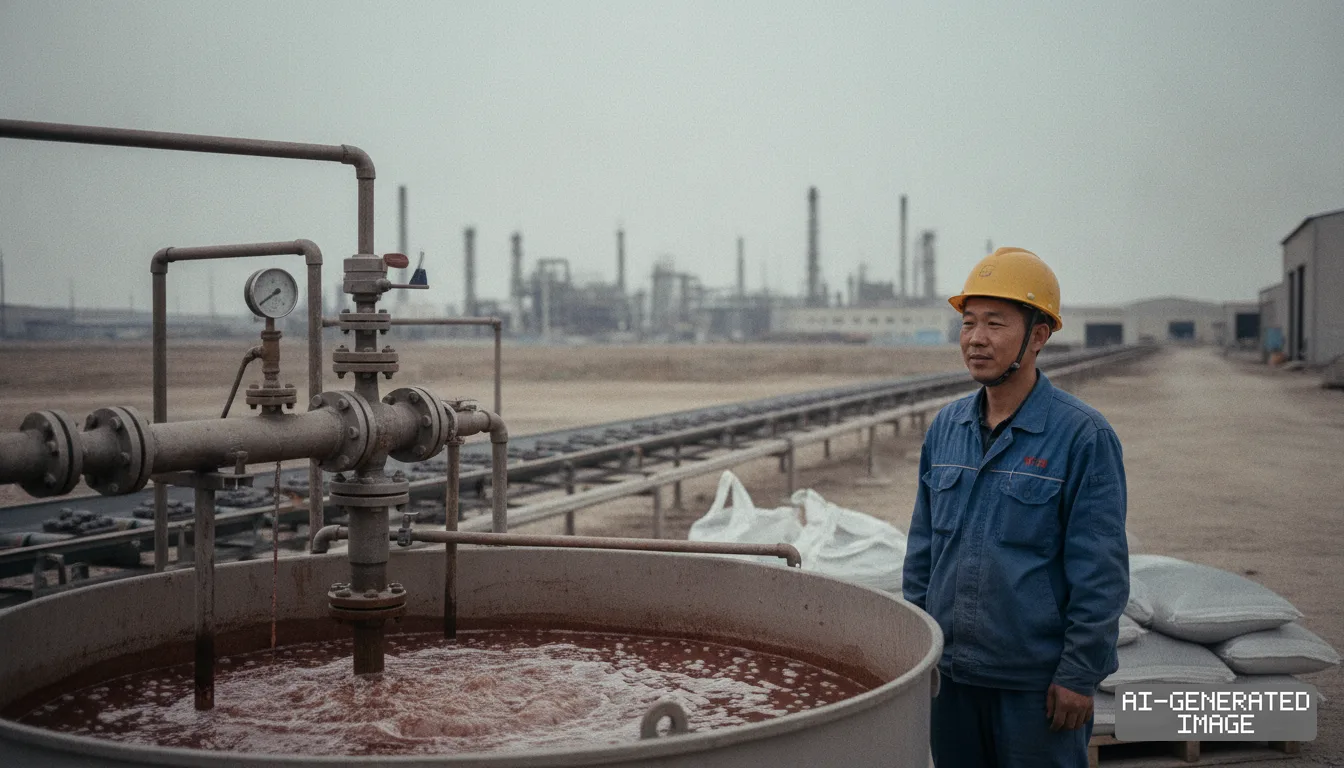
Chinese rare earth suppliers withheld specialized magnet shipments from American defense contractors on Oct. 10, 2026, compounding procurement bottlenecks across aerospace and precision motor supply chains.
The hold-ups hit a supply chain where China refines roughly 85% of the world's rare earth elements. Permanent neodymium magnets and separated heavy rare earths drive missile guidance fins, radar actuators and military drone motors.
American purchases of Chinese permanent magnets ran 16% below 2024 levels through July. Deliveries fell further into the autumn as commercial clearance times lengthened at major Chinese ports.
The bottlenecks reflect escalating corporate caution among private and state-owned Chinese processors. Exporters have delayed dispatching shipments even when holding approved commercial paperwork, according to trading desk records.
Suppliers fear retrospective regulatory penalties from Chinese customs authorities. Chinese trade groups tightened internal compliance checks after Beijing sanctioned the US Responsible Business Alliance in August.
Ministry of Commerce officials established an administrative foundation for the curbs on June 22, 2026. That ruling placed 10 American aerospace, defense and critical minerals corporations on an export control management list under Announcement No. 23.
The June blacklisting prohibited Chinese entities from providing dual-use items to those listed companies. It also banned foreign businesses from transferring Chinese-origin controlled materials to them through third-party intermediaries.
The targeted American companies hold significant positions in domestic supply initiatives. MP Materials and USA Rare Earth, which received $550 million and $1.6 billion respectively in federal backing, remain barred from receiving Chinese dual-use inputs.
Defense vehicle builder Oshkosh Defense and actuator specialist Aveox also sit on the restricted roster. Both manufacturers rely on permanent magnets for specialized vehicle drives and precision airborne components.
The administrative framework dates back to April 4, 2025. China's Ministry of Commerce and the General Administration of Customs then instituted individual export licensing on seven heavy rare earth categories under Announcement No. 18.
That decree covered samarium, gadolinium, terbium, dysprosium, lutetium, scandium and yttrium. Exporters must submit detailed end-user certifications proving purely civilian applications before customs officers release cargo.
Yttrium supplies demonstrate the scale of the contraction. American imports of the thermal-barrier coating mineral dropped from 333 tons before April 2025 to 17 tons over the subsequent eight-month span, a 95% collapse.
China previously banned direct exports of dual-use commodities to American military users on Dec. 3, 2024. That mandate instructed customs bureaus to halt any critical mineral intended for United States defense applications.
The current shipping delays contrast sharply with European market access. Chinese Commerce Minister Wang Wentao met European Union Trade Commissioner Maros Sefcovic in Beijing on Oct. 9, 2026.
Both sides announced 16 trade understandings on Oct. 10. The bilateral agreement preserved a streamlined green channel for rare earth and permanent magnet licensing into European industrial plants.
American commercial buyers face a far more fragmented review apparatus. Port officers scrutinize bill-of-lading documents for tier-two aerospace suppliers, stretching standard two-week export reviews into multi-month verification procedures.
Contractors are attempting to substitute non-Chinese magnet assemblies. Japanese magnet producers rely on Australian concentrate from Lynas Rare Earths, but Japanese heavy rare earth separation capacity cannot fulfill total American military motor orders.
The Chinese Ministry of Commerce has not published an administrative notice confirming a centralized order to halt shipments on Oct. 10. The disruptions instead stem from private exporter risk aversion and the cumulative application of earlier licensing decrees.
Corporate planning faces an immediate regulatory deadline. A 12-month moratorium on Beijing's extraterritorial re-export rule—covering goods containing more than 0.1% Chinese critical minerals—expires Nov. 10, 2026.
Customs officials in Ningbo and Shenzhen continue to examine magnet export manifests individually, according to shipping logistics logs.
Impact map
How this development propagates across the region and out to global buyers.
| Event | Korea | China | Japan | Global impact |
|---|---|---|---|---|
| Rare earth shipment delays | Auto parts makers maintain six-month magnet stockpiles | Refiners slow exports to avoid compliance penalties | Lynas processing hub shields domestic magnet manufacturers | Defense motor costs rise as alternative magnet supply tightens |
In this story
- Companies
- MP MaterialsUSA Rare Earth
- Tickers
- MP
- Exposed
- Oshkosh Defense
- Policy
- Export Controls
- Impact
- Supply ChainCompliance
Track every Export Controls development →
Related briefings
- China rare earth suppliers halt US shipments ahead of Washington summit talks Also on Oshkosh Defense, USA Rare Earth, MP Materials
- China bans dual-use sales to MP Materials and US refiners Also on Oshkosh Defense, USA Rare Earth, Export Controls
- US Senator Daines urges China talks to protect rare earths Also on USA Rare Earth, MP Materials, Export Controls
- China bars dual-use exports to Japan citing military end-use Also on USA Rare Earth, Export Controls, Compliance
Sources
Primary documents
Reporting
Confidence: high — how we grade this
The documents behind this briefing are linked above. East Asia Brief produces its English text with AI assistance under human editorial review, and does not translate or republish other outlets' articles. See our methodology and AI policy. Spotted an error? Tell us.
The Morning Brief
What changed in Korean, Chinese and Japanese industry overnight — and what it means for your supply chain. One email, weekday mornings, US time. Free.
The Morning Brief is in preparation. Leave your address and we will write to you once — when the first issue is ready. Nothing before that.