Cameco backs $120B US-Korea nuclear pact for eight reactors
A one-off patent waiver clears up to two Korean APR1400 units on American federal land while securing a $4.0 billion licensing and nuclear fuel services package for Westinghouse.
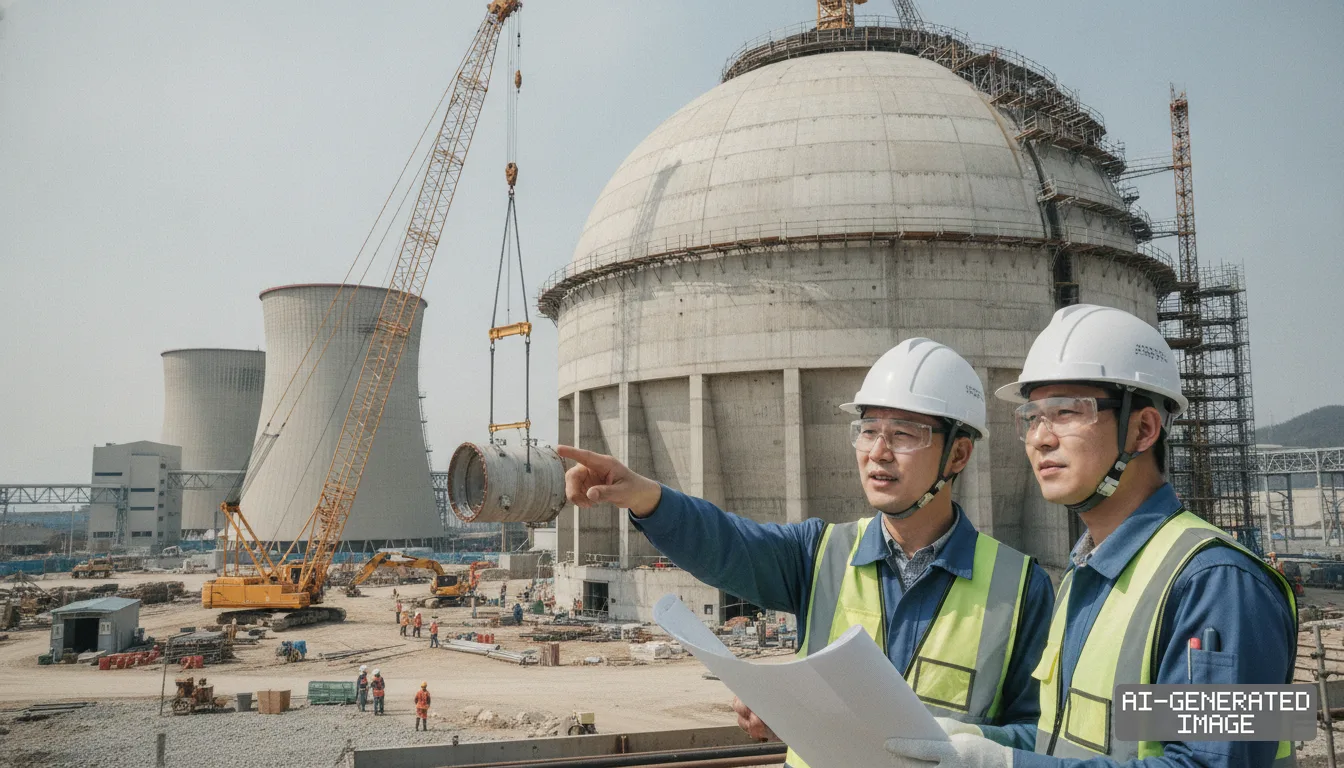
Cameco Corporation backed a $120 billion South Korea-US civil nuclear framework on Oct. 2, confirming a one-off intellectual property waiver that allows Korean reactors to be built on American federal sites.
The framework outlines the deployment of up to eight large commercial nuclear reactors across the United States. South Korean capital will finance six Westinghouse AP1000 units and up to two Korean APR1400 units.
Westinghouse Electric Company secures about $2.0 billion per APR1400 unit under the arrangement. The $4.0 billion total package covers intellectual property licensing, engineering, procurement and long-term nuclear fuel service contracts.
Cameco holds a 49% equity stake in Westinghouse, while Brookfield Asset Management owns the remaining 51%. The company welcomed Washington's continued push to expand domestic nuclear capacity, Cameco Chief Executive Tim Gitzel said.
The agreement applies a one-off exception to a 50-year licensing accord signed in January 2025. That previous pact between Westinghouse, Korea Electric Power Corporation and Korea Hydro & Nuclear Power barred independent Korean reactor construction.
Westinghouse had filed legal claims against KEPCO and KHNP over exports of the APR1400 design to Eastern Europe and the Middle East. The American vendor claimed ownership of baseline cooling and pressurization patents derived from legacy System 80 technology.
The one-off waiver resolves that impasse for American installations while channeling procurement fees back to Westinghouse. In exchange, Korean engineering teams gain direct access to project construction within the United States.
The $120 billion program allocates approximately $100 billion to direct engineering, equipment procurement and reactor fabrication. A separate $20 billion contingency reserve protects the project against construction overruns, according to project outlines.
Washington intends to place the eight reactors on federally owned tracts to accelerate permitting. Deployment will start with two Westinghouse AP1000 units before breaking ground on any Korean-designed facilities.
Initial project planning focuses on federal parcels situated in Ohio, Tennessee, South Carolina and Kentucky. Federal ownership allows developers to bypass municipal zoning disputes that delayed past commercial nuclear builds in North America.
Cameco confirmed that potential Korean equity investments in Westinghouse will not dilute its own holding. The Canadian miner expects to retain its 49% share regardless of any sovereign Korean capital injection.
Brookfield Asset Management also endorsed the framework as part of a wider commercial nuclear expansion. The alternative asset manager submitted a confidential initial public offering draft for Westinghouse on July 31.
Cameco extracts natural uranium from high-grade deposits in Saskatchewan and operates conversion facilities in Ontario. The partnership links those Canadian upstream resources directly to long-term fuel fabrication contracts for the new reactors.
The framework establishes a transatlantic nuclear supply chain designed to displace state-backed Russian suppliers. Western utilities have sought alternatives to Russian state nuclear corporation Rosatom and its export arm Tenex since 2024.
South Korea provides heavy forging capacity and modular manufacturing infrastructure that the American nuclear sector currently lacks. Korean fabricators led by Doosan Enerbility produce ultra-large reactor pressure vessels and steam generators for both designs.
Allowing the APR1400 onto American soil gives Korean nuclear builders reference facilities inside the world's largest power market. KHNP previously lacked authorization to market its flagship reactor directly to American utility operators.
The reactor framework forms part of a broader $200 billion energy development pact between Seoul and Washington. That package includes industrial power infrastructure in Texas and commercial natural gas supply projects in Alaska.
The framework remains non-binding pending the negotiation and execution of definitive commercial agreements, Cameco said. The companies must still finalize power purchase contracts, regional grid connections and licensing filings with the Nuclear Regulatory Commission.
The framework operates separately from the American Nuclear Supply Chain Loans program managed by the US Department of Energy. Private equity and sovereign Korean credit facilities will supply the primary capital instead of federal loan guarantees.
The bilateral understanding also supports long-term supplier development across heavy forging and advanced components. Westinghouse continues development of its eVinci microreactor and AP300 small modular system alongside Korean manufacturing partners.
The notice does not state the exact equity share Korean utilities will acquire in Westinghouse. Government officials have not published valuation terms or pricing formulas for any minority stake.
Commercial teams plan to begin drafting binding engineering contracts before the end of the year. Federal regulators will review preliminary site characterization data through the first half of 2027.
Impact map
How this development propagates across the region and out to global buyers.
| Event | Korea | China | Japan | Global impact |
|---|---|---|---|---|
| civil nuclear framework | KEPCO and KHNP obtain waiver for up to two APR1400 units in the US | excluded from allied uranium fuel and modular reactor supply chains | heavy equipment suppliers see secondary forging demand for pressure vessels | Cameco and Westinghouse anchor $120 billion allied nuclear buildout |
| civil nuclear framework | KEPCO and KHNP obtain waiver for up to two APR1400 units in the US | excluded from allied uranium fuel and modular reactor supply chains | heavy equipment suppliers see secondary forging demand for pressure vessels | Cameco and Westinghouse anchor |
| civil nuclear framework | KEPCO and KHNP obtain waiver for up to two APR1400 units in the US | excluded from allied uranium fuel and modular reactor supply chains | heavy equipment suppliers see secondary forging demand for pressure vessels | Cameco and Westinghouse anchor $120 billion allied nuclear buildout |
In this story
- Companies
- Cameco CorporationWestinghouse Electric CompanyKorea Electric Power CorporationKorea Hydro & Nuclear PowerBrookfield Asset Management
- Tickers
- CCJBAM015760.KS
- Exposed
- Doosan Enerbility
- Policy
- Economic SecuritySubsidies
- Impact
- Supply ChainCapexOrder Book
Track every Economic Security development → Track every Subsidies development →
Related briefings
- Korea signs uranium and nuclear pacts with Kazakhstan in Seoul Also on Doosan Enerbility, Korea Hydro & Nuclear Power, Order Book
- Korea and France sign nuclear fuel and strategic tech pact Also on Korea Hydro & Nuclear Power, Order Book
- Pacifico Energy commits $1 billion to South Korea offshore wind projects Also on Korea Electric Power Corporation, Order Book
- Korea speeds HVDC power corridor to supply Yongin semiconductor cluster Also on Korea Electric Power Corporation, Order Book
Sources
Reporting
Confidence: medium — how we grade this
The documents behind this briefing are linked above. East Asia Brief produces its English text with AI assistance under human editorial review, and does not translate or republish other outlets' articles. See our methodology and AI policy. Spotted an error? Tell us.
The Morning Brief
What changed in Korean, Chinese and Japanese industry overnight — and what it means for your supply chain. One email, weekday mornings, US time. Free.
The Morning Brief is in preparation. Leave your address and we will write to you once — when the first issue is ready. Nothing before that.