Brazil Senate passes critical minerals bill to expand rare earth processing
The legislation allocates 7 billion reais to build domestic refining capacity and challenge China's control over permanent magnet materials.
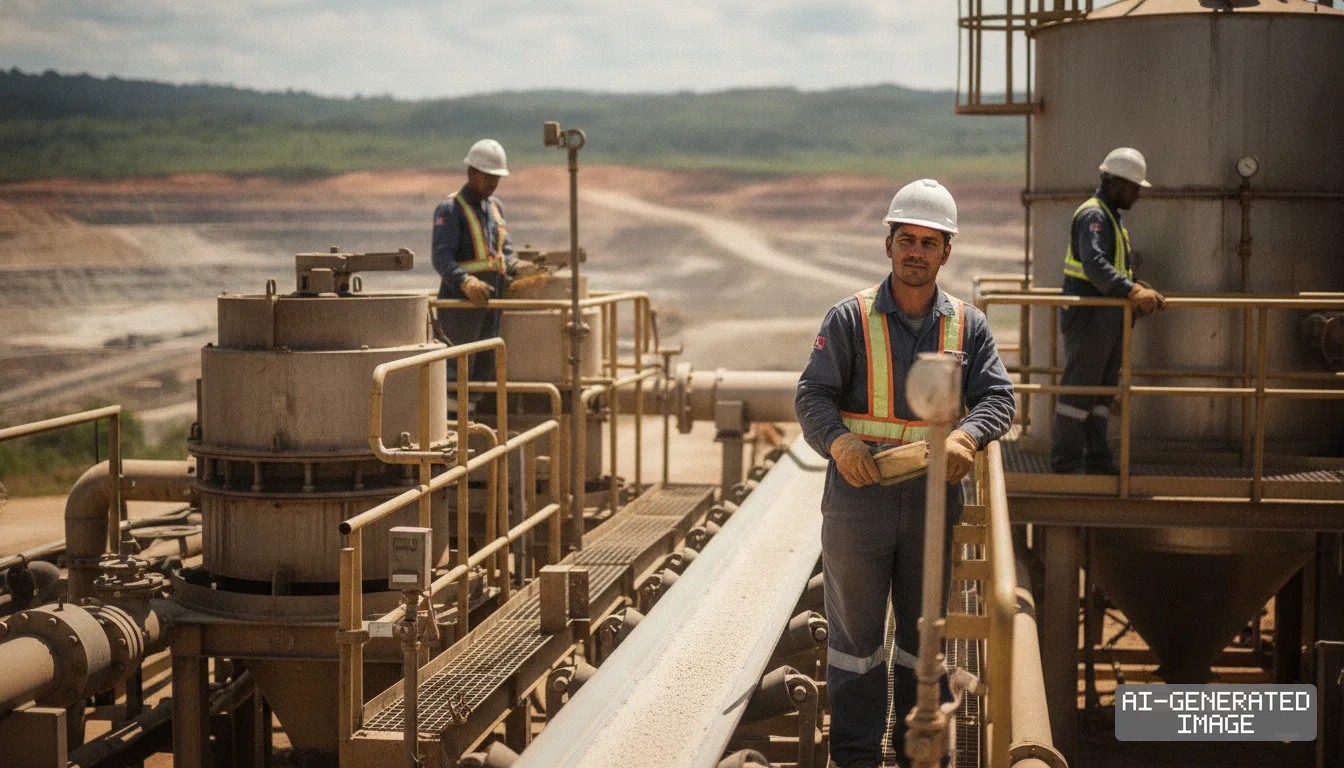
Brazil's Federal Senate approved a national critical minerals bill on Sept. 3, 2026, establishing financial incentives to build domestic refining plants and counter Chinese dominance in the rare earth supply chain.
The measure, designated Bill PL 2.780/2024, creates the National Policy for Critical and Strategic Minerals. The text passed the lower house on May 6 and now goes to President Luiz Inacio Lula da Silva for his signature.
The framework authorizes up to 7 billion Brazilian reais ($1.4 billion) in state support. The legislation seeks to end Brazil's historical role as an exporter of unrefined ore.
Under the statute, the government will capitalize the Mineral Activity Guarantee Fund with 2 billion reais ($393 million). That federal fund will back credit lines for mineral extraction and processing ventures.
The bill directs another 5 billion reais toward tax credits over a five-year window. Beneficiation, chemical transformation and domestic metallurgical operations will qualify for those fiscal benefits.
Companies mining and transforming critical minerals must spend at least 0.5% of their gross operating revenue on research and development. The law exempts guarantee fund revenues from corporate income tax.
A new presidential body, the National Council for the Industrialization of Critical and Strategic Minerals, will oversee the sector. Known as CIMCE, the council will decide which minerals qualify for state backing.
The council will also review foreign acquisitions of domestic mining assets. CIMCE holds the power to approve corporate transactions and select priority ventures for fast-track environmental licensing.
The council gives the executive branch clear control over strategic policy. Up to 15 federal officials will sit on the board alongside two private-sector delegates and regional representatives.
Brazil holds the world's second-largest deposits of rare earth elements after China, according to the U.S. Geological Survey. Yet Brazilian facilities process less than 1% of global output.
China controls roughly 70% of global rare earth extraction and more than 90% of magnet-grade refining capacity. Beijing tightened export licensing on critical minerals and processing equipment across recent trade disputes.
Those export restrictions disrupted procurement plans for international manufacturers. Electric vehicle makers and wind turbine producers require neodymium, praseodymium, terbium and dysprosium for high-strength permanent magnets.
Permanent magnets convert electrical power into mechanical torque inside traction motors. Automakers outside China face rising costs when Beijing limits shipments of heavy rare earth oxides.
In Goias state, the Serra Verde mine produces all four magnetic rare earths outside Asia. Foreign investors have targeted such assets to establish independent supply channels.
USA Rare Earth completed a $2.8 billion purchase of Serra Verde to secure feedstocks for Western processing plants. The Brazilian law gives such ventures financial backing if they build refineries inside the country.
Industrial buyers in South Korea and Japan face direct exposure to these regulatory shifts. Both countries import almost all their refined rare earth metals from Chinese suppliers.
South Korean battery and automotive supply chains need alternative sources of dysprosium and terbium. Motor producers in Japan have also sought long-term supply pacts with Latin American miners.
Japan's diplomatic mission signed a cooperation agreement with Goias state authorities earlier this year. The partnership focuses on developing local processing lines for rare earth concentrates.
The Brazilian Mineral Research Association criticized the speed of the legislative debate. The trade group said the Senate approved the bill without sending it to thematic review committees.
Mining companies requested clearer guidelines for environmental permits, the association said. Industrial executives expressed concern that administrative reviews by CIMCE could delay project timetables.
Senator Eduardo Braga, who steered the bill through the floor, rejected amendments that sought to dilute government oversight. Braga said state control over strategic deposits protects national sovereignty.
President Lula has scheduled the signing ceremony, which will enact the national mineral policy into federal law.
Impact map
How this development propagates across the region and out to global buyers.
| Event | Korea | China | Japan | Global impact |
|---|---|---|---|---|
| Brazil critical minerals processing law | motor supply chain | refining dominance challenged | magnet sourcing | EV raw material costs |
In this story
- Companies
- Serra Verde
- Tickers
- VALE3.SA
- Policy
- SubsidiesExport ControlsForeign Investment Screening
- Impact
- Supply ChainCapexCost Structure
Track every Subsidies development → Track every Export Controls development →
Related briefings
- Benchmark says ex-China heavy rare earth prices jumped 150% in Q3 Also on Serra Verde, Export Controls, Cost Structure
- India pushes rare earth magnet output to counter China curbs Also on Export Controls, Cost Structure, Subsidies
- Malaysia overtakes China in US drone market as tariffs bite Also on Export Controls, Cost Structure, Subsidies
- China Substrate Makers Speed Glass Core Lines for AI Chips Also on Export Controls, Cost Structure, Subsidies
Sources
Reporting
Confidence: medium — how we grade this
The documents behind this briefing are linked above. East Asia Brief produces its English text with AI assistance under human editorial review, and does not translate or republish other outlets' articles. See our methodology and AI policy. Spotted an error? Tell us.
The Morning Brief
What changed in Korean, Chinese and Japanese industry overnight — and what it means for your supply chain. One email, weekday mornings, US time. Free.
The Morning Brief is in preparation. Leave your address and we will write to you once — when the first issue is ready. Nothing before that.