Li Auto drops CATL from 2026 i6, tapping Sunwoda and CALB
The automaker confirmed an Oct. 28 rollout for its top-selling electric SUV with proprietary packs, ending single-source reliance on China's dominant cell manufacturer.
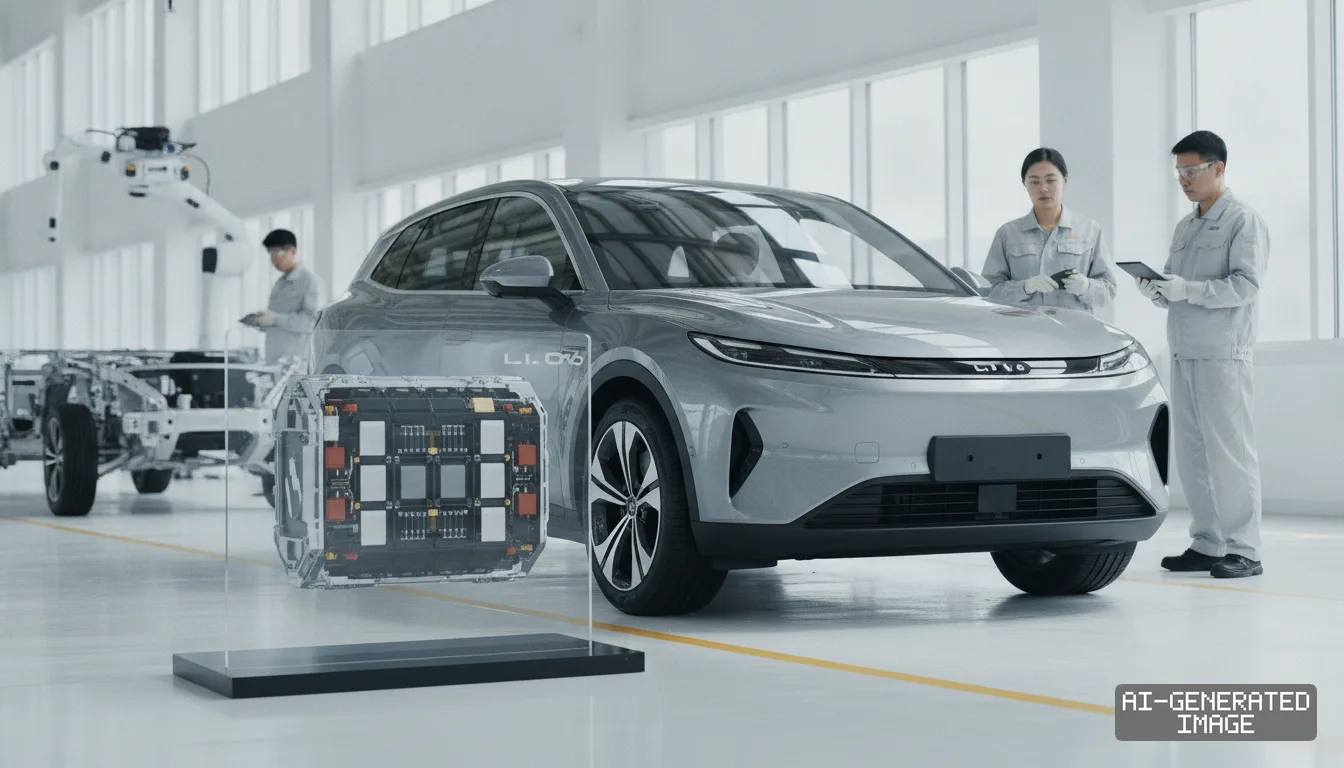
Li Auto scheduled the official market launch of its 2026 i6 electric sport utility vehicle for Oct. 28, 2026, confirming the full exclusion of long-standing battery supplier CATL.
The refreshed model carries an in-house developed 96-kilowatt-hour fast-charging battery pack delivering 780 kilometers of range under China Light-duty Test Cycle standards.
The vehicle represents Li Auto's primary volume driver. Deliveries reached 16,979 units in August 2026, generating roughly 45% of the company's total monthly vehicle volume.
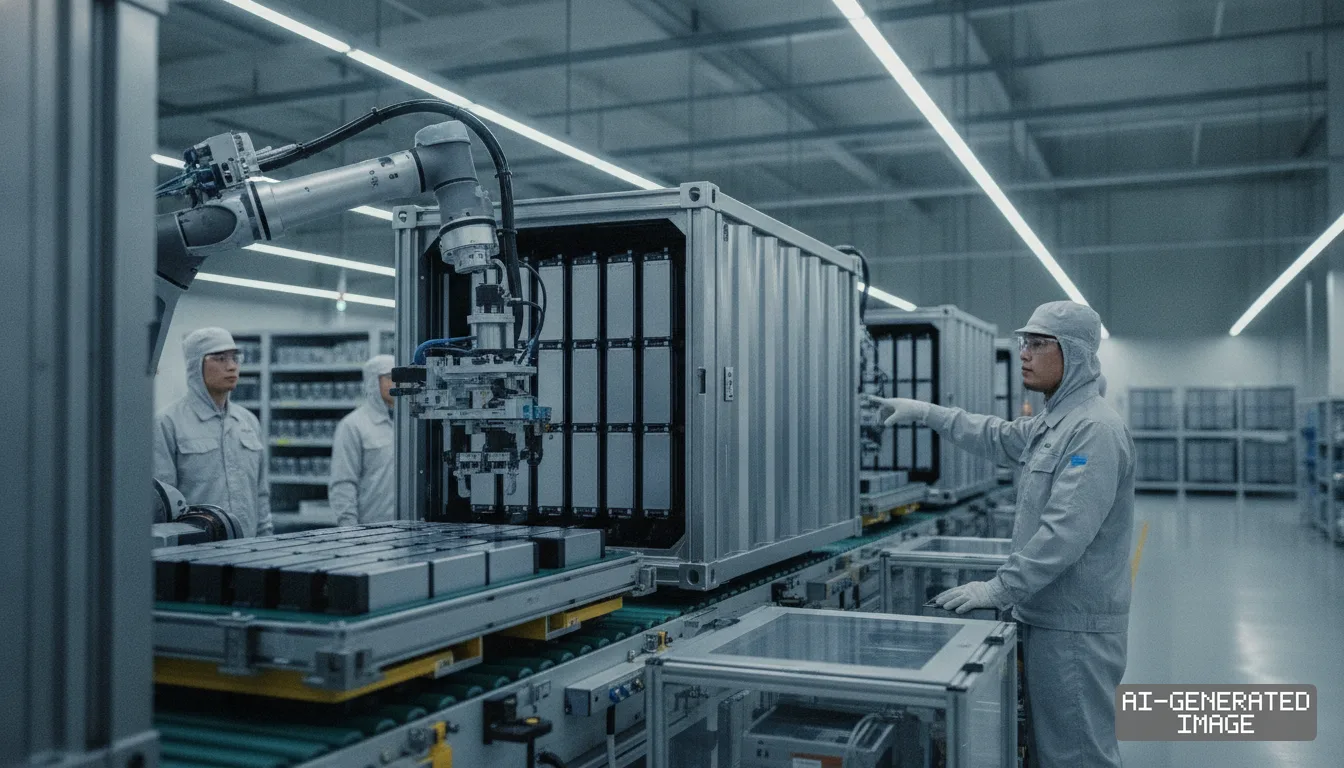
Shandong Li Auto Battery, a fifty-fifty manufacturing venture between the carmaker and Sunwoda Electronic, produces the final battery pack assemblies.
Cell manufacturing has been divided between Sunwoda Electric Vehicle Battery and CALB Group, regulatory filings published by China's Ministry of Industry and Information Technology show.
The regulatory certification omitted Contemporary Amperex Technology Co. Limited entirely from the 2026 i6 specification register, ending exclusive cell supply.
Li Auto laid the capital foundation for the shift on Sept. 4, 2026, through a 2.65 billion yuan ($390 million) equity injection into Sunwoda EVB.
That subscription gave Li Auto an 8.79% direct holding, expanding its combined indirect ownership to 11.17% alongside related entities.
The transaction established Li Auto as the second-largest shareholder in the cell manufacturing business, diluting parent firm Sunwoda's ownership to 24.06%.
Li Auto announced a broader operational transition on Sept. 7, 2026, detailing plans to phase in proprietary battery architectures across its entire passenger vehicle lineup.
The strategy separates electrochemical cell formulation and software design from heavy industrial cell fabrication, replicating the contract manufacturing model used in consumer electronics.
Li Auto develops the battery management algorithms, pack enclosures and structural safety systems internally before contracting third-party producers for cell lines.
Senior Vice President Liu Liguo said the carmaker retains direct commercial and engineering responsibility toward vehicle owners regardless of which vendor casts the physical cells.
The multi-vendor sourcing model directly erodes CATL's pricing dominance across China's premium new energy vehicle sector.
Data from the China Automotive Battery Innovation Alliance show CATL controlled 45.37% of domestic power battery installations across the first seven months of 2026.
CALB captured a 6.32% market share over the identical seven-month span, while Sunwoda held 2.89% of national installations.
Automakers across China have accelerated supply-chain diversification to counter margin compression following prolonged domestic retail price cuts.
Automotive sector profit margins fell to 3.4% during early 2026, with pure vehicle assembly operations yielding margins near 1.5%.
Because battery modules account for approximately 30% to 40% of electric vehicle production costs, pricing flexibility has become vital for carmakers.
Xiaomi Auto similarly expanded its battery procurement network in September 2026, incorporating CALB and Sunwoda alongside existing supplies from CATL and BYD subsidiary FinDreams.
The simultaneous supplier realignments demonstrate that leading Chinese electric vehicle assemblers refuse to remain captive to single battery suppliers.
Deploying multiple approved cell chemistries provides assemblers greater leverage during quarterly raw material pricing negotiations.
Li Auto Chairman Li Xiang addressed the shift during an executive briefing on Sept. 28, 2026, rejecting suggestions of an adversarial break with CATL.
Li said the arrangement mirrors Apple's relationship with foundry partners rather than a zero-sum commercial exclusion of existing suppliers.
Li Auto had faced operational vulnerabilities under single-vendor battery procurement agreements throughout earlier product rollouts.
The company exhausted allocated reserves of CATL fast-charging cells for its Mega minivan in September 2026, forcing a sudden shift to in-house packs.
Earlier dual-sourcing efforts on the i8 sport utility vehicle triggered consumer pushback when identical vehicle trims were delivered with different cell brands without advance notice.
To avoid customer resistance, the 2026 i6 will ship exclusively with unified pack specifications certified under the in-house battery nomenclature.
Sunwoda and CALB will supply identical prismatic lithium iron phosphate form factors manufactured to Li Auto's internal structural blueprints.
The regulatory filings do not state the exact cell allocation ratio between Sunwoda and CALB for initial vehicle batches.
Li Auto plans to display the 2026 i6 at domestic retail showrooms on Oct. 11, 2026, before presenting the model at the Paris Motor Show on Oct. 12.
Customer deliveries of the refreshed vehicle will begin across Chinese distribution centers in early November 2026.
Impact map
How this development propagates across the region and out to global buyers.
| Event | Korea | China | Japan | Global impact |
|---|---|---|---|---|
| Li Auto eliminates CATL from volume i6 SUV | LG Energy Solution and Samsung SDI face intensified domestic pricing pressure as Chinese cell rivals broaden contracts | CATL loses sole-source lock on volume model while Sunwoda and CALB expand Tier-1 market share | Panasonic sees no Tier-1 procurement opening among independent Chinese electric vehicle assemblers | EV assemblers decouple cell architecture from pack assembly, curbing battery supplier pricing power |
In this story
- Companies
- Li AutoContemporary Amperex TechnologySunwoda ElectronicCALB Group
- Tickers
- 2015.HK300750.SZ300207.SZ3931.HK
- Exposed
- Xiaomi
- Policy
- Economic Security
- Impact
- Supply ChainPricingCost Structure
Track every Economic Security development →
Related briefings
- Li Auto adopts in-house batteries across all models to cut costs Also on Li Auto, Sunwoda Electronic, Contemporary Amperex Technology
- CXMT beats SK hynix and Micron in DRAM margin at 87.59% gross rate Also on Xiaomi, Pricing
- CATL warns China EV price war triggers batch battery defects and safety hazards Also on Sunwoda Electronic, Cost Structure
- Gotion and Sunwoda ramp sodium-ion battery output for Chinese light electric vehicles Also on Sunwoda Electronic, Cost Structure
Sources
Reporting
Confidence: medium — how we grade this
The documents behind this briefing are linked above. East Asia Brief produces its English text with AI assistance under human editorial review, and does not translate or republish other outlets' articles. See our methodology and AI policy. Spotted an error? Tell us.
The Morning Brief
What changed in Korean, Chinese and Japanese industry overnight — and what it means for your supply chain. One email, weekday mornings, US time. Free.
The Morning Brief is in preparation. Leave your address and we will write to you once — when the first issue is ready. Nothing before that.