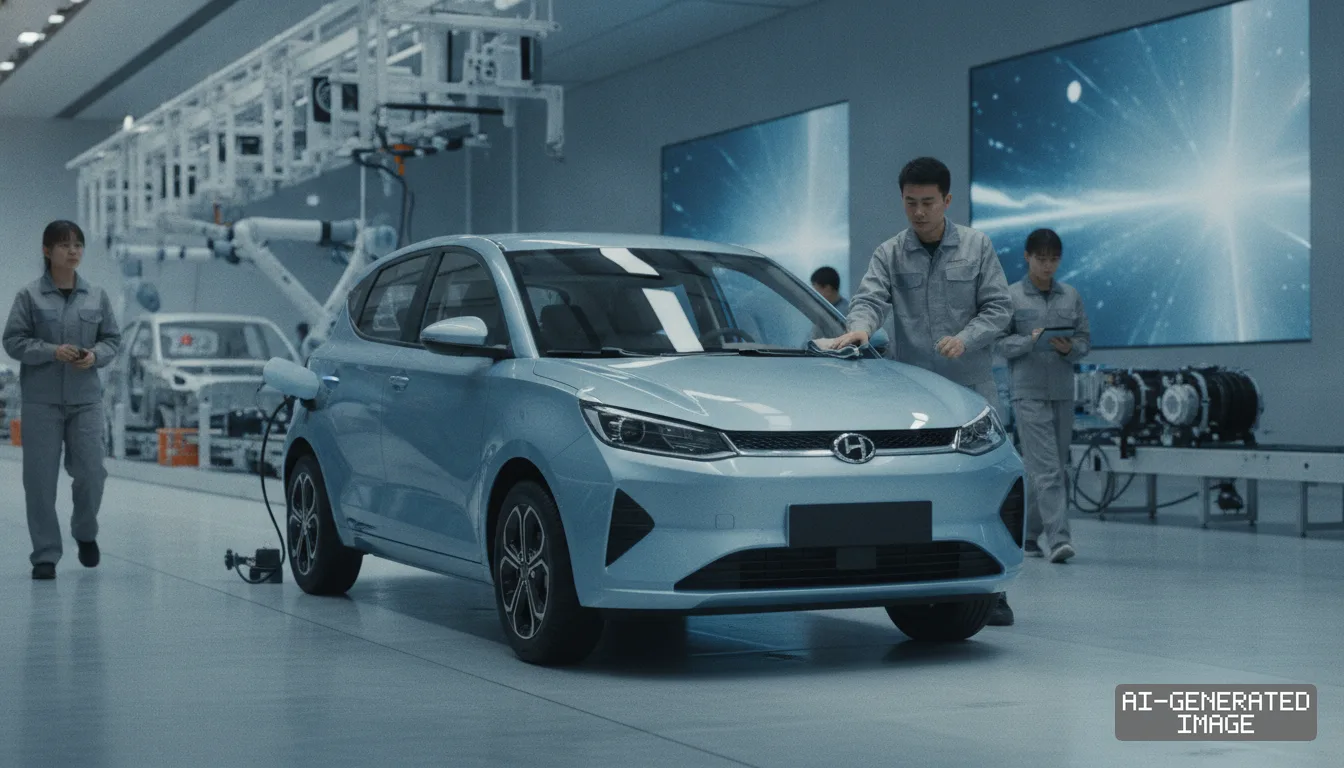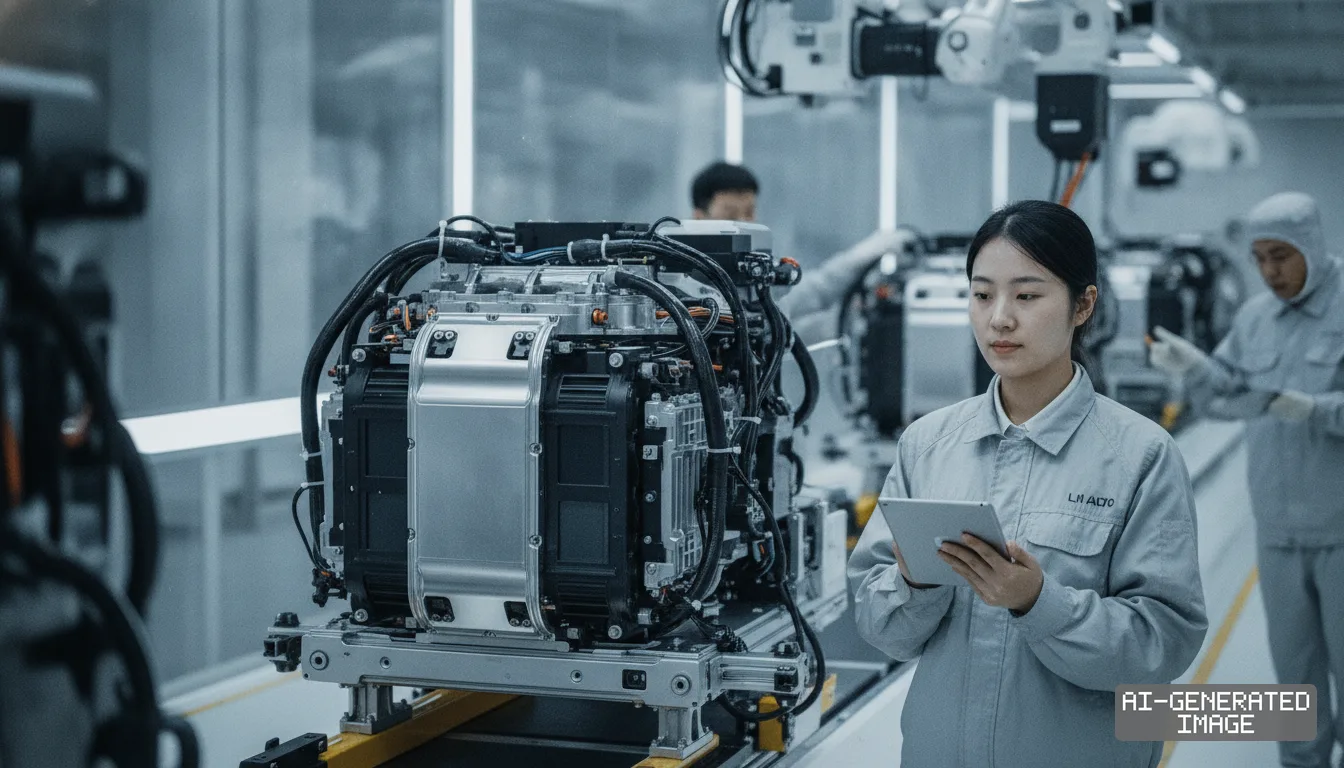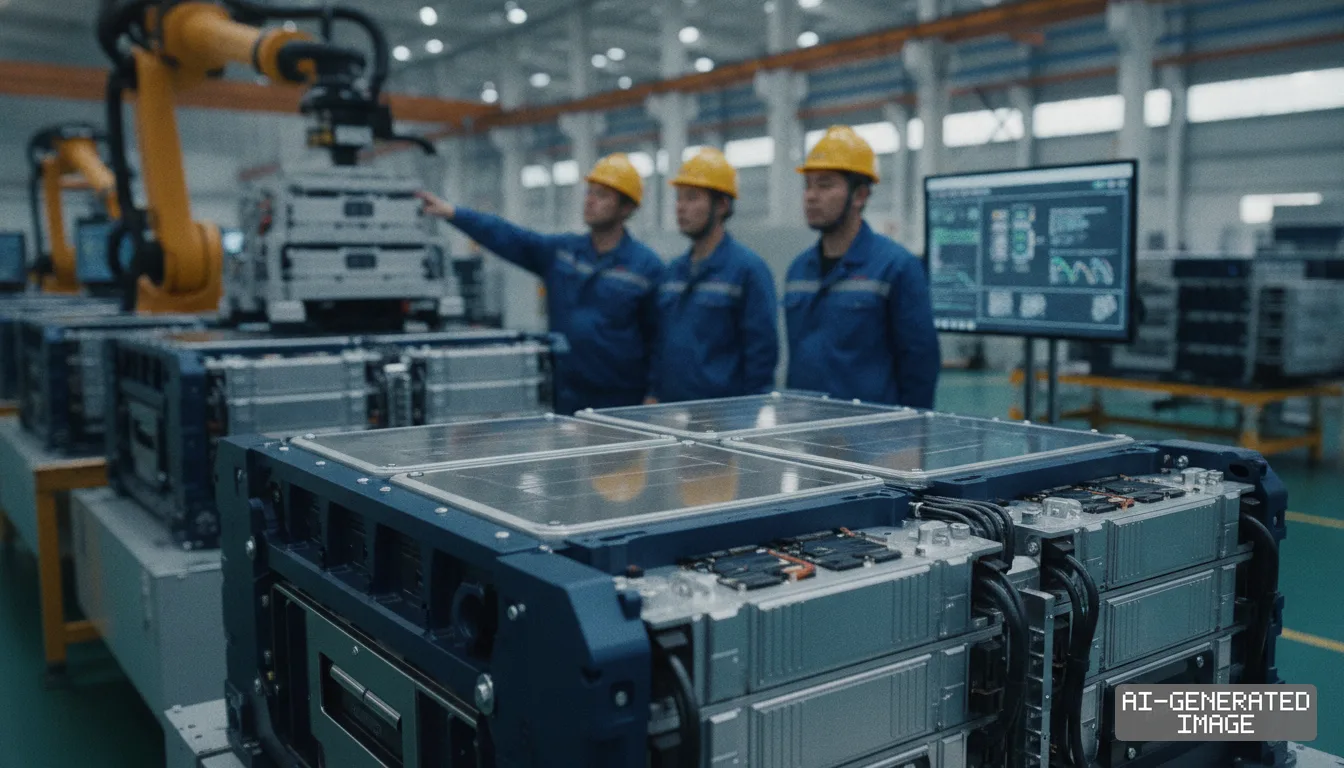
CATL warns China EV price war triggers batch battery defects and safety hazards
With over 600 new vehicle models launching this year, Chairman Robin Zeng calls for strict parts-per-billion defect controls as compressed timelines compromise validation.
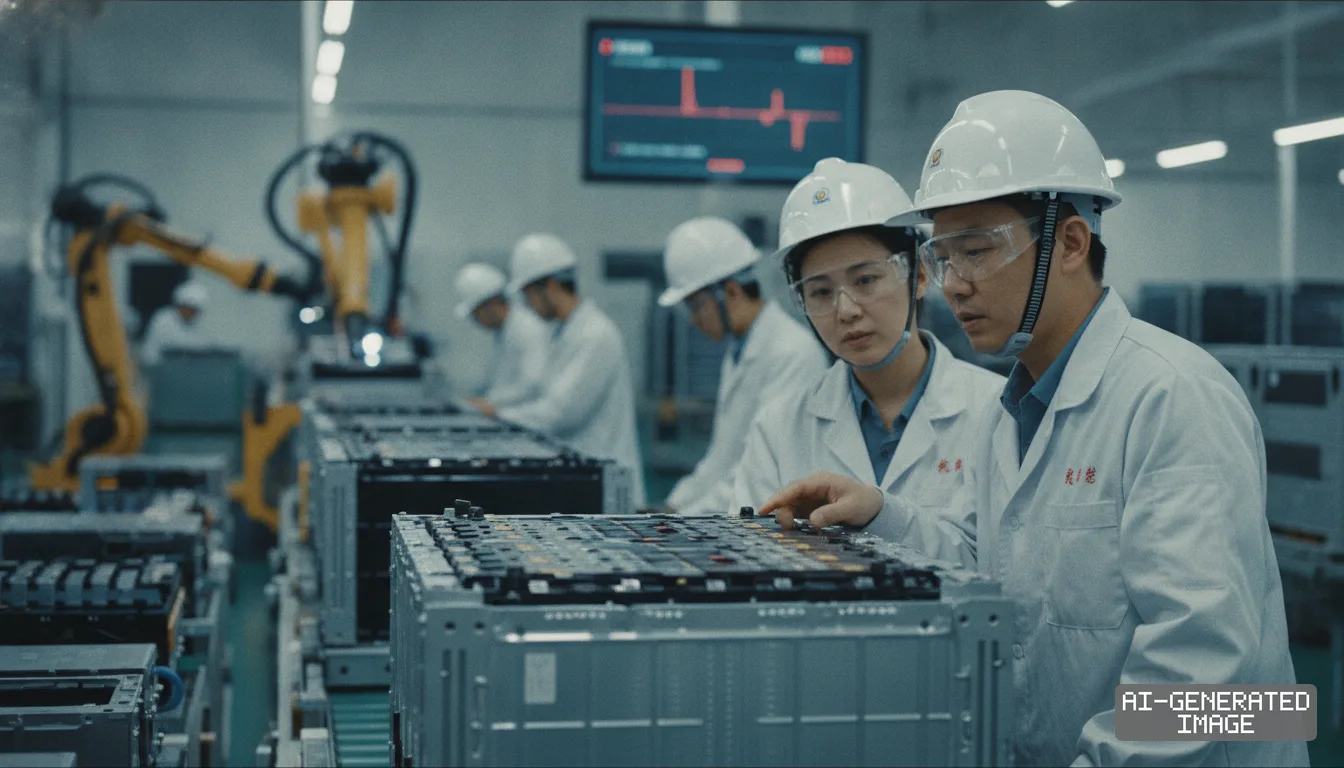
CATL Chairman Robin Zeng warned on Sept. 4, 2026 that fierce price cuts and compressed electric vehicle launch schedules in China are causing batch battery defects and severe fire risks.
The warning came as domestic automakers rolled out more than 600 new vehicle models during 2026, a launch pace averaging nearly three releases per day.
Robin Zeng, founder and chairman of Contemporary Amperex Technology Co., Limited, delivered the keynote address during the 2026 World Power Battery Conference in Yibin, Sichuan Province.
The Fujian-based manufacturer is the world's largest producer of traction batteries, supplying automotive clients across China, Europe and North America.
Zeng said aggressive competition centered on development speed, technical specifications and retail discounting has cut vehicle development programs from three years down to under 18 months.
Those compressed schedules force engineering teams to shorten validation steps and omit long-term durability testing, according to Zeng's keynote remarks.
Shortened testing has caused multiple production batteries to suffer batch-level failures across the market, Zeng said.
He described the scale of the resulting defects as alarming for the broader electric mobility sector.
Thermal runaway happens when an internal battery defect generates heat faster than the cell can dissipate it, sparking fires that spread across adjacent modules.
Zeng warned that in mass production, minute cell flaws quickly multiply into catastrophic fires and fatal road accidents.
China accounted for more than 7.4 million new energy vehicle sales during the first half of 2026, conference data showed.
Electric and plug-in hybrid vehicles represented roughly half of total domestic passenger car sales over that six-month period.
Global power battery installations reached 608 gigawatt-hours during the same period, with Chinese manufacturers occupying seven of the top 10 positions.
Those seven domestic producers held more than 70% of worldwide cell shipments in the first half of the year.
Zeng said that at such scale, standard automotive defect rates measured in parts per million cannot protect drivers from recurring fires.
He called on battery manufacturers to enforce a parts-per-billion standard, equivalent to fewer than one defective cell in every billion units produced.
A typical electric vehicle battery pack houses hundreds of individual cells connected in series and parallel.
Vehicle range and operating safety depend on the performance of the weakest cell in the enclosure, Zeng said.
When millions of vehicles operate on public roads, even tiny manufacturing deviations inevitably cause fleet-wide failures, Zeng said.
Zeng said quality cannot be inspected into a battery pack after manufacturing finishes.
Safety margins must be engineered into material choices, structural cell layouts and module enclosures before production begins, Zeng said.
CATL deploys an internal adversarial engineering unit that includes specialists in electrochemistry, mechanical engineering and artificial intelligence.
The internal unit holds absolute veto authority over product rollouts before lines begin commercial operation, Zeng said.
Manufacturing facilities use artificial intelligence algorithms to track production parameters and identify irregularities before cells leave assembly stations.
Zeng did not name specific automakers or battery producers responsible for the batch failures cited in his address.
The domestic industry has experienced rising quality disputes as vehicle retail prices dropped.
Lithium iron phosphate cell prices fell below 0.35 yuan ($0.049) per watt-hour during the first half of 2026.
Those price drops lowered vehicle purchase costs but reduced operating margins for component vendors across the supply chain.
Automakers and battery suppliers have resolved earlier cell quality disputes through court filings and negotiated warranty settlements.
Geely Automobile subsidiary Viridi E-Mobility Technology sued cell supplier Sunwoda in late 2025 over battery defects before settling the dispute for 608 million yuan ($89 million).
Chinese manufacturers have deployed power batteries in roughly 30 million vehicles globally, according to company disclosures.
Zeng said consumer confidence in Chinese electric vehicles depends on long-term field reliability rather than aggressive retail discounting.
CATL opened its corporate headquarters and production facilities on Sept. 3, 2026 for a month-long quality audit program.
The program invites industrial partners and media representatives to review manufacturing operations across Fujian and Sichuan provinces through Sept. 30, 2026.
Impact map
How this development propagates across the region and out to global buyers.
| Event | Korea | China | Japan | Global impact |
|---|---|---|---|---|
| EV price war and battery defects | cell rivals raise quality bar | automakers face recall risk | solid-state pivot | EV safety scrutiny |
In this story
- Companies
- Contemporary Amperex Technology Co. Limited
- Tickers
- 300750.SZ
- Exposed
- Sunwoda ElectronicGeely Auto
- Policy
- Economic Security
- Impact
- Supply ChainComplianceCost Structure
Track every Economic Security development →
Related briefings
- BYD cuts entry EV price below $10,000 with new five-seat Seagull Also on Geely Auto, Cost Structure
- BYD widens Seagull hatchback to five seats for export drive Also on Geely Auto
- Li Auto drops CATL from 2026 i6, tapping Sunwoda and CALB Also on Sunwoda Electronic, Cost Structure
- Gotion and Sunwoda ramp sodium-ion battery output for Chinese light electric vehicles Also on Sunwoda Electronic, Cost Structure
Sources
Reporting
Confidence: medium — how we grade this
The documents behind this briefing are linked above. East Asia Brief produces its English text with AI assistance under human editorial review, and does not translate or republish other outlets' articles. See our methodology and AI policy. Spotted an error? Tell us.
The Morning Brief
What changed in Korean, Chinese and Japanese industry overnight — and what it means for your supply chain. One email, weekday mornings, US time. Free.
The Morning Brief is in preparation. Leave your address and we will write to you once — when the first issue is ready. Nothing before that.