LG Energy Solution pairs sodium batteries with SST for AI grids
The system showcased at the RE+ 2026 exhibition in Las Vegas manages millisecond electricity surges for computing clusters with solid-state transformers.
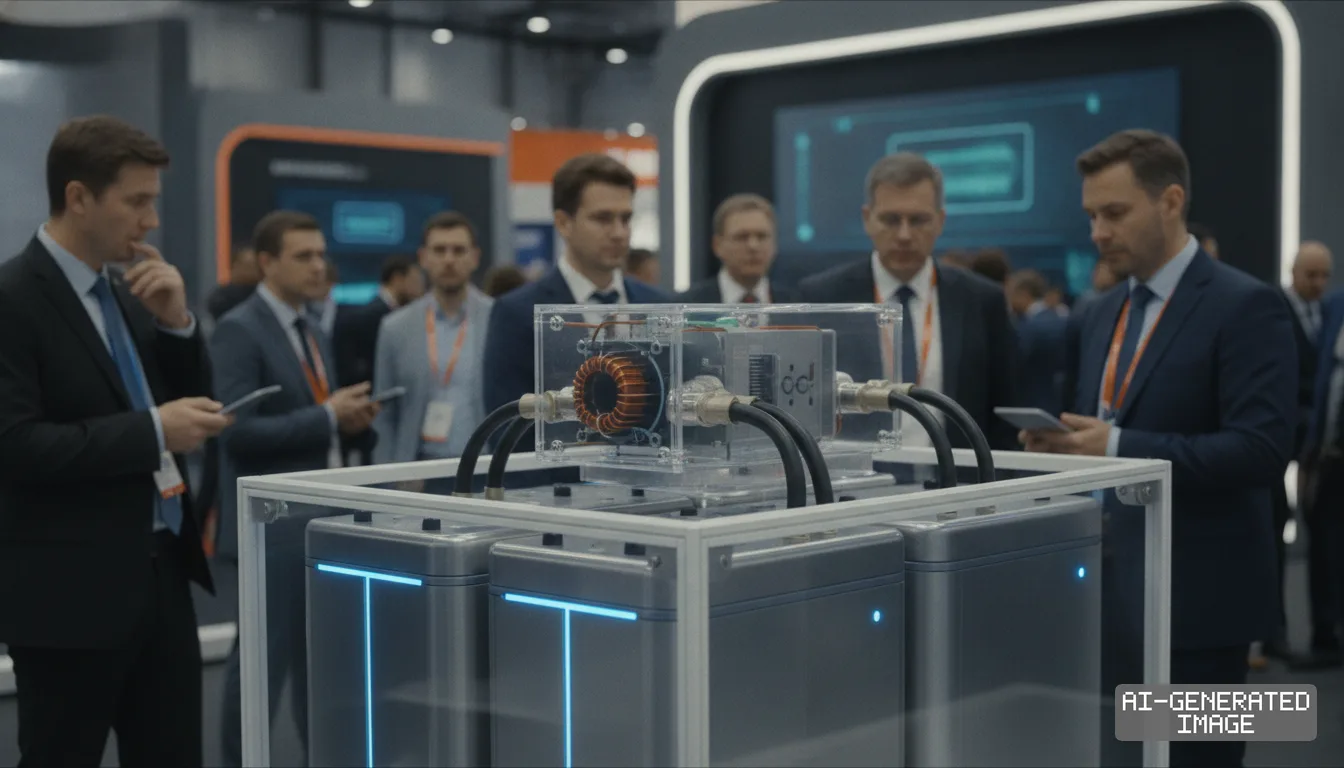
LG Energy Solution unveiled Nov. 18 an integrated energy storage concept pairing sodium-ion batteries with solid-state transformers to supply sudden electricity surges at artificial intelligence data centers.
The company showcased the system at the RE+ 2026 clean energy trade show in Las Vegas. It operated a 279-square-meter booth, expanding its exhibition footprint by 20% from the previous year.
The display marks the largest exhibition space among South Korean battery manufacturers at the venue. LG Energy Solution is using the event to showcase specialized hardware for data server substations.
Power demand from artificial intelligence computing clusters fluctuates rapidly within milliseconds. Conventional electrical transformers struggle to adjust to these sharp load swings without substantial conversion heat and voltage drop.
The prototype combines sodium-ion battery racks, designated SIB LINK, with solid-state transformers. Solid-state transformers use power semiconductors rather than conventional copper coils to convert voltage levels and route electrical currents.
This semiconductor architecture reduces power conversion losses while accelerating reaction times to momentary spikes in server demand. The setup stabilizes incoming utility lines during heavy compute training runs.
Sodium-ion chemistry provides physical safeguards against overheating during repeated charge cycles. The cells operate with high stability under sub-zero ambient temperatures and resist thermal runaway under electrical strain.
The design also diversifies critical mineral supply chains away from mined lithium, cobalt and nickel. Sodium reserves are geologically abundant and distributed across continental salt deposits and ocean brine.
LG Energy Solution previously outlined its sodium-ion commercialization roadmap in its corporate sustainability report published March 20. That document prioritized low-voltage vehicle batteries before utility storage.
Initial development focused on 12-volt and 24-volt auxiliary automotive batteries, according to the report. The manufacturer plans to transfer that chemistry into commercial grid systems and entry-level electric cars.
Alongside the experimental sodium platform, LG Energy Solution introduced utility-scale hardware manufactured in the United States. It presented the JF3 AC LINK battery energy storage system for regional utility operators.
The JF3 AC LINK uses lithium iron phosphate cells built on American production lines. The layout increases energy storage density per square meter of site footprint by approximately 26%.
The higher area density allows utility operators and server operators to install larger battery capacities on constrained real estate parcels. It also incorporates digital twin software to track equipment wear.
LG Energy Solution highlighted its qualification under Nvidia's DSX Ready BESS certification program. Nvidia verified the company's JF2 AC LINK hardware against electrical design standards required by high-density artificial intelligence computing infrastructure.
South Korean cell manufacturers face intense price competition in the global grid storage segment. Chinese competitors led by Contemporary Amperex Technology draw on deeply amortized domestic lithium iron phosphate supply chains.
LG Energy Solution is countering that pressure through its American systems integration arm, LG Energy Solution Vertech. Vertech delivers turnkey hardware assembly, operating software and field maintenance to North American utilities.
Vertech introduced the AEROS Intelligence software module at the Las Vegas show. The software uses predictive models to optimize daily battery dispatch schedules and identify thermal anomalies in operating cell strings.
The parent company reaffirmed its target to establish more than 50 gigawatt-hours of annual battery production capacity across North America by the end of 2026. That manufacturing network includes standalone facilities and joint ventures with automotive partners.
The transition toward specialized storage architectures reflects a broader strategic pivot. Global battery makers are shifting underutilized cell lines toward grid infrastructure as consumer electric vehicle adoption moderates.
Data center operators require uninterrupted utility feeds to avoid server downtime. Backup battery systems are increasingly replacing diesel generators to meet zero-carbon corporate standards and local air quality rules.
Pairing alternative chemistries with solid-state power electronics allows energy storage systems to serve both bulk energy shifting and instantaneous grid frequency regulation. Conventional transformer stations cannot deliver both functions in a single footprint.
The promotional materials released by the company do not provide a commercial delivery schedule for the sodium-ion and transformer platform. LG Energy Solution has not disclosed customer procurement agreements or quantified efficiency ratings for the prototype.
The RE+ 2026 exhibition concludes Nov. 19 in Las Vegas. LG Energy Solution plans to review its progress toward its 50 gigawatt-hour regional manufacturing capacity target at the close of the fourth quarter.
Impact map
How this development propagates across the region and out to global buyers.
| Event | Korea | China | Japan | Global impact |
|---|---|---|---|---|
| Sodium-ion and SST BESS unveiling | LG Energy Solution develops sodium-ion alternative to diversify beyond nickel-rich cells | Contemporary Amperex Technology faces direct competition in non-lithium utility energy storage | Japanese power semiconductor producers gain prospective demand for high-voltage switching chips | Data center operators gain direct-to-grid battery architectures mitigating lithium supply constraints |
In this story
- Companies
- LG Energy Solution
- Tickers
- 373220.KS
- Exposed
- NvidiaContemporary Amperex Technology
- Policy
- Standards
- Impact
- Supply ChainCapexCost Structure
Track every Standards development →
Related briefings
- Utilities test semi-solid grid batteries despite 15% capex premium Also on Contemporary Amperex Technology, Standards, LG Energy Solution
- CATL adds sodium-ion batteries to swap stations across 200 cities Also on Contemporary Amperex Technology, Standards, LG Energy Solution
- CATL and IM Motors deploy active battery fire safety systems Also on Contemporary Amperex Technology, Standards, LG Energy Solution
- Indonesia nickel probe ties carmakers to deforestation in Sulawesi Also on Contemporary Amperex Technology, Standards, LG Energy Solution
Sources
Reporting
Confidence: medium — how we grade this
The documents behind this briefing are linked above. East Asia Brief produces its English text with AI assistance under human editorial review, and does not translate or republish other outlets' articles. See our methodology and AI policy. Spotted an error? Tell us.
The Morning Brief
What changed in Korean, Chinese and Japanese industry overnight — and what it means for your supply chain. One email, weekday mornings, US time. Free.
The Morning Brief is in preparation. Leave your address and we will write to you once — when the first issue is ready. Nothing before that.