BYD wins China nod for 875 km Han sedan with 88.7 kWh LFP pack
The formal ministry specification confirms cell-to-pack density gains after domestic deliveries of the outgoing saloon plunged 68.9% in October.
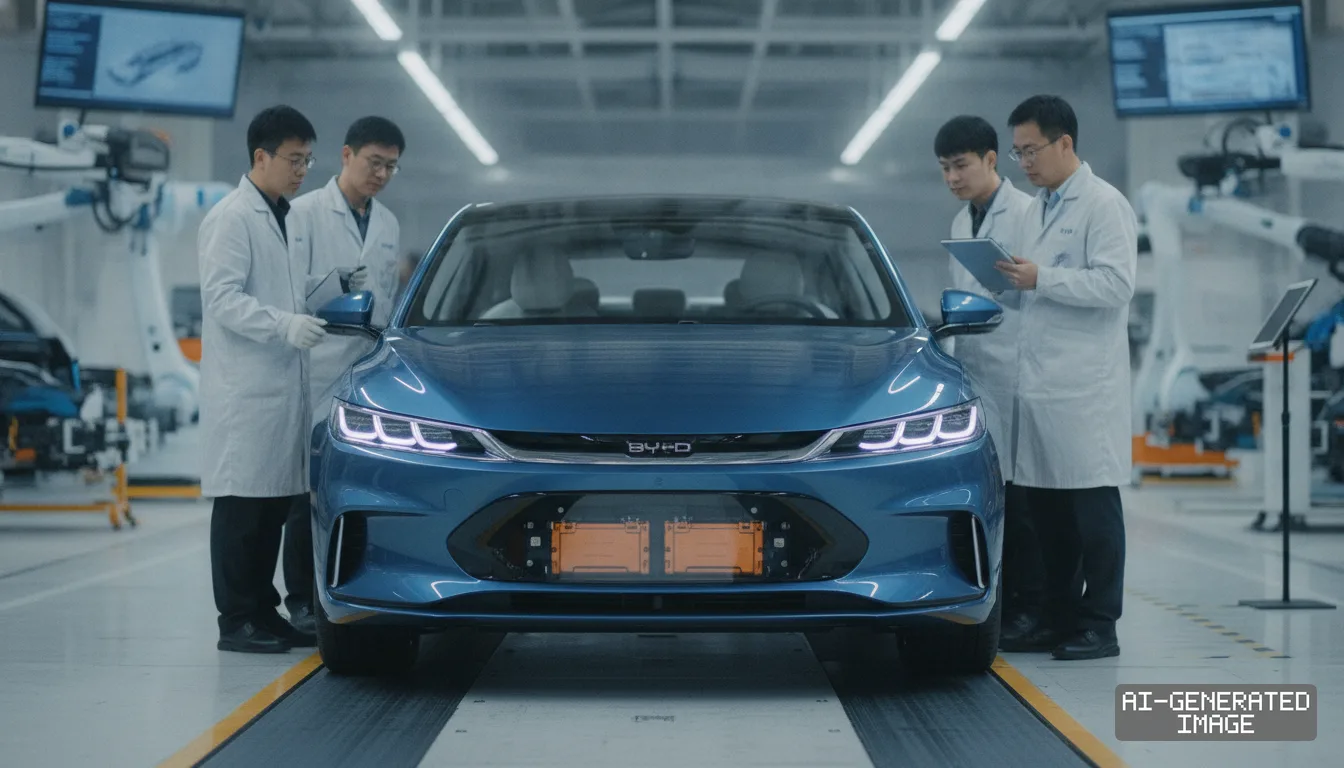
China's Ministry of Industry and Information Technology published regulatory specifications on Nov. 18, 2026, approving BYD's next-generation Han sedan with an 88.7 kilowatt-hour lithium iron phosphate battery delivering 875 kilometers of range.
The formal listing confirms that BYD has engineered its flagship passenger car to reach long-distance mileage once exclusive to nickel-based chemistries. Chinese testing cycles rate the top rear-wheel-drive configuration at 875 kilometers, or roughly 718 kilometers under European testing standards.
Domestic deliveries of the outgoing Han fell 68.9% year-on-year in October to 2,236 units. That volume drop pushed BYD to overhaul its executive saloon with larger dimensions and denser blade packs to defend its domestic market share.
The regulatory catalog lists two battery capacities assembled by BYD subsidiary FinDreams Battery. A base 76.7 kilowatt-hour pack powers an entry version, while the larger 88.7 kilowatt-hour unit supports both single-motor and dual-motor trims.
The high-output rear-wheel-drive model pairs the 88.7 kilowatt-hour pack with a 300-kilowatt electric motor. That configuration achieves the headline 875-kilometer rating while holding curb weight to 2,060 kilograms, according to ministry filings.
A high-performance all-wheel-drive variant adds a 200-kilowatt front motor to a 320-kilowatt rear unit, producing a combined 520 kilowatts. That powertrain yields 730 kilometers of range while pushing vehicle weight to 2,351 kilograms.
BYD also certified an entry trim using a 76.7 kilowatt-hour pack with a 245-kilowatt rear motor. The ministry registry rates that configuration at 775 kilometers of range and a top speed of 240 kilometers per hour.
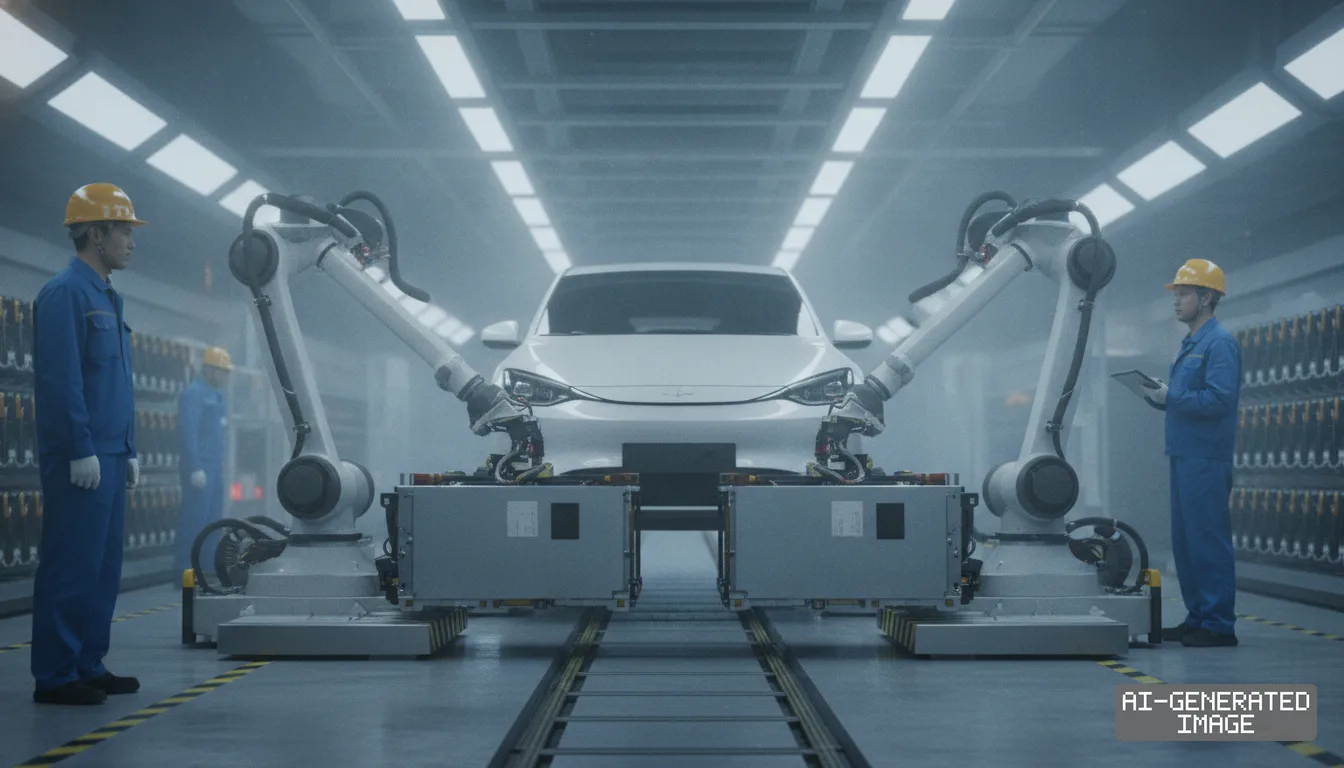
All variants use lithium iron phosphate blade cells packaged directly into the chassis. Cell-to-pack architecture eliminates separate modular casing, raising volumetric energy density to pack more energy into executive sedans without expanding outer battery enclosures.
The new Han measures 5,156 millimeters long, 1,969 millimeters wide and 1,507 millimeters tall, on a 3,030-millimeter wheelbase. Those proportions make the sedan 161 millimeters longer and 59 millimeters wider than the first-generation car introduced in 2020.
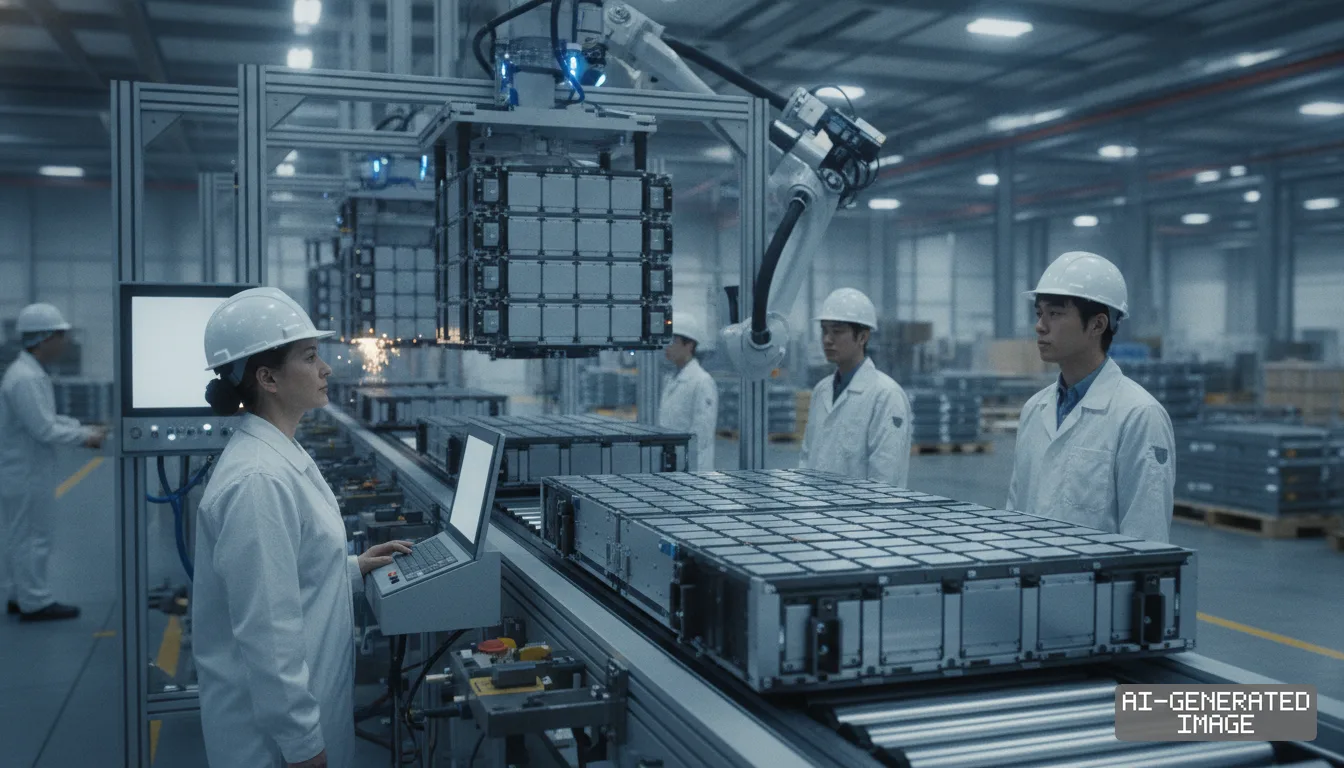
FinDreams Battery manufactures the structural cells at its Wuwei production facility and completes final pack assembly in Zhengzhou. The vertical integration lets BYD bypass external component markups that burden competing vehicle assemblers.
The development sharpens cost competition for South Korean cell manufacturers LG Energy Solution, Samsung SDI and SK On. Those three producers supply ternary nickel-manganese-cobalt cells that dominate executive electric vehicle platforms outside China.
Ternary cells typically trade between $80 and $95 per kilowatt-hour, while Chinese lithium iron phosphate cells trade between $50 and $65 per kilowatt-hour. BYD matching 700-kilometer real-world ranges on iron chemistry removes the driving deficit that previously supported ternary price premiums.
Automakers building executive electric sedans have historically avoided lithium iron phosphate because lower gravimetric energy density added excessive pack weight. By packing 88.7 kilowatt-hours into a five-meter sedan body, BYD demonstrates that volumetric efficiency offsets lower material density.
The certified battery hardware mirrors packs filed earlier this quarter for BYD's Ocean series Seal 07 saloon. Deploying identical 76.7 and 88.7 kilowatt-hour packs across both Dynasty and Ocean brand channels lowers unit tooling expenses and accelerates procurement scale.
The regulatory submission also registers a plug-in hybrid model designated the Han DM-i. That vehicle pairs a 1.5-liter turbocharged gasoline engine with an electric motor and a 45.4 kilowatt-hour iron-phosphate pack, yielding 400 kilometers of battery-only driving.
Foreign automakers selling luxury sedans in China face immediate price compression. German and Japanese brands targeting China's executive market must now compete against an 875-kilometer range profile without access to comparable captive battery supply chains.
The shift also influences export strategies as trade barriers rise across North America and Europe. High tariffs on Chinese vehicles incentivize Chinese carmakers to maximize base margins, and iron-phosphate architectures provide wider cost buffers than nickel-rich alternatives.
Rising iron-phosphate adoption among Chinese executive flagships may prompt global original equipment manufacturers to reconsider cell chemistries for premium segments. Standardizing on iron chemistry allows carmakers to cut bill-of-materials expenses across mid-size and large passenger sedans.
The ministry filing does not state whether the production sedan will include the nine-minute flash-charging capability or the DiSus-A active suspension system reported by domestic industry media.
BYD plans to unveil the production Han on Nov. 27, 2026, at the Guangzhou Auto Show. Commercial deliveries across Chinese dealerships will follow the public exhibition.
Impact map
How this development propagates across the region and out to global buyers.
| Event | Korea | China | Japan | Global impact |
|---|---|---|---|---|
| BYD Han 88.7 kWh LFP certification | LG Energy Solution, Samsung SDI and SK On face pricing pressure on ternary cells as LFP reaches 875 km range | FinDreams Battery scales second-generation blade packs across Dynasty and Ocean saloon lines | Toyota and Honda experience widening cost disparities against vertically integrated Chinese sedans | Executive sedan platforms face bill-of-materials reductions as LFP displaces nickel packs in 700 km range tiers |
In this story
- Companies
- BYDFinDreams Battery
- Tickers
- 002594.SZ1211.HK
- Exposed
- LG Energy SolutionSamsung SDISK On
- Impact
- PricingSupply ChainCost Structure
Related briefings
- BYD targets 2027 solid-state battery debut in luxury fleet Also on FinDreams Battery, BYD, Samsung SDI
- BYD readies 300 kW Flash Charging for entry Seagull city car Also on FinDreams Battery, BYD, Pricing
- BYD schedules Fangchengbao Tai 9 hybrid SUV debut for Nov. 19 Also on FinDreams Battery, BYD, Pricing
- BYD Denza N8 debuts Nov. 12 with 1,003-kilometer battery range Also on FinDreams Battery, BYD, Pricing
Sources
Reporting
Confidence: medium — how we grade this
The documents behind this briefing are linked above. East Asia Brief produces its English text with AI assistance under human editorial review, and does not translate or republish other outlets' articles. See our methodology and AI policy. Spotted an error? Tell us.
The Morning Brief
What changed in Korean, Chinese and Japanese industry overnight — and what it means for your supply chain. One email, weekday mornings, US time. Free.
The Morning Brief is in preparation. Leave your address and we will write to you once — when the first issue is ready. Nothing before that.