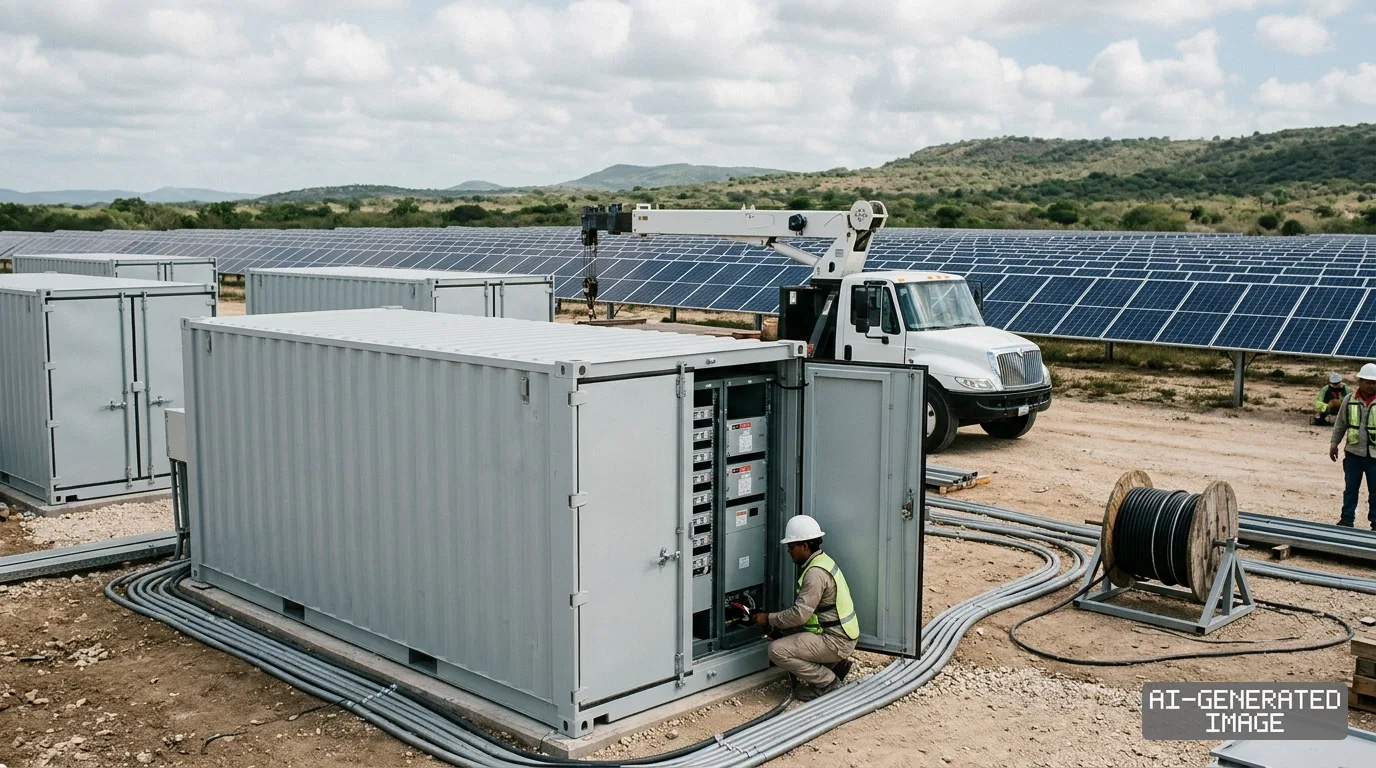
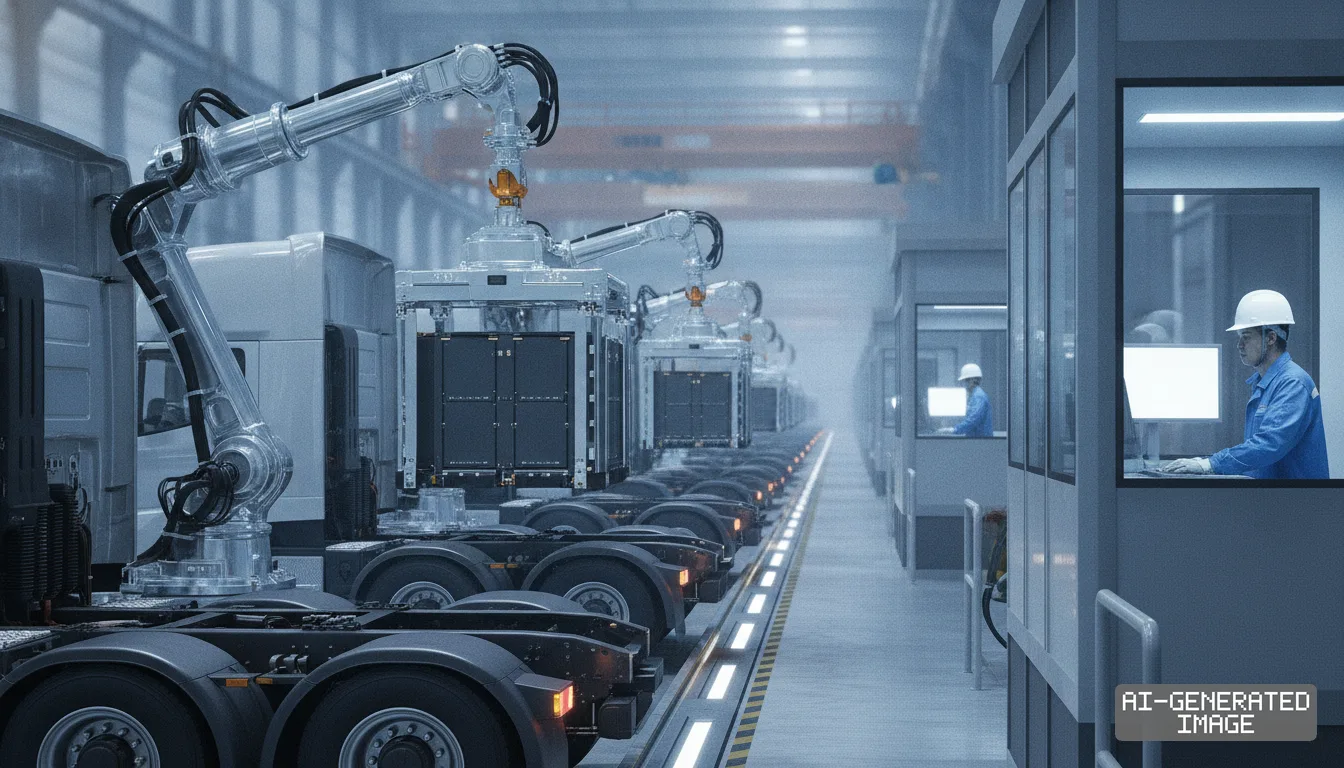
CATL and IM Motors deploy active battery fire safety systems
The architecture integrates millisecond pyrofuse disconnects with 200 aerogel heat shields to meet China's mandatory zero-explosion traction battery standard GB 38031-2025.
CATL and IM Motors detailed on Nov. 4, 2026 their joint battery safety architecture, integrating cell-level firewalls and millisecond circuit disconnects to prevent thermal runaway across future electric vehicles.
The system deploys active pyrofuses inside battery packs for the IM LS8 NEO sport utility vehicle. Pre-sales opened Oct. 29 starting at 249,800 yuan ($35,100), with CATL cells standard on all trims.
SAIC Motor, which controls IM Motors alongside Alibaba Group, allocates more than 20 billion yuan ($2.8 billion) annually to research and development. That sum accounts for roughly 3% of the automaker's total revenue.
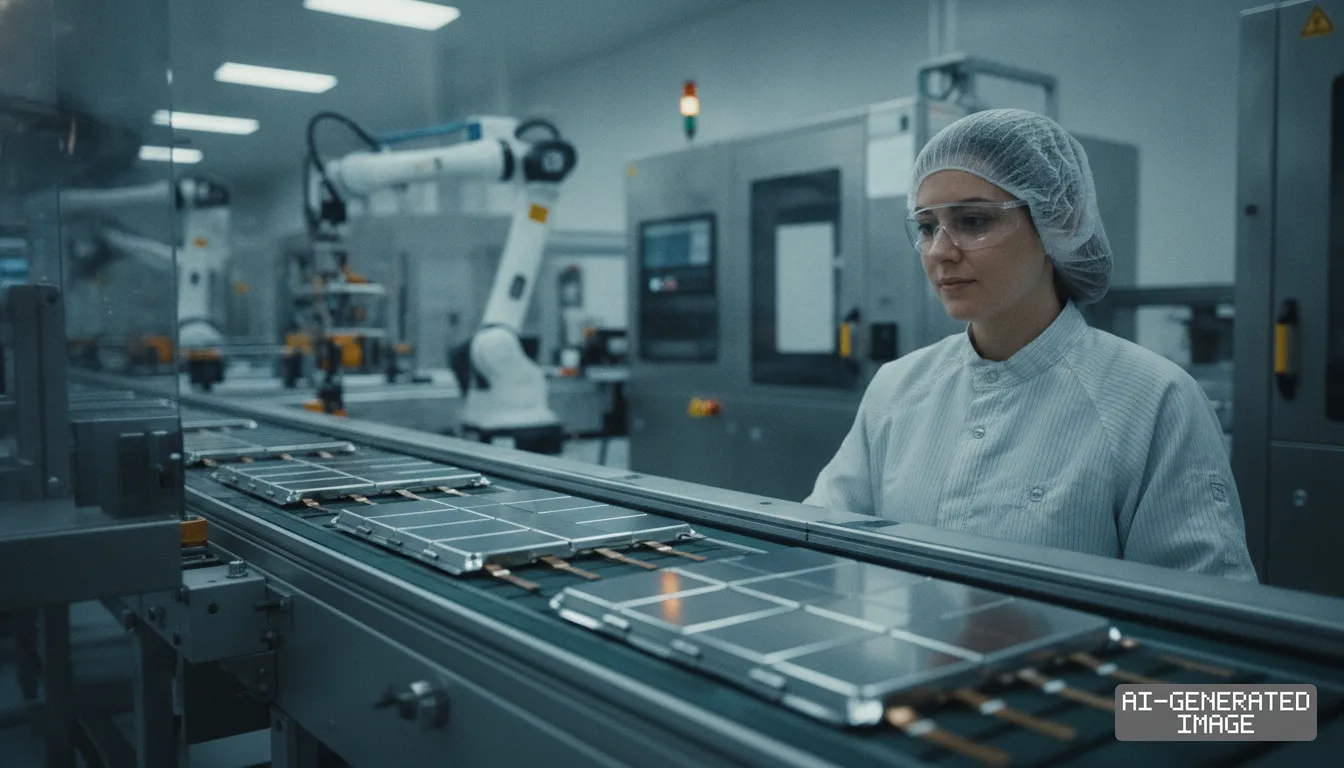
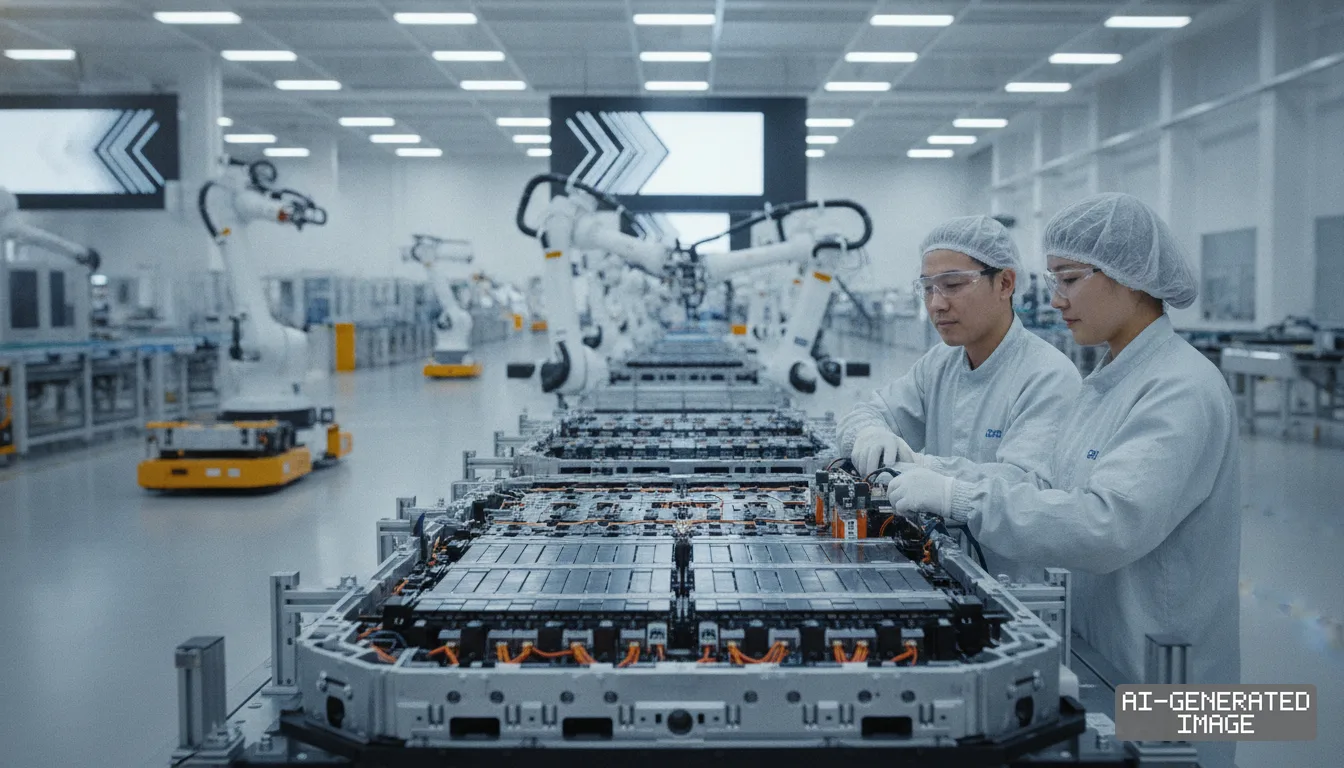
CATL manufactures the traction cells at its Ningde Lighthouse facility in Fujian province. Each cell undergoes 200 distinct manufacturing stages and 700 quality control inspection nodes before pack assembly.
Automated optical scanners guided by artificial intelligence evaluate weld seams and electrode alignment. The system cuts secondary inspection demand by roughly 70%, targeting a line defect rate of one part per billion.
Pack safety centers on an active pyrofuse mechanism wired directly to the battery management system. The component uses an explosive charge to break high-voltage circuits in milliseconds when sensors register abnormal current or cell venting.
Physical containment relies on more than 200 aerogel thermal insulation sheets placed between adjacent cells. The ceramic barrier withstands temperatures exceeding 1,000 degrees Celsius for more than 10 minutes without structural collapse.
The battery system operates on a quasi-900-volt electrical platform co-engineered by the two companies. High-voltage operation lowers internal resistance losses while reducing wiring harness mass across the vehicle chassis.
Pack enclosures incorporate bottom directional pressure relief valves below each cell cluster. If an internal short circuit triggers gas release, exhaust ducts channel hot vapors outward beneath the car floor away from passenger seats.
CATL has iterated three generations of no-propagation pack architecture since 2018 under its NP technology initiative. The latest design balances thermal isolation with liquid cooling plates that absorb residual heat from neighboring cells.
Design redundancy must work in tandem with manufacturing discipline to eliminate propagation risks, Tang Guocheng, domestic passenger vehicle product manager at CATL, said during a technical briefing.
The engineering adjustments align with China's mandatory traction battery safety standard GB 38031-2025. The Ministry of Industry and Information Technology put the rule into force on July 1, 2026.
The updated national code requires battery packs to demonstrate zero fire and zero explosion for at least 120 minutes following cell-level thermal runaway. External casing temperatures must remain below 60 degrees Celsius.
The previous 2020 national standard permitted pack combustion if the vehicle issued an occupant warning five minutes beforehand. The 2026 revision removes that allowance, requiring complete physical containment within the enclosure.
Hydrogen sensors installed inside the sealed battery casing detect early electrolyte outgassing within seconds. Early detection allows the control module to trigger cabin alerts before runaway spreads to adjacent prismatic cans.
CATL supplies roughly 37% of the global traction battery volume and runs six manufacturing plants recognized by the World Economic Forum for automation. The supplier operates joint pack facilities directly with SAIC Motor.
The two companies operate United Auto Battery System in Jiangsu province to assemble module packs for SAIC brands. IM Motors draws all of its current high-nickel and ternary cell inventory through that supply channel.
IM Motors first outlined the multi-tier defense architecture under its 5-0 safety program in Dec. 2024. That system integrated structural side sills capable of absorbing high-speed lateral collisions with multi-layer thermal barriers.
IM Motors opened pre-orders for the flagship LS8 SUV on Oct. 29, recording more than 10,000 orders within 45 minutes. The model pairs CATL packs with four-wheel steer-by-wire chassis hardware.
Chinese electric vehicle manufacturers face growing scrutiny over thermal failure as ultra-fast direct-current charging expands nationwide. High charging rates increase thermal stress on cell separators and anode coatings.
South Korean battery makers LG Energy Solution and Samsung SDI also face tightening thermal containment demands from European automotive clients. The Chinese regulatory shift sets an engineering reference point for global procurement tenders.
Adding aerogel sheets, mica shields and pyrofuses adds between $180 and $250 to total pack bill-of-materials costs. Automakers absorb the expense to comply with domestic type approval requirements.
The GB 38031-2025 standard also introduced mandatory bottom impact testing and post-fast-charge thermal shock evaluations. Packs must endure underside scrapings without cell rupture or internal short circuits.
The companies did not publish a separate joint venture contract filing on Nov. 4, and regulatory registries show no newly formed corporate entity for the thermal safety platform.
Existing vehicle models that received commercial type approval before July 1, 2026 must demonstrate full compliance with the zero-explosion rule by Aug. 1, 2027 to retain their sales permits.
Impact map
How this development propagates across the region and out to global buyers.
| Event | Korea | China | Japan | Global impact |
|---|---|---|---|---|
| GB 38031-2025 compliance | LG Energy Solution and Samsung SDI re-engineer export packs to match 120-minute thermal containment rules | CATL and IM Motors absorb $180-$250 in bill-of-materials overhead across quasi-900V architectures | component suppliers see rising demand for heat-resistant aerogel and sensor hardware | EV makers transition engineering benchmarks toward zero thermal propagation |
| GB 38031-2025 compliance | LG Energy Solution and Samsung SDI re-engineer export packs to match 120-minute thermal containment rules | CATL and IM Motors absorb | — | — |
| GB 38031-2025 compliance | LG Energy Solution and Samsung SDI re-engineer export packs to match 120-minute thermal containment rules | CATL and IM Motors absorb $180-$250 in bill-of-materials overhead across quasi-900V architectures | component suppliers see rising demand for heat-resistant aerogel and sensor hardware | EV makers transition engineering benchmarks toward zero thermal propagation |
In this story
- Companies
- Contemporary Amperex TechnologyIM MotorsSAIC Motor
- Tickers
- 300750.SZ600104.SS
- Exposed
- Alibaba GroupLG Energy SolutionSamsung SDI
- Policy
- Standards
- Impact
- ComplianceCost StructureSupply Chain
Track every Standards development →
Related briefings
- China reviews export control filings on 40 critical tech categories Also on Alibaba Group, Compliance
- China exempts overseas AI model APIs from draft export rules Also on Alibaba Group, Compliance
- China MOFCOM restricts AI model and chip IP export transfers Also on Alibaba Group, Compliance
- Xi Jinping plans business delegation for Donald Trump summit Also on Alibaba Group, Compliance
Sources
Reporting
Confidence: medium — how we grade this
The documents behind this briefing are linked above. East Asia Brief produces its English text with AI assistance under human editorial review, and does not translate or republish other outlets' articles. See our methodology and AI policy. Spotted an error? Tell us.
The Morning Brief
What changed in Korean, Chinese and Japanese industry overnight — and what it means for your supply chain. One email, weekday mornings, US time. Free.
The Morning Brief is in preparation. Leave your address and we will write to you once — when the first issue is ready. Nothing before that.