LG Energy Solution locks in $4.3 billion Tesla Megapack battery supply
The 5.94 trillion won agreement establishes a three-year delivery run from August 2027 to July 2030, with filings showing no new automotive cell contracts.
LG Energy Solution maintained its 5.94 trillion won ($4.31 billion) supply relationship with Tesla strictly in stationary energy storage, with regulatory records showing no new electric-vehicle cell contract filed on Nov. 5, 2026.
The disclosure history traces to a formal regulatory filing submitted to South Korea's Financial Supervisory Service on July 30, 2025. In that filing, the battery manufacturer recorded a firm supply agreement valued at 5,944,227,336,000 won ($4.309 billion).
That contract establishes a fixed three-year baseline delivery schedule running from Aug. 1, 2027 through July 31, 2030. The formal terms also include mutual options to extend commercial shipments for up to seven additional years, the filing said.
LG Energy Solution initially masked the buyer's identity under a commercial confidentiality clause valid until July 31, 2030. Industry participants and equipment vendors across South Korea had widely linked the procurement volume to Tesla's expanding energy division.
Official confirmation of the counterparty arrived on March 16, 2026, through the U.S. Department of the Interior. The federal agency published a detailed fact sheet during the Indo-Pacific Energy Security Summit that identified Tesla as the purchasing customer.
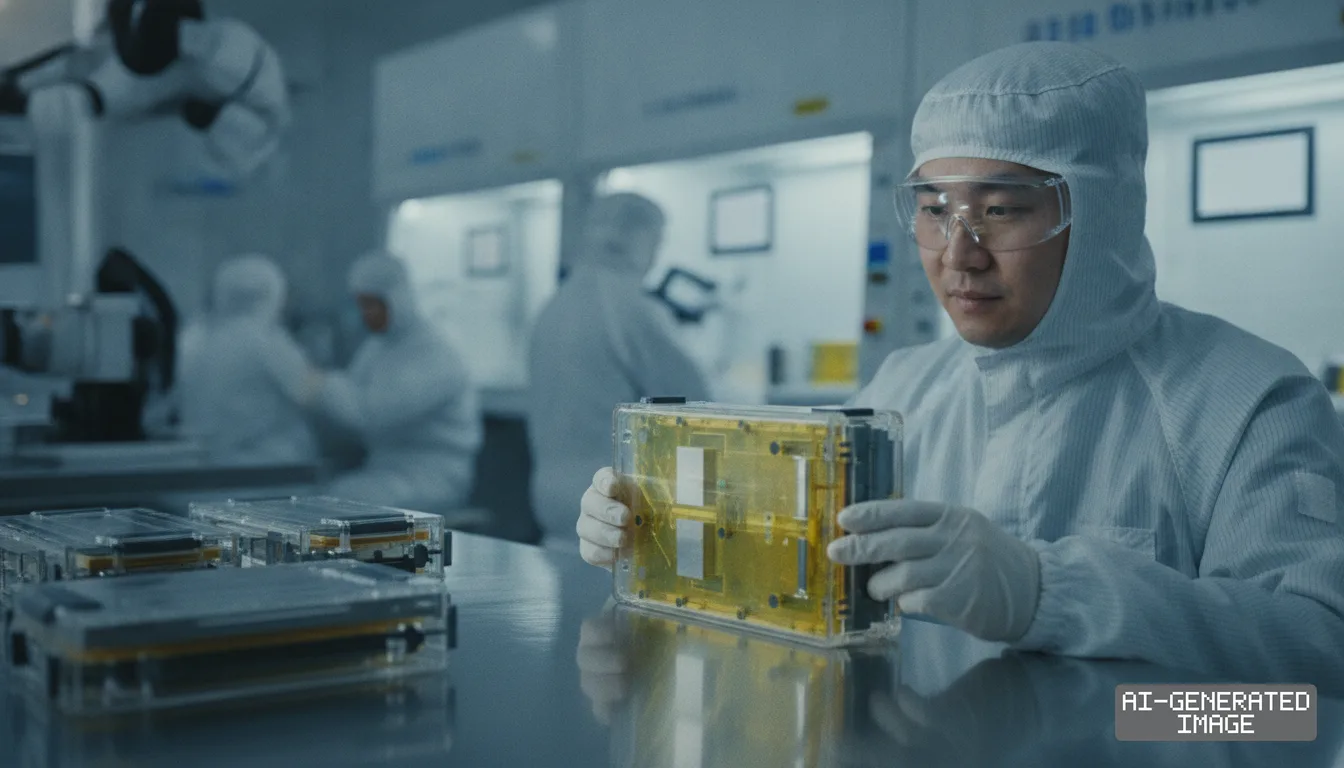
That government release confirmed the cells are lithium iron phosphate—known as LFP—prismatic units built exclusively for utility grid storage. The batteries will feed Tesla's Megapack 3 storage architecture rather than passenger electric cars, the notice said.
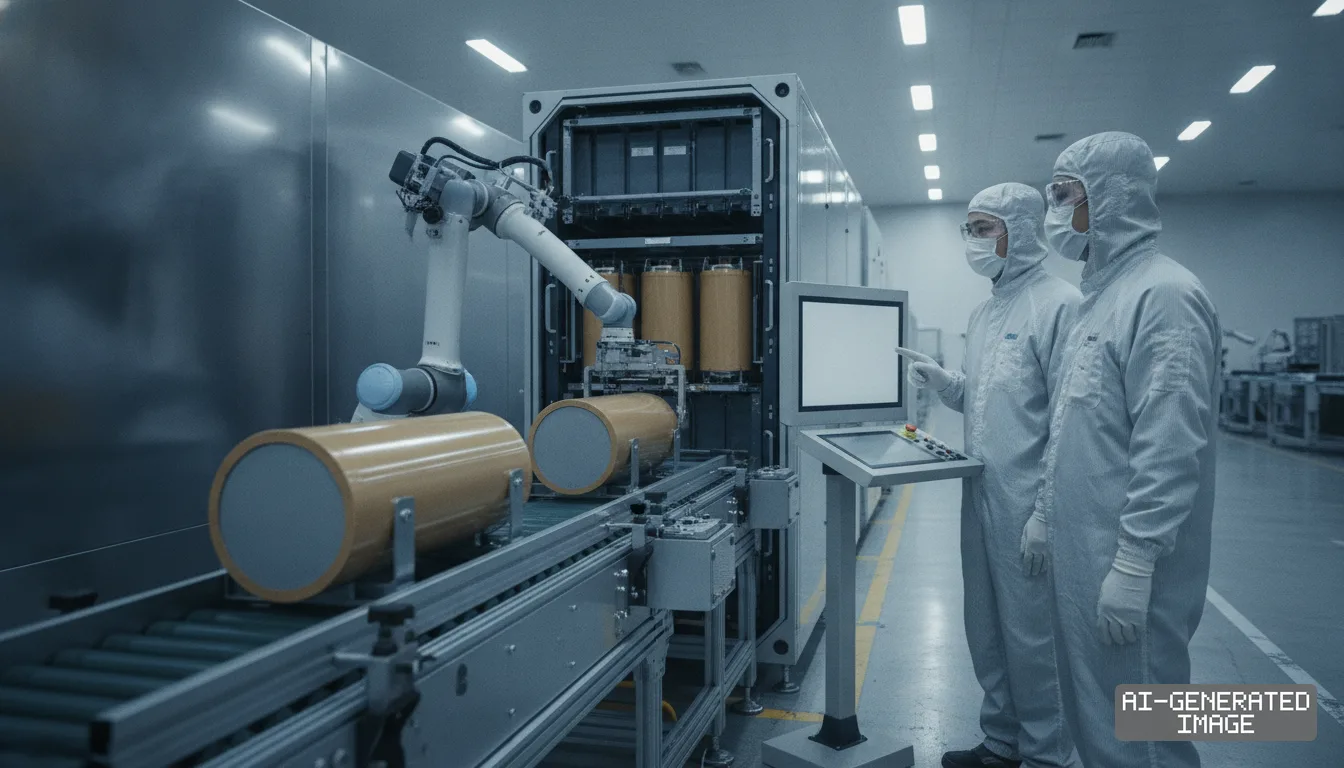
Cell production is assigned to LG Energy Solution's manufacturing site in Lansing, Michigan. The South Korean manufacturer has allocated dedicated production lines inside the facility to fulfill the multiyear storage commitment without disrupting passenger vehicle accounts.
The Lansing plant was originally organized as Ultium Cells 3, an automotive battery joint venture between LG Energy Solution and General Motors. General Motors held an equal stake before scaling back its regional electric vehicle assembly goals.
LG Energy Solution acquired full ownership of the Lansing facility in May 2025, taking over the complete industrial asset. The transaction allowed the battery company to pivot unfinished manufacturing space toward stationary energy systems without joint-venture operational constraints.
The battery maker engineered the Lansing facility for an annual manufacturing capacity of 50 gigawatt-hours. Reallocating the facility's floor plan toward stationary storage units insulated the balance sheet from slower electric car sales across North American showrooms.
Tesla integrates its utility storage units at a dedicated Megafactory complex in Houston, Texas. The company requires reliable cell deliveries to satisfy long-term utility contracts with municipal grid operators, commercial industrial facilities and artificial intelligence data centers.
Securing domestic cells enables Tesla to reduce tariff exposure on imported Chinese lithium iron phosphate battery packs. Tesla incurred roughly $200 million in tariff expenses on imported utility cells during the third quarter of 2025 alone, the company said.
Domestic production in Michigan also assists utility developers in qualifying for bonus tax credits under federal clean-energy laws. Those regulatory frameworks require stationary power projects to source structural components and battery hardware from certified North American manufacturing plants.
LG Energy Solution has adjusted capital deployment across North America as passenger electric vehicle adoption remains uneven. Shifting cell assembly lines toward stationary storage provides consistent factory utilization while protecting operating margins from discounting in consumer automotive markets.
The South Korean battery maker currently operates five distinct energy storage production facilities across the United States. That expanded footprint makes LG Energy Solution the primary domestic supplier scaling high-capacity prismatic LFP cells on American soil.
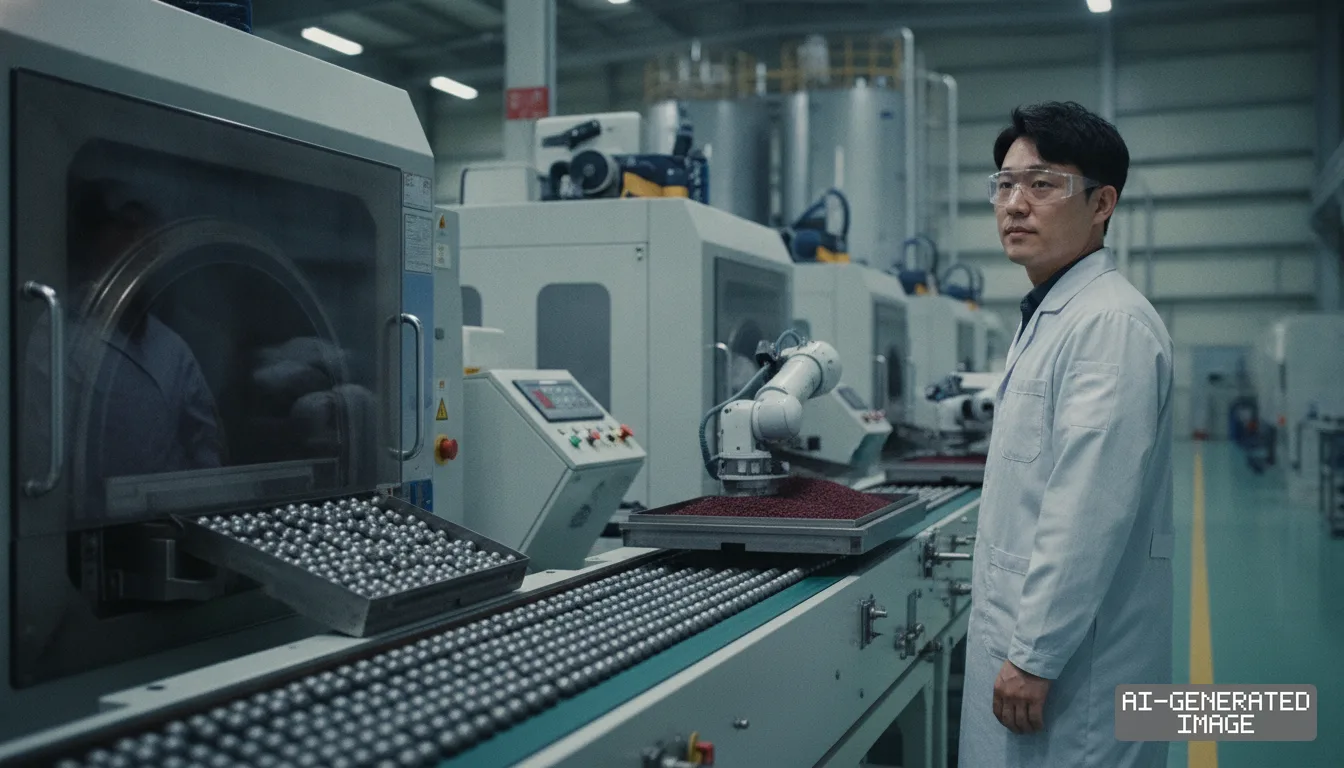
Equipment suppliers have started shipping automated processing tools to Lansing to configure the dedicated storage line. LG Energy Solution agreed to pay 10 billion won ($7.3 million) to equipment vendors to cover design revisions across the manufacturing line.
The equipment vendor cohort includes South Korean automated machinery builders TSI, SFA Nexel, Shinjin M-Tech, Eugene Technology and Apro. Chinese equipment vendors including Hangke Technology have also provided formation and testing hardware for the Michigan battery facility.
Regulatory filings on the Korea Exchange show no record of a separate electric-vehicle battery supply agreement signed with Tesla on Nov. 5, 2026. Neither company has published procurement documentation or regulatory notices concerning fresh passenger automotive cell orders.
Tool qualification and automated cell testing at Lansing will proceed ahead of commercial production scheduled for Aug. 1, 2027. That milestone initiates the contract's baseline three-year delivery window, which runs through July 31, 2030, before potential option periods.
Impact map
How this development propagates across the region and out to global buyers.
| Event | Korea | China | Japan | Global impact |
|---|---|---|---|---|
| Tesla ESS cell procurement | LG Energy Solution secures 5.94 trillion won ($4.31 billion) backlog through 2030 | CATL faces tariff disadvantages on U.S. utility battery deliveries | Panasonic remains concentrated on cylindrical EV cells rather than grid storage | Megapack 3 gains domestic supply resilience against clean power tariffs |
In this story
- Companies
- LG Energy SolutionTesla
- Tickers
- 373220.KSTSLA
- Exposed
- General Motors
- Policy
- SubsidiesLocal Content Rules
- Impact
- Supply ChainOrder BookCapex
Track every Subsidies development → Track every Local Content Rules development →
Related briefings
- LG Energy Solution Binds $4.3B Tesla Pact to Grid Storage Also on General Motors, Tesla, LG Energy Solution
- LG Energy Solution clarifies $4.3B Tesla energy storage deal Also on General Motors, Tesla, LG Energy Solution
- LG Energy Solution details $4.3B Tesla battery supply for US energy storage Also on General Motors, Tesla, LG Energy Solution
- CATL widens global EV battery lead to 39.4% as Korean share slips Also on General Motors, Tesla, LG Energy Solution
Sources
Primary documents
Reporting
Confidence: high — how we grade this
The documents behind this briefing are linked above. East Asia Brief produces its English text with AI assistance under human editorial review, and does not translate or republish other outlets' articles. See our methodology and AI policy. Spotted an error? Tell us.
The Morning Brief
What changed in Korean, Chinese and Japanese industry overnight — and what it means for your supply chain. One email, weekday mornings, US time. Free.
The Morning Brief is in preparation. Leave your address and we will write to you once — when the first issue is ready. Nothing before that.