Samsung SDI signs 1 GWh US battery storage supply contract
The Korean manufacturer will deliver Indiana-built prismatic containers to Alpha Omega Power by year-end, expanding cumulative orders with the developer to 1.5 gigawatt-hours.
Samsung SDI signed a supply agreement on Oct. 26, 2026, to deliver 1 gigawatt-hour of prismatic energy storage systems to American utility developer Alpha Omega Power.
The contract increases cumulative supply commitments to Alpha Omega Power to 1.5 gigawatt-hours. The developer previously secured 0.5 gigawatt-hours under an initial contract signed in late 2025.
Samsung SDI America, the Michigan-based sales subsidiary of the South Korean battery manufacturer, will complete all hardware deliveries by the end of 2026.
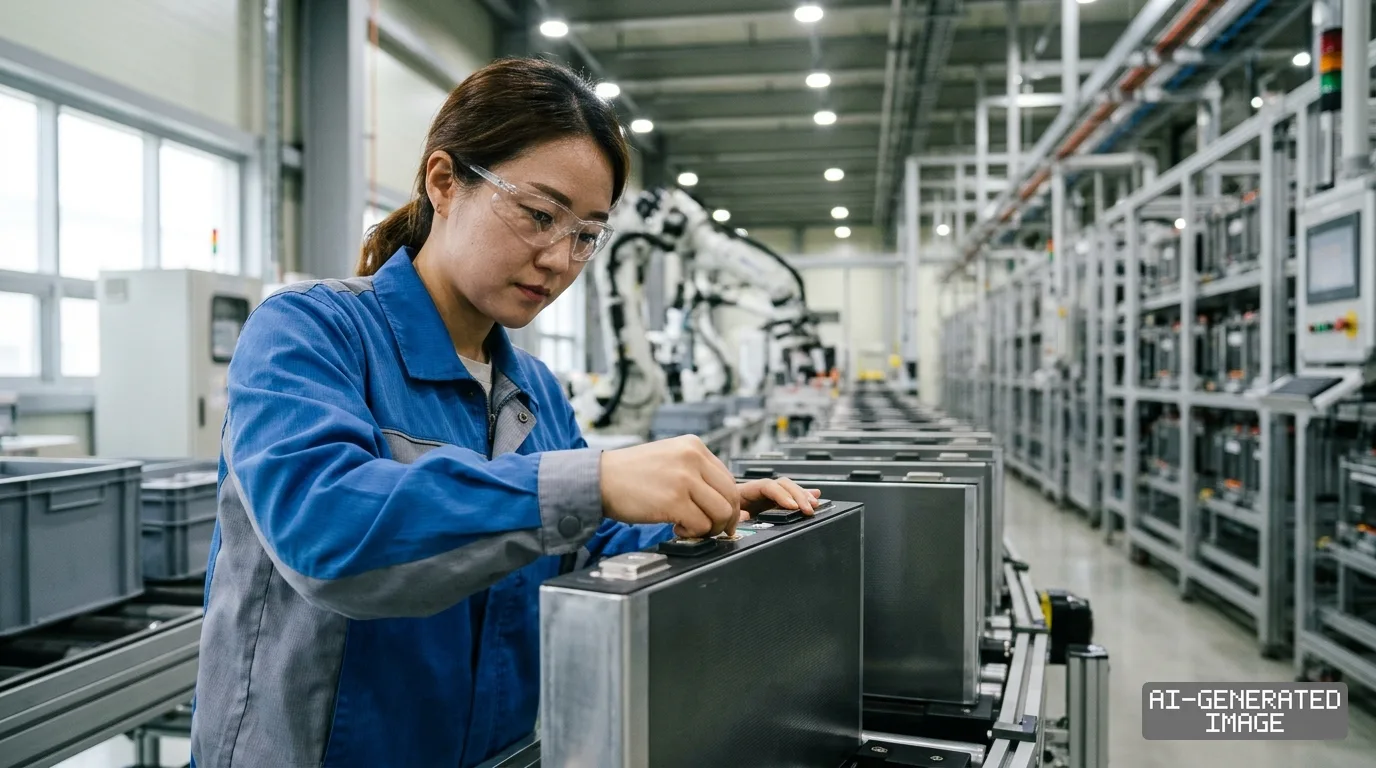
Battery cells and containerized modules will come from the StarPlus Energy manufacturing complex in Kokomo, Indiana. Samsung SDI operates the Indiana facility as a joint venture with automaker Stellantis.
Samsung SDI has repurposed three of the four production lines at the initial Kokomo plant for stationary storage batteries. The shift reallocates manufacturing capacity away from electric vehicle cells.
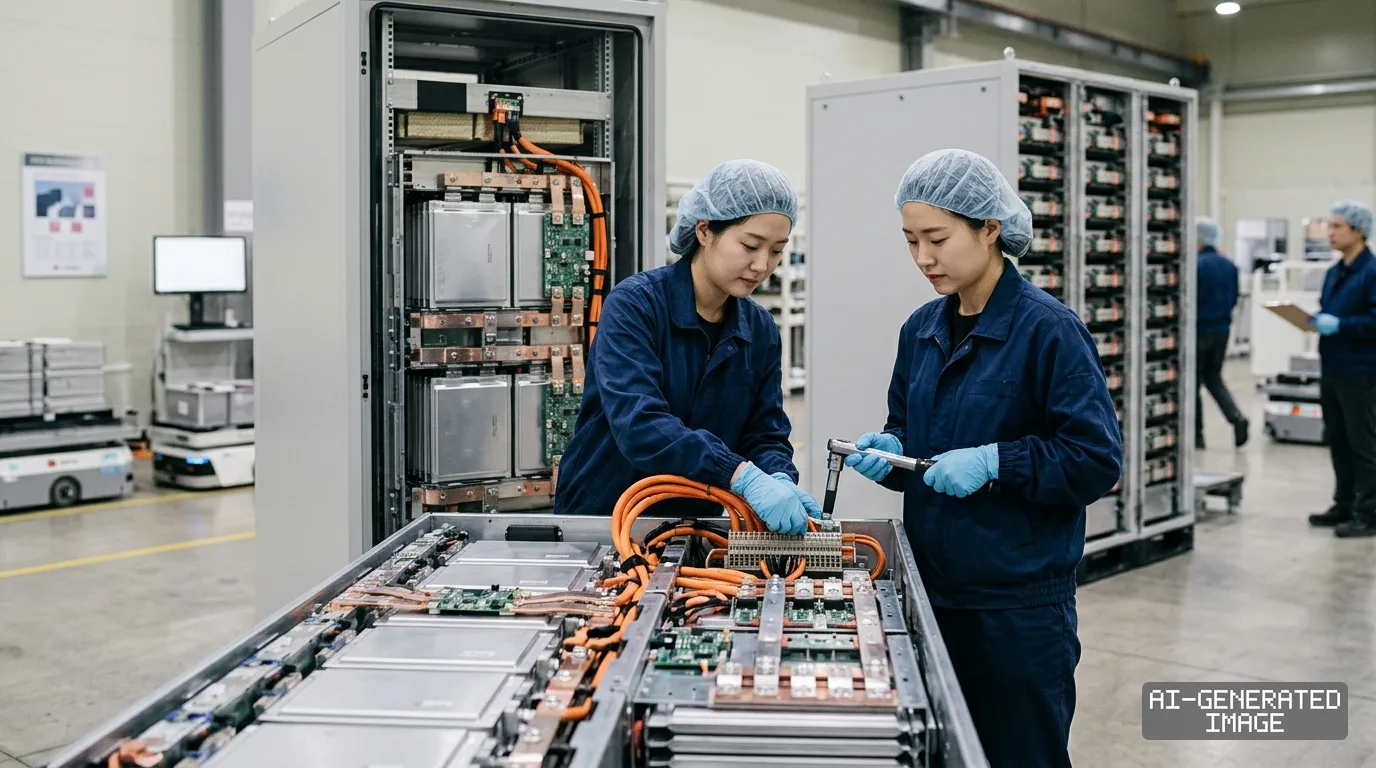
The agreement covers the Samsung Battery Box 1.7, an integrated utility-scale storage system. The enclosure packs cells, thermal controls and electrical safety hardware into a standard 20-foot shipping container footprint.
Each containerized unit delivers 6.14 megawatt-hours of total energy capacity. That rating increases energy density by 17% compared with the earlier SBB 1.5 configuration, the company said.
The system uses high-nickel nickel-cobalt-aluminum chemistry housed in rigid prismatic aluminum cans. Prismatic casings protect individual cells from physical stress and thermal deformation better than flexible pouch formats.
Fire protection relies on Samsung SDI's proprietary Enhanced Direct Injection technology. The mechanism injects extinguishing agents directly into individual battery modules if internal temperatures breach safety thresholds.
The enclosure complies with the National Fire Protection Association standard 855 for stationary installations. It has also received Underwriters Laboratories 9540 system safety certification, the company said.
Onboard control software uses predictive algorithms to track battery performance and cell degradation. The system flags electrical anomalies before cell instability can trigger thermal propagation across adjacent modules.
Alpha Omega Power will deploy the containers in utility-scale grid balancing facilities across the western United States and Texas. Both regions face growing load pressure from industrial demand.
The planned battery installations will interconnect directly with transmission networks run by the Electric Reliability Council of Texas and the Western Electricity Coordinating Council.
Facility construction for the grid balancing projects will break ground next year in 2027. Alpha Omega Power operates as an independent power producer developing dedicated energy storage assets.
American-made storage systems from Samsung SDI will support domestic energy infrastructure growth, Alpha Omega Power Chief Executive Officer Paul Choi said. The agreement strengthens local project supply chains, Choi said.
Grid operators are accelerating battery procurement to handle peak electricity demand driven by data centers. Battery storage provides fast-response balancing power to stabilize transmission frequency during intermittent renewable generation.
Federal tax credit rules require utility developers to meet increasing domestic sourcing benchmarks. Energy storage facilities breaking ground in 2027 must hit a 60% domestic content threshold to claim full investment tax credits.
Sourcing cells assembled at the Indiana facility allows developers to satisfy federal content rules. The procurement guidelines restrict equipment produced by designated foreign entities, particularly Chinese battery manufacturers.
Battery cells represent up to 52% of total capital expenditure in utility storage projects, according to energy supply chain analytics firm Anza Renewables. That proportion prevents developers from meeting domestic content standards when using imported Chinese cells.
Samsung SDI is currently the sole non-Chinese manufacturer producing prismatic battery cells for stationary storage inside the United States. That geographic presence gives the Korean firm an advantage in federal subsidy compliance.
The company is negotiating additional multi-gigawatt-hour supply contracts with several North American energy developers, Samsung SDI America Vice President Fabrice Hudry said.
The Kokomo joint venture plant launched series production of ternary storage cells during the fourth quarter of 2025. The company also aims to begin commercial manufacturing of lithium iron phosphate storage cells this month.
The transaction follows two earlier grid storage agreements Samsung SDI secured in the United States over the past 10 months. Those two prior orders carried values of about 2 trillion won ($1.45 billion) and 1.5 trillion won ($1.09 billion).
The company did not disclose the financial value of the latest contract with Alpha Omega Power. Samsung SDI has filed no regulatory disclosure on the Korea Exchange regarding the transaction.
Hardware deliveries from the Kokomo plant will run through late December 2026. The delivery schedule ensures battery enclosures arrive on site ahead of the developer's 2027 project construction dates.
Impact map
How this development propagates across the region and out to global buyers.
| Event | Korea | China | Japan | Global impact |
|---|---|---|---|---|
| 1 GWh utility ESS agreement | Samsung SDI deepens US grid footprint, converting 3 EV lines in Kokomo to stationary storage | Chinese battery makers face exclusion as 2027 US ITC local content threshold rises to 60% | Japanese cell makers remain absent from US utility prismatic storage market | Grid storage procurement accelerates to meet utility balancing demand driven by data centers |
In this story
- Companies
- Samsung SDIAlpha Omega Power
- Tickers
- 006400.KS
- Exposed
- Stellantis
- Policy
- Tax CreditsLocal Content Rules
- Impact
- Supply ChainOrder BookCompliance
Track every Tax Credits development → Track every Local Content Rules development →
Related briefings
- MOT secures $7.6M Samsung SDI order for US LFP battery plant Also on Local Content Rules, Stellantis, Samsung SDI
- POSCO Future M and L&F target 330,000 tons of domestic LFP Also on Local Content Rules, Tax Credits, Samsung SDI
- US warns it will bar Chinese electric vehicles via Canada Also on Local Content Rules, Stellantis, Compliance
- Stellantis pushes Leapmotor European parts past 40% in Spain Also on Local Content Rules, Stellantis, Compliance
Sources
Reporting
Confidence: medium — how we grade this
The documents behind this briefing are linked above. East Asia Brief produces its English text with AI assistance under human editorial review, and does not translate or republish other outlets' articles. See our methodology and AI policy. Spotted an error? Tell us.
The Morning Brief
What changed in Korean, Chinese and Japanese industry overnight — and what it means for your supply chain. One email, weekday mornings, US time. Free.
The Morning Brief is in preparation. Leave your address and we will write to you once — when the first issue is ready. Nothing before that.