LG Energy Solution wins NVIDIA DSX Ready status for AI power backup
The South Korean battery maker joins Tesla and Hitachi Energy in the chip designer's validated equipment list, offering 5.1-megawatt-hour storage blocks to smooth volatile computing loads.
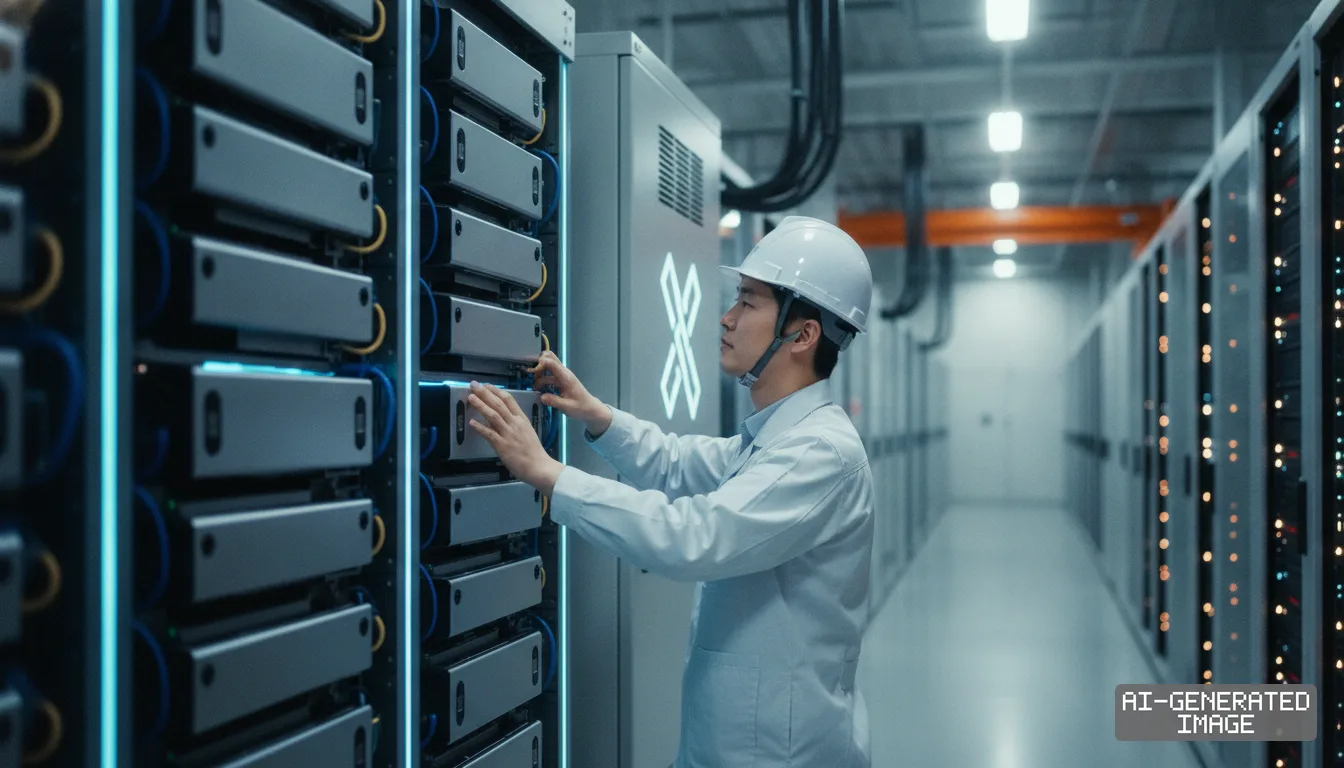
LG Energy Solution said Sept. 21 its utility-scale energy storage systems qualified under NVIDIA's newly created DSX Ready program to supply power backup for artificial-intelligence data center campuses.
The South Korean battery maker is among three energy storage providers approved at the program's debut. The certification establishes baseline engineering standards for facilities operating clusters of high-power processors, the company said.
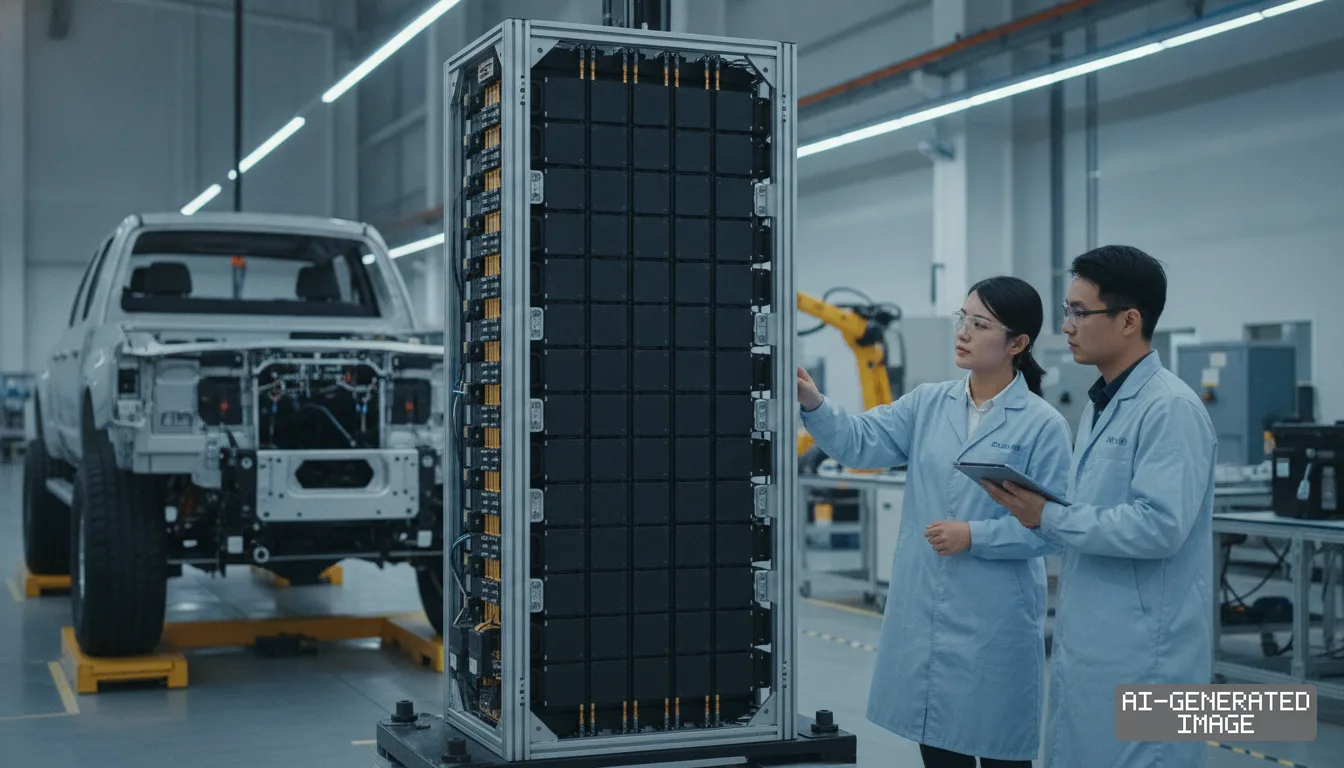
The qualification covers alternating-current battery blocks rated at 2.5 megawatts and 5.1 megawatt-hours. Each containerized system provides localized reserve capacity to stabilize electrical frequency during sudden surges in computing activity.
Large artificial-intelligence training workloads create steep fluctuations in electrical demand within milliseconds. Dedicated battery energy storage systems absorb excess electricity and inject instantaneous current to prevent voltage collapse across facility networks.
The approved architecture combines battery cells with power conversion systems and grid-forming controls. The design complies with North American fire and electrical safety standards issued by UL Solutions and the National Fire Protection Association, according to company filings.
NVIDIA named Tesla and Hitachi Energy alongside LG Energy Solution as the inaugural battery storage partners. The semiconductor designer introduced the qualification framework to lower integration hurdles for commercial data center developers.
The qualification platform also evaluates cooling distribution units, which pump liquid coolant through dense server racks. NVIDIA certified cooling hardware from LG Electronics, Vertiv Holdings and liquid-cooling specialist LiquidStack in that companion track.
The new rating builds on a strategic partnership signed on June 8, 2026. Under that broader agreement, LG affiliates committed to co-develop 800-volt direct-current power distribution systems designed for future server hall generations.
Monday's qualification applies to commercial alternating-current systems designed for immediate connection to existing electrical substations. The 800-volt direct-current program remains an ongoing research project focused on internal server-room power delivery, representatives said.
LG Energy Solution is shifting production lines toward commercial energy storage systems as electric-vehicle growth stabilizes. The Seoul-based manufacturer aims to increase total global energy storage capacity to over 60 gigawatt-hours by the end of 2026.
North American manufacturing sites will supply 50 gigawatt-hours of that annual production target. The operational footprint includes an operating site in Holland, Michigan alongside facility expansions scheduled in Lansing, Michigan and Ohio.
The company also invested $70 million to convert automotive battery lines at its Spring Hill, Tennessee joint venture. The converted facility produces lithium-iron-phosphate battery cells tailored for stationary energy storage, according to corporate releases.
LG Energy Solution held cumulative energy storage system orders of 140 gigawatt-hours entering 2026. Management set an annual target to secure more than 90 gigawatt-hours of additional commercial orders during the current calendar year.
Federal trade policies in the United States have altered competitive dynamics across the stationary storage sector. Import tariffs on Chinese lithium-iron-phosphate battery cells stand at 25% under Section 301 trade rules.
Those customs levies raise procurement costs for American cloud operators purchasing energy containers from Chinese cell manufacturers. Chinese battery makers supply roughly two-thirds of global grid-scale storage installations but face mounting regulatory friction across North America.
Federal clean-energy tax incentives also condition full subsidies on domestic equipment assembly within the United States. Local manufacturing protects facility developers against logistical bottlenecks and compliance reviews regarding foreign manufacturing entities.
Hyperscale operators in major computing corridors face multi-year delays to obtain high-voltage electrical grid hookups. On-site battery installations permit developers to commission server capacity before local utility substations finish transmission line upgrades.
Computing facilities running 100-megawatt loads subject municipal utility feeders to severe phase imbalances. Rapid-response battery storage dampens voltage dips when large training models stop or restart execution cycles.
LG Energy Solution provides turnkey containers that combine cells, enclosures, power conversion systems and thermal management controls. Hyperscale developers increasingly prefer pre-integrated units to reduce field construction hours and site assembly risks.
Tesla maintains significant commercial momentum across North American utility storage through its Megapack product line. Hitachi Energy controls broad utility relationships in high-voltage transformers and switchgear, linking all three qualified vendors to existing utility interconnections.
NVIDIA scheduled initial reference engineering deployments for DSX Ready hardware to begin in the fourth quarter of 2026. Hyperscale operators and commercial colocation providers evaluate certified equipment catalogs as they finalize capital spending budgets for 2027 infrastructure construction.
The official announcements do not disclose specific delivery volumes, contract values or purchasing commitments from data center operators. NVIDIA has not published an expiration date or renewal schedule for DSX Ready partner listings.
LG Energy Solution plans to deliver initial commercial units of its qualified 5.1-megawatt-hour storage systems from North American manufacturing lines before the close of 2026.
Impact map
How this development propagates across the region and out to global buyers.
| Event | Korea | China | Japan | Global impact |
|---|---|---|---|---|
| NVIDIA DSX Ready qualification | LG Energy Solution enters approved AI factory supply chain with 50 GWh US capacity target | Chinese BESS exporters face commercial barrier in US data centers alongside 25% cell tariffs | Hitachi Energy secures inaugural qualification for utility transformers and battery systems | Hyperscale builders qualify 5.1 MWh modular blocks to accelerate time-to-power for 100 MW sites |
In this story
- Companies
- LG Energy SolutionNVIDIA
- Tickers
- 373220.KSNVDA
- Exposed
- TeslaHitachi EnergyLG ElectronicsVertiv
- Policy
- Economic SecuritySubsidiesTariffs
- Impact
- Supply ChainOrder BookCompliance
Track every Economic Security development → Track every Subsidies development → Track every Tariffs development →
Related briefings
- South Korean toolmakers advance glass substrate TGV laser drillers to volume lines Also on LG Electronics, Order Book
- EcoPro targets humanoid robot batteries for 2027 production Also on LG Electronics, Order Book
- LG taps Samsung Foundry for appliance AI chips under Korean state project Also on LG Electronics, Order Book
- Xi Jinping plans business delegation for Donald Trump summit Also on Tesla, Nvidia, Tariffs
Sources
Reporting
Confidence: medium — how we grade this
The documents behind this briefing are linked above. East Asia Brief produces its English text with AI assistance under human editorial review, and does not translate or republish other outlets' articles. See our methodology and AI policy. Spotted an error? Tell us.
The Morning Brief
What changed in Korean, Chinese and Japanese industry overnight — and what it means for your supply chain. One email, weekday mornings, US time. Free.
The Morning Brief is in preparation. Leave your address and we will write to you once — when the first issue is ready. Nothing before that.