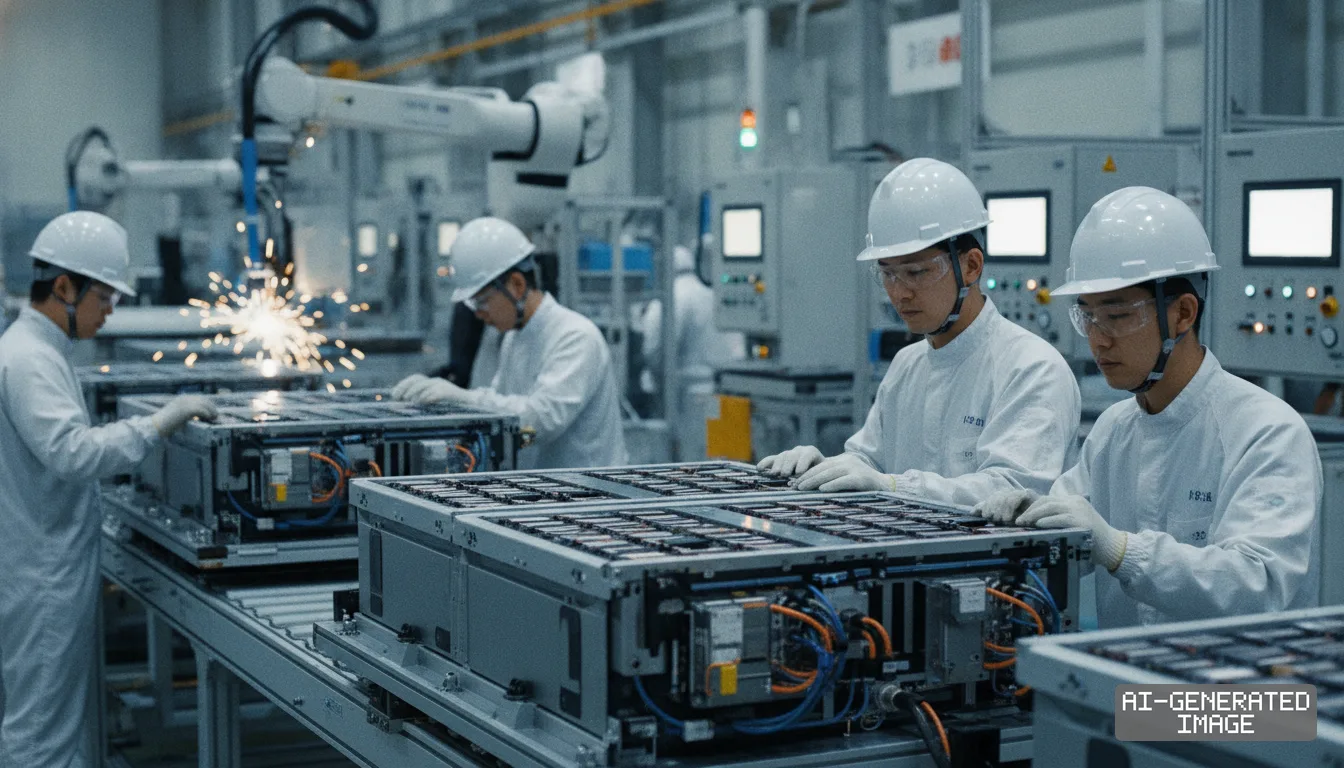
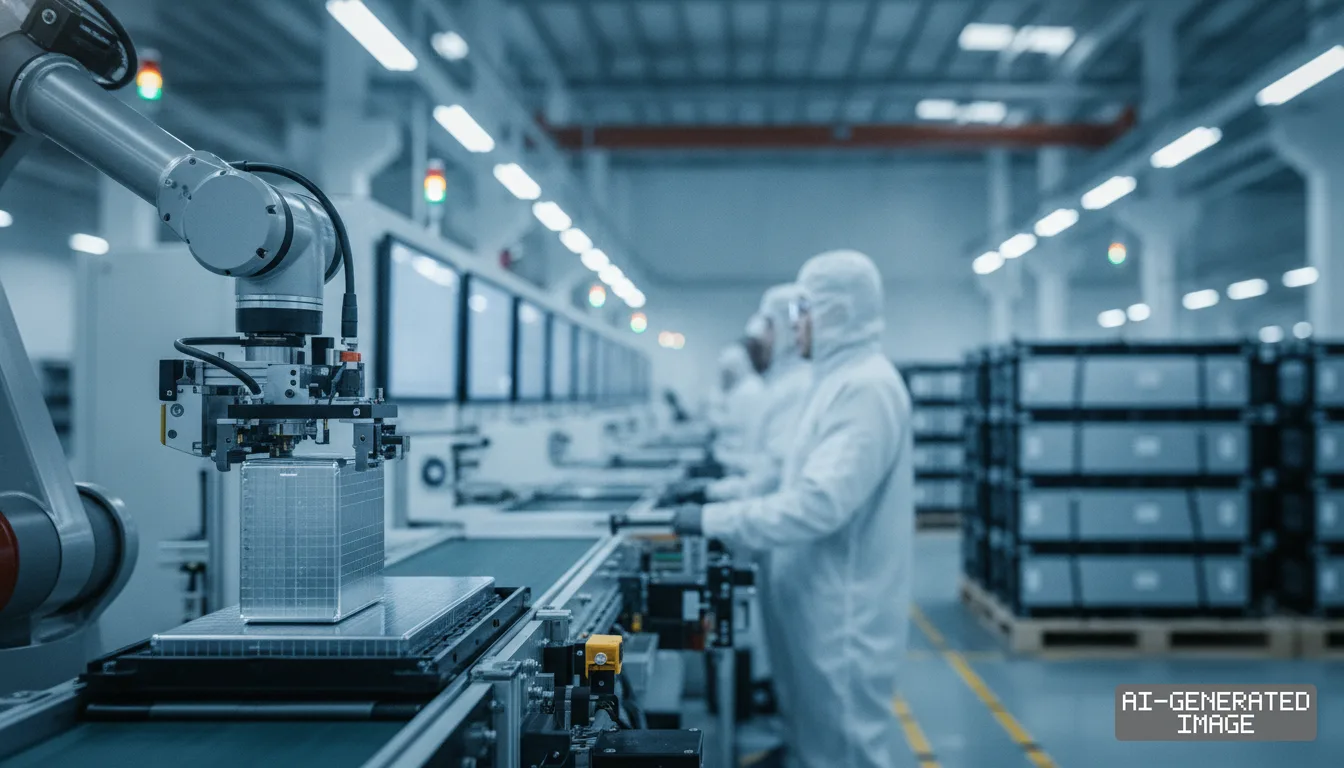
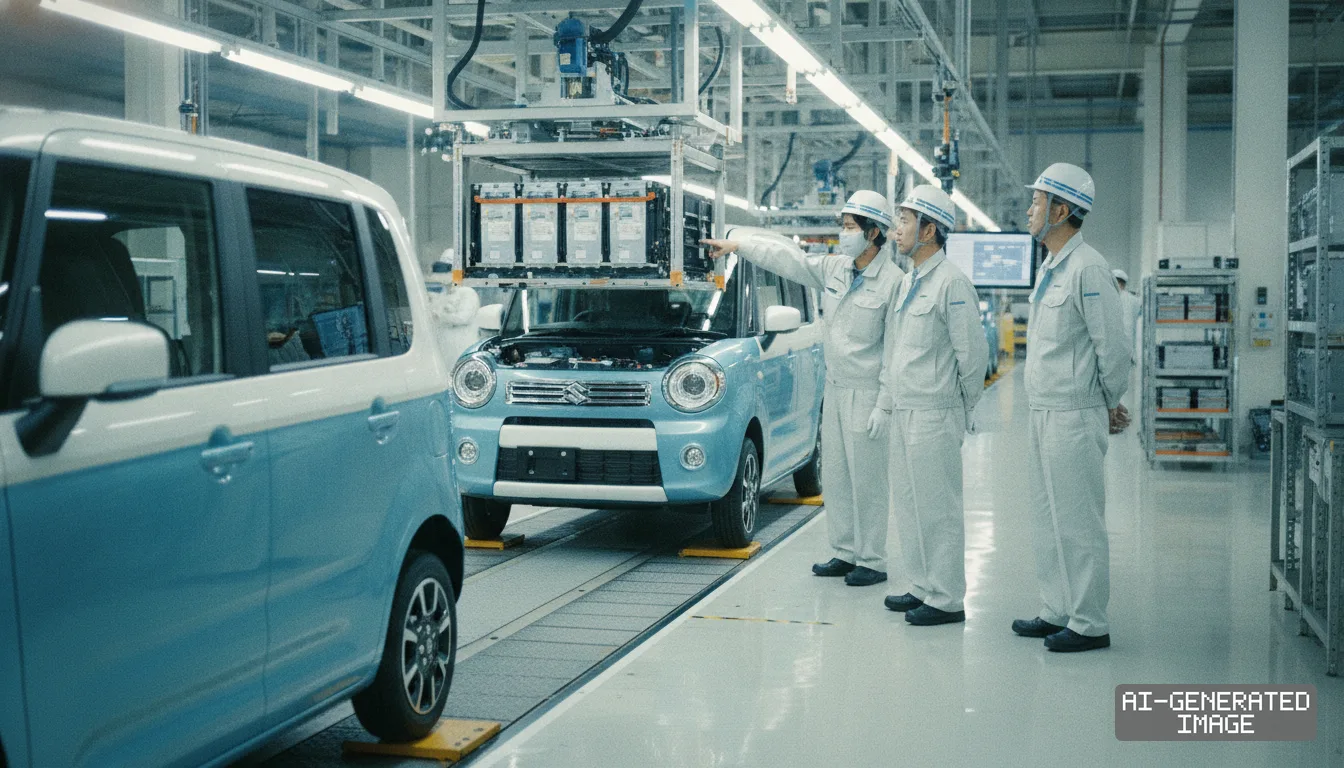
POSCO Future M Locks In $4.5B Cathode Pact With Samsung SDI to 2032
The revised 21.25 trillion won agreement swaps high-nickel volume for 380,000 tons of LFP materials to build US-compliant battery supply chains.
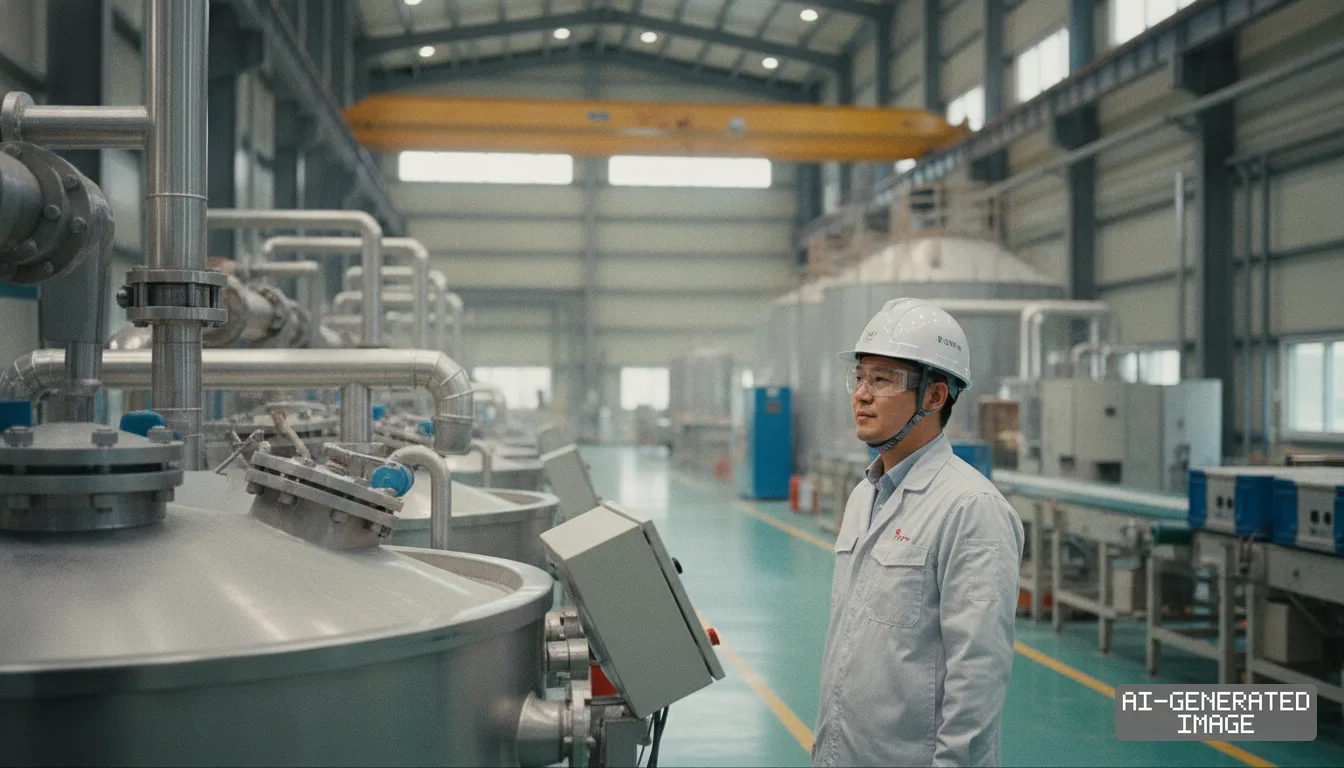
POSCO Future M confirmed on Oct. 12, 2026, that its 6.05 trillion won ($4.5 billion) cathode contract with Samsung SDI secures 380,000 tons of lithium iron phosphate materials through 2032.
The six-year supply tranche represents roughly 28% of the revised 21.25 trillion won ($15.8 billion) comprehensive materials agreement between the two companies. Commercial deliveries of the phosphate active materials will commence in 2027.
The parent agreement amends a 10-year contract originally executed on Jan. 30, 2023. That initial pact had allocated 40.03 trillion won entirely to nickel-cobalt-aluminum cathodes.
Lower underlying lithium benchmark prices led the suppliers to write down the nominal top-line value of the contract by 47%. Falling raw material pass-through formulas triggered the numerical reduction across both product lines.
Total physical material shipments will nevertheless rise by roughly 45% compared to the 2023 schedule. The two manufacturers converted a portion of their original high-nickel commitments into lower-cost chemistries.
The finalized volume of lithium iron phosphate cathodes doubles an earlier preliminary arrangement of 190,000 tons agreed upon in August. Rapid expansion in energy storage projects across North America drove the volume revision.
Samsung SDI is deploying the phosphate cells into stationary power storage platforms. Utility customers building data centers for artificial intelligence workloads have sharply accelerated orders for grid-scale battery systems.
The contract also provides a critical compliance buffer against foreign entity rules established under the US Inflation Reduction Act. The regulation excludes batteries manufactured with components from prohibited foreign entities from receiving federal clean energy subsidies.
Chinese processors currently refine the overwhelming majority of global battery-grade iron phosphate. Procuring finished cathode active material from South Korean lines provides Samsung SDI with verifiable non-prohibited feedstock.
The companies also agreed to expand future cooperation into lithium manganese oxide cathode materials. The manganese-rich formulation reduces reliance on cobalt while maintaining higher voltage than conventional phosphate blends.
Synthetic graphite anode materials will also join the joint procurement framework under a supplementary pact. POSCO Future M remains South Korea's sole commercial producer of synthetic graphite for lithium-ion battery anodes.
Adjusting chemistry allocations allows POSCO Future M to optimize output across its domestic manufacturing facilities. The company operates a dedicated high-nickel NCA cathode site in Pohang with an annual capacity of 30,000 tons.
A complementary cathode plant in Gwangyang provides an additional 52,500 tons of annual capacity. The combined footprint gives POSCO Future M 82,500 annual tons of high-nickel production capacity.
The supplier has begun repurposing select production lines in Pohang to handle phosphate-based precursors. Converting existing infrastructure mitigates idle asset costs while ternary electric vehicle cell demand decelerates.
Samsung SDI draws high-nickel materials from the Pohang facility for its prismatic automotive cells. The manufacturer supplies those premium cells to global automakers for long-range electric vehicle architectures.
The revised contract preserves a high-nickel NCA delivery quota valued at 15.20 trillion won ($11.3 billion) through 2032. That preserves POSCO Future M as a primary cathode vendor for Samsung SDI's premium automotive product lines.
The deal follows an earlier contract signed in September with domestic rival SK On. That three-year agreement covers roughly 1.1 trillion won of lithium iron phosphate cathode deliveries running from 2027 through 2029.
POSCO Future M also holds active high-nickel cathode contracts with LG Energy Solution totaling more than 52 trillion won. The newest agreement solidifies its commercial position across all three of South Korea's primary battery makers.
Securing firm volume commitments shields POSCO Group's upstream mining investments in lithium and nickel extraction. The conglomerate has invested heavily in raw material processing assets in Argentina and Western Australia.
Higher capacity utilization across cathode and anode lines improves unit production economics amid tighter industry margins. Long-term purchase obligations allow the company to negotiate more predictable precursor procurement schedules.
Commercial shipments of the newly contracted lithium iron phosphate materials are scheduled to begin on Jan. 1, 2027. Deliveries under the revised high-nickel and phosphate framework run through Dec. 31, 2032.
Regulatory filings do not confirm any standalone $4.5 billion high-nickel cathode agreement executed on Oct. 12, leaving the restructured Oct. 6 multi-chemistry pact as the active framework.
Impact map
How this development propagates across the region and out to global buyers.
| Event | Korea | China | Japan | Global impact |
|---|---|---|---|---|
| Cathode supply restructuring | POSCO Future M secures 380,000 tons of LFP volume, lifting utilization across Pohang lines | Chinese LFP exporters face reduced market access in US-linked supply chains | Japanese cell manufacturers face stiffer North American ESS competition from Korean suppliers | Grid storage procurement secures non-PFE materials eligible for US tax credits |
In this story
- Companies
- POSCO Future MSamsung SDI
- Tickers
- 003670.KS006400.KS
- Exposed
- SK OnLG Energy Solution
- Policy
- SubsidiesEconomic Security
- Impact
- Supply ChainOrder BookCost Structure
Track every Subsidies development → Track every Economic Security development →
Related briefings
- POSCO Future M signs $776M LFP cathode supply deal with SK On Also on POSCO Future M, SK On, Samsung SDI
- China Customs tightens origin documentation for graphite transit shipments Also on Posco Future M, SK On, Samsung SDI
- South Korea Expands Advanced Battery Tax Credits to Rebalance Domestic Fabs Also on POSCO Future M, SK On, Samsung SDI
- CATL Surpasses Korean Battery Trio in Markets Outside China Also on POSCO Future M, SK On, Samsung SDI
Sources
Primary documents
Reporting
Confidence: high — how we grade this
The documents behind this briefing are linked above. East Asia Brief produces its English text with AI assistance under human editorial review, and does not translate or republish other outlets' articles. See our methodology and AI policy. Spotted an error? Tell us.
The Morning Brief
What changed in Korean, Chinese and Japanese industry overnight — and what it means for your supply chain. One email, weekday mornings, US time. Free.
The Morning Brief is in preparation. Leave your address and we will write to you once — when the first issue is ready. Nothing before that.