POSCO Future M signs $776M LFP cathode supply deal with SK On
The three-year agreement covers battery cells produced at SK On's Georgia plant for North American energy storage systems, curbing reliance on Chinese materials.
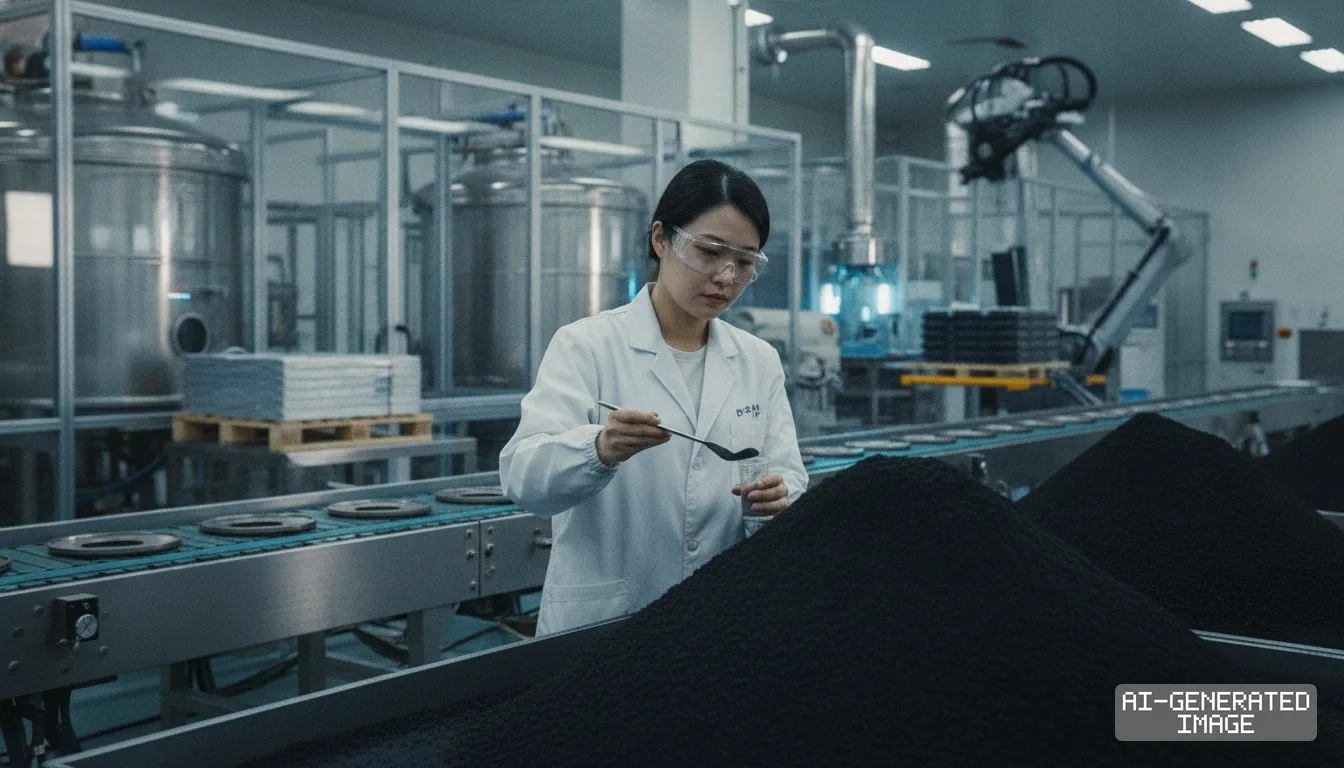
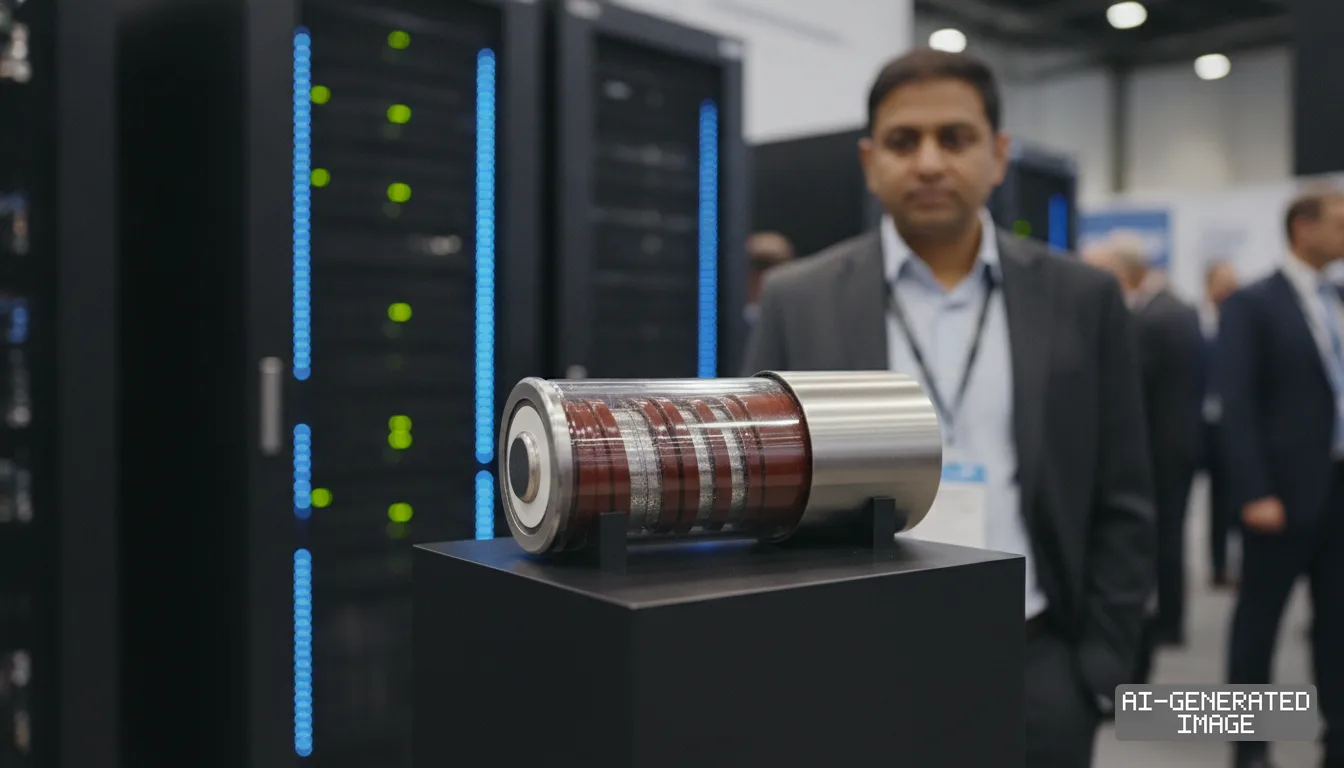
POSCO Future M disclosed a 1.07 trillion won ($776 million) agreement on Sept. 22 to supply lithium iron phosphate cathode materials to SK On for United States energy storage systems.
The transaction equals 36.6% of POSCO Future M's 2025 consolidated revenue of 2.94 trillion won. Deliveries run from Jan. 1, 2027 to Dec. 31, 2029, under regulatory filings submitted to the Korea Exchange in Seoul.
The contract permits a two-year extension through Dec. 31, 2031, subject to mutual agreement between both companies. All contracted materials will feed SK On's battery cell manufacturing complex in Commerce, Georgia.
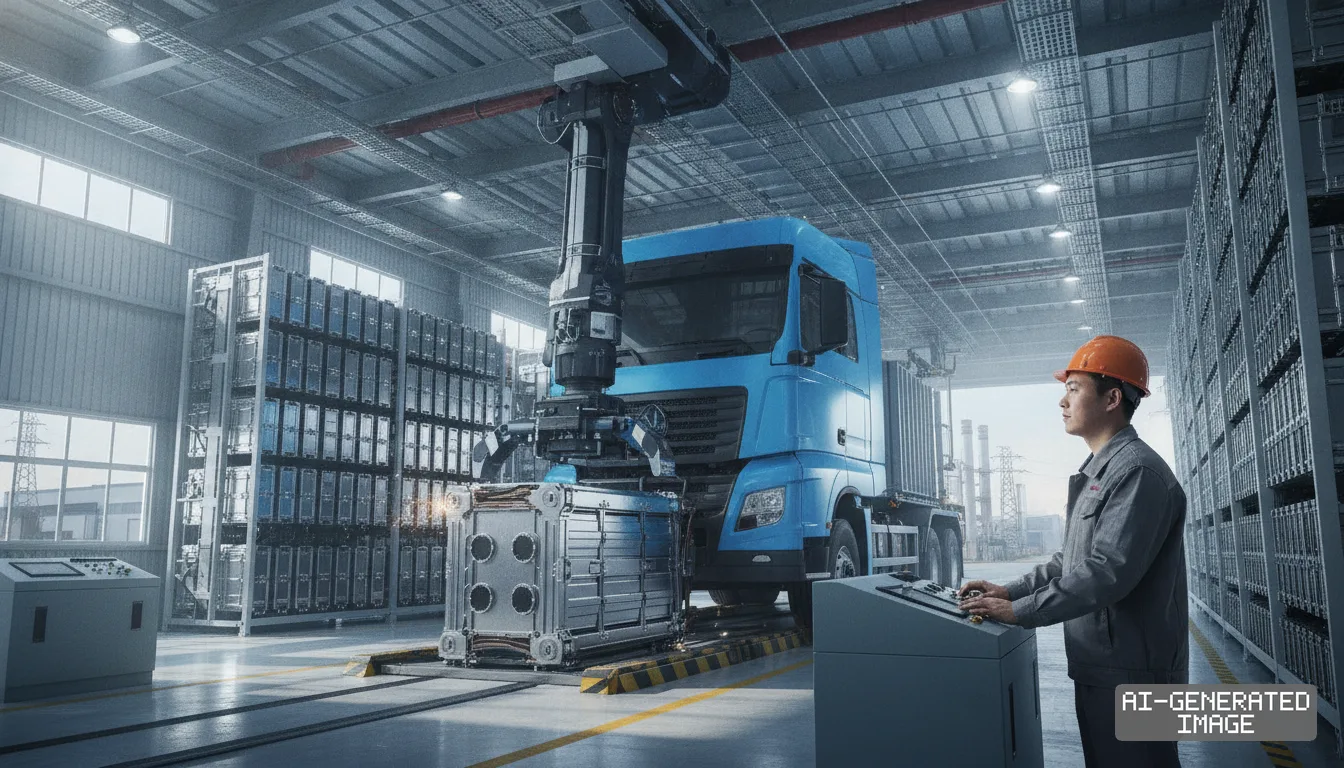
SK On will process the cathode powder into battery cells for utility-scale energy storage systems — stationary battery packs that balance electric grids. North American utilities are expanding grid storage to handle electricity demand from artificial intelligence data centers.
United States grid operators plan to install more than 15 gigawatts of utility-scale battery storage capacity across 2026 and 2027, according to project queues published by the United States Energy Information Administration. Regional transmission organizations in Texas and California account for more than 55% of those planned grid connections.
The deal marks POSCO Future M's first cathode supply contract with SK On. The supplier previously delivered only synthetic and natural graphite anodes — the negative terminal material in rechargeable cells — to the battery maker.
With this agreement, POSCO Future M supplies both cathodes and anodes to South Korea's three dominant cell producers: LG Energy Solution, Samsung SDI and SK On. The company already ships high-nickel ternary cathodes to LG Energy Solution and Samsung SDI under multi-year procurement programs.
To fulfill the order, POSCO Future M converted high-nickel cathode lines at its Pohang complex in North Gyeongsang province into iron phosphate production units. Line conversions allow the company to bypass the capital cost of constructing a new manufacturing facility.
The Pohang reconfiguration converts roughly 20,000 metric tons of annual cathode capacity from nickel-cobalt-manganese chemistries to lithium iron phosphate. Retrofitting existing factory lines lowers capital expenditure by more than 40% compared to greenfield plant construction, according to internal company project assessments.
Commercial mass production and initial shipments from the repurposed Pohang lines begin in late 2026, the company said. Prototype testing and customer qualification runs are currently underway at the plant.
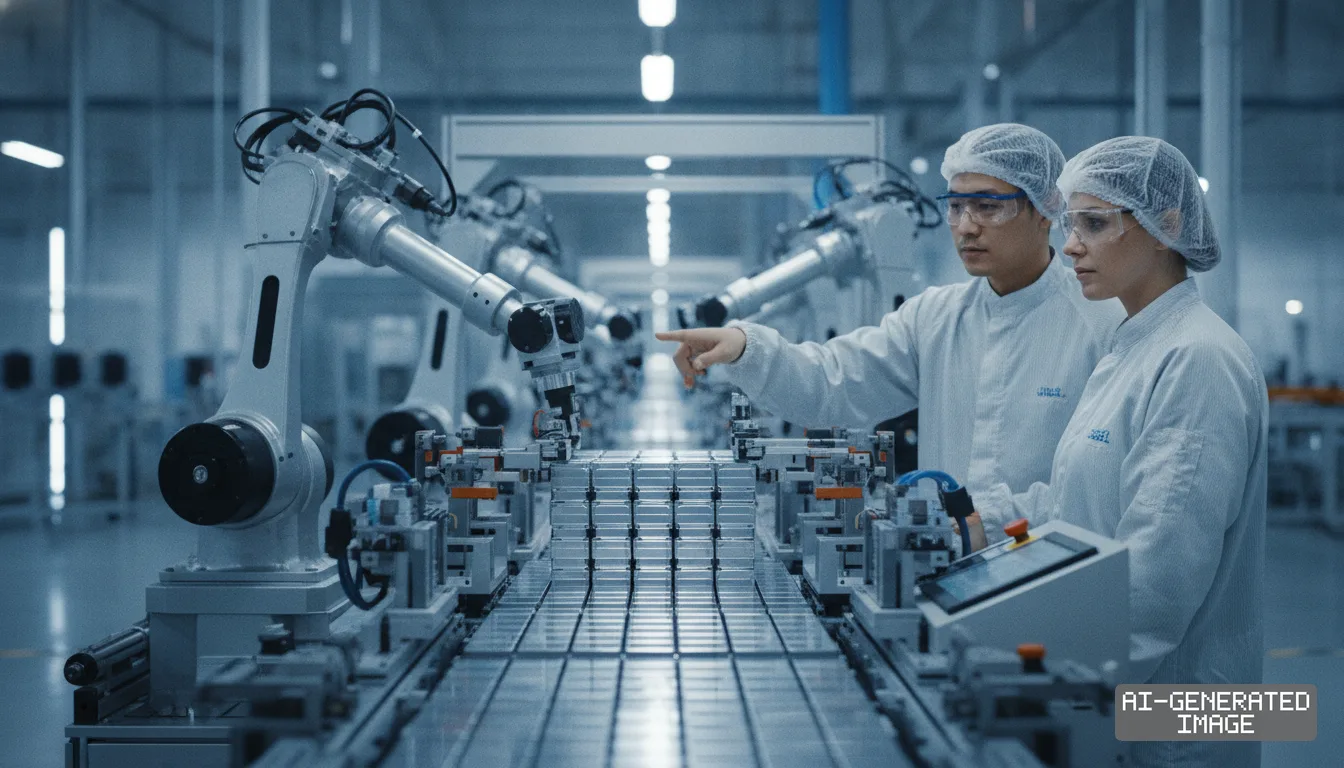
SK On has begun retooling portions of its 21.5-gigawatt-hour cell manufacturing hub in Commerce to assemble prismatic and pouch cells tailored for stationary containers rather than passenger vehicles. The shift allows the battery maker to utilize factory lines that experienced lower utilization rates during the electric-vehicle sales slowdown.
The manufacturing process relies on raw materials secured across POSCO Group affiliates. POSCO Future M will synthesize cathode powder using lithium extracted from POSCO Holdings brine operations at the Hombre Muerto salt lake in Argentina.
The group will also supply iron oxide, an industrial by-product of its domestic steelmaking mills, as precursor feedstock. Sourcing lithium from South American brine and iron oxide from domestic blast furnaces insulates the manufacturing process from Chinese precursor import dependencies.
Chinese chemical refiners control roughly 95% of worldwide lithium iron phosphate cathode precursor production, based on data from the Korea International Trade Association. The United States Foreign Entity of Concern guidelines under the Inflation Reduction Act restrict federal tax subsidies for storage projects that incorporate battery components sourced from Chinese entities.
By processing Argentine brine lithium in South Korea before shipping finished cathodes to Georgia, POSCO Future M maintains compliance with United States clean energy procurement frameworks. South Korea maintains a bilateral free-trade agreement with Washington, qualifying domestically refined critical minerals for federal tax credits.
United States Section 301 tariffs on Chinese stationary energy storage cells rise to 25% in 2026, up from earlier 7.5% baseline duties. That tariff adjustment creates an estimated $18 to $22 per kilowatt-hour cost penalty on direct battery imports from Chinese manufacturers.
South Korean battery producers long prioritized high-nickel ternary chemistries, which deliver higher energy density for long-range electric vehicles. Lithium iron phosphate chemistries offer lower energy density but provide longer cycle life, superior thermal stability, and manufacturing costs roughly 20% to 30% below nickel-rich alternatives.
Energy storage systems prioritize cycle life and fire safety over compact cell volume. Utility operators typically cycle stationary storage units once or twice daily to store surplus solar generation during peak daylight hours and discharge power onto regional grids during evening peaks.
POSCO Future M aims to expand its total annual cathode production capacity to 395,000 metric tons by 2030, spreading output across nickel-based and phosphate-based formulations. The company operates domestic production clusters in Pohang and Gwangyang, alongside an overseas cathode joint venture with General Motors in Becancour, Canada.
SK On intends to allocate up to five gigawatt-hours of its Georgia manufacturing footprint toward energy storage production by 2027. The company is actively marketing long-duration storage cells to independent power producers and electric utilities across the United States Sun Belt.
The regulatory disclosure does not specify the precise tonnage of cathode material POSCO Future M will deliver annually under the contract. POSCO Future M also did not publish the targeted energy density specification for the customized iron phosphate powder.
Customer qualification testing at the Pohang plant is scheduled for completion in the second quarter of 2026. Commercial deliveries begin Jan. 1, 2027.
Impact map
How this development propagates across the region and out to global buyers.
| Event | Korea | China | Japan | Global impact |
|---|---|---|---|---|
| LFP cathode supply contract | POSCO Future M enters commercial LFP production, SK On retools Georgia lines for ESS | Chinese precursor exporters face market exclusion under US FEOC standards | Japanese cathode suppliers see price competition stiffen in North American ESS | US utility storage developers gain IRA-compliant non-Chinese LFP battery supply |
In this story
- Companies
- POSCO Future MSK On
- Tickers
- 003670.KS096770.KS
- Exposed
- LG Energy SolutionSamsung SDIPOSCO Holdings
- Policy
- TariffsSubsidiesEconomic Security
- Impact
- Supply ChainOrder BookCost Structure
Track every Tariffs development → Track every Subsidies development → Track every Economic Security development →
Related briefings
- Posco Holdings starts direct lithium extraction test runs for Korean cathode lines Also on Posco Holdings, Posco Future M, Samsung SDI
- POSCO Chairman Urges Australia Critical Minerals Alliance to Diversify Supply Also on POSCO Holdings, POSCO Future M, SK On
- China Customs tightens origin documentation for graphite transit shipments Also on Posco Future M, SK On, Samsung SDI
- South Korea Expands Advanced Battery Tax Credits to Rebalance Domestic Fabs Also on POSCO Future M, SK On, Samsung SDI
Sources
Primary documents
Reporting
Confidence: high — how we grade this
The documents behind this briefing are linked above. East Asia Brief produces its English text with AI assistance under human editorial review, and does not translate or republish other outlets' articles. See our methodology and AI policy. Spotted an error? Tell us.
The Morning Brief
What changed in Korean, Chinese and Japanese industry overnight — and what it means for your supply chain. One email, weekday mornings, US time. Free.
The Morning Brief is in preparation. Leave your address and we will write to you once — when the first issue is ready. Nothing before that.