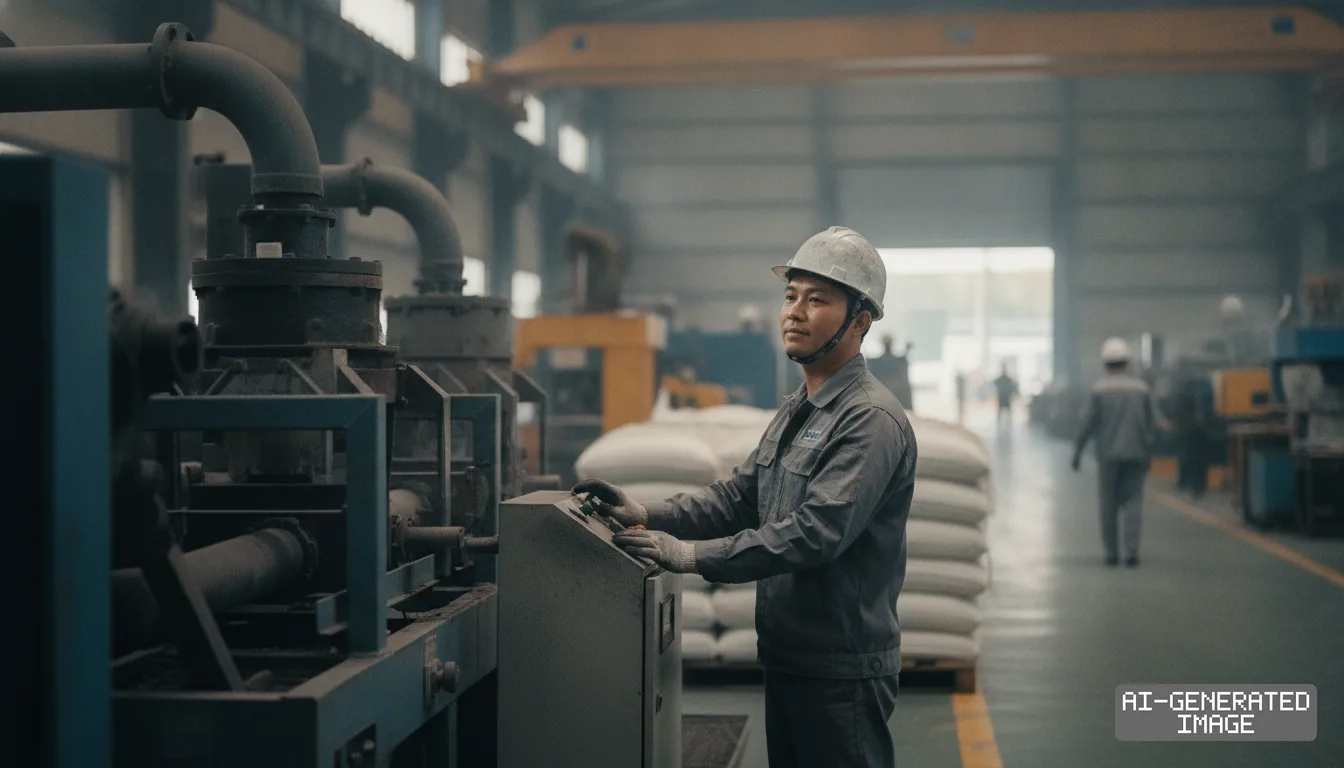
Desay SV opens €26M Spanish plant to build car cockpit controllers
The tier-one supplier launched its 20,000-square-meter Linares facility on Nov. 12, aiming for 2.8 million units of annual output worth €380 million.
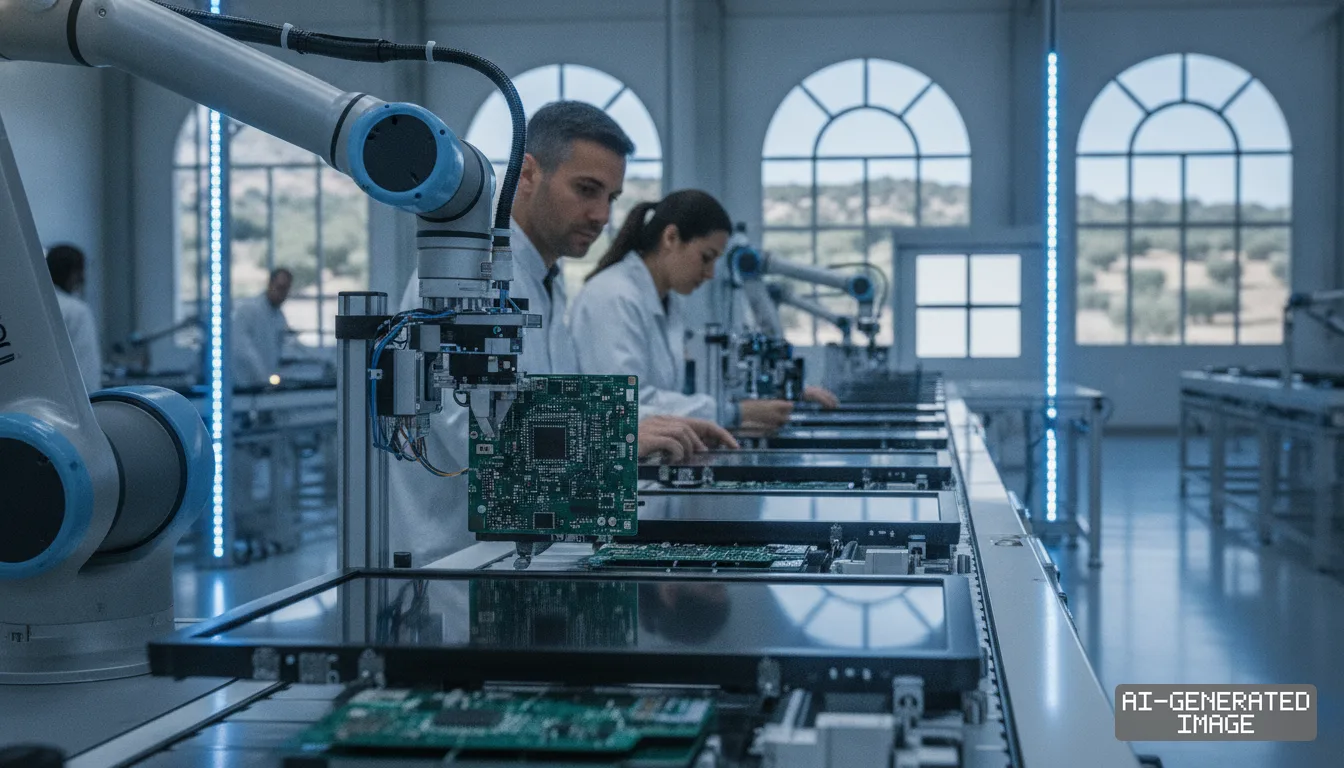
Desay SV opened its first Spanish smart manufacturing plant in Linares on Nov. 12, 2026, investing over €26 million ($28 million) to produce smart cockpit controllers and displays for European automakers.
The facility occupies 20,000 square meters within Santana Tech Park in Andalusia. It serves as the Chinese tier-one supplier's third mass production base in Europe alongside two operational facilities in Weimar, Germany.
Planned capacity reaches 2.8 million units annually once all phases finish. Full commercial operations are expected to generate roughly €380 million ($410 million) in annual production value, according to company disclosures.
The site focuses on domain controllers — central computers that manage in-cabin displays and digital interaction — and automotive screens. European carmakers increasingly require localized assembly to insulate supply lines from shipping bottlenecks.
Chinese automotive electronics suppliers face mounting regulatory pressure across the European Union. Tariffs on imported Chinese electric vehicles reached up to 35.3% in late 2024, pushing component makers to establish factories inside the single market.
Local manufacturing shields electronic sub-assemblies from import duties and eases compliance with European rules of origin. By assembling parts in Spain, Desay SV avoids the cross-border logistical frictions that complicate direct maritime shipments from China.
Desay SV recorded 24.4 billion yuan ($3.4 billion) in group revenue during the first nine months of 2026, up 9.3% year on year. International revenue rose 55.7% in the first half of 2026.
Overseas sales reached 1.6 billion yuan ($222 million) in that six-month period. Management is prioritizing European industrial investments to offset slowing volume growth and margin compression in the intensely contested Chinese domestic automotive market.
The company competes globally with traditional automotive electronics suppliers such as Continental and Bosch. European automakers rely heavily on those legacy tier-one firms for dashboard instrumentation, body domain systems and electronic control units.
Desay SV aims to capture European market share by offering pre-integrated computing platforms. The company integrates high-performance microprocessors with proprietary middleware to shorten vehicle software development cycles for original equipment manufacturers.
Construction at the Linares site began on July 5, 2024, in partnership with the regional government of Andalusia. Builders completed the structural framework of the manufacturing facility on Sept. 19, 2025.
Andalusian regional authorities provided administrative support and site infrastructure at the Santana industrial zone. The park formerly housed Santana Motor, a domestic vehicle manufacturer that shuttered assembly lines in 2011.
Spanish officials view the electronics plant as a vital step in reindustrializing the province of Jaén. The regional government has allocated training resources to help the plant staff its precision cleanrooms.
Desay SV plans to create up to 500 direct manufacturing, engineering and logistics jobs in Linares by 2030. The company signed training partnerships with the University of Jaén and technical institute I.E.S. Himilce.
The German hub in Weimar houses antenna test laboratories alongside electronics assembly lines. Adding Spanish capacity expands physical assembly space, allowing the Weimar technical campus to focus on prototype validation and radio-frequency engineering.
Spain ranks as the second-largest vehicle manufacturer in Europe behind Germany, producing more than two million vehicles each year. That manufacturing base gives component suppliers direct proximity to multinational vehicle assembly lines.
Automotive groups including Stellantis, Renault, Volkswagen and Ford operate major vehicle assembly plants across Spain. Having local electronics capacity allows suppliers to fulfill just-in-time delivery requirements without holding excessive safety stock.
Desay SV already supplies intelligent cockpit systems to multinational groups such as Volkswagen, Stellantis and Renault. The Spanish plant provides those customers with European-made hardware options that satisfy local content preferences.
The company notice does not identify the two European automakers that placed initial production contracts with the Linares facility. Desay SV declined to publish customer order volumes, citing commercial confidentiality agreements.
Commercial mass production and customer shipments are scheduled to commence in the first quarter of 2027, the company said. Pilot lines in Linares will complete equipment calibration and automotive qualification testing through late 2026.
Impact map
How this development propagates across the region and out to global buyers.
| Event | Korea | China | Japan | Global impact |
|---|---|---|---|---|
| Desay SV Linares smart factory inauguration | LG Electronics faces stiffer smart cockpit domain controller competition in European OEM bids | Desay SV localizes European hardware assembly to navigate EU automotive tariffs and origin rules | Denso encounters direct price pressure on automotive display modules from local Spanish capacity | European automakers secure an onshore Chinese tier-one supplier for software-defined vehicle architectures |
In this story
- Companies
- Desay SV
- Tickers
- 002920.SZ
- Exposed
- ContinentalBoschVolkswagenStellantisRenault
- Policy
- TariffsLocal Content Rules
- Impact
- Supply ChainCapexCompliance
Track every Tariffs development → Track every Local Content Rules development →
Related briefings
- JCET expands automotive radar SiP packaging lines to capture ADAS sensor demand Also on Desay SV, Continental
- BYD plans three European car plants to counter EU tariffs Also on Renault, Volkswagen, Stellantis
- EU and UK enforce 2027 EV origin rules, risking 10% battery tariffs Also on Renault, Stellantis, Local Content Rules
- China mandates digital tracking codes for heavy rare earth shipments to tighten export control Also on Continental, Compliance
Sources
Reporting
Confidence: medium — how we grade this
The documents behind this briefing are linked above. East Asia Brief produces its English text with AI assistance under human editorial review, and does not translate or republish other outlets' articles. See our methodology and AI policy. Spotted an error? Tell us.
The Morning Brief
What changed in Korean, Chinese and Japanese industry overnight — and what it means for your supply chain. One email, weekday mornings, US time. Free.
The Morning Brief is in preparation. Leave your address and we will write to you once — when the first issue is ready. Nothing before that.