Hyundai weighs $74M stake in POSCO Future M Vietnam anode plant
A 28% equity injection in the Thai Nguyen facility secures preferential purchasing rights for 23,000 metric tons of synthetic graphite anode material.
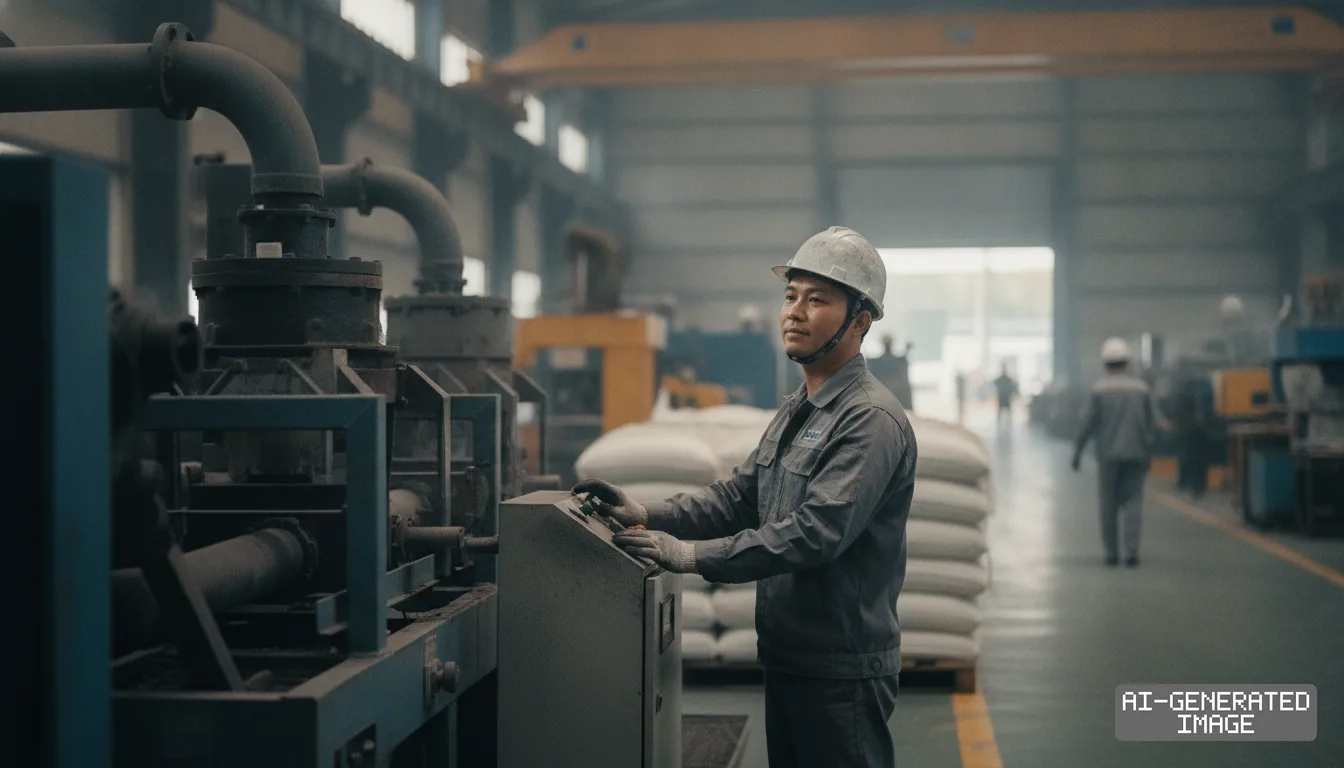
Hyundai Motor Group confirmed Nov. 13 it is reviewing a 100 billion won ($74.4 million) equity investment in POSCO Future M's synthetic graphite anode project in northern Vietnam.
The proposed capital injection represents 28% of the 357 billion won total construction budget for the Thai Nguyen facility. The plant provides an initial processing capacity of 23,000 metric tons per year.
Synthetic graphite serves as the active material in electric vehicle battery anodes, enabling rapid charging and cycle durability. POSCO Future M operates as South Korea's sole commercial producer of the finished material.
The proposed transaction grants Hyundai Motor Group preferential purchasing rights for anode shipments from the Vietnamese factory. The two companies signed a non-binding letter of intent Nov. 3 to formalize terms.
United States clean vehicle rules drive the investment. Under Inflation Reduction Act guidelines, vehicles containing battery materials extracted or processed by a foreign entity of concern lose access to the $7,500 consumer tax credit.
China controls more than 90% of global synthetic graphite processing capacity. South Korean battery cell manufacturers and automakers have relied almost entirely on Chinese refineries for their anode supply.
POSCO Future M broke ground on the factory earlier this year inside the Song Cong 2 Industrial Complex in Thai Nguyen Province. Mass commercial production is scheduled to start in 2028.
The Vietnamese site covers enough land to support a modular expansion up to 55,000 metric tons annually. POSCO Future M plans to add production lines in phases as customer supply contracts expand.
The company already operates an 8,000-ton synthetic graphite plant in Pohang, South Korea. The overseas facility leverages manufacturing processes developed at Pohang while lowering production overhead.
Vietnam offers lower industrial electricity rates and labor expenses compared with South Korea. The Southeast Asian nation also maintains trade pacts that facilitate material exports to Western automotive hubs.
POSCO Future M said it had already secured binding customer purchase agreements for the plant's initial 23,000-ton capacity. Those orders include a 1.01 trillion won long-term supply contract signed in March.
Automakers are increasingly bypassing tier-one battery suppliers to buy directly into upstream chemical refining. Direct equity stakes lock in compliant raw material streams ahead of regulatory enforcement deadlines.
The partnership expands an earlier memorandum of understanding established between Hyundai Motor Group and POSCO Group in April 2025. That agreement targeted joint supply chain security across automotive steel and battery inputs.
Under the Vietnam arrangement, Hyundai Motor and POSCO Future M will jointly conduct preliminary product development. Engineering teams will test material formulations against electric vehicle charging profiles and cold-weather discharge rates.
Hyundai Motor Group sells electric models through its Hyundai, Kia and Genesis brands. Captive anode supplies from Vietnam will feed battery joint ventures operating across North America.
European trade measures also push automakers toward alternative supply chains. The European Union's Critical Raw Materials Act and proposed industrial rules establish progressive quotas to reduce Chinese dependency below 65% by 2030.
Chinese anode manufacturers such as Shanghai Putailai New Energy Technology, Ningbo Shanshan and BTR New Material Group maintain pricing advantages through state power subsidies and integrated needle coke procurement.
Synthetic graphite production requires high-temperature graphitization, an energy-intensive process that heats carbon precursor needle coke past 3,000 degrees Celsius. Power tariffs in Thai Nguyen lower that specific cost layer.
POSCO Future M has also diversified its natural graphite procurement, securing spherical graphite supply agreements from African mines to complement artificial material streams processed in South Korea and Southeast Asia.
Securing Hyundai Motor as an anchor equity partner mitigates capital expenditure risks for POSCO Future M. The materials producer has calibrated spending across cathode and anode divisions during the broader electric vehicle demand slowdown.
Commercial production at the Thai Nguyen facility remains targeted for 2028, following mechanical installation throughout 2027. The project timeline aligns with the scheduled expiration of United States regulatory transition waivers for anode graphite.
The companies have not published the final equity percentage, the exact annual tonnage allocated to Hyundai Motor Group or the termination date of the preferential purchasing arrangement.
A final investment decision depends on definitive contract negotiations and subsequent board approvals from both corporate groups. POSCO Future M has not submitted an official disclosure filing to the Korea Exchange regarding the non-binding agreement.
Impact map
How this development propagates across the region and out to global buyers.
| Event | Korea | China | Japan | Global impact |
|---|---|---|---|---|
| Vietnam synthetic graphite anode project | Hyundai Motor and POSCO Future M build compliant non-Chinese anode supply chain | Chinese anode refiners face erosion of South Korean export market share | Japanese cell makers gain alternative Southeast Asian synthetic anode supplier | US clean vehicle tax credit compliance improves for non-Chinese EV supply chains |
In this story
- Companies
- Hyundai MotorPOSCO Future M
- Tickers
- 005380.KS003670.KS
- Exposed
- KiaShanghai Putailai New Energy TechnologyNingbo ShanshanBTR New Material Group
- Policy
- Local Content RulesSubsidies
- Impact
- Supply ChainCapexCompliance
Track every Local Content Rules development → Track every Subsidies development →
Related briefings
- China Tightens Dual-Use Graphite Export Licensing for Anode Supply Chains Also on Shanghai Putailai New Energy Technology, Ningbo Shanshan, BTR New Material Group
- POSCO Future M Loses Anode Share as Chinese Graphite Surges in 2026 Also on BTR New Material Group, POSCO Future M, Subsidies
- Gotion and Sunwoda ramp sodium-ion battery output for Chinese light electric vehicles Also on BTR New Material Group, Subsidies
- Hyundai, LG Energy launch used battery storage pilot for EVs Also on Kia, Hyundai Motor, Compliance
Sources
Reporting
Confidence: medium — how we grade this
The documents behind this briefing are linked above. East Asia Brief produces its English text with AI assistance under human editorial review, and does not translate or republish other outlets' articles. See our methodology and AI policy. Spotted an error? Tell us.
The Morning Brief
What changed in Korean, Chinese and Japanese industry overnight — and what it means for your supply chain. One email, weekday mornings, US time. Free.
The Morning Brief is in preparation. Leave your address and we will write to you once — when the first issue is ready. Nothing before that.