COMAC completes first crewed flight of 10-ton electric airliner
The 10-metric-ton CE-25A demonstrator carried three crew members over 60.4 kilometers in Shandong, targeting regional 19-seat commuter routes.
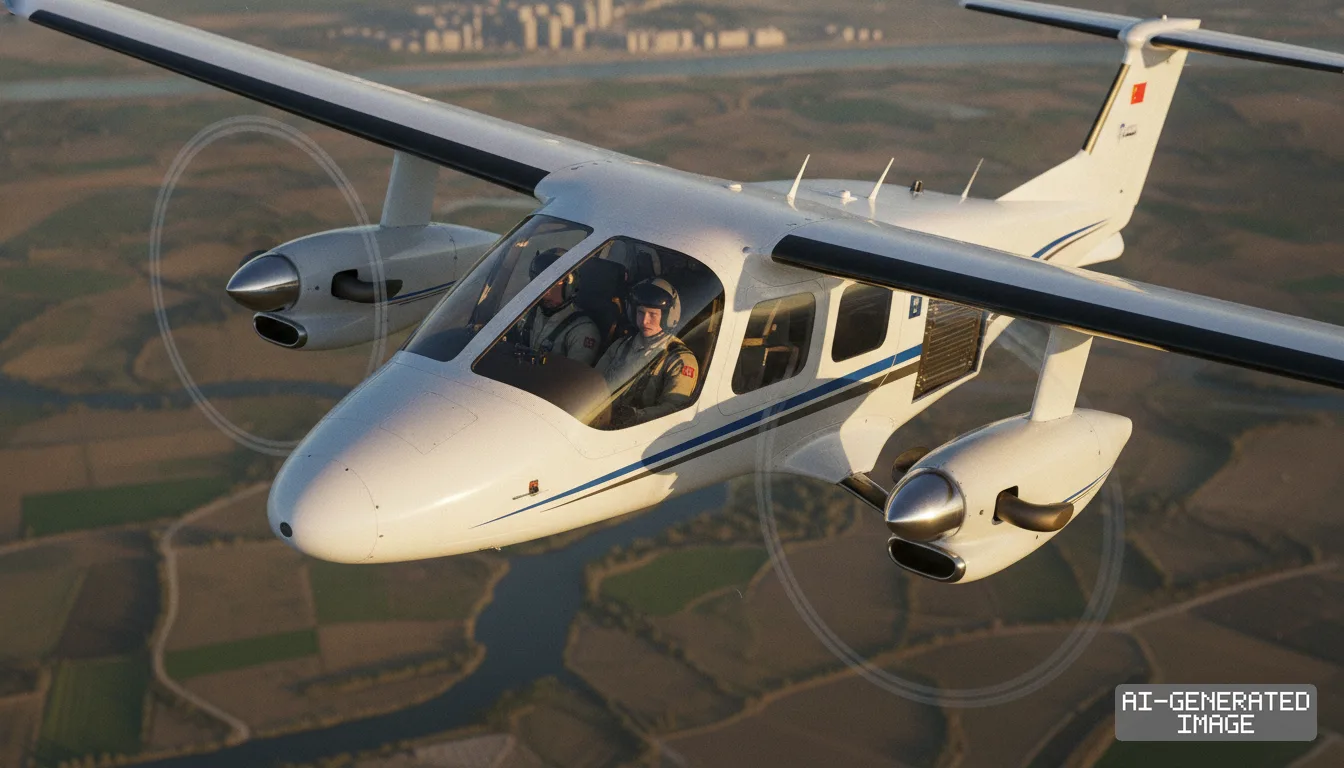
Commercial Aircraft Corporation of China announced Nov. 15 that its 10-metric-ton CE-25A electric commercial passenger aircraft completed its first crewed flight in Shandong province.
The demonstrator carried two pilots and one flight test engineer during the sortie at Binzhou. The aircraft remained airborne for 16 minutes and 38 seconds, covering a ground distance of 60.4 kilometers.
The CE-25A is designed to carry 19 passengers over regional routes of up to 400 kilometers. That payload places the design into the regional commuter market rather than the smaller urban air taxi segment.
The aircraft has a maximum takeoff weight of 10 metric tons. It cruises at 300 kilometers per hour at an assigned altitude of 2,400 meters.
Propulsion relies on 10 electric ducted fans distributed along the high wing structure. Five electric nacelles sit on each wing instead of conventional turboprop engines.
State-owned planemaker COMAC developed the airframe in partnership with Contemporary Amperex Technology Co. Limited and Shanghai Jiao Tong University. The partners established an electric aviation joint venture in July 2023.
That venture, COMAC Times Aviation, was registered with 600 million yuan ($82.5 million) in capital. CATL holds a direct equity stake to engineer aviation-grade lithium battery packs for commercial airframes.
The November piloted test follows 19 uncrewed autonomous flights conducted since Feb. 2. Those uncrewed sorties validated aerodynamic controls, flight software and battery pack thermal behavior.
The Civil Aviation Administration of China has accepted COMAC's formal application for a type certificate. The airworthiness review will proceed under CCAR-25 regulations.
The CCAR-25 framework governs transport-category airplanes. Applying transport standards requires the electrical power system to meet redundancy rules equivalent to large jetliners.
Electric aviation programs in North America and Europe have focused on four-seat or six-seat urban air taxis. Reaching 19 seats requires high-capacity energy storage that can handle steep reserve requirements.
CATL unveiled a condensed battery cell in 2023 with an energy density reaching 500 watt-hours per kilogram. The company stated then that the chemistry met civil aviation safety benchmarks.
Commercial regional aviation requires energy density above 400 watt-hours per kilogram to carry useful payloads. Conventional electric vehicle cells typically operate below 300 watt-hours per kilogram.
Aviation packs require containment shells that stop thermal runaway propagation between cells. These protective shells add structural deadweight that regional airframe designers must offset.
The CE-25A distributed fan layout improves wing lift across takeoff and climb phases. Ducted fans also lower noise footprints around secondary regional airports.
CATL supplies roughly 37% of global electric vehicle battery capacity. Expanding into aviation lets the manufacturer open a high-margin specialty cell business before automotive growth plateaus.
Chinese regional air transport faces high operating costs on routes under 500 kilometers. Electric regional aircraft aim to cut per-seat fuel and routine engine maintenance expenses.
Grid operators must now prepare high-megawatt charging infrastructure at feeder airfields. A 10-ton aircraft requires fast ground turnaround to match regional turboprop flight schedules.
South Korean battery producers have not targeted fixed-wing transport aircraft in this weight class. LG Energy Solution and Samsung SDI have centered aviation development on urban electric vertical takeoff platforms.
Japanese suppliers retain a commanding role in composite structural materials and electric motors. Toray Industries supplies carbon fiber prepreg, while motor builders target high-torque aerospace propulsion.
Western competitors are pursuing hybrid-electric architectures rather than pure battery power for 19-seat aircraft. Sweden's Heart Aerospace altered its ES-30 program from pure electric to hybrid drive to meet reserve margins.
Pure battery propulsion limits the CE-25A to point-to-point hops between well-equipped airstrips. Strong headwinds or diversions to distant alternate airports cut into practical commuter range.
The CAAC will establish special certification conditions for high-voltage aviation distribution. Current Chinese civil aviation rules carry few formal specifications for multi-megawatt airborne traction packs.
The initial review of the CE-25A airworthiness compliance plan begins with CAAC engineers in December. The certification campaign will require hundreds of logged flight hours across varied weather conditions.
The flight notice does not state the installed battery pack capacity or specific energy density, and COMAC has not published a commercial delivery schedule or price.
The prototype airframe returns to ground test benches in Binzhou for motor tear-down inspections.
Impact map
How this development propagates across the region and out to global buyers.
| Event | Korea | China | Japan | Global impact |
|---|---|---|---|---|
| COMAC CE-25A electric passenger aircraft piloted flight | LG Energy Solution and Samsung SDI remain focused on eVTOL cells rather than 10-ton transport airframes | CATL validates aviation battery engineering via 600 million yuan JV with COMAC | Toray and aerospace component vendors gain potential carbon fiber and actuator demand | Regional aviation tests pure-electric 19-seat viability against Western hybrid programs |
In this story
- Companies
- Commercial Aircraft Corporation of ChinaContemporary Amperex Technology Co. Limited
- Tickers
- 300750.SZ
- Exposed
- LG Energy SolutionSamsung SDIToray IndustriesHeart Aerospace
- Policy
- Standards
- Impact
- Supply ChainCapexCompliance
Track every Standards development →
Related briefings
- US limits aircraft part licenses to China to counter mineral limits Also on Commercial Aircraft Corporation of China, Compliance
- Sumitomo Chemical shifts aramid separator lines to Korea as battery thermal rules tighten Also on Toray Industries, Samsung SDI, LG Energy Solution
- Panasonic Optimizes 4680 Battery Cell Yields at Wakayama Plant in Japan Also on Toray Industries
- Japan Separator Makers Accelerate Ceramic-Coated and Solid-State Film Expansion Also on Toray Industries
Sources
Reporting
Confidence: medium — how we grade this
The documents behind this briefing are linked above. East Asia Brief produces its English text with AI assistance under human editorial review, and does not translate or republish other outlets' articles. See our methodology and AI policy. Spotted an error? Tell us.
The Morning Brief
What changed in Korean, Chinese and Japanese industry overnight — and what it means for your supply chain. One email, weekday mornings, US time. Free.
The Morning Brief is in preparation. Leave your address and we will write to you once — when the first issue is ready. Nothing before that.