Panasonic Optimizes 4680 Battery Cell Yields at Wakayama Plant in Japan
The Japanese cell manufacturer improves dry electrode coating lines and tabless winding processes to stabilize commercial shipments for primary automotive clients.
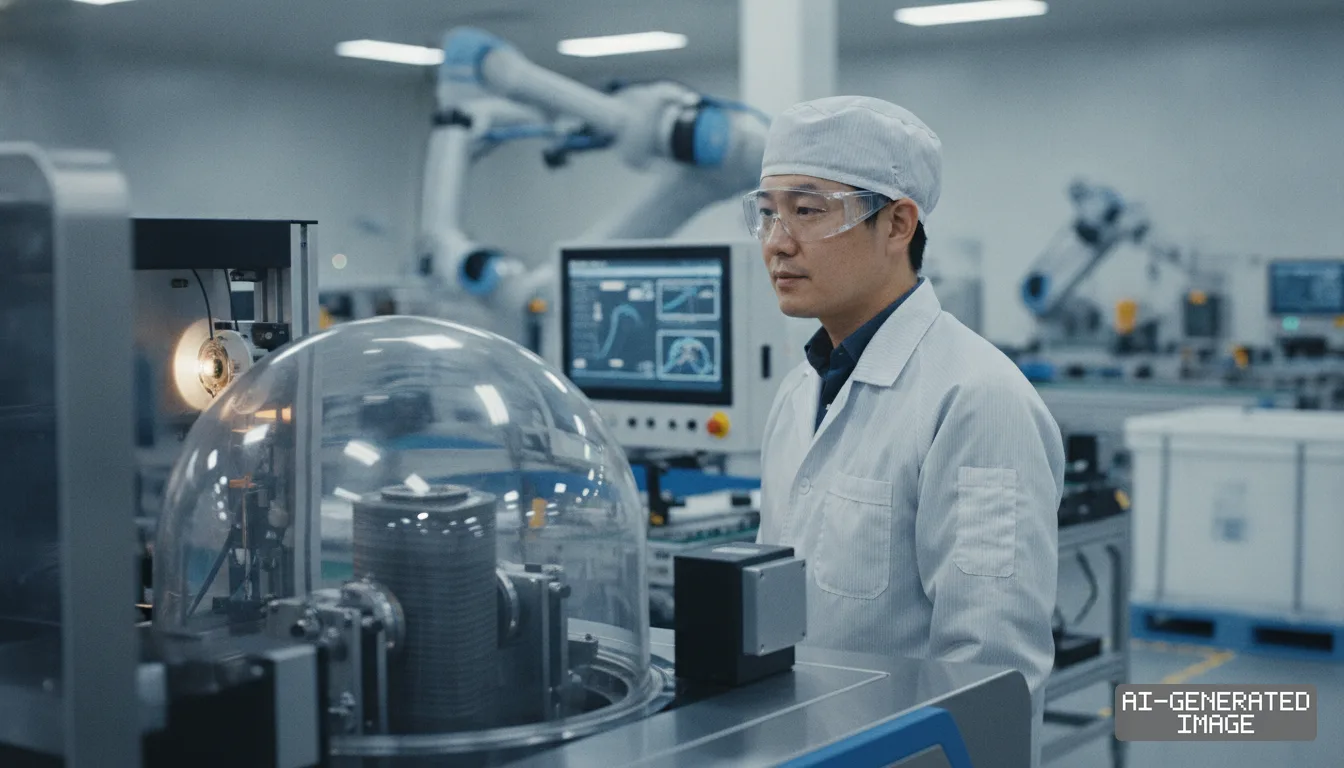
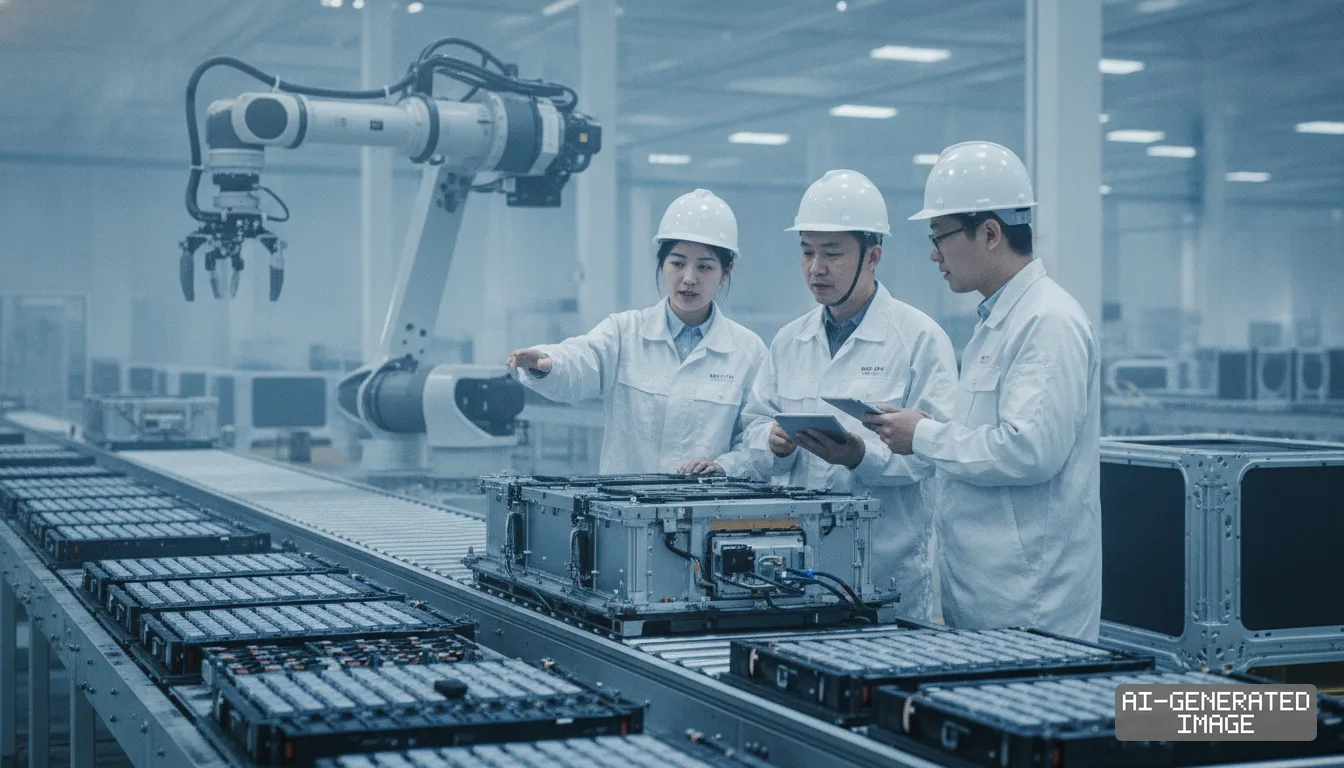
Panasonic Energy has initiated advanced process optimizations across its cylindrical battery manufacturing lines in Japan, refining electrode deposition techniques and tabless jelly-roll winding mechanisms to accelerate commercial yields for its 4680-format lithium-ion cells.
The Osaka-headquartered unit of Panasonic Holdings is concentrating high-volume ramp-up efforts at its Wakayama factory in western Japan, which serves as the primary mother plant for developing and standardizing next-generation cylindrical manufacturing blueprints before technical transfers to North American sites. The 4680 format, measuring 46 millimeters in diameter and 80 millimeters in height, offers approximately five times the energy capacity of the earlier 2170 cylindrical cells. Scaling commercial yields has posed severe industrial challenges across global cell manufacturers due to thermal build-up during rapid charging, thicker cathode coatings, and precise alignment tolerances required for tabless current collectors.
Panasonic has redesigned its electrode coating and calendering sequences to address continuous micro-delamination along high-nickel active material layers. Engineering teams at Wakayama integrated improved continuous roll-pressing feedback systems that measure mass per unit area in real time via non-contact radiation gauges, correcting lateral coating unevenness across wide-web copper and aluminum current collector foils. The modification reduces internal resistance deviations across individual cell batches, lowering thermal variance during high-rate discharge cycles.
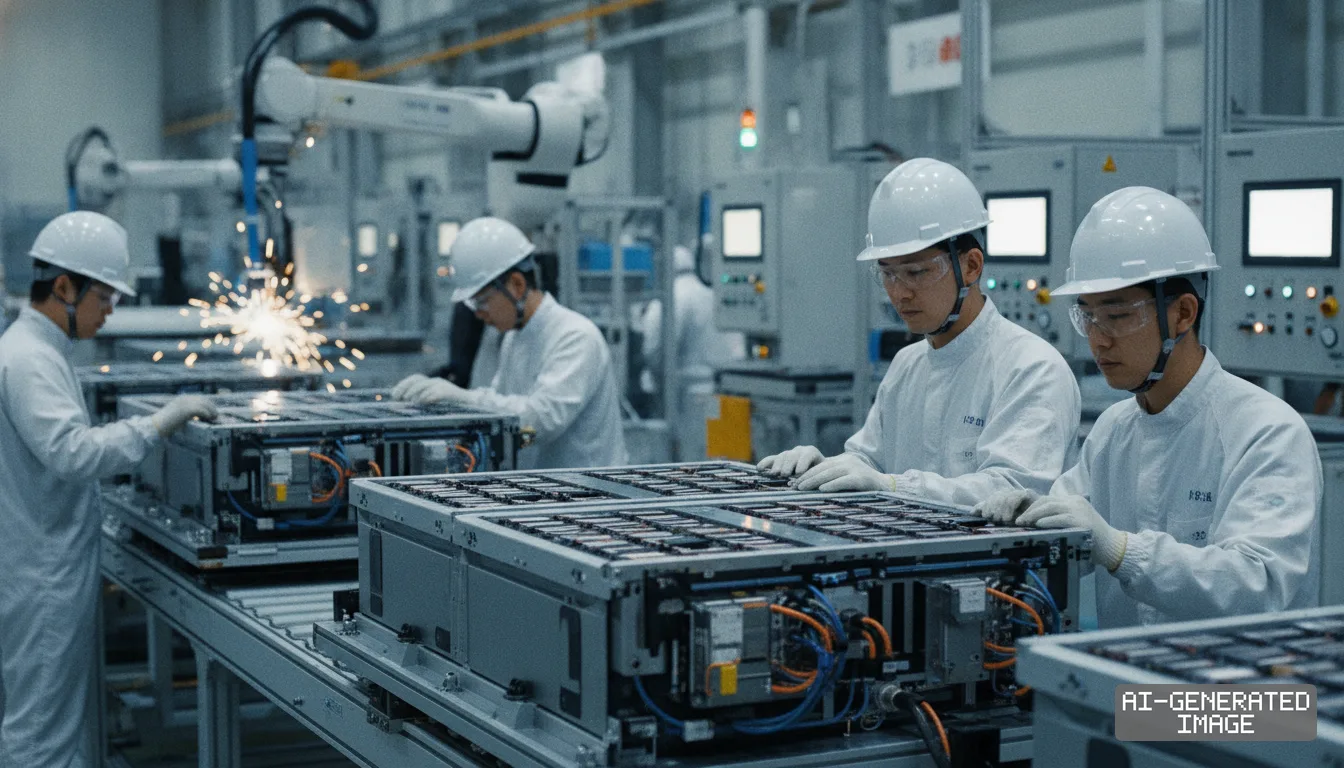
The transition to a tabless architecture represents the central mechanical hurdle in commercializing large-format cylindrical packaging. Conventional 2170 cells rely on welded metal tabs to carry electrical current from the wound cathode and anode foils to external terminals. The 4680 design eliminates discrete tabs by laser-patterning and folding the exposed foil edges along the entire length of the jelly-roll, forming continuous end-cap contacts. Panasonic refined its precision continuous laser-notching modules, sourcing customized optical scanning heads to prevent microscopic metal splatter during the high-speed foil cutting stage. Eliminating spatter minimizes internal short-circuit risks while securing the structural integrity required for rapid automated laser welding against inner battery can terminals.
Material formulation adjustments have proceeded in tandem with mechanical tooling upgrades. Panasonic is deploying high-nickel cathode formulations paired with silicon-doped synthetic graphite anodes to boost volumetric energy density toward targets exceeding 800 watt-hours per liter at the cell level. Japanese chemical and precursor suppliers, including Sumitomo Metal Mining for high-nickel cathode active materials and Toray Industries for ultra-thin coated separators, have aligned delivery specifications with the tighter mechanical stress limits demanded by large-diameter continuous cylindrical winding. The thicker electrode layers inherent to the 4680 format increase mechanical rigidity, raising the risk of edge cracking when rolled into 46-millimeter casings unless binding polymers maintain adequate elasticity throughout continuous high-speed winding.
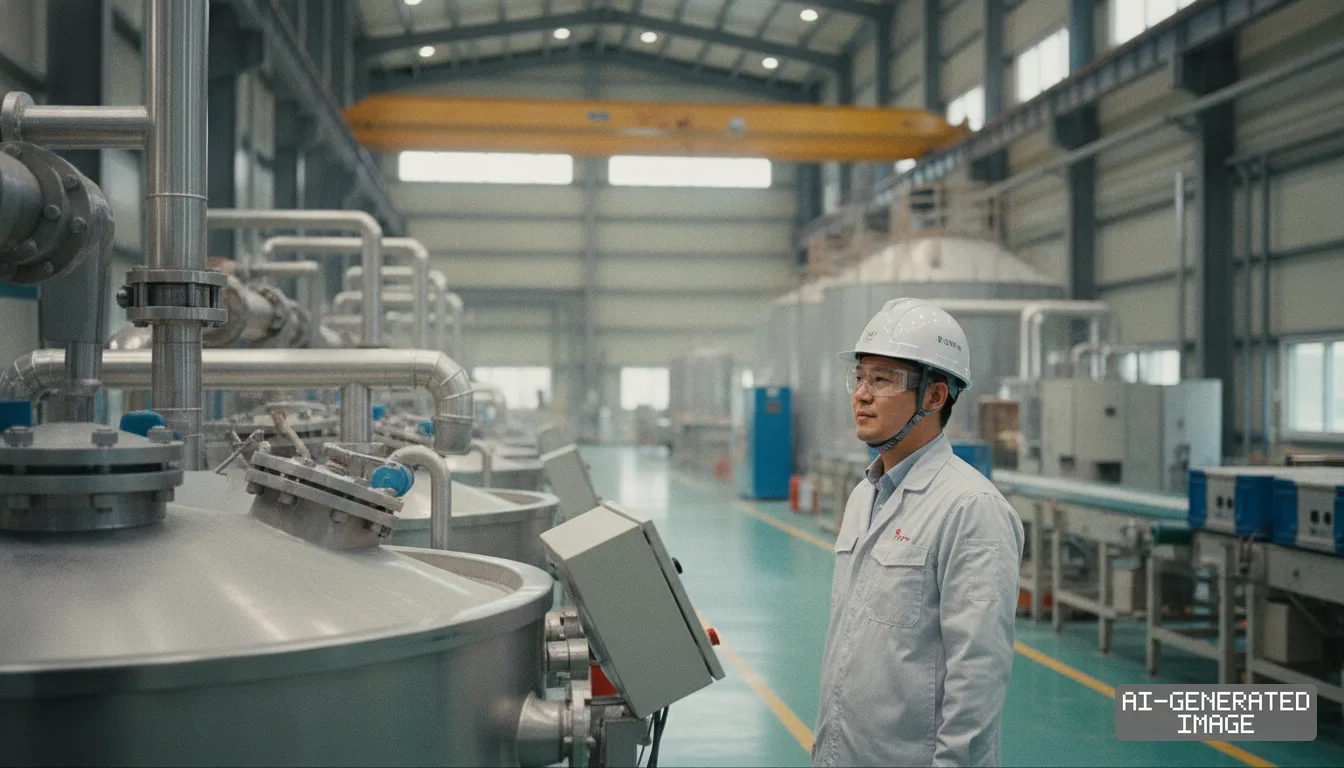
Electrolyte wetting represents another operational bottleneck Panasonic has addressed at the pilot-to-commercial inflection point. Due to the dense, large jelly-roll volume of the 4680 structure, conventional vacuum-assisted liquid electrolyte filling cycles require significantly longer permeation durations compared to smaller cells. Panasonic shortened overall filling and stabilization cycle times by introducing multi-stage pressurized vacuum injection cycles combined with proprietary fluorinated electrolyte additives designed to accelerate wetting across dense graphite-silicon matrices. This process optimization cuts factory dwelling durations during the pre-formation aging phase, raising factory-floor throughput per square meter.
Equipment integration across the Wakayama facility involves domestic precision machinery specialists. Winding equipment vendors, automated assembly integrators, and automated formation systems have calibrated production tolerances to target a continuous line output rate exceeding 300 parts per minute. Japanese machinery suppliers including CKD Corporation and Toray Engineering have delivered customized components designed to minimize mechanical vibrations during high-speed web transport, ensuring that microscopic edge registration between cathode, anode, and ceramic-coated separator layers remains within five-micrometer margins.
For automotive platform architects, the production stabilization of 4680 cells determines the timeline for structural battery pack deployment. Integrating large-format cylindrical cells directly into vehicle chassis without intermediate modular frames reduces pack-level component counts, drops structural weight, and simplifies automated pack assembly lines. However, automotive original equipment manufacturers require strict batch uniformity, as a single out-of-spec cell inside a series-parallel circuit can degrade total pack thermal management and available driving range. Panasonic’s yield improvements at Wakayama provide the technical baseline needed to ensure delivery compliance for anchor client Tesla, which integrates 4680 structural packs into its high-volume utility vehicles and light trucks.
Panasonic has also structured its Japanese manufacturing trials to validate process economics before installing high-speed lines at its multi-billion-dollar cell facility under construction in De Soto, Kansas. Operating trial lines at full line-speed within Japan allows engineering teams to identify maintenance bottlenecks, train supervisory line technicians, and document statistical process control rules. This procedural isolation shields overseas capital expenditure from protracted trial-and-error costs associated with unproven factory tooling setups.
The company’s capital spending plan allocates sustained domestic funding toward pilot equipment modernization and advanced electrode synthesis while preserving operational flexibility across its traditional 1865 and 2170 production lines at the Suminoe and Kaizuka facilities in Osaka. Panasonic has maintained steady production of 2170 cells to satisfy current vehicle manufacturing schedules, ensuring that engineering resources shifted to the 4680 format do not disrupt existing revenue-generating component streams.
Line stabilization metrics at Wakayama will serve as the industrial template for evaluating the competitive viability of Japanese cylindrical cell manufacturing against high-speed prism and pouch formats produced by South Korean and Chinese competitors. Contemporary Amperex Technology and BYD have advanced high-density prismatic solutions and cell-to-body structural platforms, while LG Energy Solution and Samsung SDI are installing their own 46-series cylindrical lines. The technical viability of Panasonic's manufacturing platform rests on its ability to sustain low scrap rates across continuous high-speed coating, winding, and laser-sealing stages at full industrial volumes.
Impact map
How this development propagates across the region and out to global buyers.
| Event | Korea | China | Japan | Global impact |
|---|---|---|---|---|
| 4680 line stabilization | competing cylindrical ramp | — | domestic equipment orders | vehicle pack weight reduction |
In this story
- Companies
- Panasonic HoldingsPanasonic EnergyTesla
- Tickers
- 6752.TTSLA
- Exposed
- Sumitomo Metal MiningToray IndustriesCKD Corporation
- Policy
- SubsidiesEconomic Security
- Impact
- CapexSupply ChainCost Structure
Track every Subsidies development → Track every Economic Security development →
Related briefings
- Sumitomo Chemical shifts aramid separator lines to Korea as battery thermal rules tighten Also on Toray Industries, Panasonic Holdings, Cost Structure
- Japan Separator Makers Accelerate Ceramic-Coated and Solid-State Film Expansion Also on Toray Industries, Panasonic Energy, Cost Structure
- Japanese trading houses expand cobalt refining ties to counter supply risk Also on Sumitomo Metal Mining, Panasonic Energy
- Japan certifies $2.4 billion in battery subsidies to lock in solid-state cell capacity Also on Sumitomo Metal Mining, Panasonic Holdings
Sources
This briefing carries no sources block. It was written from our desks’ working knowledge of the sector rather than from documents retrieved for this piece. Read it as orientation and check any figure you intend to act on — how we source briefings.
This briefing carries no linked sources: it was written from our desks' working knowledge of the sector rather than from documents retrieved for this piece. East Asia Brief publishes no citation it cannot link. Our English text is produced with AI assistance under human editorial review. See our methodology and AI policy. Spotted an error? Tell us.
The Morning Brief
What changed in Korean, Chinese and Japanese industry overnight — and what it means for your supply chain. One email, weekday mornings, US time. Free.
The Morning Brief is in preparation. Leave your address and we will write to you once — when the first issue is ready. Nothing before that.