Ford nets CAD 759M Oakville aid while shipping Michigan LFP cells
Canadian federal and Ontario subsidies back the truck plant overhaul as commercial prismatic cells leave the Marshall battery facility.
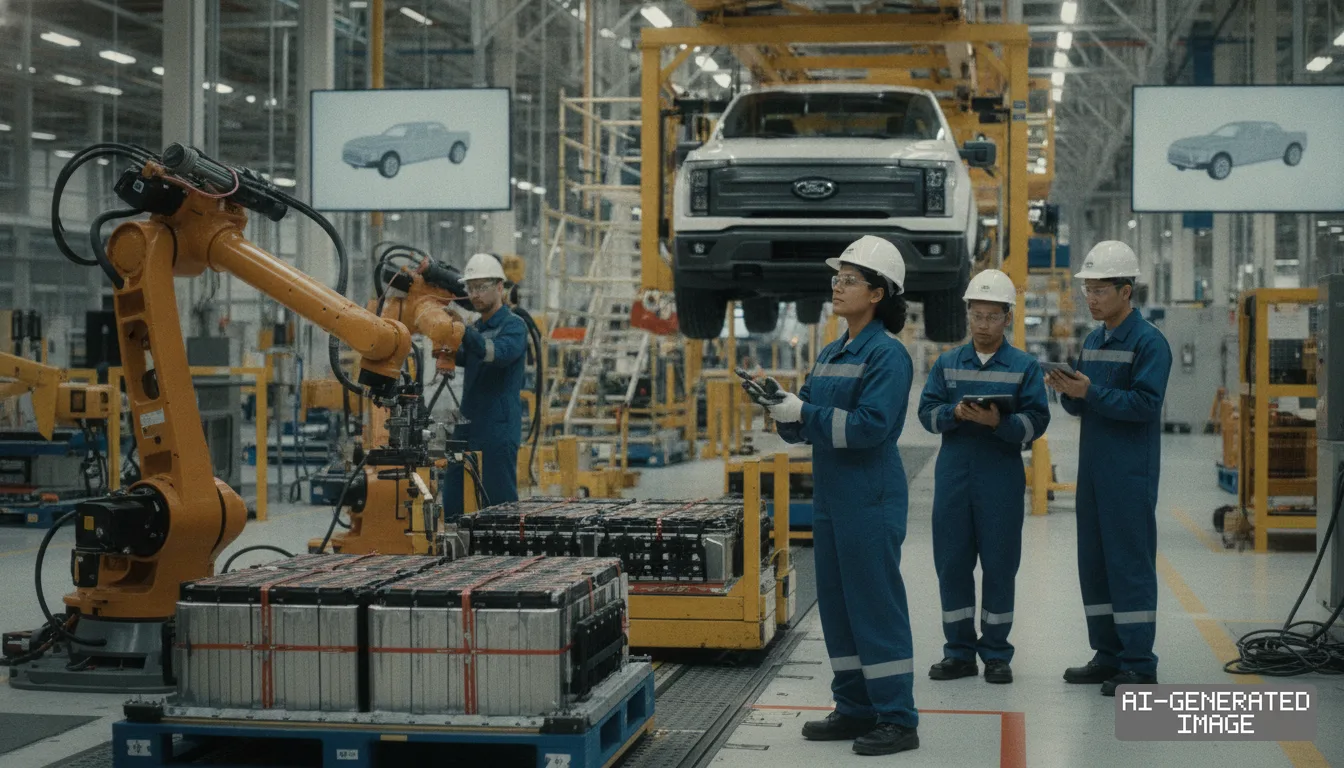
Ford Motor confirmed Nov. 21, 2026, it secured Canadian public funding for its Oakville assembly overhaul while shipping its first commercial lithium iron phosphate battery cells from its Michigan plant.
The Canadian federal government and Ontario pledged 759.1 million Canadian dollars ($545 million), covering roughly 15% of the CAD 5 billion conversion of the Oakville plant to build combustion trucks.
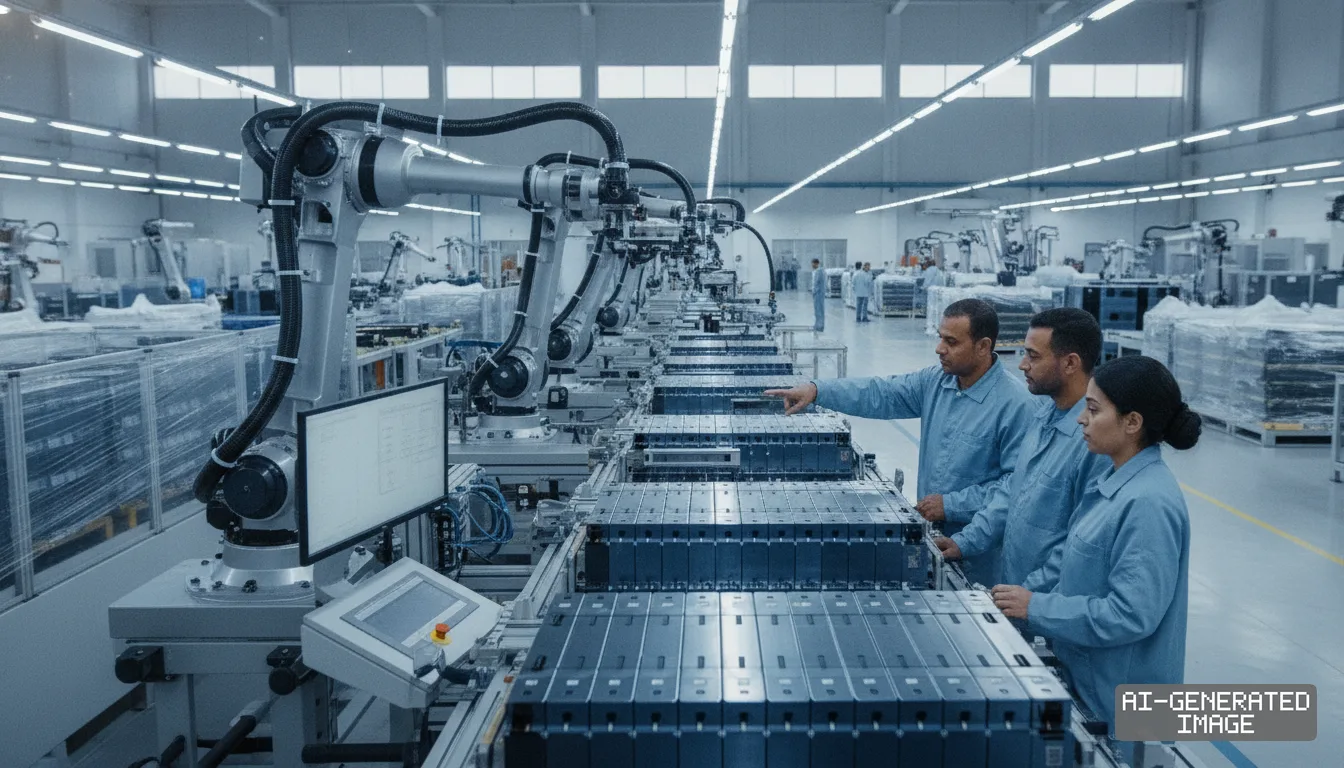
That cash infusion pairs with Ford's $3 billion BlueOval Battery Park Michigan in Marshall, where cell lines began delivering commercial prismatic packs on Nov. 18 to supply domestic electric truck prototypes.
The dual milestones mark a sharp realignment of Ford's North American manufacturing network. The company is using cash from heavy combustion trucks to absorb elevated battery production costs during an uneven electric vehicle transition.
Oakville was originally slated to become a dedicated electric vehicle hub under an agreement signed in 2020. Ford canceled that program earlier this year, terminating a prior CAD 295 million federal electrification contract without drawing funds.
The revised strategy directs Oakville to assemble up to 100,000 heavy-duty F-Series Super Duty trucks per year. The overhaul adds a dedicated stamping plant and protects more than 2,000 unionized manufacturing jobs in Ontario.
Under agreements finalized Nov. 20, Ottawa provides CAD 464.5 million through its Strategic Response Fund. The Ontario provincial government contributes CAD 294.6 million in matching industrial assistance to support tooling and robotics installation.
Chief Executive Officer Jim Farley said Nov. 21 the Oakville investment reinforces Ford's most profitable vehicle line. The factory will build V8 gasoline and diesel trucks to supply commercial fleet buyers across North America.
The Canadian plant will source engines from Ford's Essex Engine Plant in Windsor, Ontario. That integrated domestic powertrain corridor shields the carmaker against potential U.S. tariff actions on finished vehicles imported from Canada.
Across the border, BlueOval Battery Park Michigan achieved commercial production this month. Ford Energy said Nov. 18 that prismatic cells are currently shipping to Louisville Assembly Plant in Kentucky for Ford Fathom truck prototypes.
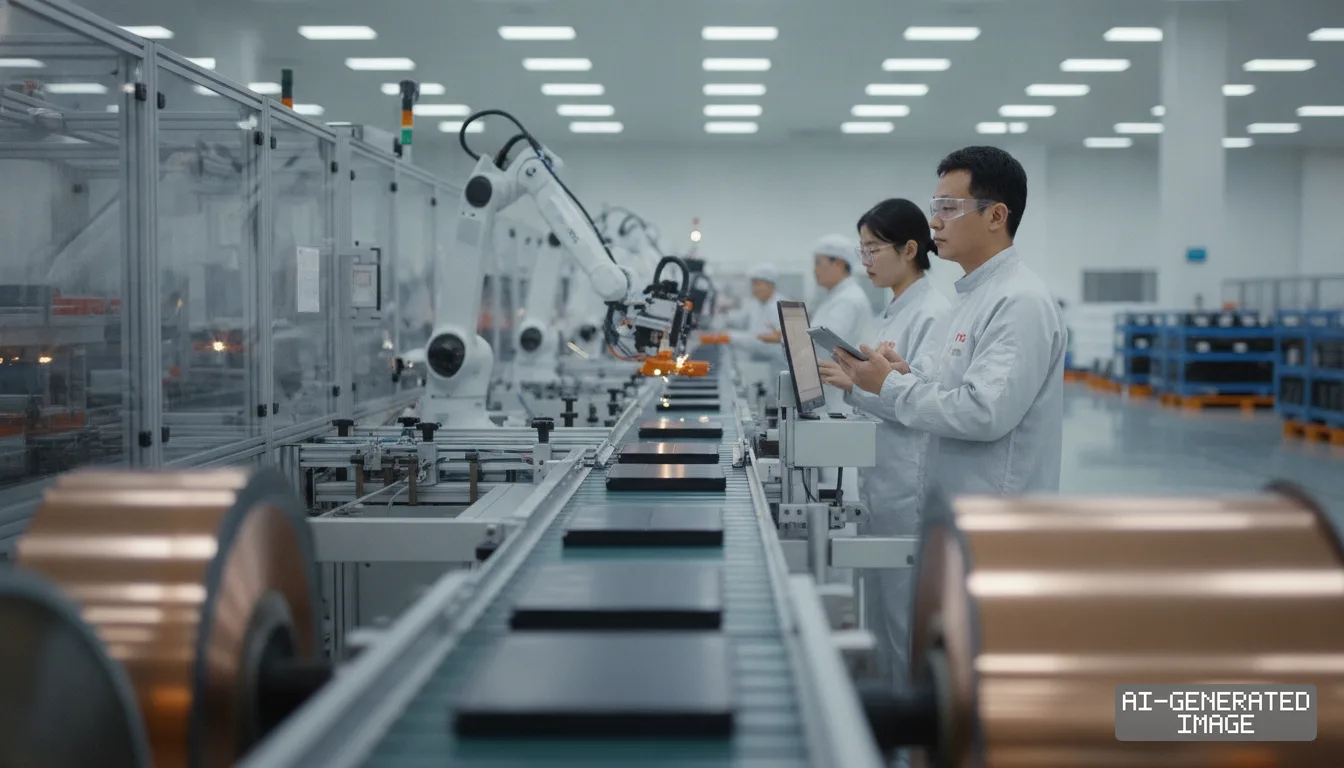
The Fathom is a midsize electric pickup designed for commercial buyers seeking lower operational costs. The Marshall plant's automated lines assemble 40 lithium iron phosphate prismatic cells every minute, according to company specifications.
Ford scaled the Marshall facility to 20 gigawatt-hours of annual capacity, employing about 1,700 workers. That footprint reflects a reduction from the 35 gigawatt-hours and 2,500 jobs Ford originally announced in February 2023.
The Michigan site operates as a wholly owned Ford subsidiary. Ford licensed the underlying cell chemistry and manufacturing processes from China's Contemporary Amperex Technology Co. Limited, known as CATL.
CATL collects intellectual property licensing fees and technical service payments from Marshall but holds no equity. That contractual separation was designed to comply with Foreign Entity of Concern rules under the U.S. Inflation Reduction Act.
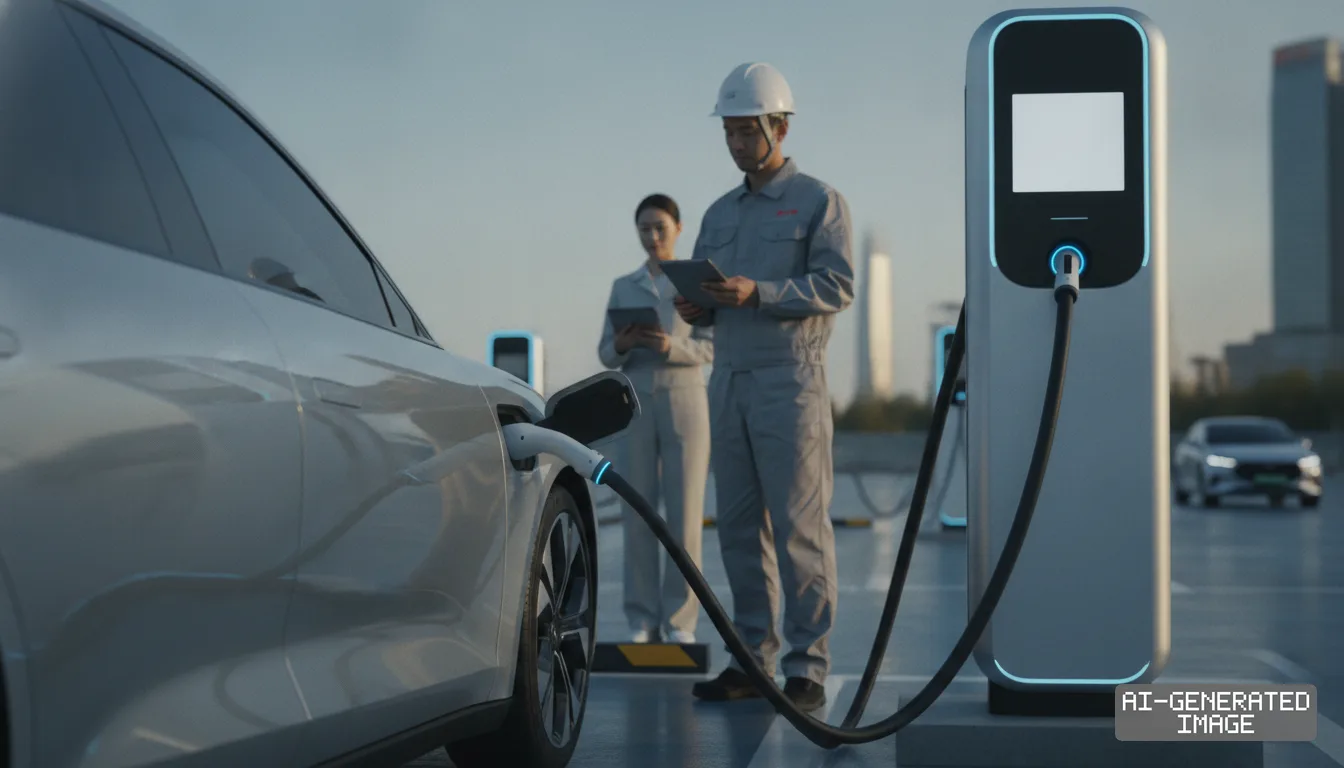
Under Section 45X of the statute, Ford qualifies for an Advanced Manufacturing Production Credit of $35 per kilowatt-hour for domestic cells. An additional $10 per kilowatt-hour applies to finished battery packs assembled in the United States.
The plant must also clear Treasury Department restrictions under Section 30D. Those provisions disqualify electric vehicles from consumer tax credits if battery cells or critical mineral inputs trace to Chinese corporate control.
Ford structured Marshall with an American management team and domestic assembly workforce to keep CATL at arm's length. The company is wagering that intellectual property licensing without equity will survive federal scrutiny.
The licensing framework represents CATL's primary commercial foothold in the North American passenger market. CATL provides technical assistance while avoiding direct capital exposure to shifting trade policies and congressional investigations in Washington.
Ford Energy is already linking cell production from Marshall to the stationary power sector. EDF Power Solutions North America agreed to buy up to 4 gigawatt-hours of battery energy storage systems per year under a five-year contract.
Output from Marshall also provides manufacturing data for Ford Energy Systems in Glendale, Kentucky. Ford allocated roughly $2 billion to that Kentucky plant to begin commercial grid-scale battery storage assembly in late 2027.
The Canadian contribution agreement does not state the exact disbursement schedule for Ottawa's CAD 464.5 million grant, nor has the U.S. Treasury issued formal certification on Marshall's 2027 Foreign Entity of Concern compliance status.
Ottawa's grant contract carries an operating covenant requiring Ford to run Oakville through March 31, 2038, while Ford plans to bring a dedicated battery pack assembly line online in Marshall before Dec. 31, 2027.
Impact map
How this development propagates across the region and out to global buyers.
| Event | Korea | China | Japan | Global impact |
|---|---|---|---|---|
| Ford North American manufacturing realignment | LG Energy Solution and SK on face LFP price pressure from domestic licensed Michigan cells | CATL books technology royalties on 20 GWh capacity while avoiding direct equity exposure | Commercial truck cell suppliers face displacement as Ford internalizes LFP production | Automakers adopt IP licensing agreements to navigate US Foreign Entity of Concern rules |
In this story
- Companies
- Ford Motor Company
- Tickers
- F
- Exposed
- Contemporary Amperex Technology
- Policy
- SubsidiesTax Credits
- Impact
- Supply ChainCapexCompliance
Track every Subsidies development → Track every Tax Credits development →
Related briefings
- Ford taps Korean vendors DH and Hana for Michigan battery pilot line Also on Ford Motor Company, Contemporary Amperex Technology, Compliance
- SK On assumes $1.5 billion debt from US battery subsidiary Also on Ford Motor Company, Compliance, Subsidies
- EcoPro replaces affiliate CEOs to defend margins in EV slump Also on Ford Motor Company, Subsidies
- SK On wins Ford Q1 status for its 30 GWh Hungarian plant Also on Ford Motor Company, Compliance
Sources
Reporting
Confidence: medium — how we grade this
The documents behind this briefing are linked above. East Asia Brief produces its English text with AI assistance under human editorial review, and does not translate or republish other outlets' articles. See our methodology and AI policy. Spotted an error? Tell us.
The Morning Brief
What changed in Korean, Chinese and Japanese industry overnight — and what it means for your supply chain. One email, weekday mornings, US time. Free.
The Morning Brief is in preparation. Leave your address and we will write to you once — when the first issue is ready. Nothing before that.