CATL unveils dual-battery truck system on 13,000 fleet orders
The battery maker signed initial supply deals with 14 logistics operators as China's monthly electric heavy-duty truck penetration topped 50% for a second straight month.
Contemporary Amperex Technology Co. Limited unveiled an electric-electric range-extension battery system for heavy-duty trucks on Oct. 20, 2026, securing initial commercial delivery orders for 13,000 units from 14 Chinese logistics operators in Beijing.
The commercial commitments mark CATL's largest single deployment in freight transport. The launch comes as freight carriers accelerate vehicle electrification to reduce fleet operating costs along national highway corridors.
New-energy commercial trucks accounted for 50.28% of all heavy truck sales in China in September. The milestone marked the second consecutive month that zero-emission powertrains outsold traditional diesel engines in the sector.
Couriers SF Holding, ZTO Express and YTO Express signed procurement contracts for the new vehicles. State-owned China Postal Express and Logistics also committed freight capacity to the platform at the Beijing event.
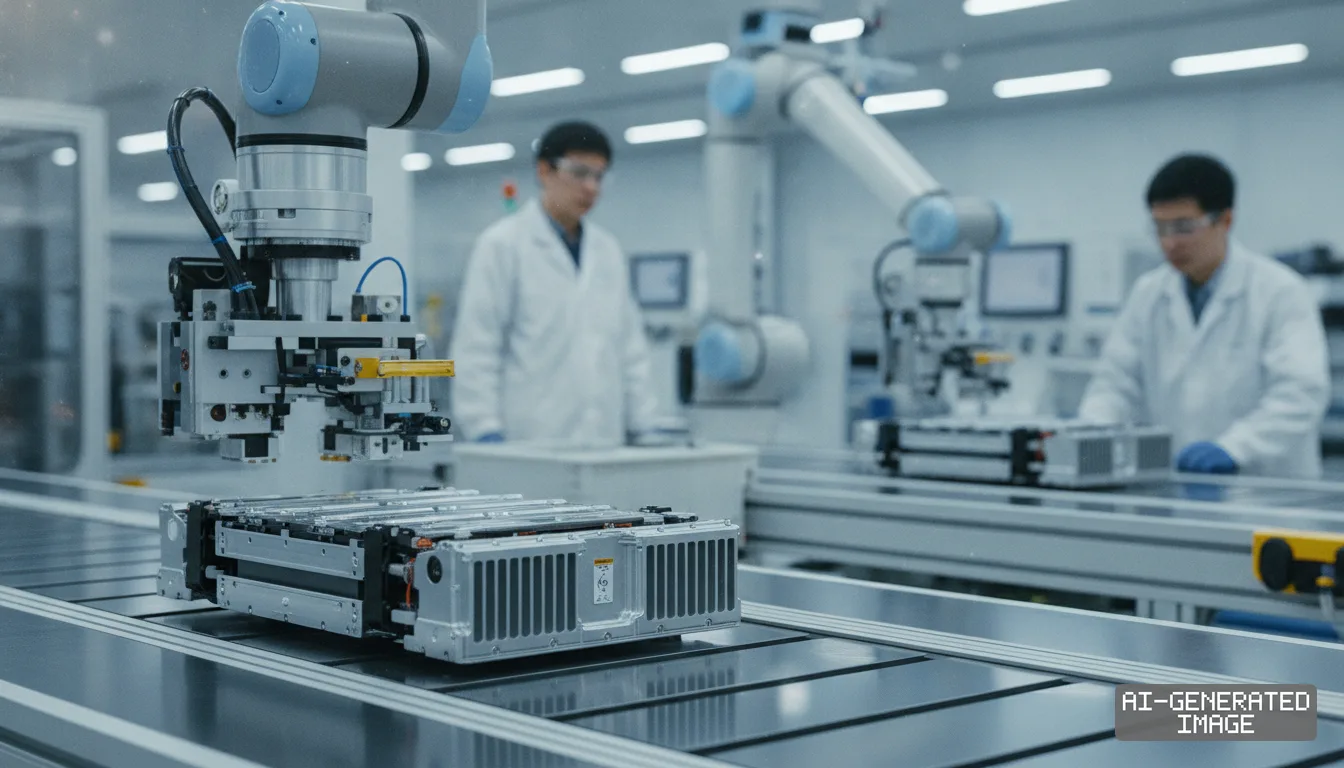
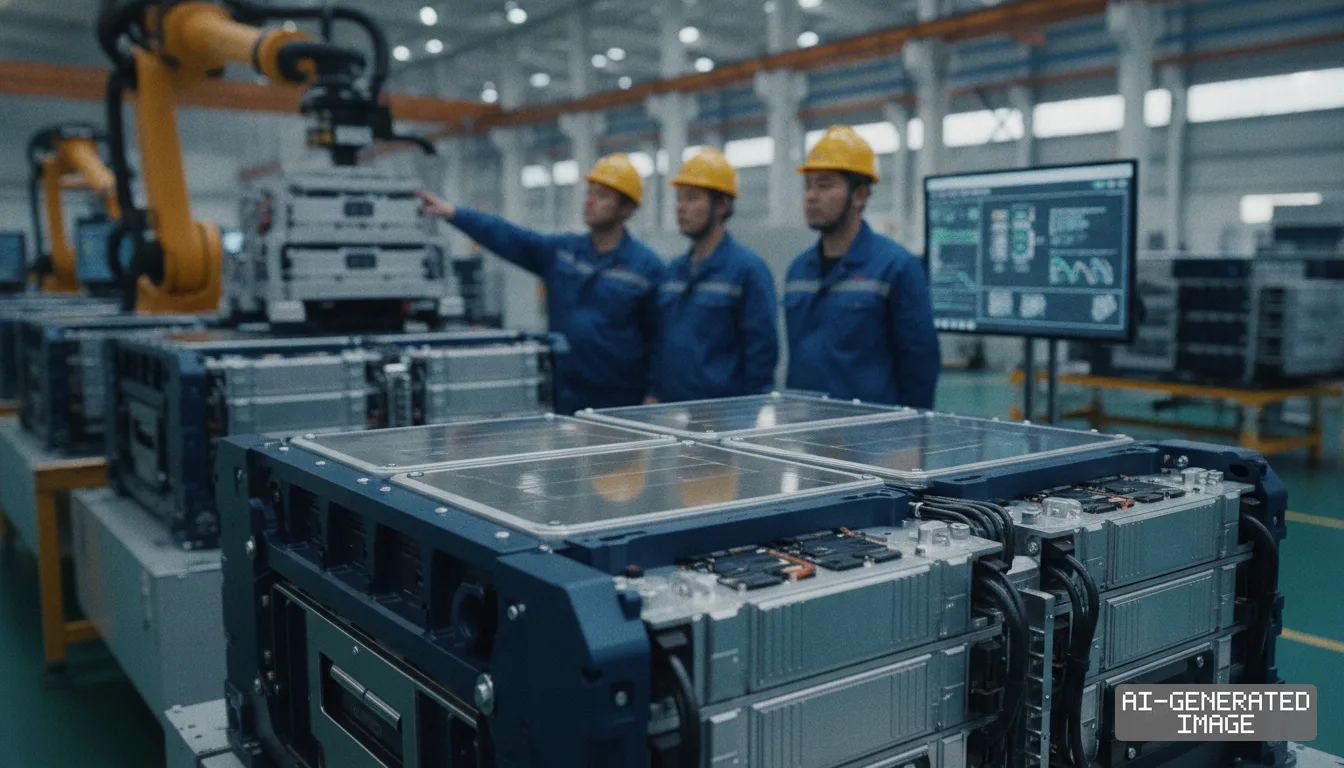
The battery system relies on a dual-pack architecture that separates primary traction from reserve power. An exchangeable battery block sits under the chassis, while a secondary pack remains permanently fixed behind the vehicle cab.
CATL engineered the primary swappable unit in two standard industrial sizes. The 260-series pack delivers 432 kilowatt-hours for 3,800-millimeter wheelbases, while the larger 300-series pack supplies 513 kilowatt-hours for 4,200-millimeter chassis frames.
The secondary behind-the-cab pack provides 77 kilowatt-hours of auxiliary storage. Built with lithium iron phosphate cells, the secondary unit supports 3C fast charging, allowing drivers to replenish backup power during mandatory cargo stops.
Freight operators historically suffered from premature battery swapping due to driver range anxiety. Drivers routinely pulled into swap stations with roughly 30% of energy remaining, capping usable depth of discharge near 70%.
The auxiliary battery eliminates that buffer by acting as an onboard reserve. Drivers can deplete the main chassis pack to less than 5% state of charge, raising system depth of discharge above 95%.
Power management hardware transfers electricity between the packs within milliseconds once the primary battery reaches depletion. The handoff occurs without vehicle deceleration or interruption to steering and pneumatic braking systems, CATL said.
Chassis swap stations can replace a depleted primary block in five minutes. Automated mechanical arms unbolt the spent battery from underneath the vehicle frame and lock a fully charged pack into place.
CATL calculates that the dual-electric configuration reduces fuel and maintenance expenditure by more than 460,000 yuan ($64,500) per truck over a three-year operating cycle compared with standard diesel-fueled heavy rigs.
The system uses a battery-as-a-service commercial model that unbundles pack ownership from truck titles. Freight carriers purchase the rolling chassis and lease battery capacity, lowering upfront vehicle acquisition hurdles for fleet managers.
CATL currently operates its proprietary QIJI swap infrastructure across five major Chinese logistics corridors. Operational freight fleets have accumulated more than five million kilometers of commercial driving on the network to date, according to company data.
The manufacturer plans to commission 900 heavy truck swap stations across China by Dec. 31, 2026. Network coverage will expand to 2,000 swap stations by the end of 2027, according to company rollout schedules.
The company's long-term infrastructure roadmap calls for 10,000 heavy-vehicle swap stations across China. The planned footprint targets 80% coverage of China's interprovincial freight corridors, connecting coastal maritime ports to western industrial hubs.
The technological shift coincides with diverging dynamics across China's heavy transport market. Total heavy truck sales fell 21% year-on-year in September, but deliveries of electric heavy trucks climbed 37% over the same monthly interval.
Highway tractor units led the market transition during the third quarter. New-energy tractor adoption reached 64.48% of total tractor sales in September, reflecting rapid fleet substitution along fixed point-to-point shipping routes.
CATL batteries power more than 430,000 heavy-duty electric commercial vehicles worldwide. The installed base gives the Chinese cell manufacturer roughly 70% share of the global electric heavy truck battery market, according to corporate disclosures.
The new-generation QIJI swap stations require no ground excavation pit, cutting civil construction costs by 10%. Engineering crews can erect and commission an operating station in five days alongside highway service areas, CATL said.
Foreign competitors remain largely absent from China's heavy commercial battery supply chain. South Korean cell makers LG Energy Solution and Samsung SDI concentrate capital spending on passenger vehicle cells, leaving Chinese logistics standards uncontested.
CATL did not disclose the turnkey capital cost of individual QIJI swap stations or the per-kilowatt-hour leasing fee schedule that logistics carriers will pay across the regional swap network.
Initial deliveries of the 13,000 dual-electric commercial trucks begin route trials in November, with commercial freight runs scheduled across Beijing, Hebei and Shandong logistics corridors.
Impact map
How this development propagates across the region and out to global buyers.
| Event | Korea | China | Japan | Global impact |
|---|---|---|---|---|
| CATL heavy truck battery launch | LG Energy Solution and Samsung SDI face standard lock-out in Chinese heavy logistics corridors | CATL locks in 13,000 fleet orders and establishes standard 432 kWh and 513 kWh swappable form factors | Commercial truck exporters face mounting operating cost gaps against Chinese electric rigs | Commercial fleet TCO falls an estimated $64,500 over three years, accelerating long-haul zero-emission shifts |
In this story
- Companies
- Contemporary Amperex Technology
- Tickers
- 300750.SZ
- Exposed
- SF HoldingZTO ExpressYTO ExpressChina Postal Express & Logistics
- Impact
- Supply ChainOrder BookCost Structure
Related briefings
- BYD lifts overseas EV battery volume 66.5% to take 11% share Also on Contemporary Amperex Technology, Cost Structure, Order Book
- BYD Widens BEV Lead Over Tesla to Record 275,946 Cars in Q3 Also on Contemporary Amperex Technology, Cost Structure, Order Book
- SK On Cuts LFP Cathode Costs With Carbon Nanotube Powder Also on Contemporary Amperex Technology, Cost Structure
- Indonesia nickel probe ties carmakers to deforestation in Sulawesi Also on Contemporary Amperex Technology, Cost Structure
Sources
Reporting
Confidence: medium — how we grade this
The documents behind this briefing are linked above. East Asia Brief produces its English text with AI assistance under human editorial review, and does not translate or republish other outlets' articles. See our methodology and AI policy. Spotted an error? Tell us.
The Morning Brief
What changed in Korean, Chinese and Japanese industry overnight — and what it means for your supply chain. One email, weekday mornings, US time. Free.
The Morning Brief is in preparation. Leave your address and we will write to you once — when the first issue is ready. Nothing before that.