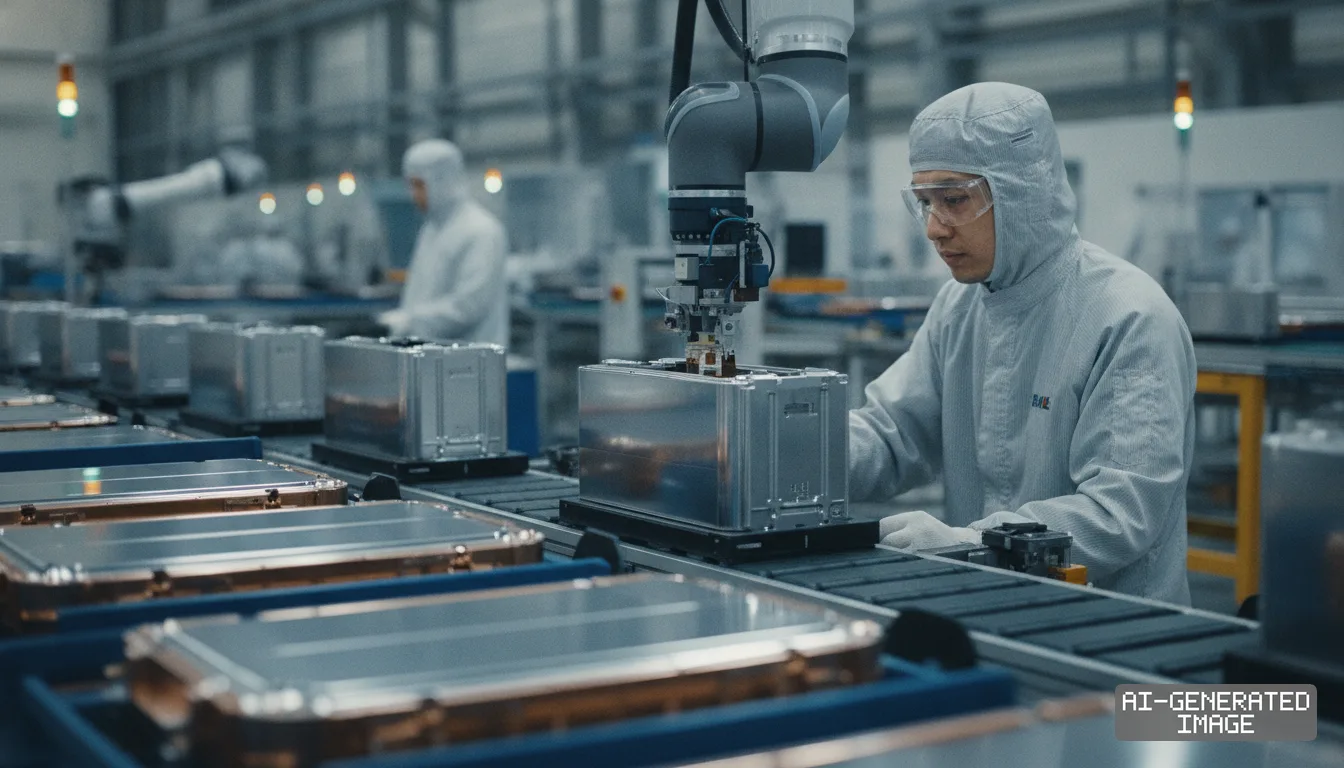
CATL launches 9MWh TENER+ grid battery system in Australia
The world's largest battery maker agreed to pair its 9-megawatt-hour container with Hitachi Energy power systems, cutting installation footprints by 35% across utility-scale grids.
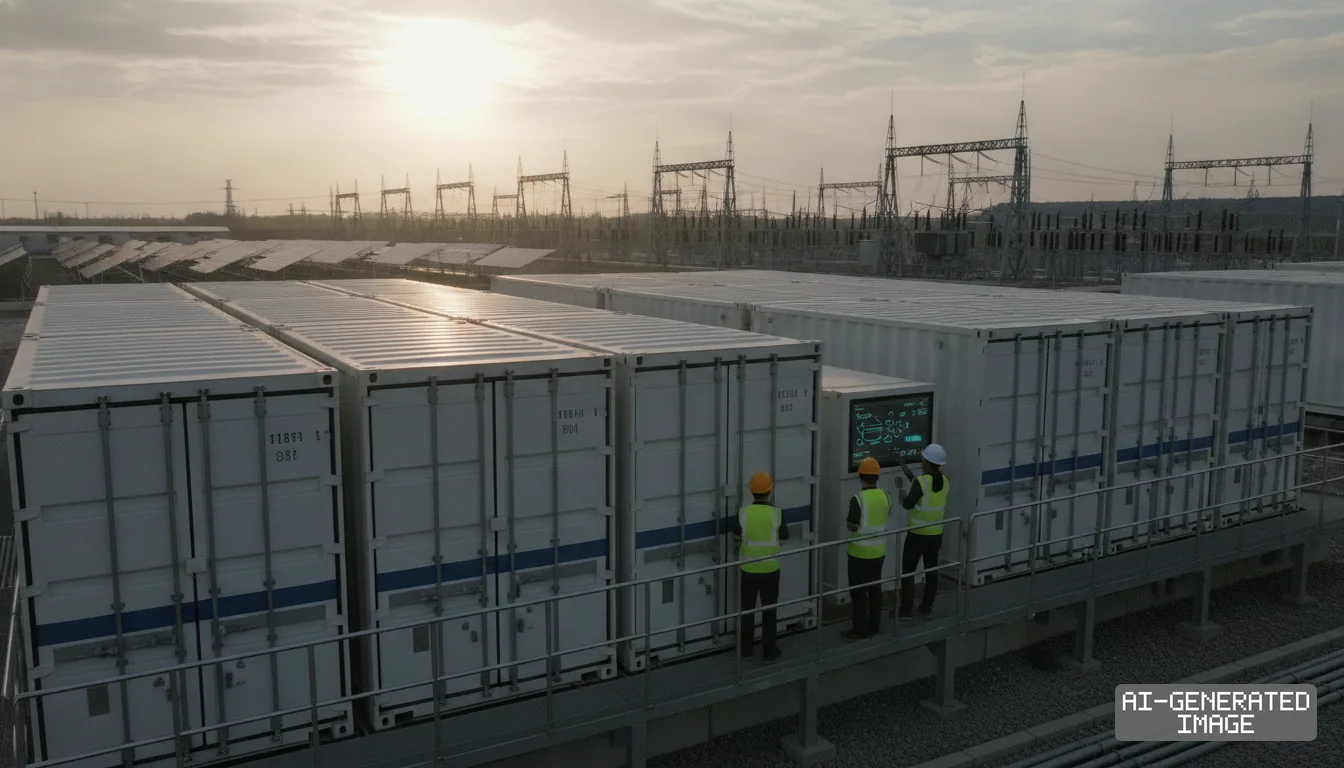
Contemporary Amperex Technology Co., Limited unveiled its 9-megawatt-hour TENER+ containerized battery storage system on Oct. 28, 2026, targeting international utility customers facing tightening substation acreage and rising construction costs.
The Chinese battery producer introduced the utility-scale platform at the All-Energy Australia 2026 conference in Melbourne. The system represents the company's highest-density commercial product for stationary power networks.
The new enclosure delivers 9 megawatt-hours of direct-current energy capacity. The configuration reduces the number of containers required for a given project by 40% compared with conventional five-megawatt-hour systems, the company said.
The higher capacity cuts total project land requirements by 35%, Zane Zhou, CATL general manager for Australia and New Zealand, said at the launch. The platform lowers balance-of-system capital expenditure, including cabling, civil foundation works and transport overhead.
CATL paired the product release with three institutional agreements designed to accelerate deployment across Asia-Pacific transmission networks. The company signed a memorandum of understanding with Hitachi Energy to deliver integrated grid-scale storage solutions.
The partnership combines CATL direct-current battery blocks with power conversion systems and grid-connection equipment built by Hitachi Energy. The arrangement aims to standardize engineering packages and shorten commissioning cycles for transmission operators across Australia and the wider region.
Hitachi Energy supplies power conversion hardware and transformer units to grid developers globally. The collaboration gives the Zurich-based unit of Hitachi access to standardized integration packages with the world's highest-volume cell manufacturer.
CATL also signed a cooperation pact with Australian engineering contractor EPEC Group and the Xiamen Empirical Energy Storage Research Institute. The agreement covers technical validation, grid-forming compliance testing and engineering delivery for utility-scale battery sites.
A third pact with the University of New South Wales Sydney focuses on local technical workforce development and advanced grid-modeling research. The initiatives target regulatory approvals required by the Australian Energy Market Operator.
Australia has become a primary proving ground for utility-scale storage manufacturers. S&P Global Commodity Insights estimates the country requires tens of gigawatts of dispatchable capacity to replace retiring coal-fired generation over the coming decade.
CATL has supplied more than 17 gigawatt-hours of battery energy storage systems across Australian utility and commercial projects to date. The volume represents roughly 5% of its cumulative global stationary storage deliveries, which exceed 3,000 project sites.
The overseas commercial push comes as battery cell pricing faces severe margin pressure in domestic automotive channels. Chinese carmakers are increasingly manufacturing proprietary battery packs, capping domestic growth for third-party cell producers.
CATL reported third-quarter net profit of 21.25 billion yuan ($2.98 billion) on Oct. 18, up 14.5% from a year earlier but trailing institutional estimates. Expanding overseas utility margins offers a buffer against automotive commoditization.
CATL led global energy storage cell shipments for a fifth consecutive year in 2025, taking 30.4% market share, according to research firm SNE Research. Rival manufacturers BYD, Eve Energy and LG Energy Solution have also developed six-megawatt-hour containers to defend market positions.
The TENER+ system uses liquid cooling to maintain thermal uniformity across dense cell configurations. The manufacturer specified an operational design lifespan of 25 years and guaranteed cell degradation controls for utility asset owners.
The enclosures feature acoustic insulation that keeps operational noise below 65 decibels, Zhou said. The design eliminates heat-island effects, enabling developers to site equipment near suburban substations with stringent residential noise ordinances.
The hardware includes protective coatings and sealed enclosures engineered for humid and coastal operating environments. The system also supports automated single-click commissioning across multi-container arrays to lower site labor expenses.
Alongside the primary lithium-ion platform, CATL showcased its TENER Sodium storage variant in Melbourne. The alternative chemistry targets four-to-eight-hour duration storage in desert regions with wide ambient temperature swings.
The sodium-ion platform draws interest for off-grid mining microgrids and remote agricultural feeders across western Australia, Zhou said. The technology eliminates nickel, cobalt and lithium supply chain constraints, though commercial rollouts remain in pilot phases.
The three agreements signed in Melbourne remain non-binding memorandums of understanding rather than finalized purchase contracts. The parties did not disclose financial terms, equipment pricing or delivery schedules for joint utility bids.
CATL has not published an official engineering datasheet or commercial warranty schedule on its corporate newsroom for the Australian model. Developers must wait for certified local test documentation before bidding the hardware into grid connection queues.
The All-Energy Australia exhibition concludes Oct. 29, 2026. System integrators and project developers will monitor whether the Hitachi Energy collaboration yields firm equipment orders before transmission auction deadlines scheduled for the first quarter of 2027.
Impact map
How this development propagates across the region and out to global buyers.
| Event | Korea | China | Japan | Global impact |
|---|---|---|---|---|
| 9MWh BESS launch | LG Energy Solution and Samsung SDI face higher energy density competition in grid bids | CATL expands offshore utility margins to offset slowing domestic automotive growth | Hitachi Energy secures power electronics channel across Asia-Pacific grid storage | Utility balance-of-system capital expenditure falls as container count drops 40% |
In this story
- Companies
- Contemporary Amperex TechnologyHitachi Energy
- Tickers
- 300750.SZ6501.T
- Exposed
- EPEC Group
- Impact
- Supply ChainOrder BookCost Structure
Related briefings
- LG Energy Solution wins NVIDIA DSX Ready status for AI power backup Also on Hitachi Energy, Order Book
- SK On Deploys CATL-Powered Zeekr 7X SUV for Fleet Benchmark Also on Contemporary Amperex Technology, Cost Structure, Order Book
- CATL unveils dual-battery truck system on 13,000 fleet orders Also on Contemporary Amperex Technology, Cost Structure, Order Book
- BYD lifts overseas EV battery volume 66.5% to take 11% share Also on Contemporary Amperex Technology, Cost Structure, Order Book
Sources
Reporting
Confidence: medium — how we grade this
The documents behind this briefing are linked above. East Asia Brief produces its English text with AI assistance under human editorial review, and does not translate or republish other outlets' articles. See our methodology and AI policy. Spotted an error? Tell us.
The Morning Brief
What changed in Korean, Chinese and Japanese industry overnight — and what it means for your supply chain. One email, weekday mornings, US time. Free.
The Morning Brief is in preparation. Leave your address and we will write to you once — when the first issue is ready. Nothing before that.