CATL confirms 2027 solid-state battery pilot for premium EVs
The Chinese cell maker reaffirmed its sulfide timeline on an investor platform, increasing pressure on South Korean rivals investing trillions in next-generation lines.
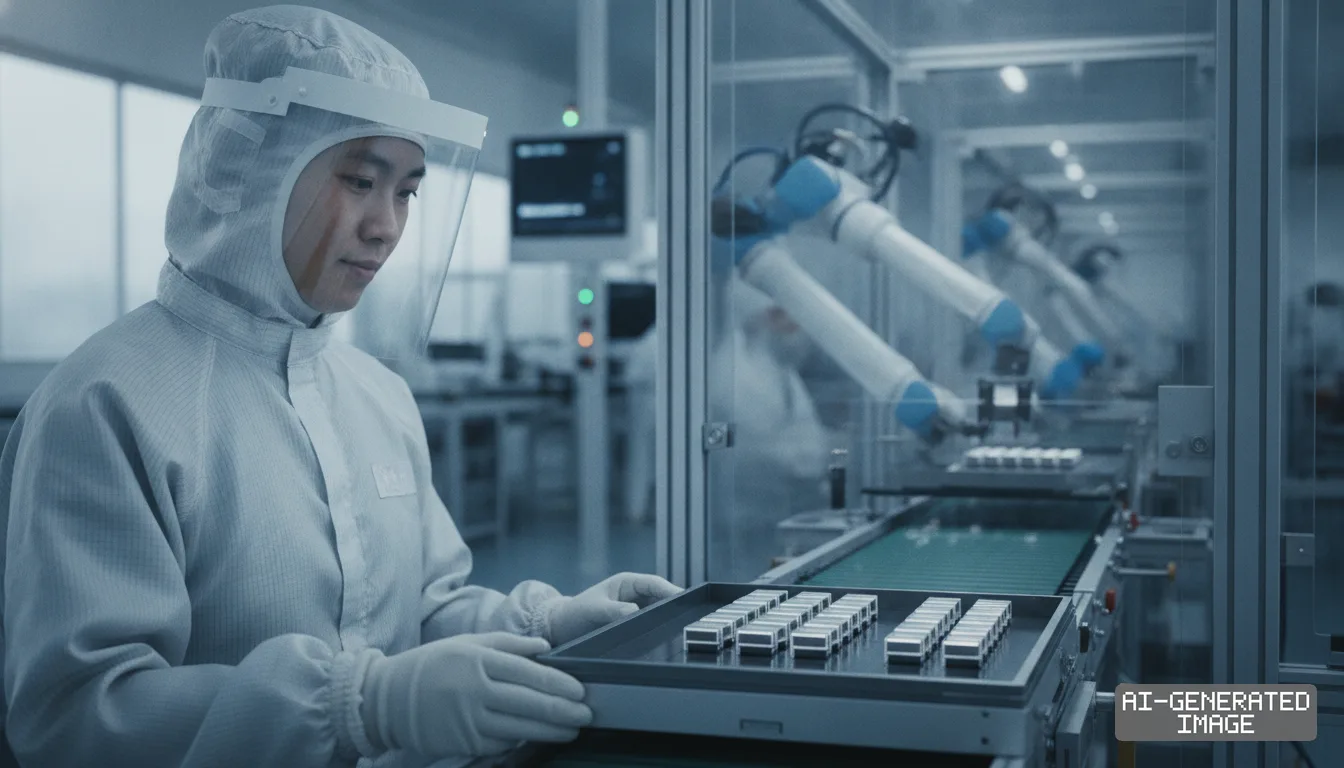
Contemporary Amperex Technology Co. Limited reiterated Oct. 27, 2026, that it remains on schedule to begin small-scale pilot production of sulfide-based all-solid-state batteries for luxury vehicles in 2027.
CATL supplied 37.9% of the global electric vehicle battery market in the first half of 2026. The company is developing solid-state cells with an energy density of 500 watt-hours per kilogram, approximately double current mass-market cells.
The Chinese battery manufacturer addressed investors through the Shenzhen Stock Exchange interactive platform. Management reaffirmed development targets previously outlined during corporate earnings briefings and at the Summer Davos forum in Dalian.
Initial production runs will supply electric vehicles priced above 250,000 yuan ($35,000), executive statements indicate. The cells will also power industrial robots and commercial drones before reaching mass-market passenger cars.
Solid-state batteries replace flammable liquid electrolytes with solid ion conductors, eliminating fire hazards and enabling higher cell voltages. CATL has selected sulfide electrolytes, which offer high ionic conductivity at room temperature.
Sulfide materials react violently with ambient moisture, generating toxic hydrogen sulfide gas. That chemical instability requires dry-room manufacturing facilities that operate under strict dew-point controls, increasing factory construction overhead.
CATL currently evaluates its all-solid-state manufacturing maturity at level four on a nine-point technical readiness scale. The company aims to advance that rating to level eight by 2027, corporate disclosures show.
A dedicated team of more than 1,000 research engineers is running development work in Ningde. The unit has manufactured 20-ampere-hour prototype pouch cells to evaluate cycle life and charging performance under pressure.
Commercial mass production delivering over one million packs annually will not begin until 2030 or later, Chairman Robin Zeng said. That extended schedule reflects high precursor prices, low cell yields and complex cell encapsulation requirements.
China's Ministry of Industry and Information Technology aligned national targets with that timetable on Sept. 28, 2026. The ministry published policy guidelines establishing 2030 as the deadline for commercial scale across domestic supply chains.
CATL's reaffirmed target increases competitive pressure on South Korean cell makers. Samsung SDI has allocated 16 trillion won ($11.6 billion) to its Ulsan complex, targeting mass manufacturing of 900 watt-hour-per-liter sulfide batteries in late 2027.
Samsung SDI currently operates a 6,500-square-meter pilot facility in Suwon called the S-line. The company has already shipped validation samples to automotive customers, utilizing an anode-less structure to maximize cell energy density.
Korean manufacturers have counted on next-generation chemistries to retain premium margins as Chinese lithium iron phosphate cells dominate budget vehicles. CATL matching the 2027 pilot date narrows that technological buffer.
LG Energy Solution is developing polymer and sulfide systems to defend its 520 gigawatt-hours of operational and planned manufacturing capacity. The company plans to commercialize polymer cells by 2026 before launching sulfide systems in 2030.
SK On is pursuing parallel development programs for composite polymer and sulfide solid electrolytes. The manufacturer, which accounts for roughly 5% of global installations, has targeted commercial vehicle integration between 2029 and 2030.
Regional competition extends beyond South Korea. Toyota Motor plans small-batch vehicle integration by 2027, backed by more than 1,300 solid-state patents and a joint development alliance with refiner Idemitsu Kosan.
Domestic rival BYD, which holds 15.8% of global cell deliveries, is developing halide and sulfide electrolytes. The Shenzhen-based company plans to start passenger vehicle fleet trials in late 2027 to protect its market position.
CATL has expanded its intellectual property portfolio to secure critical materials processing. The company registered an international patent with the World Intellectual Property Organization in March 2026, detailing an anode-stabilizing lithium fluoride coating.
The manufacturer has also entered supply arrangements for high-purity lithium sulfide and specialized copper foils. Those agreements are designed to ensure steady precursor feeds before pilot production starts in Fujian province, procurement records indicate.
Lithium sulfide prices remain higher than $1,000 per kilogram, keeping pack costs uncompetitive for mass-market vehicles. Equipment makers estimate solid-state line installation costs exceed conventional lithium-ion setups by at least 200%.
Cathode selection presents an additional hurdle. Solid-state packs require high-nickel active materials engineered to tolerate continuous physical expansion, pushing suppliers toward single-crystal cathode chemistries.
Vehicle integration demands sustained stack pressure to maintain contact between electrodes and solid electrolytes. Automotive engineers must design rigid battery pack structures that add weight, partially offsetting energy density gains at the pack level.
Automotive customers in China have begun preparing vehicle platforms for the 2027 cells. Joint engineering teams are testing structural enclosures designed to maintain mechanical pressure during vehicle operation.
Electrode coating machinery must operate under inert gas to prevent degradation. Equipment makers in Shenzhen and Wuxi are developing stacking systems to lift early yields above 50%.
The Shenzhen Stock Exchange filing does not state the capital expenditure allocated to the 2027 pilot lines. CATL has also not published its projected manufacturing cost per kilowatt-hour.
CATL plans to deliver initial verification cells to automotive partners in the second quarter of 2027. China's Ministry of Industry and Information Technology is scheduled to publish unified national solid-state cell safety rules by December 2027.
Impact map
How this development propagates across the region and out to global buyers.
| Event | Korea | China | Japan | Global impact |
|---|---|---|---|---|
| CATL solid-state battery roadmap | Samsung SDI and LG Energy Solution face margin pressure on 2027 premium sulfide cells | CATL and BYD lock up domestic sulfide precursor supply chains for 2027 pilot lines | Toyota accelerates joint sulfide electrolyte production with Idemitsu Kosan toward 2027 pilot | Luxury EV pack costs remain elevated as solid-state cells enter initial 2027 deployments |
In this story
- Companies
- Contemporary Amperex Technology
- Tickers
- 300750.SZ
- Exposed
- Samsung SDILG Energy SolutionSK OnBYDToyota Motor
- Policy
- Standards
- Impact
- CapexSupply ChainPricing
Track every Standards development →
Related briefings
- CATL targets 2027 pilot output for all-solid-state batteries Also on Toyota Motor, SK On, BYD
- BYD targets 2027 solid-state battery debut in luxury fleet Also on Toyota Motor, BYD, Contemporary Amperex Technology
- BYD readies solid-state battery road trial as rivals advance Also on Toyota Motor, BYD, Contemporary Amperex Technology
- Changan and CATL Expand 75 GWh Cell Hub and Solid-State Line Also on Toyota Motor, Contemporary Amperex Technology, Samsung SDI
Sources
Reporting
Confidence: medium — how we grade this
The documents behind this briefing are linked above. East Asia Brief produces its English text with AI assistance under human editorial review, and does not translate or republish other outlets' articles. See our methodology and AI policy. Spotted an error? Tell us.
The Morning Brief
What changed in Korean, Chinese and Japanese industry overnight — and what it means for your supply chain. One email, weekday mornings, US time. Free.
The Morning Brief is in preparation. Leave your address and we will write to you once — when the first issue is ready. Nothing before that.