Audi plans $4B Georgia plant, challenging Hyundai suppliers
The German luxury brand will build a 200,000-unit SUV facility in Peach County, competing with Hyundai Motor Group for regional parts suppliers and skilled manufacturing labor.
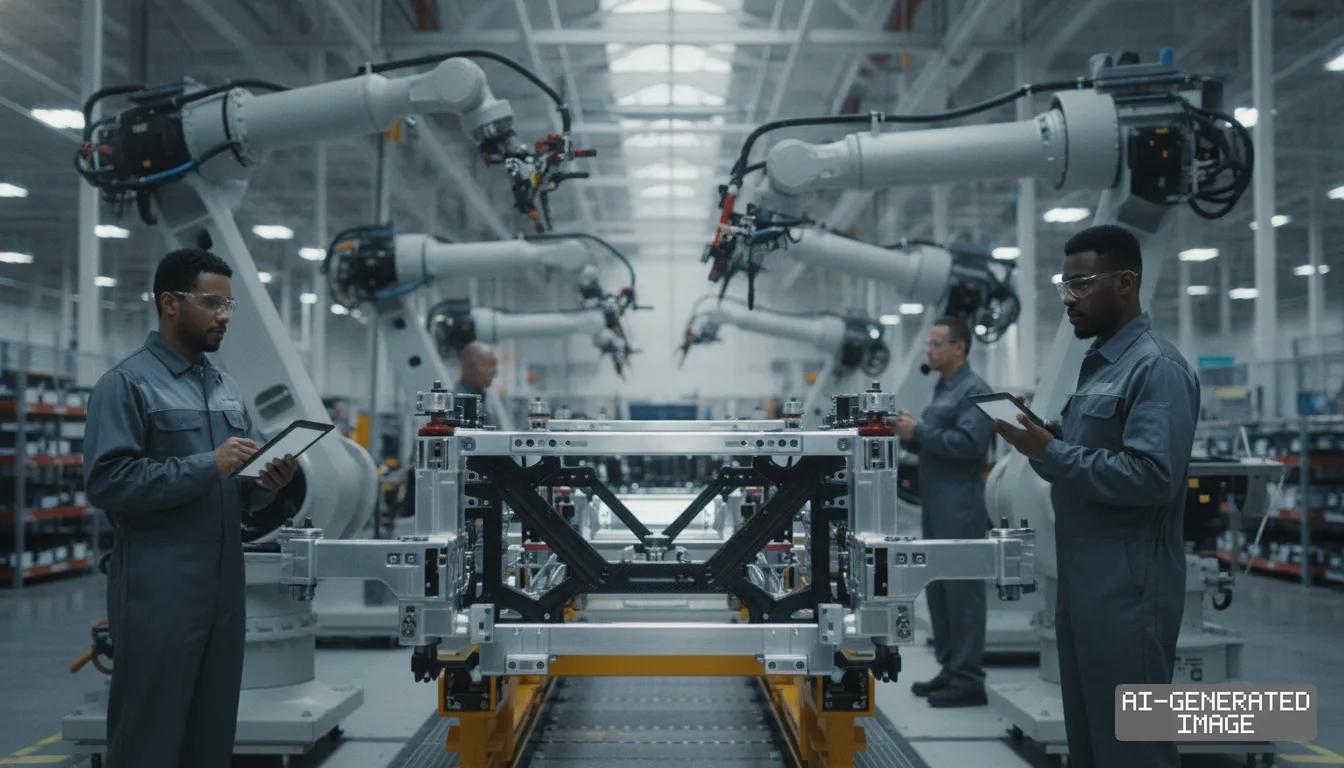
Audi AG confirmed plans Oct. 26 to build a $4 billion assembly facility in Peach County, Georgia, setting up direct competition with Hyundai Motor Group for the state's automotive supply chain.
The project establishes an annual manufacturing capacity of up to 200,000 vehicles at the Middle Georgia Megasite, marking the German brand's first manufacturing footprint in the United States.
Audi expects to create approximately 4,500 direct jobs on the 1,474-acre site, representing one of the largest single industrial commitments in central Georgia history.
President Donald Trump verbally cited the investment at $4.2 billion during a weekend campaign rally in Perry, Georgia, alongside Audi Chief Executive Gernot Döllner.
The planned capital outlay establishes North America as a third operational pillar for Audi alongside Europe and China, Döllner said in the company's project announcement.
The site sits roughly 145 miles west of Hyundai Motor Group Metaplant America, the 300,000-unit facility operating in Bryan County, Georgia.
Kia Corporation also operates an assembly plant in West Point, Georgia, which produces 340,000 vehicles annually and anchors dozens of Korean component vendors.
Hyundai and its suppliers have committed more than $7.59 billion across coastal Georgia, bringing more than 17 Korean tier-1 automotive parts vendors into the state.
Those suppliers invested an additional $2.5 billion across 12 Georgia counties to support Hyundai's electric and hybrid assembly lines, state economic records show.
Audi's arrival offers those regional vendors an alternative customer, potentially shifting pricing power away from Hyundai as automakers compete for local parts allocation.
Korean suppliers of chassis modules, metal stampings and thermal management systems in central Georgia must now decide whether to reserve production lines for European models.
Contract diversification allows parts makers to buffer against single-client volume adjustments, while increasing their bargaining power during annual price reviews with Hyundai.
The new assembly footprint will also intensify competition for industrial labor across middle and coastal Georgia, where automotive manufacturing expansion has already tightened recruitment.
Hyundai Metaplant has already hired more than 1,600 workers toward an eventual 8,500-person target, driving up regional benchmark wages for certified industrial technicians.
Georgia state agencies plan to support Audi through Georgia Quick Start, the state technical training program that also trained workers for Hyundai and Kia.
The training initiative will build a dedicated center and customize vocational curriculums with the Technical College System of Georgia, state officials said.
Local assembly allows Audi to insulate high-margin vehicles from U.S. import tariffs, which cost the German automaker roughly $1.4 billion in annual customs duties.
Import tariffs on European vehicles reached 25% before falling to 15% under recent transatlantic trade adjustments, accelerating German corporate localization in the American South.
The factory also sharpens competition across the Southeastern battery corridor, where South Korean battery makers have committed tens of billions in capital.
SK On operates a 22 gigawatt-hour battery cell facility in Commerce, Georgia, supplying Ford Motor and other original equipment manufacturers.
LG Energy Solution is building a multi-billion-dollar joint-venture battery cell plant with Hyundai in Bryan County to feed the adjacent Metaplant assembly line.
Automakers manufacturing in North America face strict domestic assembly and regional content requirements to qualify for federal clean vehicle purchase credits.
Those statutory thresholds grant battery cell manufacturers expanded pricing power as European and Asian brands vie for non-Chinese cell allocations across the region.
The official notices do not state which battery makers will supply the facility, and Audi has not published a finalized parts procurement list or confirmed whether the site will build dedicated electric vehicles.
Audi designated the output only as premium sport utility vehicles tailored for North American drivers, leaving specific model assignments and hybrid ratios unconfirmed.
Volkswagen Group must still formally submit the Peach County project to its supervisory board in Germany for final corporate approval before disbursements begin.
Site preparation and land grading at the Middle Georgia Megasite are scheduled to begin in 2027, followed by structural plant construction in 2028.
Commercial vehicle assembly at the facility is slated to open in 2031, according to timelines published by the Georgia Department of Economic Development.
Impact map
How this development propagates across the region and out to global buyers.
| Event | Korea | China | Japan | Global impact |
|---|---|---|---|---|
| Audi $4B Georgia factory | Hyundai and suppliers face higher local parts bids and labor competition | No direct factory exposure, but excluded from subsidized US EV supply chain | Toyota and regional Japanese suppliers see tightening Southeast US labor supply | Audi localizes North American SUV output to bypass 15-25% import tariff costs |
In this story
- Companies
- AudiHyundai Motor Company
- Tickers
- 005380.KS
- Exposed
- KiaLG Energy SolutionSK OnVolkswagen Group
- Policy
- TariffsLocal Content Rules
- Impact
- Supply ChainCapexPricing
Track every Tariffs development → Track every Local Content Rules development →
Related briefings
- Hyundai accelerates Ulsan EV conversion to balance export lines with global demand Also on Hyundai Motor Company, SK On, LG Energy Solution
- Korea Cuts EV Subsidies on Low Energy Density Cells, Squeezing LFP Imports Also on Hyundai Motor Company, SK on, LG Energy Solution
- CATL begins trial cell production at 100 GWh Hungarian site Also on Volkswagen Group, SK On, LG Energy Solution
- Volkswagen and Gotion commit $3.7B to European battery hubs Also on Volkswagen Group, SK On, LG Energy Solution
Sources
Reporting
Confidence: medium — how we grade this
The documents behind this briefing are linked above. East Asia Brief produces its English text with AI assistance under human editorial review, and does not translate or republish other outlets' articles. See our methodology and AI policy. Spotted an error? Tell us.
The Morning Brief
What changed in Korean, Chinese and Japanese industry overnight — and what it means for your supply chain. One email, weekday mornings, US time. Free.
The Morning Brief is in preparation. Leave your address and we will write to you once — when the first issue is ready. Nothing before that.