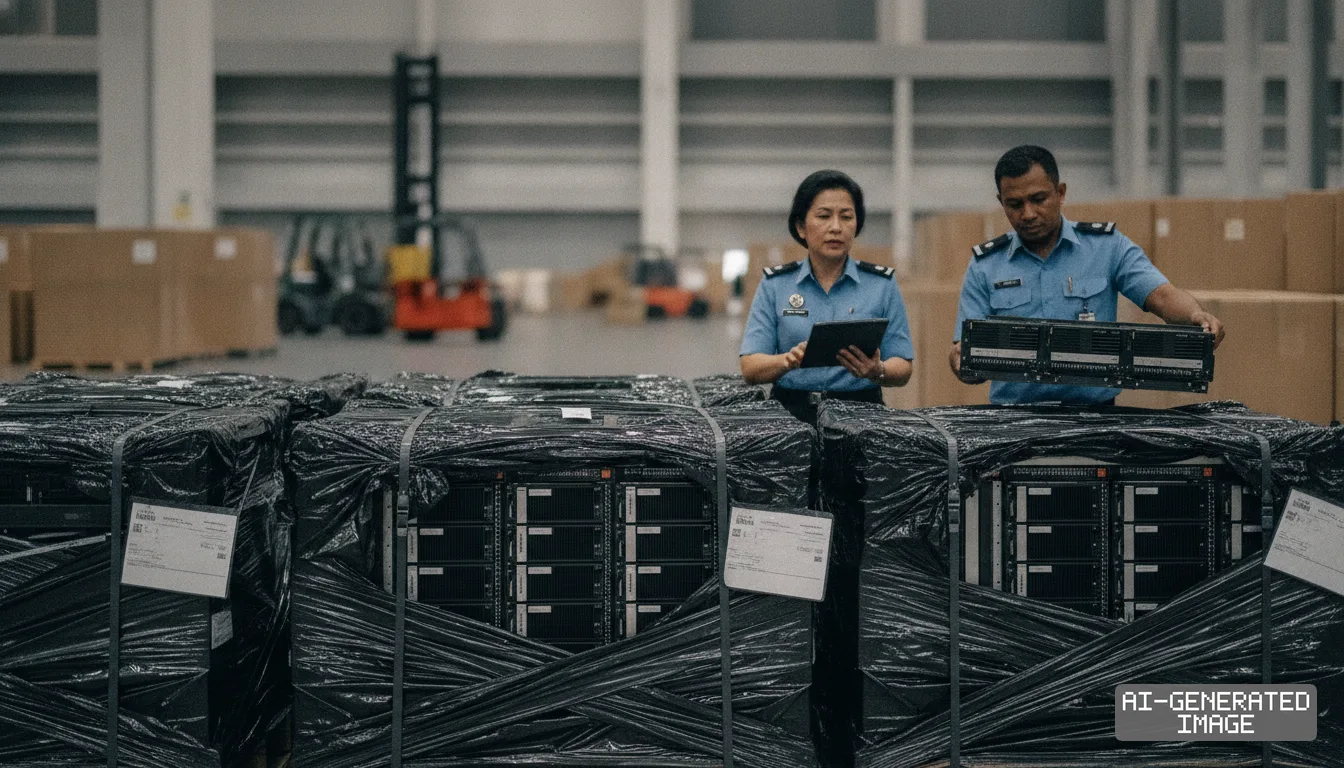
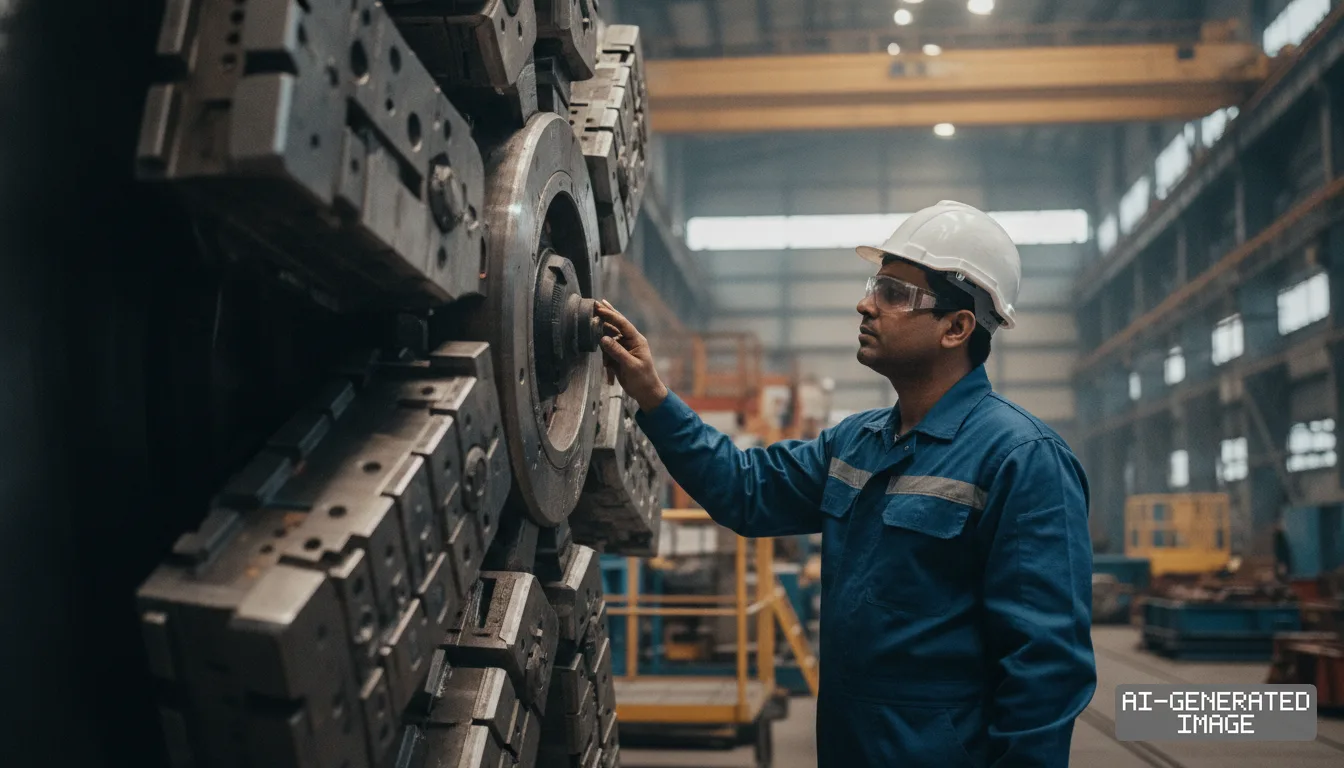
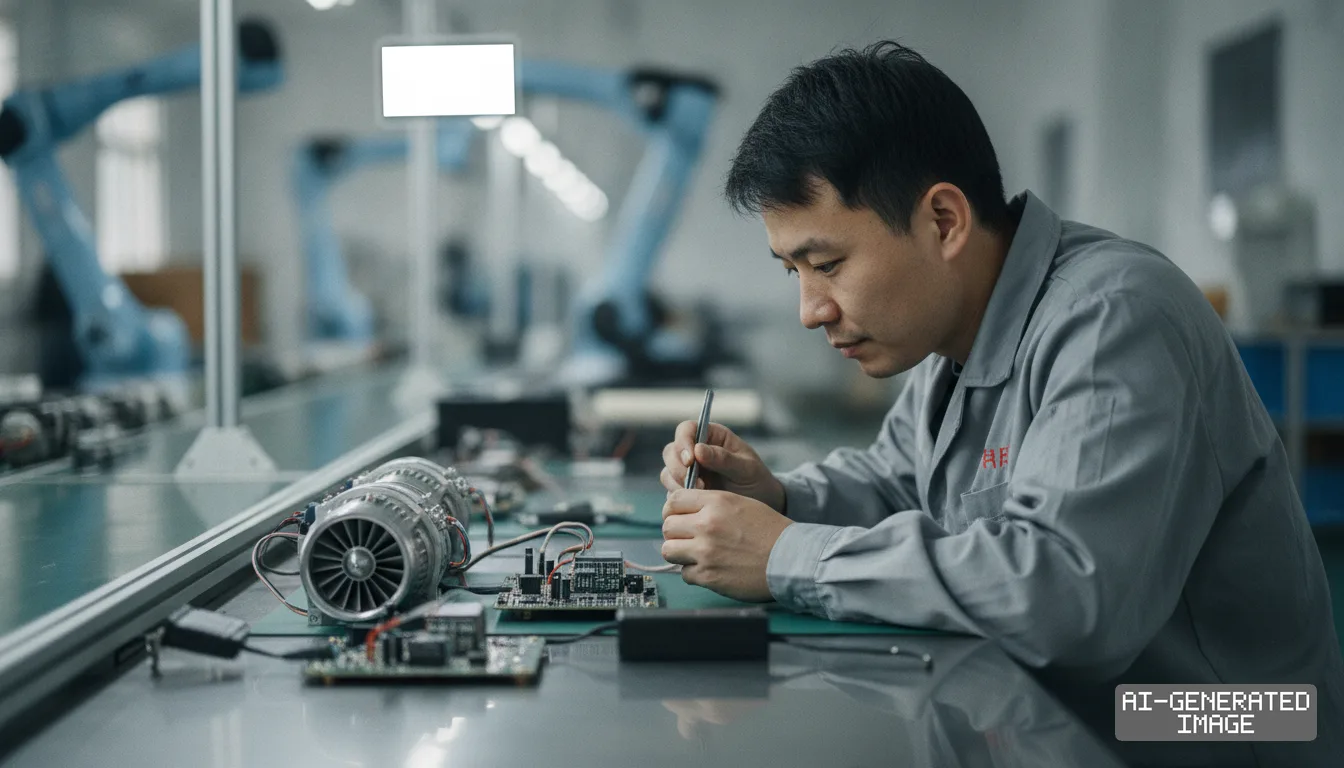
China reviews export control filings on 40 critical tech categories
The commerce ministry processes mandatory registrations covering 23 artificial intelligence technologies alongside solar and biopharma items.
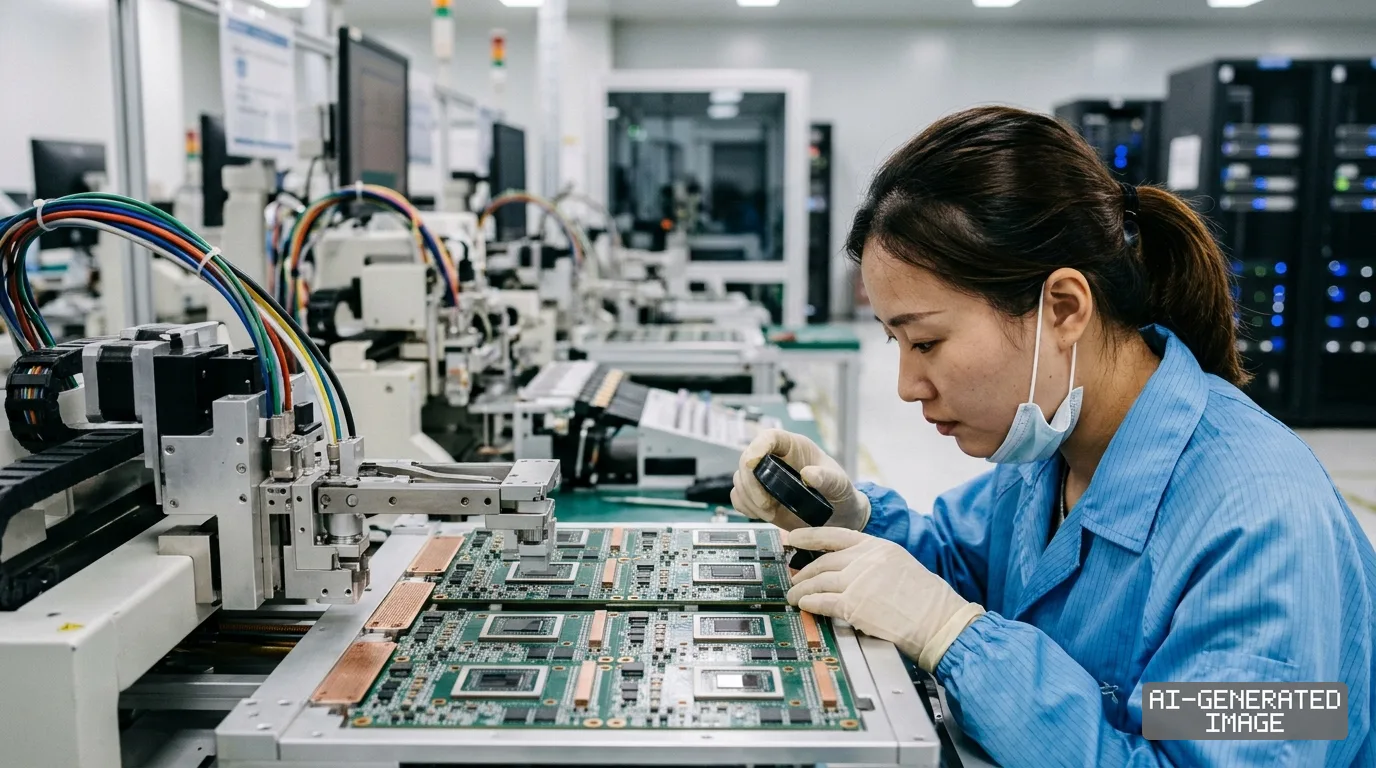
China's Ministry of Commerce reviewed interim compliance filings Oct. 29, 2026, enforcing export restrictions on 40 critical technologies that subject advanced artificial intelligence models and computing clusters to state licensing.
The joint regulatory framework with the Ministry of Science and Technology marks Beijing's first statutory system governing frontier model weights. The rules derive from the Foreign Trade Law and technology import-export regulations.
The measure covers 40 technologies across three strategic industries, according to Notice No. 48 published by the ministry. The list designates 14 technologies as prohibited exports and 26 technologies as restricted exports.
Artificial intelligence accounts for 23 items on the controlled list, representing 58% of the restricted catalogue. Solar manufacturing contributes 12 items, while biopharmaceutical engineering makes up the remaining five entries.
Under the classification thresholds, the ministry restricted exports of foundation models exceeding 2 trillion parameters. Training workloads requiring cumulative computation above $10^{26}$ floating-point operations also face mandatory licensing before transfer abroad.
The prohibition list bans exports of artificial intelligence systems designed to generate or mutate malicious computer code. Software engineering tools developed for automated cyber vulnerability exploitation require explicit ministry approval before foreign release.
Clean energy manufacturing faces parallel restrictions across the photovoltaic supply chain. The notice restricts exports of polycrystalline silicon production lines with an annual capacity of 30,000 metric tons or more.
The government also prohibited the outbound transfer of manufacturing processes for perovskite and tandem solar modules. Advanced silicon wafer slicing techniques remain subject to technical screening.
In the life sciences bracket, Beijing barred exports of proprietary cell and gene therapy manufacturing platforms. Novel target discovery pipelines and small interfering ribonucleic acid formulations require individual state review before licensing.
Commercial frontier labs face direct exposure under the parameter thresholds. Alibaba Group released its Qwen3.8-Max model with 2.4 trillion parameters in August, placing its weights within the scope of state review.
Moonshot AI operates its Kimi K3 system at 2.8 trillion parameters. DeepSeek maintains its DeepSeek-V4-Pro architecture at 1.6 trillion parameters, just below the parameter ceiling, according to technical disclosures from the developers.
The regulation creates clear carve-outs for open distribution and routine commercial operations. Technologies already released through open-source licenses or public academic papers are completely exempt from the export catalogue.
Commercial services delivered over standard cloud networks also avoid export control screening. Foreign users accessing Chinese models through application programming interfaces, web browsers, mobile apps or hosted software do not trigger export filings.
Physical transfer of model weights to overseas servers outside Chinese enterprise control requires explicit licensing. The ministry established that local on-premises deployment by foreign corporate customers constitutes a formal technology export.
Domestic enterprises deploying proprietary clusters on their own overseas infrastructure receive streamlined regulatory clearance. The ministry applies automatic licensing to Chinese firms establishing wholly owned data centers abroad.
Overseas semiconductor tape-outs and international technical standards participation also qualify for accelerated approvals. The commerce agency said the provisions aim to protect sensitive dual-use assets while maintaining commercial integration.
The rules mark a structural shift in technology trade policy between Beijing and Washington. While western export controls target physical semiconductor hardware and lithography tools, China has erected statutory guardrails around domestic algorithmic architectures.
The mechanism mirrors controls enforced on rare earth processing and advanced battery materials. Beijing increasingly uses industrial export licensing to retain high-value intellectual property within its borders during cross-border commercial expansions.
Global enterprise buyers face altered procurement terms for proprietary Chinese software solutions. Multinational firms can license models through cloud interfaces but cannot transfer source code or raw weights into external private databases.
South Korean electronics manufacturers rely primarily on local and American models for internal enterprise workflows, avoiding direct operational disruption. Japanese industrial robotics developers maintain isolated software stacks that remain unexposed to Chinese algorithmic licensing.
European cloud operators hosting customized Chinese model instances must verify server ownership structures. Entities operating shared infrastructure with domestic Chinese partners must confirm licensing status before installing weights on foreign hardware.
All technology exporters must register proposed overseas transfers on the ministry's unified trade platform before completion. The interim registration mandate took effect Oct. 16 and applies to pending transactions initiated before that date.
Public consultations on the draft revision remain open through Nov. 15, 2026. The ministry will publish the final statutory catalogue following interagency review of industry submissions.
The ministry has not published a separate October 29 announcement detailing 40 artificial intelligence technologies, and regulatory filings confirm the measures derive entirely from the broader October 16 joint notice.
Impact map
How this development propagates across the region and out to global buyers.
| Event | Korea | China | Japan | Global impact |
|---|---|---|---|---|
| China AI export control catalogue | no direct operational exposure, domestic conglomerates use local and US models | Alibaba and Moonshot face licensing for frontier models over 2T parameters | industrial automation developers maintain isolated stacks without Chinese weights | enterprise clients barred from foreign on-premises hosting of Chinese frontier weights |
In this story
- Companies
- Alibaba Group
- Tickers
- 9988.HK
- Policy
- Export Controls
- Impact
- ComplianceSupply Chain
Track every Export Controls development →
Related briefings
- China exempts overseas AI model APIs from draft export rules Also on Alibaba Group, Export Controls, Compliance
- China MOFCOM restricts AI model and chip IP export transfers Also on Alibaba Group, Export Controls, Compliance
- Xi Jinping plans business delegation for Donald Trump summit Also on Alibaba Group, Export Controls, Compliance
- CXMT starts pilot HBM3E production as China accelerates AI chip self-reliance Also on Alibaba Group, Export Controls, Compliance
Sources
Primary documents
Reporting
Confidence: high — how we grade this
The documents behind this briefing are linked above. East Asia Brief produces its English text with AI assistance under human editorial review, and does not translate or republish other outlets' articles. See our methodology and AI policy. Spotted an error? Tell us.
The Morning Brief
What changed in Korean, Chinese and Japanese industry overnight — and what it means for your supply chain. One email, weekday mornings, US time. Free.
The Morning Brief is in preparation. Leave your address and we will write to you once — when the first issue is ready. Nothing before that.