CATL deploys dual-electric truck battery packs for logistics fleets
The battery maker signed 13,000 commercial vehicle agreements for swappable platforms that raise usable depth of discharge to 95% and target 2,000 swap stations by 2027.
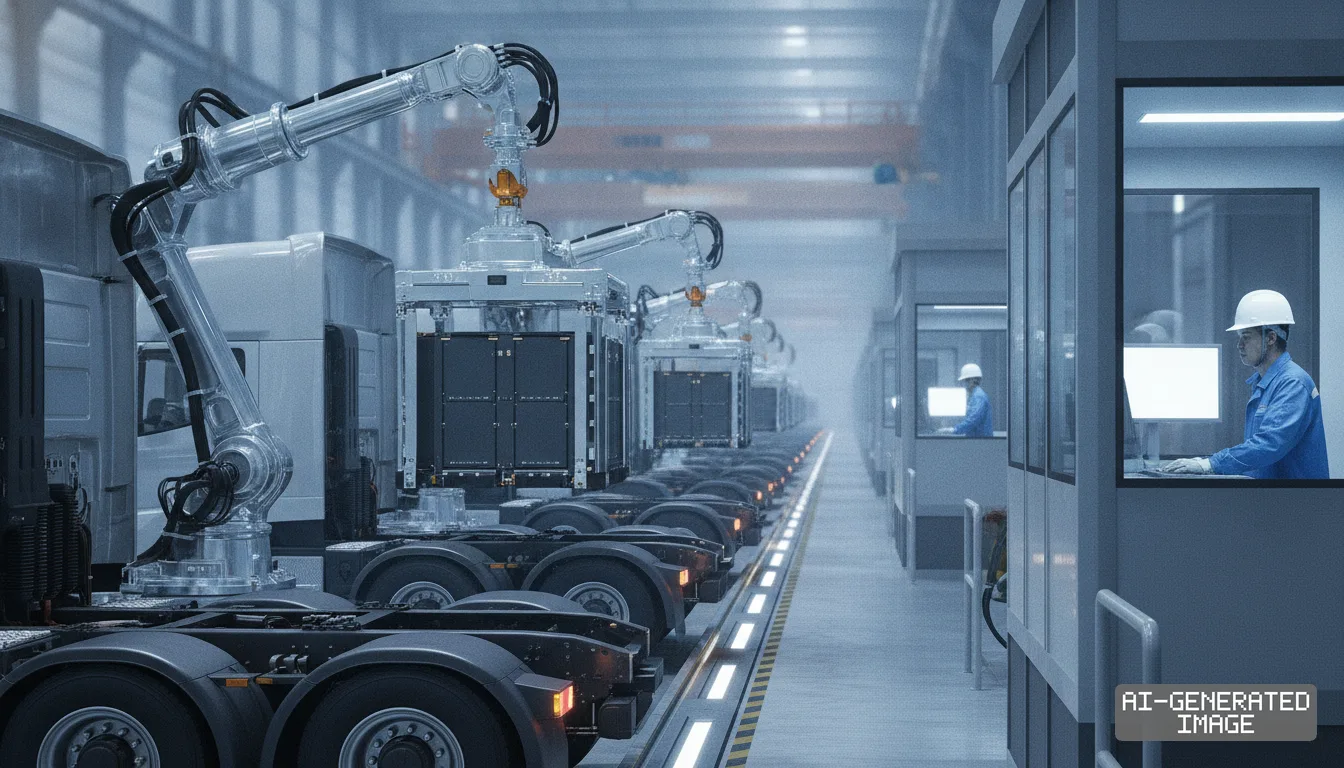
Contemporary Amperex Technology Co., Limited detailed commercial rollouts on Nov. 3, 2026, for its dual-electric range-extension platform engineered to eliminate charging downtime across heavy-duty battery-swappable logistics trucks.
The Chinese battery manufacturer, which supplies more than 70% of the world's 430,000 electric heavy trucks, designed the system to decouple freight hauling from static plug-in charging queues.
The architecture combines a swappable chassis battery rated up to 513 kilowatt-hours with an auxiliary pack, addressing a market where electric freight reached 50.28% of China's heavy truck sales in September.
Standard commercial haulers running on single swappable packs frequently return to swap depots with 30% of their energy unspent, fleet managers said during technical briefings. Drivers surrender that buffer to ensure they reach the station.
The dual-battery configuration lifts the usable depth of discharge on the primary pack from roughly 70% to more than 95%, the company said. The switch allows trucks to run the swappable unit down to 5% capacity.
An onboard reserve pack transfers power to the electric driveline within milliseconds of the main unit reaching that depletion threshold. The handover occurs without speed loss or cabin torque interruption, according to company bench tests.
The primary energy reservoir uses standardized chassis-mounted blocks compatible with CATL's automated QIJI swap stations. Operators can select between the 260# pack holding 432 kWh or the larger 300# pack holding 513 kWh.
The 432 kWh unit fits freight tractors with a 3,800-millimeter wheelbase, according to technical filings. The 513 kWh block requires a longer 4,200-millimeter chassis common in interprovincial line-haul logistics.
A secondary 77 kWh lithium-ion pack mounts permanently behind the driver cabin. That auxiliary unit provides backup driving range and supports fast charging at rates up to 3C, replenishing energy during statutory driver rest periods.
The split design separates the battery into a leased asset and permanent vehicle equipment under a 1+X framework. Fleets lease the expensive traction block while retaining the smaller reserve on the truck balance sheet.
Carriers can adjust leased traction capacities to match seasonal freight volumes. A logistics firm hauling peak parcel loads in November can lease the 513 kWh pack, downscaling to smaller modules during February lulls to cut carrying costs.
The hardware deployment matches commercial commitments for 13,000 heavy trucks signed across 14 transport groups. Express couriers SF Express, ZTO Express and YTO Express signed procurement framework pacts covering long-haul tractors.
The initial 13,000-unit commitment represents roughly 3% of China's operational electric tractor fleet. Delivery schedules distribute the vehicles across arterial routes linking the Yangtze River Delta to inland distribution hubs.
Operating economics drive the transition away from diesel engines along heavily trafficked corridors. Heavy diesel tractors consume between 32 and 38 liters of fuel per 100 kilometers under full gross payload conditions.
A dual-electric truck operating on leased swappable packs cuts lifetime energy expenditures by more than 460,000 yuan ($68,700) across a three-year haulage cycle, the battery maker said.
Commercial terms for the platform revise the standard Battery-as-a-Service model by billing operators on net kilowatt-hours drawn rather than gross pack discharge. That adjustment credits power recovered through regenerative braking on downhill grades.
The billing structure reduces nominal per-kWh rental expenses by up to 20% for line-haul fleets operating high-mileage runs, the company said. Carriers recapture savings from kinetic energy during mountainous transit.
Turnaround speed remains the critical metric governing battery swapping adoption against ultra-fast stationary megawatt charging. Automated QIJI swap stations complete a full pack exchange in five minutes, according to certified field logs.
The automated locking mechanism achieves a 99.99% first-time docking success rate across 5 million cumulative kilometers of corridor testing, station engineering documents showed. The station design eliminates underground civil excavation, cutting construction costs by 10%.
The infrastructure buildout now dictates the operational boundaries for participating fleets. Five trunk highway routes currently operate continuous commercial swapping service under the QIJI brand.
CATL committed to opening 900 heavy-truck swap stations nationwide by Dec. 31, 2026. The network plan calls for expanding that footprint to 2,000 stations along national expressways by the end of 2027.
The company did not publish a separate regulatory filing on Nov. 3, 2026, and the release does not state the active station count operating along trunk corridors as of November.
The platform relies on standardized mechanical interfaces developed with domestic truck manufacturers including FAW Jiefang and Shaanxi Automobile. Those interfaces fix electrical busway connections and hydraulic locking pins across participating chassis brands.
South Korean cell producers LG Energy Solution and Samsung SDI have concentrated commercial vehicle programs on fixed pouch and prismatic high-nickel packs, leaving swappable heavy truck platforms inside China largely uncontested.
European transport operators continue to test megawatt charging standards rather than chassis exchange systems. The European Union's alternative fuels infrastructure rules require charging plazas every 60 kilometers along core transit corridors by 2030.
The divergence leaves Chinese logistics firms testing swappable packs while Western fleets invest in stationary depot chargers. The operational data gathered from the 13,000 contracted tractors will test whether swappable architecture delivers lower cost per ton-kilometer.
Logistics operators begin taking initial vehicle deliveries under the 13,000-unit agreement on Dec. 15, 2026, ahead of spring freight volume surges.
Impact map
How this development propagates across the region and out to global buyers.
| Event | Korea | China | Japan | Global impact |
|---|---|---|---|---|
| Commercial freight dual-battery swapping platform | LG Energy Solution and Samsung SDI face restricted access to China heavy truck pack contracts | SF Express and ZTO Express deploy 13,000 dual-pack tractors across 900 QIJI swap stations | Commercial truck exporters face cost competition as Chinese fleets lower diesel TCO by $68,700 | Western logistics operators evaluate 5-minute chassis swapping against 1-megawatt stationary plug-in depot standards |
In this story
- Companies
- Contemporary Amperex Technology Co. Limited
- Tickers
- 300750.SZ
- Exposed
- SF ExpressZTO ExpressYTO Express
- Policy
- Standards
- Impact
- Cost StructureCapexSupply Chain
Track every Standards development →
Related briefings
- CATL unveils dual-battery truck system on 13,000 fleet orders Also on ZTO Express, YTO Express, Cost Structure
- CATL launches dual-battery truck system as fleet demand rises Also on Contemporary Amperex Technology Co. Limited, Standards, Cost Structure
- CATL warns solid-state battery costs block 2030 vehicle scale Also on Contemporary Amperex Technology Co. Limited, Standards, Cost Structure
- Hungarian court upholds CATL permit for €7.3B Debrecen gigafactory Also on Contemporary Amperex Technology Co. Limited, Standards
Sources
Reporting
Confidence: medium — how we grade this
The documents behind this briefing are linked above. East Asia Brief produces its English text with AI assistance under human editorial review, and does not translate or republish other outlets' articles. See our methodology and AI policy. Spotted an error? Tell us.
The Morning Brief
What changed in Korean, Chinese and Japanese industry overnight — and what it means for your supply chain. One email, weekday mornings, US time. Free.
The Morning Brief is in preparation. Leave your address and we will write to you once — when the first issue is ready. Nothing before that.