CATL Debrecen battery plant faces protests over operating permits
Civic groups challenged authorizations for the 3,000 billion forint European hub, where Hungary backed the initial 40-gigawatt-hour cell line with state aid.
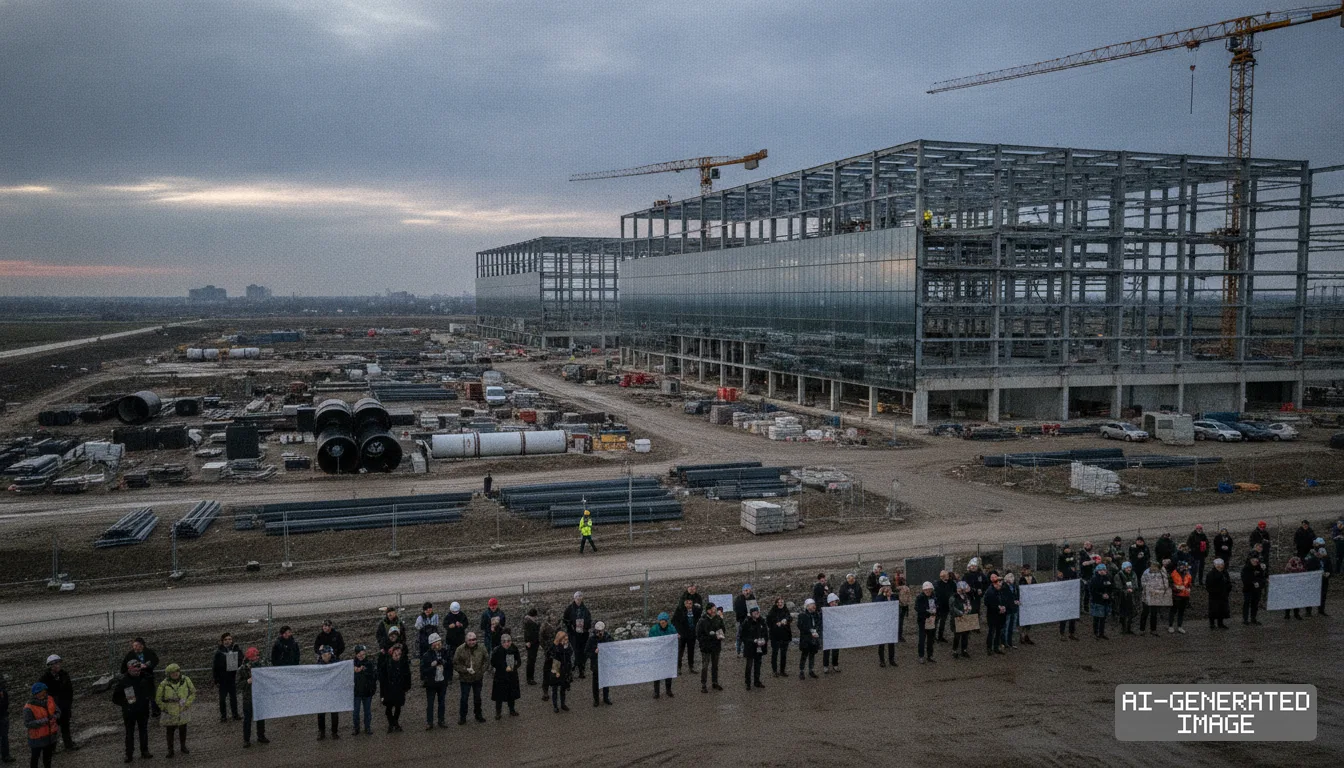
Contemporary Amperex Technology Co. Limited faced escalating environmental protests in Debrecen on Nov. 6, 2026, after local civic groups challenged operational permits for its planned 100-gigawatt-hour European battery production hub.
The 3,000 billion forint ($8.2 billion) industrial facility represents China's largest manufacturing investment in the European Union. Hungarian authorities provided 129 billion forints in direct state subsidies to back the plant's first 40-gigawatt-hour cell line.
Debrecen Mayor László Papp defended the industrial development during public remarks at the municipal Kölcsey Center. Municipal oversight and newly increased environmental fines ensure the battery facility will comply with Hungarian groundwater protection standards, Papp said.
Public opposition escalated when the Hungarian Battery Association convened the sixth annual Hungarian Battery Days conference in Debrecen rather than Budapest. The two-day conference gathered 230 battery executives and government officials from 20 countries.
Péter Kaderják, executive director of the Hungarian Battery Association, addressed delegates during the opening plenary on Nov. 4. Debrecen was selected to host the meeting because international automotive partners from South Korea, China and the Netherlands requested on-site technical reviews, Kaderják said.
Protesters organized by the Mikepércsi Anyák environmental association formed picket lines at the entrance of the conference hall. Demonstrators held banners reading "You celebrate, we mourn" while calling on municipal authorities to halt industrial groundwater permits.
Tensions deepened after Hungarian opposition lawmaker Zsolt Tárkányi published clauses from an unreleased 2022 memorandum between the national government and CATL. The disclosure placed government commitments to foreign manufacturers under intense parliamentary scrutiny.
The leaked agreement confirmed that state development agencies evaluated an additional 100 hectares of industrial land within 50 kilometers of Debrecen. State authorities also agreed to assist CATL in recruiting more than 6,000 non-European workers to staff assembly shifts.
Local residents extended the demonstrations directly to the Southern Industrial Park on Nov. 5 during an official site tour for conference delegates. Protesters gathered outside Gate 2 of the CATL gigafactory, sounding horns and drums to disrupt visiting executives.
A technical department manager from CATL walked outside the gate to speak with the demonstrators. The manufacturing site complies fully with European Union environmental standards and utilizes closed-loop water treatment units, the manager said.
CATL altered its integrated pollution permits in earlier filings to install adiabatic cooling towers and laser cell-cleaning systems. Those modifications reduced the facility's baseline water requirements by 30% and cut potable water demand to one-third of original estimates, company filings show.
The street protests followed a major legal setback for environmental activists in municipal court. The Debrecen Court dismissed a three-and-a-half-year administrative lawsuit on Oct. 30, rejecting a community petition to annul the factory's primary environmental licence.
The court ruled that regional environmental authorities acted lawfully when approving updated emission ceilings and industrial water extraction limits. That ruling cleared CATL to proceed with pre-commissioning testing inside its main cell production building.
Exposure extends directly to European automotive original equipment manufacturers that reserved battery cell allocations from the site. The Debrecen plant is contracted to supply lithium-ion cells for German assembly lines, including the nearby BMW electric vehicle factory.
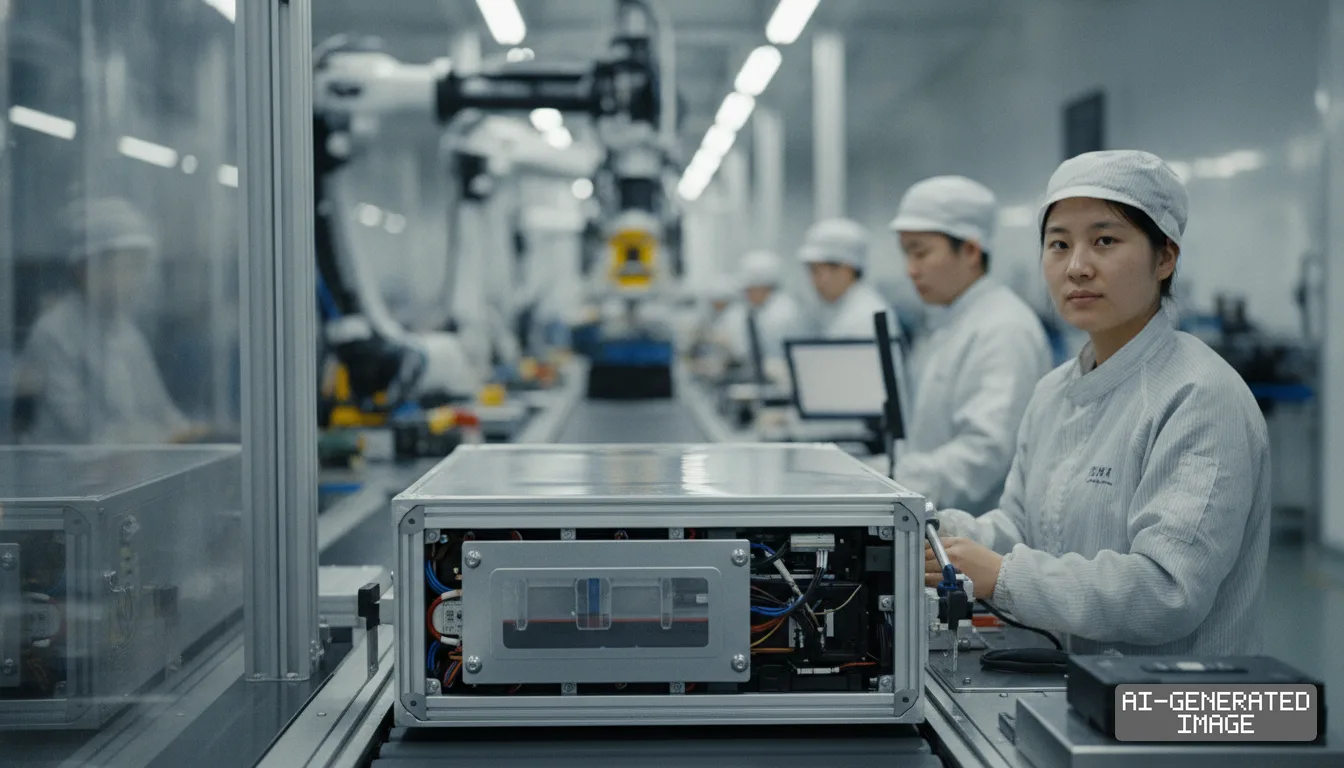
CATL has already produced 120,000 battery modules at an adjacent Debrecen workshop, supplying packs for more than 30,000 electric vehicles. The company employs roughly 1,000 workers at the site and plans to expand the local workforce to 1,500.
Sustained community opposition poses operational friction for planned second and third construction phases totaling 60 gigawatt-hours. The additional capacity requires further groundwater allocations and high-voltage grid upgrades from regional utility providers across Hajdú-Bihar county.
CATL has not issued a formal stock exchange filing regarding the civic protests, and the Hungarian Ministry of Foreign Affairs and Trade has not published the full text of the 2022 agreement.
Trial operations inside the Debrecen cell building continue under municipal emissions monitoring ahead of volume commercial deliveries scheduled for the first quarter of 2027.
Impact map
How this development propagates across the region and out to global buyers.
| Event | Korea | China | Japan | Global impact |
|---|---|---|---|---|
| Debrecen gigafactory permit protests | LG Energy Solution and SK on face identical Hungarian water review standards | CATL phase 1 startup proceeds while phase 2 and 3 face local land scrutiny | Japanese separator suppliers track CATL European cell delivery schedules | European automakers absorb local environmental compliance costs for EV packs |
In this story
- Companies
- Contemporary Amperex Technology
- Tickers
- 300750.SZ
- Exposed
- BMW
- Policy
- SubsidiesStandards
- Impact
- ComplianceSupply ChainCapex
Track every Subsidies development → Track every Standards development →
Related briefings
- CATL Clears Battery Passport Trial Ahead of 2027 EU Mandate Also on BMW, Standards, Compliance
- BYD sets Denza N8 pre-orders to target luxury EV market in China Also on BMW, Standards
- CATL Surpasses Korean Battery Trio in Markets Outside China Also on BMW, Contemporary Amperex Technology, Subsidies
- CATL widens global EV battery lead to 39.4% as Korean share slips Also on BMW, Contemporary Amperex Technology, Subsidies
Sources
Reporting
Confidence: medium — how we grade this
The documents behind this briefing are linked above. East Asia Brief produces its English text with AI assistance under human editorial review, and does not translate or republish other outlets' articles. See our methodology and AI policy. Spotted an error? Tell us.
The Morning Brief
What changed in Korean, Chinese and Japanese industry overnight — and what it means for your supply chain. One email, weekday mornings, US time. Free.
The Morning Brief is in preparation. Leave your address and we will write to you once — when the first issue is ready. Nothing before that.