BYD Denza N8 debuts Nov. 12 with 1,003-kilometer battery range
Regulatory filings show the redesigned sport utility vehicle uses a 130.15 kilowatt-hour lithium iron phosphate pack to top 1,000 kilometers.
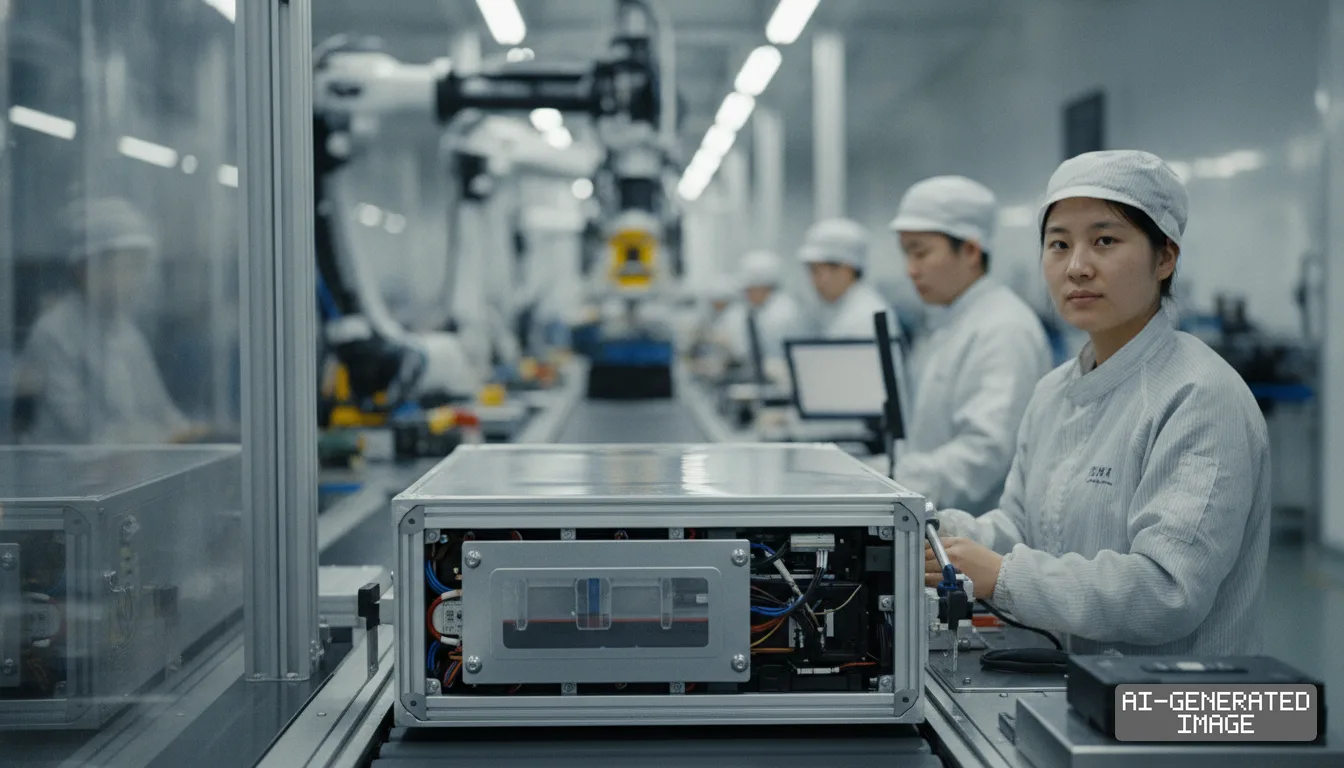
BYD luxury marque Denza set a Nov. 12 market launch date on Nov. 6, 2026 for its redesigned N8 sport utility vehicle, featuring an in-house 130.15 kilowatt-hour battery.
The electric sport utility vehicle delivers up to 1,003 kilometers of driving range under the China Light-Duty Vehicle Test Cycle. That distance makes the N8 one of the first mass-production battery-electric sport utility vehicles in China to cross the 1,000-kilometer mark in official regulatory filings.
The flagship model relies on a 130.15 kilowatt-hour pack using lithium iron phosphate chemistry, according to homologation filings published by China's Ministry of Industry and Information Technology. That battery capacity represents a 19.6% increase over the 108.8 kilowatt-hour pack used in the original 2023 pure electric edition.
The announcement resolves persistent trade confusion regarding the vehicle's powertrain layout. Early market chatter suggested the 1,003-kilometer figure stemmed from a hybrid system, conflating the new model with the discontinued 2023 plug-in hybrid that combined gasoline and electric power for 1,030 kilometers of range.
The model scheduled for launch is an all-electric vehicle carrying no internal combustion engine. Denza developed the platform around second-generation Blade battery cells engineered by BYD's wholly owned battery manufacturing unit, FinDreams Battery.
FinDreams Battery supplies 100% of the cells for the vehicle line, reinforcing BYD's complete vertical integration across cell chemistry, pack assembly and vehicle integration. The unit produced more than 140 gigawatt-hours of passenger vehicle batteries during the first nine months of the year.
The regulatory filings homologate two battery pack sizes for the five-seat sport utility vehicle. Alongside the flagship 130.15 kilowatt-hour pack, Denza certified a smaller 105.79 kilowatt-hour pack aimed at lower price tiers.
The 105.79 kilowatt-hour variant yields certified test cycle ranges of 800 kilometers and 840 kilometers, depending on motor configuration and wheel diameter. The larger 130.15 kilowatt-hour battery delivers 970 kilometers in high-performance trim and reaches 1,003 kilometers in single-motor configuration.
Denza measures the standard body at 5,150 millimeters in length, 1,999 millimeters in width and 1,820 millimeters in height, riding on a 3,075-millimeter wheelbase. An extended variant, designated the N8L, stretches to 5,200 millimeters and achieves a 960-kilometer range with the same 130.15 kilowatt-hour pack.
The deployment of a 130-kilowatt-hour lithium iron phosphate pack demonstrates chemical improvements in energy density. Western and domestic competitors have typically reserved battery packs exceeding 100 kilowatt-hours for nickel-manganese-cobalt chemistries due to cell weight penalties.
By using lithium iron phosphate chemistry at this scale, BYD bypasses cobalt and nickel procurement entirely. That sourcing approach lowers raw material bill-of-materials costs while insulating production from volatile refined nickel markets.
The powertrain lineup includes single-motor rear-wheel-drive configurations producing either 320 kilowatts or 370 kilowatts, the company said. Those ratings translate to 429 horsepower and 497 horsepower for long-distance cruising trims.
The flagship all-wheel-drive edition incorporates BYD's proprietary e3 tri-motor powertrain layout. The front axle uses a single 270-kilowatt electric motor, paired with two independent 310-kilowatt electric motors powering each rear wheel.
Total system output reaches 890 kilowatts, or roughly 1,193 horsepower, according to ministry filings. The tri-motor architecture supports independent torque vectoring and integrates with Denza's dual-chamber air suspension system.
Charging speed serves as the operational counterbalance to the pack's massive physical capacity. Denza equips the N8 with high-voltage flash-charging hardware designed to lift state of charge from 10% to 70% in five minutes under optimal conditions.
Replenishing the battery from 10% to 97% requires approximately nine minutes when connected to compatible high-power terminal dispensers, the company said. Rapid charging rates allow operators to treat the vehicle as a functional alternative to internal combustion road travel.
Denza opened preliminary customer reservation channels for the sport utility vehicle on Oct. 26. Order placement requires a refundable deposit of 2,000 yuan ($280), which bundles a 5,000-yuan discount credit toward optional vehicle equipment packages.
Early order volumes have performed strongly across domestic metropolitan showrooms, Denza General Manager Li Hui said. The company did not disclose verified pre-order order tallies alongside the reservation launch.
The commercial launch lands directly against premium segment competitors in China's domestic utility segment. Premium electric vehicle pure-play Nio offers a 150 kilowatt-hour semi-solid-state battery pack delivering over 1,000 kilometers of range, but restricts that pack to daily battery-swap rental schemes due to prohibitive pack retail costs.
Extended-range specialist Li Auto captures significant luxury market share with hybrid models carrying smaller batteries of roughly 40 to 52 kilowatt-hours. Denza is attempting to draw customers away from hybrid powertrains by pairing full battery propulsion with four-digit single-charge capability.
Market exposure falls on luxury import brands that rely on ternary lithium cells. The BMW iX and Mercedes-Benz EQS SUV carry battery packs between 108 and 118 kilowatt-hours, but sell at retail price points roughly 40% to 60% above Denza's anticipated pricing bands.
The official market launch will take place on Nov. 12 at 7:00 p.m. Beijing time at BYD's corporate headquarters in the Pingshan district of Shenzhen. Denza management is scheduled to unveil final showroom pricing tiers, warranty provisions and initial regional delivery schedules during the presentation.
The company has not published the official retail pricing schedule or verified production certification for the anticipated plug-in hybrid variant, which remains unlisted in the latest regulatory filings.
Impact map
How this development propagates across the region and out to global buyers.
| Event | Korea | China | Japan | Global impact |
|---|---|---|---|---|
| Denza N8 electric SUV market debut | LG Energy Solution and SK On face reduced luxury export demand as Chinese LFP packs scale | BYD and FinDreams expand 130 kWh LFP cell utilization across high-margin premium models | Toyota and Panasonic face intensified range benchmarks in the upper mid-size utility category | Luxury EV pack design shifts toward cobalt-free LFP chemistry to curb raw material costs |
In this story
Track every Standards development → Track every Subsidies development →
Related briefings
- BYD sets Denza N8 pre-orders to target luxury EV market in China Also on Denza, FinDreams Battery, Li Auto
- BYD launches 130 kWh LFP pack in Denza SUV with 960 km range Also on Denza, BYD, Pricing
- Nio prepares 60-kWh battery pack for Firefly compact EV brand Also on Nio, Standards, Pricing
- BYD targets 2027 solid-state battery debut in luxury fleet Also on FinDreams Battery, BYD, Pricing
Sources
Reporting
Confidence: medium — how we grade this
The documents behind this briefing are linked above. East Asia Brief produces its English text with AI assistance under human editorial review, and does not translate or republish other outlets' articles. See our methodology and AI policy. Spotted an error? Tell us.
The Morning Brief
What changed in Korean, Chinese and Japanese industry overnight — and what it means for your supply chain. One email, weekday mornings, US time. Free.
The Morning Brief is in preparation. Leave your address and we will write to you once — when the first issue is ready. Nothing before that.