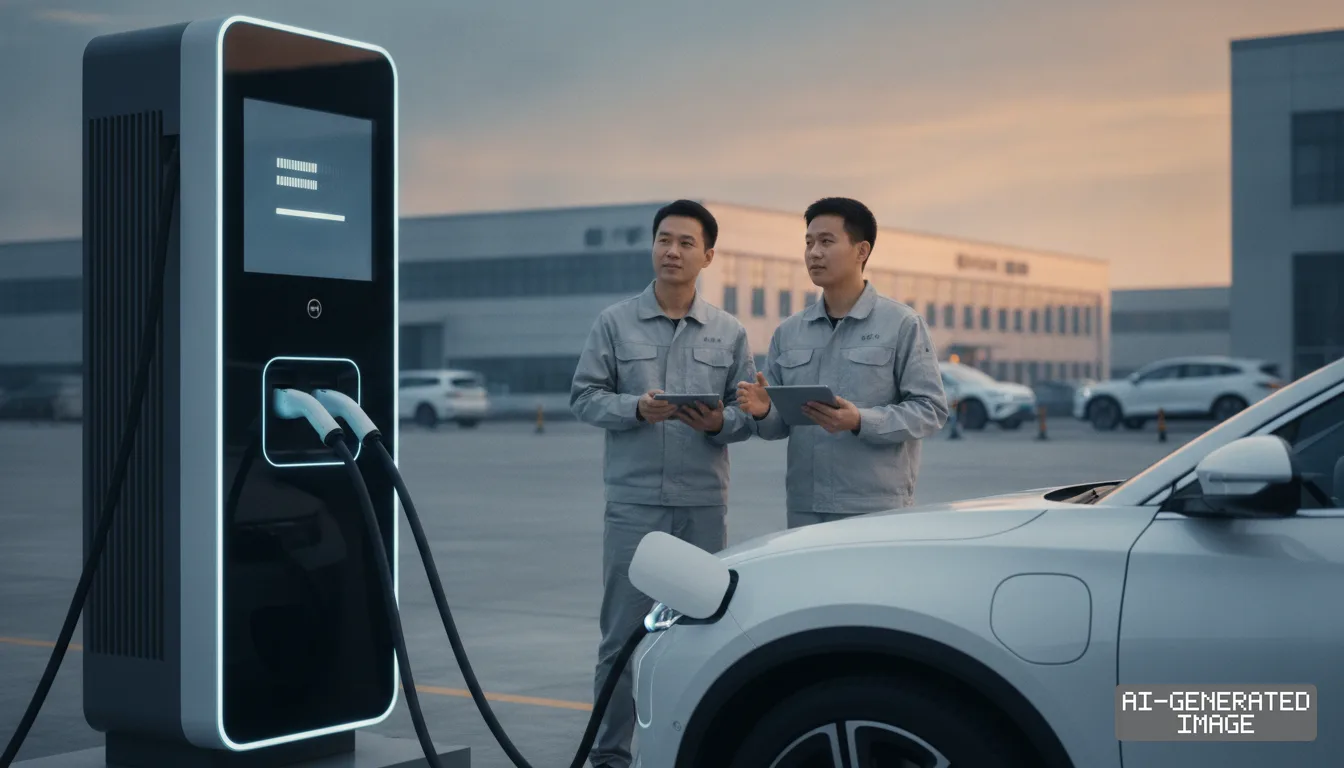
BYD verifies 12-minute subzero recharge using 1,500-kilowatt packs
Second-generation Blade cells charged from 20% to 97% at minus 30 degrees Celsius during cold tests, requiring a 1,000-volt platform that adds three minutes.
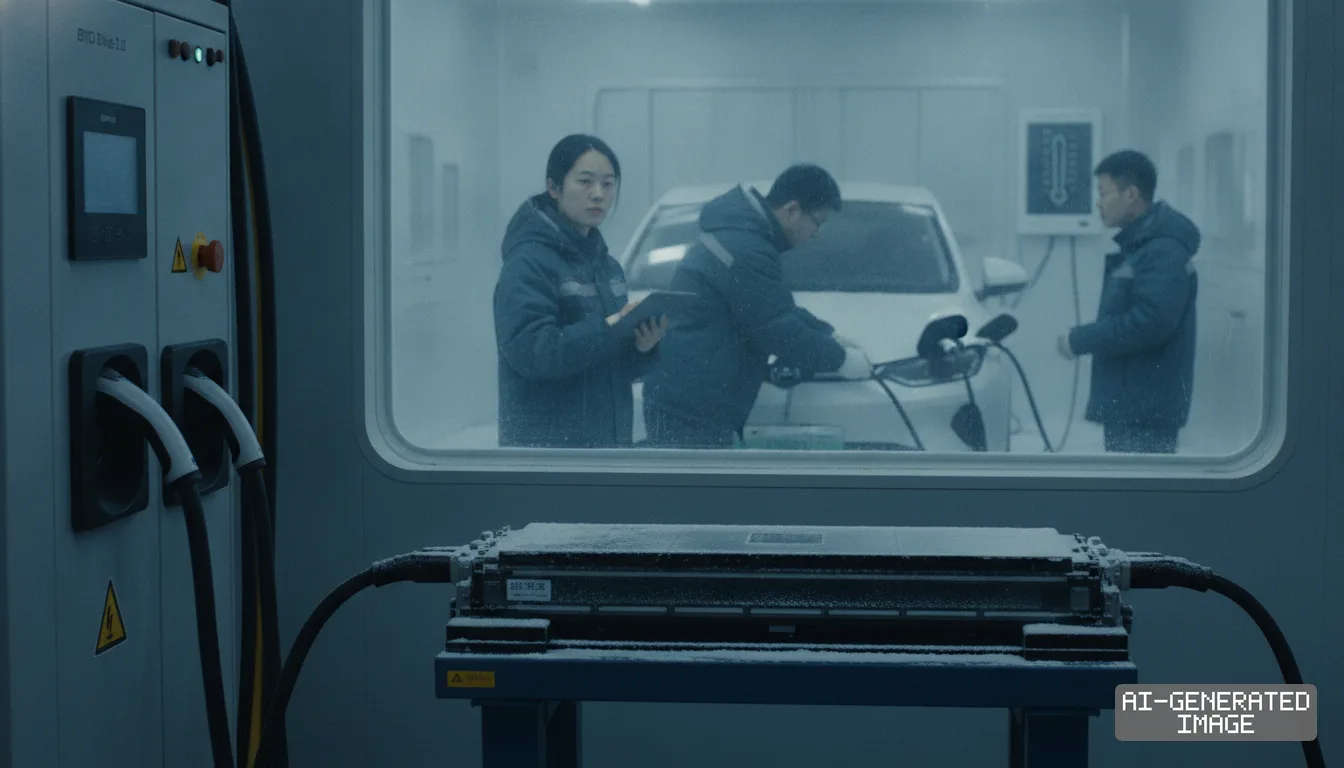
BYD reaffirmed technical benchmarks on Nov. 7, 2026, showing its second-generation Blade battery replenishes from 20% to 97% capacity in 12 minutes at minus 30 degrees Celsius.
The performance relies on its 1,500-kilowatt charging system, which adds only three minutes to standard replenishment times despite subzero conditions. At room temperature, the same battery charges from 10% to 97% in nine minutes, the company said.
BYD frames the performance under the formula of ready in five, full in nine, cold add three. Recharging halts at 97% to preserve a 3% reserve capacity for vehicle regenerative braking, according to company technical filings.
The system requires a 1,000-volt vehicle architecture paired with liquid-cooled charging terminals. The terminal delivers power to a 115-kilowatt-hour battery pack, adding roughly 300 kilometers of driving range in five minutes, BYD said.
Subzero charging relies on modified lithium iron phosphate chemistry with faster ion transport channels. The design reduces internal electrical resistance, preventing lithium plating during high-amperage input in subzero air, the company said.
Each charging station incorporates a 370-kilowatt-hour on-site energy storage system split into two 185-kilowatt-hour units. The battery buffer draws between 100 kilowatts and 560 kilowatts from municipal grids while discharging at 1,500 kilowatts, the company said.
The buffering architecture prevents local substations from tripping during multi-megawatt power spikes. BYD operates the charging network directly, allowing high-power vehicle turnover along congested highway corridors without requiring utility substation overhauls, according to technical disclosures.
Manufacturing scale backs the deployment from BYD's battery plant in Xi'an, Shaanxi Province. The company invested 7 billion yuan ($980 million) to produce second-generation Blade cells at the facility, according to provincial industrial records.
The Xi'an plant provides 16 gigawatt-hours of annual manufacturing capacity dedicated to the high-voltage chemistry. The facility supplies high-power battery packs for both commercial fleets and premium passenger models, according to factory filings.
BYD has not published a technical docket or regulatory filing dated Nov. 7, 2026. Official company documentation does not substantiate circulating claims of recharging an empty battery from 0% capacity in 12 minutes, specifying an initial threshold of 20%.
Circulating social posts misread minus 22 degrees Fahrenheit as Celsius, obscuring the certified minus 30 degrees Celsius testing standard. BYD has not issued amendments altering the baseline parameters established in its initial engineering certifications, according to corporate releases.
Contemporary Amperex Technology, which commands roughly 37% of global electric vehicle battery capacity, faces direct pressure in fast-charging LFP supply. The market leader expanded production of its competing Shenxing cells to protect domestic original equipment manufacturer supply contracts, according to industry disclosures.
Tesla operates its competing V4 Supercharger network at a peak power rating of 500 kilowatts. The American automaker maintains only 40 V4 stations across mainland China, leaving its single-connector throughput at one-third of BYD's hardware ceiling, according to company station listings.
LG Energy Solution holds about 12% of the global automotive battery market, relying predominantly on nickel-cobalt-manganese chemistries. The South Korean manufacturer offers platforms charging from 10% to 80% in 18 minutes, requiring higher raw material costs to achieve comparable charging speeds, according to corporate filings.
BYD installs the second-generation packs on its ATTO 8 sport utility vehicle and Denza Z9GT. The ATTO 8 carries a 115-kilowatt-hour pack delivering 653 kilometers of driving range under standardized testing, the company said at the Paris Motor Show.
The automaker plans to deploy 3,000 Flash Charging stations across Europe by the end of 2027. The European rollout aims to support premium passenger car exports against expanding local content regulations, according to company releases.
In its domestic market, BYD scheduled completion of 20,000 Flash Charging stations across China by Dec. 31, 2026. The deployment target includes 2,000 dedicated charging plazas situated along intercity expressways, according to network filings.
The charging network reached 11,586 operating stations across 341 Chinese cities by late September. Network terminals dispensed 210 million kilowatt-hours of electrical energy across 1.83 million driver transactions during their first six months of operation, the company said.
Vehicles manufactured by competing automakers accounted for nearly one-third of all charging sessions across the network. Non-BYD vehicles draw power at lower rates determined by their internal battery management limits, according to network operating data.
BYD concludes its 2026 infrastructure deployment window on Dec. 31 before opening commercial site certifications for European municipal charging operators.
Impact map
How this development propagates across the region and out to global buyers.
| Event | Korea | China | Japan | Global impact |
|---|---|---|---|---|
| subzero flash charging deployment | LG Energy Solution faces pricing pressure on NCM cells against subzero LFP speed | BYD and CATL lock down domestic ultra-fast infrastructure before foreign market entry | Toyota and Panasonic face extended 18-minute charging gap on legacy pack architectures | Automakers face 1,000V architecture transition as charging benchmarks shift to 15 minutes |
In this story
- Companies
- BYD
- Tickers
- 002594.SZ1211.HK
- Exposed
- Contemporary Amperex TechnologyTeslaLG Energy Solution
- Impact
- Supply ChainCapexCost Structure
Related briefings
- Panasonic Energy unveils 150 C solid-state prismatic battery Also on Tesla, BYD, Contemporary Amperex Technology
- CATL widens global EV battery lead to 39.4% as Korean share slips Also on Tesla, BYD, Contemporary Amperex Technology
- LG Energy Solution shifts battery output to AI data centers Also on Tesla, BYD, Contemporary Amperex Technology
- CATL Surpasses Korean Battery Trio in Markets Outside China Also on Tesla, BYD, Contemporary Amperex Technology
Sources
Primary documents
Reporting
Confidence: high — how we grade this
The documents behind this briefing are linked above. East Asia Brief produces its English text with AI assistance under human editorial review, and does not translate or republish other outlets' articles. See our methodology and AI policy. Spotted an error? Tell us.
The Morning Brief
What changed in Korean, Chinese and Japanese industry overnight — and what it means for your supply chain. One email, weekday mornings, US time. Free.
The Morning Brief is in preparation. Leave your address and we will write to you once — when the first issue is ready. Nothing before that.