POSCO Future M and L&F build LFP lines on Korean battery contracts
POSCO Future M's 6.0515 trillion won agreement with Samsung SDI leads a domestic push into iron phosphate chemistries long dominated by Chinese refiners.
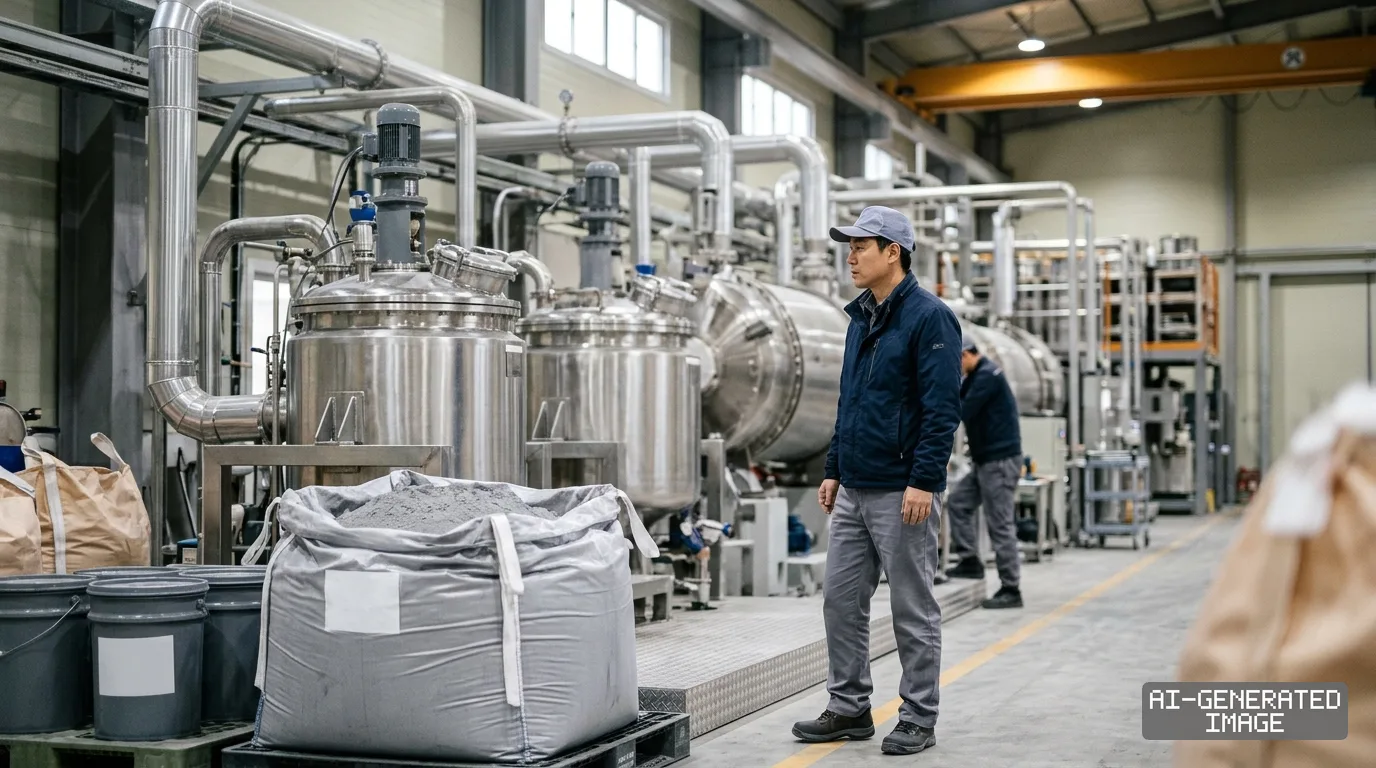
L&F and POSCO Future M accelerated plans on Nov. 7, 2026, to build dedicated lithium iron phosphate cathode production lines following major supply contracts with South Korean battery makers.
The coordinated move marks an abrupt pivot toward iron phosphate chemistry, a product category that refiners in China have long monopolized. South Korean materials manufacturers previously concentrated almost all capital expenditure on nickel-rich formulations.
POSCO Future M signed a 6.0515 trillion won ($4.38 billion) contract on Oct. 6 to supply lithium iron phosphate cathode material to Samsung SDI. The multi-year transaction is the largest single iron-based cathode deal closed by a domestic supplier.
The company expanded its supply network on Oct. 30 by signing a comprehensive materials memorandum of understanding with LG Energy Solution. That agreement encompasses 720,000 metric tons of cathode and anode materials across seven years between 2027 and 2033.
POSCO Future M is converting under-utilized nickel-cobalt-manganese production lines at its Pohang complex to manufacture iron phosphate cathode. The manufacturing line conversions will secure up to 105,000 metric tons of annual production capacity, the company said.
The Pohang conversion plan follows an earlier iron phosphate supply agreement that POSCO Future M secured with SK On in September. That initial supply transaction was valued at approximately 1.1 trillion won ($795 million), establishing supply ties across all three domestic cell producers.
L&F concluded its own binding supply contract with LG Energy Solution on Nov. 2, booking 1.035 trillion won ($748 million) in orders. The contracted delivery schedule spans four years, running from 2028 through 2031, the company announced on Nov. 3.
The LG Energy Solution contract completed L&F's order book across South Korea's three major battery makers. L&F previously signed lithium iron phosphate cathode supply agreements with Samsung SDI in March and with SK On in September.
Commercial volume will originate from L&F Plus, an advanced materials subsidiary located in the southeastern city of Daegu. The subsidiary commissioned an initial manufacturing line capable of producing 30,000 metric tons of iron phosphate cathode annually in late September.
L&F plans to double output at the Daegu facility to 60,000 metric tons annually by the first half of 2027. The manufacturer is scheduling a second domestic expansion phase to reach 120,000 metric tons of annual capacity by the second half of 2028.
To secure raw materials outside Chinese refining channels, L&F signed a memorandum of understanding with Hyundai Steel on Oct. 30. The domestic steel manufacturer will supply recycled iron oxide, the critical metal precursor required to synthesize iron phosphate crystals.
EcoPro BM outlined its own mass-production roadmap during a third-quarter earnings call on Nov. 5. Management stated that the company is reviewing capital allocations to build a dedicated production facility with an annual capacity of up to 50,000 metric tons.
The planned facility will scale beyond the 4,000-metric-ton pilot line that EcoPro BM operates in Ochang. That pilot plant has served as the validation facility for the company's proprietary fourth-generation lithium iron phosphate formulations.
Surging procurement requests from North American energy storage developers are driving the sudden investment wave. Utility developers require stationary batteries to supply artificial intelligence compute facilities and reinforce electricity transmission grids.
Power producers favor iron phosphate over nickel chemistry because the material does not release oxygen at elevated temperatures, preventing thermal runaway. Iron-based cells also provide longer cycling lifespans during daily charging and discharging cycles.
Tightening regulatory standards in the United States have accelerated the procurement pivot away from mainland Chinese refiners. Battery builders must eliminate materials processed by prohibited foreign entities to qualify for federal clean-energy tax incentives.
Converting active production equipment also addresses the sharp deceleration in premium electric vehicle adoption across Western markets. Domestic cathode producers saw facility operating rates tumble after automakers delayed high-nickel battery programs.
Binding contractual commitments will take shape before the end of 2026, when POSCO Future M and LG Energy Solution plan to finalize terms for their seven-year agreement. Shipments under that arrangement begin in 2027.
The agreement notices do not specify the precise tonnage of iron phosphate material included within the 720,000-ton headline total. Trade authorities in Seoul have not published verified filings confirming industry estimates that aggregate domestic orders exceed 210,000 metric tons.
Impact map
How this development propagates across the region and out to global buyers.
| Event | Korea | China | Japan | Global impact |
|---|---|---|---|---|
| Korean cathode makers accelerate LFP capacity buildout | POSCO Future M, L&F and EcoPro BM commit over 270,000 tons of combined LFP capacity to supply domestic battery builders | Domestic LFP cathode exporters face market share erosion in North American energy storage supply chains | Stationary battery cell manufacturers face stiffer price and delivery competition in utility grid tenders | Utility-scale ESS project developers gain non-Chinese supply lines compliant with US tax-credit rules |
In this story
- Companies
- POSCO Future MEcoPro BM
- Tickers
- 003670.KS066970.KS247540.KQ
- Exposed
- LG Energy SolutionSamsung SDISK OnHyundai Steel
- Policy
- Tax CreditsLocal Content Rules
- Impact
- Supply ChainCapexOrder Book
Track every Tax Credits development → Track every Local Content Rules development →
Related briefings
- Hyundai Steel and POSCO build US plant to bypass Section 232 Also on Hyundai Steel
- Japan shipyards agree long-term thick plate supply terms with Nippon Steel Also on Hyundai Steel
- Asian Shipyard Heavy Plate Costs Diverge as Mills and Builders Clash Over Contract Pricing Also on Hyundai Steel
- Korea Urges USTR to Strictly Honor 15% Bilateral Tariff Cap Also on Hyundai Steel
Sources
Reporting
Confidence: medium — how we grade this
The documents behind this briefing are linked above. East Asia Brief produces its English text with AI assistance under human editorial review, and does not translate or republish other outlets' articles. See our methodology and AI policy. Spotted an error? Tell us.
The Morning Brief
What changed in Korean, Chinese and Japanese industry overnight — and what it means for your supply chain. One email, weekday mornings, US time. Free.
The Morning Brief is in preparation. Leave your address and we will write to you once — when the first issue is ready. Nothing before that.