BYD's New Han EV Claims 1,000km Range
BYD confirmed the Great Han flagship sedan will launch Oct. 13, 2026 with 1,500-kilowatt Flash Charging and a nine-minute full recharge.
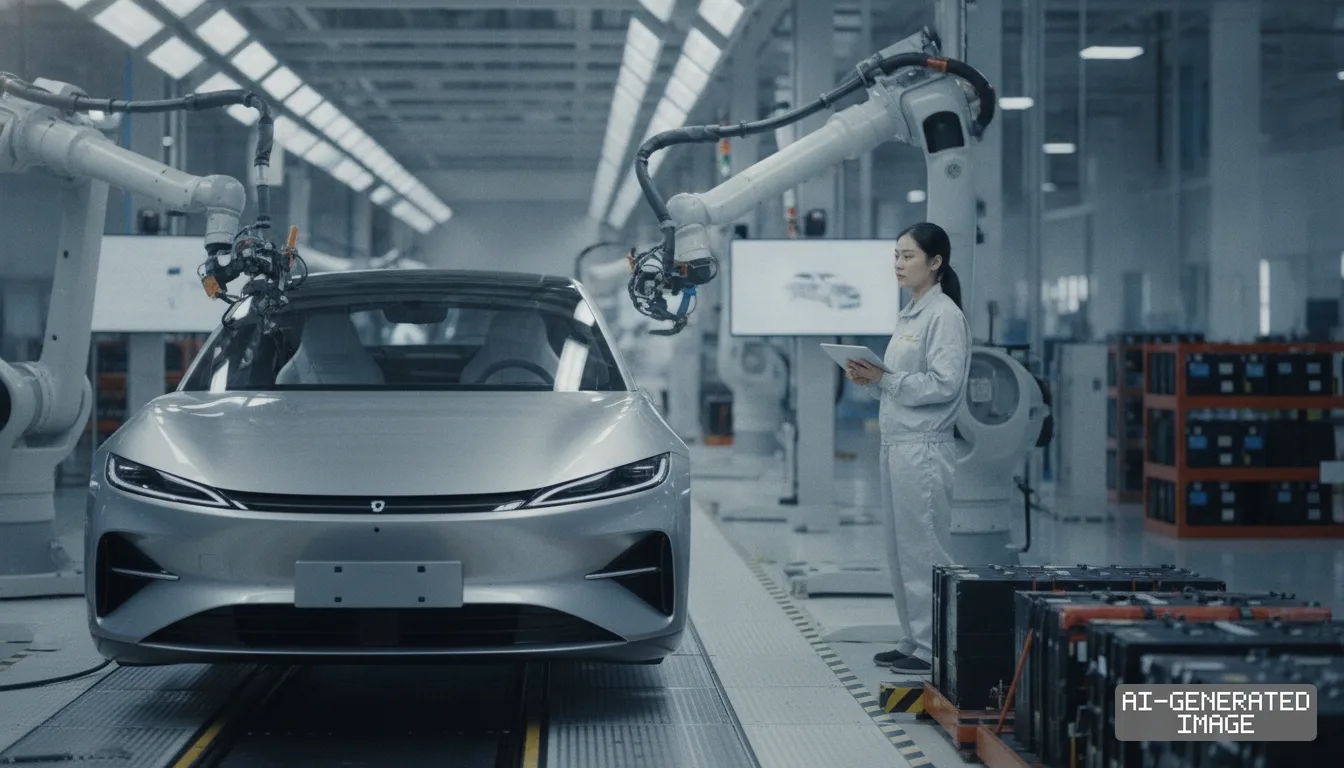
BYD confirmed on Sept. 25, 2026 that its new flagship electric sedan, the Great Han, will go on sale Oct. 13 with a claimed driving range of up to 1,008 kilometers (626 miles) on China's CLTC test cycle.
Lu Tian, general manager of BYD's Dynasty series, announced the launch date and range figure. The Great Han, called Da Han in China, is the first D-segment flagship sedan in BYD's Dynasty lineup, which already includes the Han, Song, Tang and Yuan models.
BYD opened pre-orders for the Great Han at the Chengdu Auto Show on Aug. 21, with prices starting at 249,900 yuan ($37,200). The car appeared in China's Ministry of Industry and Information Technology (MIIT) catalog of approved new-energy vehicles in June, ahead of its formal unveiling.
The sedan will ship in three variants with single- and all-wheel-drive powertrains. It measures 5,256 millimeters long with a 3,130-millimeter wheelbase, making it larger than the Tesla Model S and the Lucid Air, and closer in size to the long-wheelbase Mercedes-Benz S-Class.
Power ratings spotted ahead of the launch show the single-motor, rear-wheel-drive version running 370 kilowatts, while the dual-motor, all-wheel-drive version combines for 570 kilowatts, according to regulatory filings cited by trade outlet The Driven. The car's gross weight tops 2,500 kilograms, reflecting the size of the battery pack needed to hit the 1,008-kilometer figure.
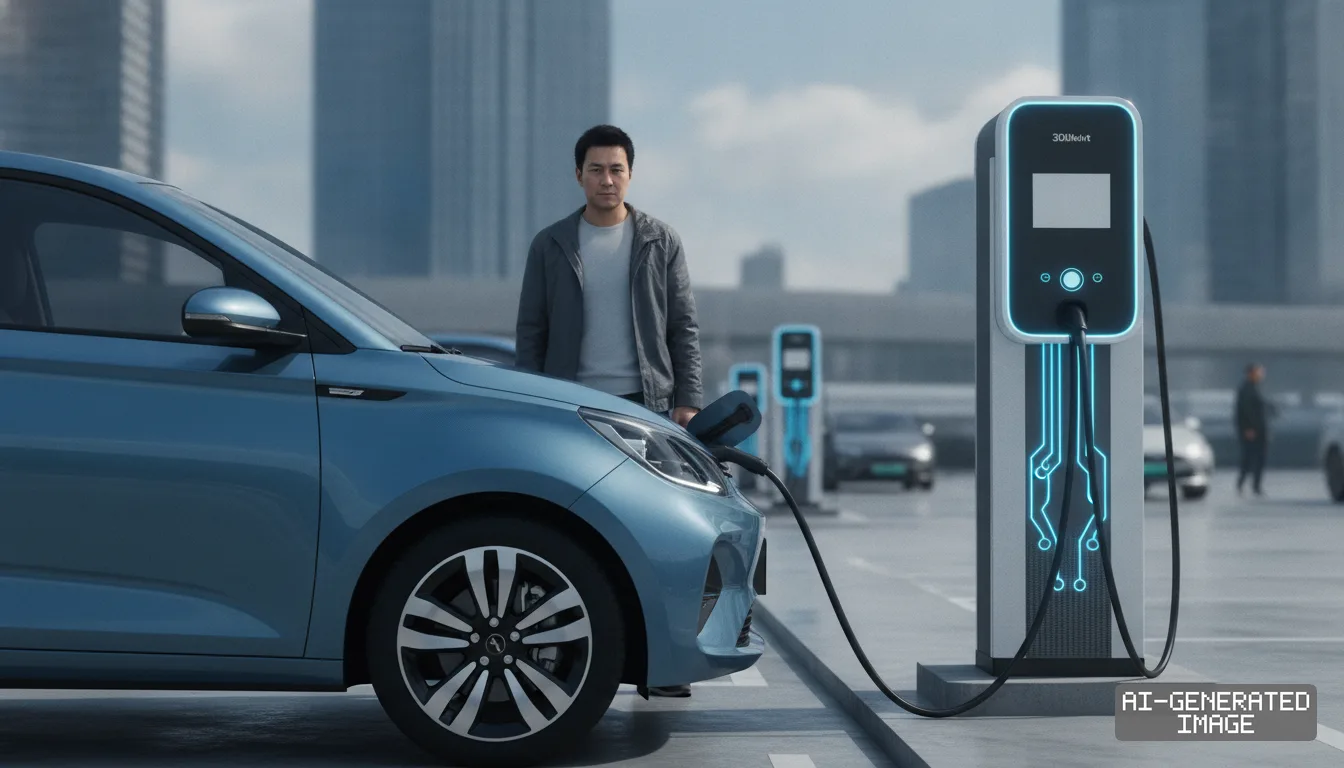
Every Great Han variant carries BYD's Blade Battery 2.0 cell pack paired with the company's Flash Charging system. BYD said the setup can recharge the battery from 10 percent to 70 percent in five minutes using 1,500-kilowatt charging hardware, with a full charge from 10 percent to 97 percent taking nine minutes.
Those figures matter beyond the car itself. Chinese automakers have spent 2026 racing to publish ever-higher range and charging-speed claims, and each new number sets a marketing bar that rival brands then have to match or beat. For battery suppliers in South Korea and Japan, claims like BYD's 1,500-kilowatt charging rate are an early signal of where cell chemistry, pack architecture and thermal management are headed in the mass-market segment, not just at the performance-flagship tier.
BYD is one of the few automakers that designs and builds its own battery cells, through its FinDreams Battery unit, rather than buying them from an outside cell maker. The Sept. 25 announcement does not name a cell supplier or describe the pack's chemistry in detail, so it is not possible to confirm from this release alone whether the Great Han's cells come from that in-house line or from another source.
The range race is not confined to the Great Han. BYD's premium brand Denza is preparing its Z9 sedan with two lithium iron phosphate Blade Battery options, rated at 102 kWh and 122 kWh, that the company says deliver up to 1,068 kilometers on the CLTC cycle with the larger pack, according to a Feb. 12 report from trade outlet The Driven. That figure would likely translate to closer to 800 kilometers on the WLTP cycle used in Europe, the outlet said.
The Great Han also carries rear-wheel steering and a dual-chamber air suspension, features BYD has used on other Dynasty-series flagships to justify pricing above mainstream EV segments. A roof-mounted LiDAR sensor, used for driver-assistance systems, was shown in earlier design previews of the car.
BYD used a similar presale strategy for its three-row Great Tang SUV, which opened orders at the Beijing Auto Show in April. Lu said at the time that the Great Tang had drawn more than 100,000 pre-orders ahead of its official launch, at presale prices starting around 250,000 yuan ($37,000) — nearly identical to the Great Han's entry price.
The Great Han's 1,008-kilometer figure is measured on China's CLTC cycle, which tends to produce higher numbers than the EPA or WLTP standards used in the United States and Europe. BYD's Sept. 25 statement does not give an EPA- or WLTP-equivalent range, and the company has not published a U.S. or European launch plan for the model.
BYD also has not disclosed the Great Han's battery capacity in kilowatt-hours or confirmed final pricing for each of the three drivetrain variants; the 249,900 yuan figure covers pre-orders only, ahead of the Oct. 13 on-sale date. The company's release likewise does not specify which markets outside China will receive the Flash Charging infrastructure needed to reach the claimed 1,500-kilowatt rate.
The Great Han's launch is now set for Oct. 13, 2026, when BYD is expected to release full trim-by-trim pricing and specifications alongside first deliveries.
In this story
- Companies
- BYD Company
- Tickers
- 002594.SZ1211.HK
- Impact
- PricingOrder Book
Related briefings
- BYD and Geely expand Southeast Asian assembly lines to build regional export hubs Also on BYD Company, Pricing, Order Book
- Geely Previews 2.2 MW EV Fast Charger to Rival BYD in China Also on BYD Company, Pricing
- Grid Storage Costs Diverge Across East Asia as Safety Rules and Balance of System Shape Pricing Also on BYD Company, Pricing
- Korea Cuts EV Subsidies on Low Energy Density Cells, Squeezing LFP Imports Also on BYD Company, Pricing
Sources
Reporting
- BYD sets launch date for the new flagship Han EV with over 1,000 km of range
- BYD to launch Da Han sedan on October 13 with up to 1,008 km of EV range - CnEVPost
- 2026 BYD Han L brings over 700 km of range and 1,000 HP for less than $30,000 - ArenaEV
- 2026 BYD Han L EV hits 701 km range, 2.7 s 0‑100 ...
- BYD to launch EVs with more than 1,000 km of range this year - The Driven IO
Confidence: medium — how we grade this
The documents behind this briefing are linked above. East Asia Brief produces its English text with AI assistance under human editorial review, and does not translate or republish other outlets' articles. See our methodology and AI policy. Spotted an error? Tell us.
The Morning Brief
What changed in Korean, Chinese and Japanese industry overnight — and what it means for your supply chain. One email, weekday mornings, US time. Free.
The Morning Brief is in preparation. Leave your address and we will write to you once — when the first issue is ready. Nothing before that.