Korea Cuts EV Subsidies on Low Energy Density Cells, Squeezing LFP Imports
Revised environmental criteria tie state purchase grants to cell density and metal recovery, reducing consumer payouts on Chinese-assembled models.
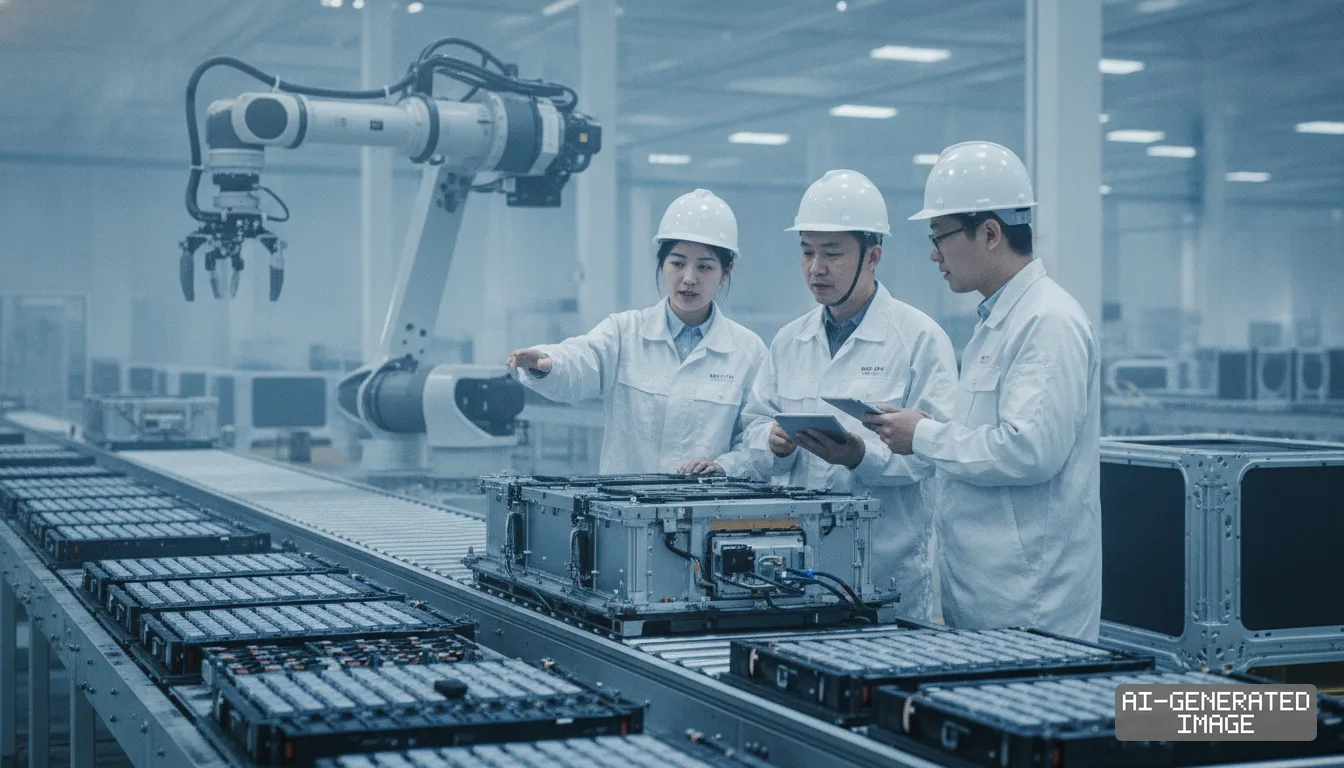
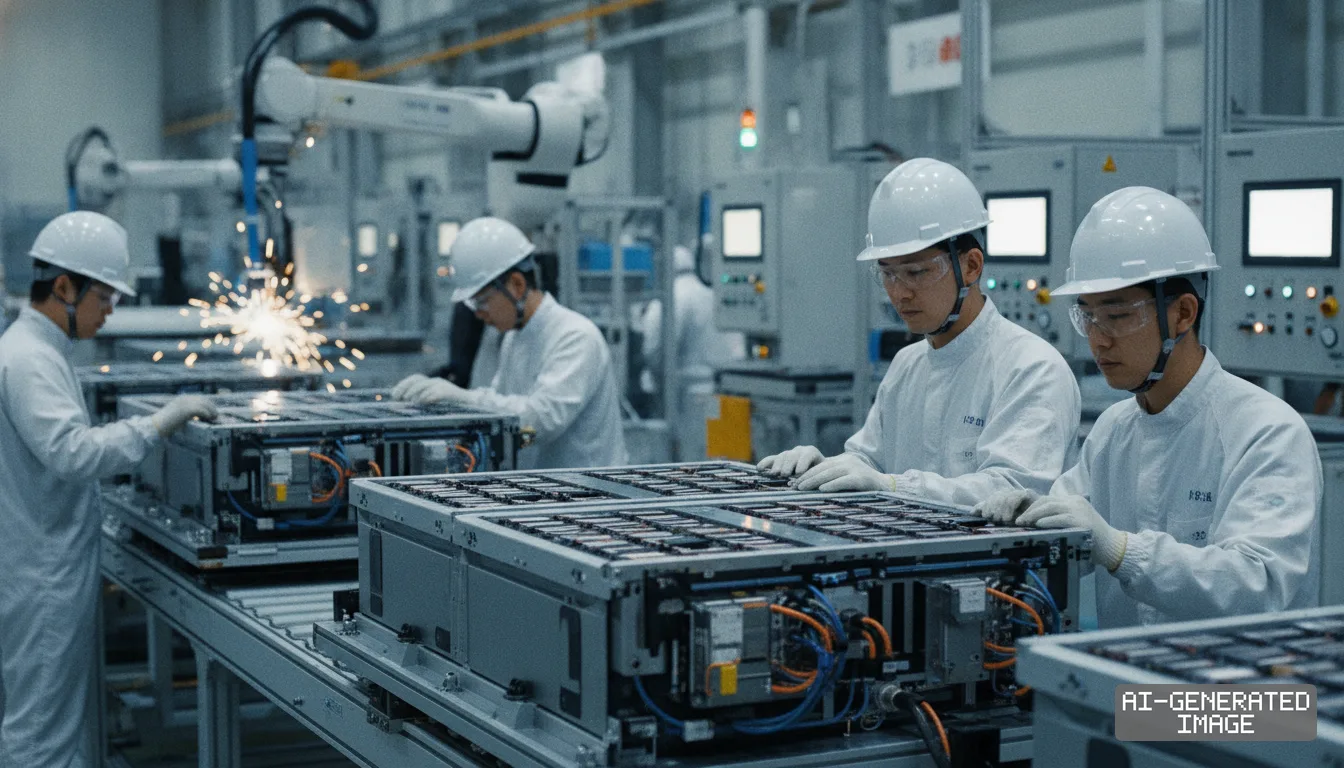
South Korea's Ministry of Environment has implemented updated national electric vehicle subsidy guidelines that scale consumer purchase incentives directly against battery cell energy density and material recyclability, reducing state grants for passenger cars equipped with lower-density lithium iron phosphate cells.
The revised framework modifies the calculation formula used by the central government and municipal administrative bodies to allocate electric vehicle purchase support. Under the updated rules, passenger vehicles with battery pack energy density below 400 watt-hours per liter receive a reduced performance coefficient, trimming the baseline central government subsidy by up to several thousand dollars compared to vehicles utilizing high-density nickel-cobalt-manganese chemistry. The policy also introduces a tiered environmental value coefficient that assesses the residual economic value of recoverable metals per kilogram of discarded battery material, penalizing chemistries that yield negligible amounts of cobalt, nickel, and manganese during industrial recycling.
The operational consequence of the formula falls heavily on imported electric models manufactured in China, which overwhelmingly rely on lithium iron phosphate packs supplied by Contemporary Amperex Technology and BYD Company. Tesla's Shanghai-built Model Y rear-wheel-drive variant, which led imported electric vehicle registrations in the domestic retail sector after adopting lithium iron phosphate packs, qualifies for significantly smaller state and municipal payouts under the revised metric. Commercial and passenger units distributed by Chinese original equipment manufacturers, including Geely-backed brands and commercial van importers operating in metropolitan logistical networks, face equivalent reductions in purchase assistance.
Domestic automotive groups maintaining high-nickel supply contracts with domestic battery producers retain the upper ceiling of the subsidy schedule. Hyundai Motor Company and Kia Corporation secure full base-grant eligibility across their dedicated electric lineups, including the Ioniq 5, Ioniq 6, and EV6, which employ ternary lithium-ion pouches and prismatic modules supplied by LG Energy Solution and SK on. These packs routinely clear the energy density threshold of 500 watt-hours per liter, allowing prospective buyers in municipal jurisdictions such as Seoul, Incheon, and Busan to capture both the maximum central government allotment and the paired local government matching disbursements.
For automotive commercial planning divisions, the policy reconfigures pricing thresholds in the entry-level and mid-range passenger vehicle segments. Automotive brands that recently shifted mass-market platforms toward lithium iron phosphate architectures to compress baseline manufacturing costs must either absorb the lost subsidy differential through retail price concessions or accept lower consumer adoption velocity against competitively subsidized nickel-rich alternatives. KG Mobility, which integrates BYD blade battery packs into its Torres EVX crossover, and Kia, which utilizes lithium iron phosphate cells in the urban Ray EV minicar, confront varied subsidy erosion across their product tiers depending on vehicle curb weight and pack density testing data submitted to state inspection agencies.
The Ministry of Environment structured the rule around two core technical indices: the energy density index and the battery resource recovery coefficient. The energy density index assigns a multi-stage multiplier ranging from 1.0 down to 0.6 across distinct volumetric density bands. The resource recovery coefficient calculates the scrap recovery value of cathode active materials based on standard hydrometallurgical recycling processes managed under South Korea's Act on Resource Circulation of Electrical and Electronic Equipment and Vehicles. Because iron and phosphate compounds present low market salvage prices relative to the processing energy required to extract them, battery packs featuring iron-based cathodes score near the statutory floor on the recyclability matrix.
Trade compliance advisors note that South Korea's regulatory approach achieves industrial insulation without relying on explicit rules of origin or nationality requirements, aligning nominally with World Trade Organization non-discrimination principles while producing market outcomes analogous to localization mandates. Unlike the United States Inflation Reduction Act, which establishes strict foreign entity of concern exclusions and domestic manufacturing thresholds, the South Korean framework relies entirely on standardized environmental efficiency and circular economy performance metrics applied universally across domestic and imported nameplates.
The policy shift arrives as Chinese battery manufacturers seek to defend export volumes across Asian and European markets in the face of elevated tariff structures in North America and the European Union. Contemporary Amperex Technology and Gotion High-Tech have accelerated domestic validation testing for upgraded lithium manganese iron phosphate chemistries, which blend manganese into the olivine crystal structure to boost cell operating voltage and elevate volumetric energy density closer to the 450 watt-hours per liter mark. Until such chemistries achieve commercial scale in volume passenger platforms, vehicles carrying standard iron phosphate configurations will face compressed price competitiveness across South Korean dealerships.
The practical impact extends downstream into municipal budgeting processes. Local governments throughout South Korea have aligned their regional EV subsidy ordinances with the central ministry's coefficient schedules. In Seoul, where municipal grants top up the central environment ministry payment, the combined incentive reduction for lower-density vehicles widens the out-of-pocket price spread between entry-level imported models and domestically assembled high-nickel equivalents. Automotive distribution networks have begun restructuring promotional campaigns and retail financing programs to offset the diminished municipal contributions.
South Korea's Korea Environment Corporation continues to publish verified subsidy allocation tables for newly registered model variants following compliance reviews of manufacturer-submitted cell datasheets and tear-down verification tests. The Ministry of Environment's technical advisory committee holds statutory review authority to recalibrate the density bands and recycling formula coefficients on an annual cycle under the provisions of the Clean Air Conservation Act.
Impact map
How this development propagates across the region and out to global buyers.
| Event | Korea | China | Japan | Global impact |
|---|---|---|---|---|
| EV subsidy revision | domestic makers retain full grants | LFP pack exports penalized | battery material suppliers watch density rules | retail pricing adjusted for imports |
In this story
- Companies
- Hyundai Motor CompanyKia CorporationTeslaBYD CompanyLG Energy SolutionSK onContemporary Amperex Technology
- Tickers
- 005380.KS000270.KSTSLA002594.SZ373220.KS300750.SZ
- Exposed
- KG MobilityGotion High-Tech
- Policy
- SubsidiesEconomic Security
- Impact
- Supply ChainPricingCompliance
Track every Subsidies development → Track every Economic Security development →
Related briefings
- Hyundai accelerates Ulsan EV conversion to balance export lines with global demand Also on Kia Corporation, Hyundai Motor Company, SK On
- Korea Links Commercial Electric Van Grants to Battery Recyclability Also on KG Mobility, SK On, LG Energy Solution
- BYD and Geely expand Southeast Asian assembly lines to build regional export hubs Also on Gotion High-Tech, BYD Company, Contemporary Amperex Technology
- SK On and GS Caltex Advance Immersion Cooling Packs for High-Voltage EV Fleets Also on Hyundai Motor Company, SK On, Compliance
Sources
This briefing carries no sources block. It was written from our desks’ working knowledge of the sector rather than from documents retrieved for this piece. Read it as orientation and check any figure you intend to act on — how we source briefings.
This briefing carries no linked sources: it was written from our desks' working knowledge of the sector rather than from documents retrieved for this piece. East Asia Brief publishes no citation it cannot link. Our English text is produced with AI assistance under human editorial review. See our methodology and AI policy. Spotted an error? Tell us.
The Morning Brief
What changed in Korean, Chinese and Japanese industry overnight — and what it means for your supply chain. One email, weekday mornings, US time. Free.
The Morning Brief is in preparation. Leave your address and we will write to you once — when the first issue is ready. Nothing before that.