Geely Previews 2.2 MW EV Fast Charger to Rival BYD in China
The single-gun 2,200 kW liquid-cooled hardware targets a seven-minute charge for Aegis Short Blade batteries ahead of an official launch alongside the updated Galaxy E5 on Sept. 23, 2026.
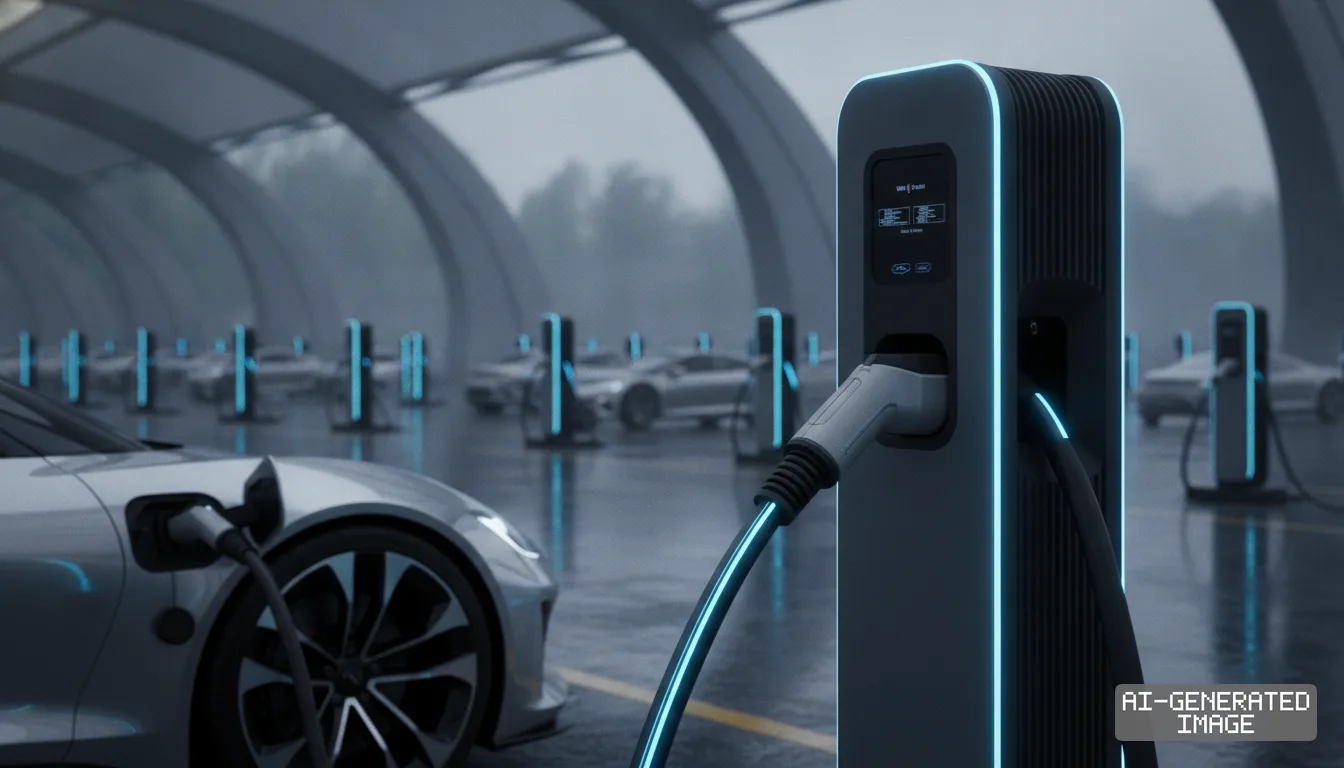
Geely Automobile released technical previews on Sept. 21, 2026 for a 2.2-megawatt electric vehicle charger, escalating an infrastructure race with rival BYD over ultra-fast charging standards across China.
The equipment delivers a peak output of 2,200 kilowatts through a single liquid-cooled connector. That power rating is more than four times the peak capacity of Tesla's 500-kilowatt V4 Supercharger stalls.
Geely engineered the station with an integrated power-sharing pool and a current delivery rating of 1,500 amperes. The system recharges compatible electric vehicle batteries from 10% to 80% in seven minutes.
The architecture also supports a four-minute emergency charge under optimal testing conditions, the company said. The capability depends on linking the station to battery cells designed for rapid lithium-ion transfer.
Geely plans to debut the charging technology alongside its refreshed Galaxy E5 sport-utility vehicle on Sept. 23, 2026. The vehicle shifts from an older front-drive configuration to an all-domain 800-volt rear-wheel-drive architecture.
The updated sport-utility vehicle features Geely's Thunderbolt 16-in-1 electric drive, delivering 245 kilowatts of motor output. That represents an increase of 85 kilowatts over the prior Galaxy E5 generation.
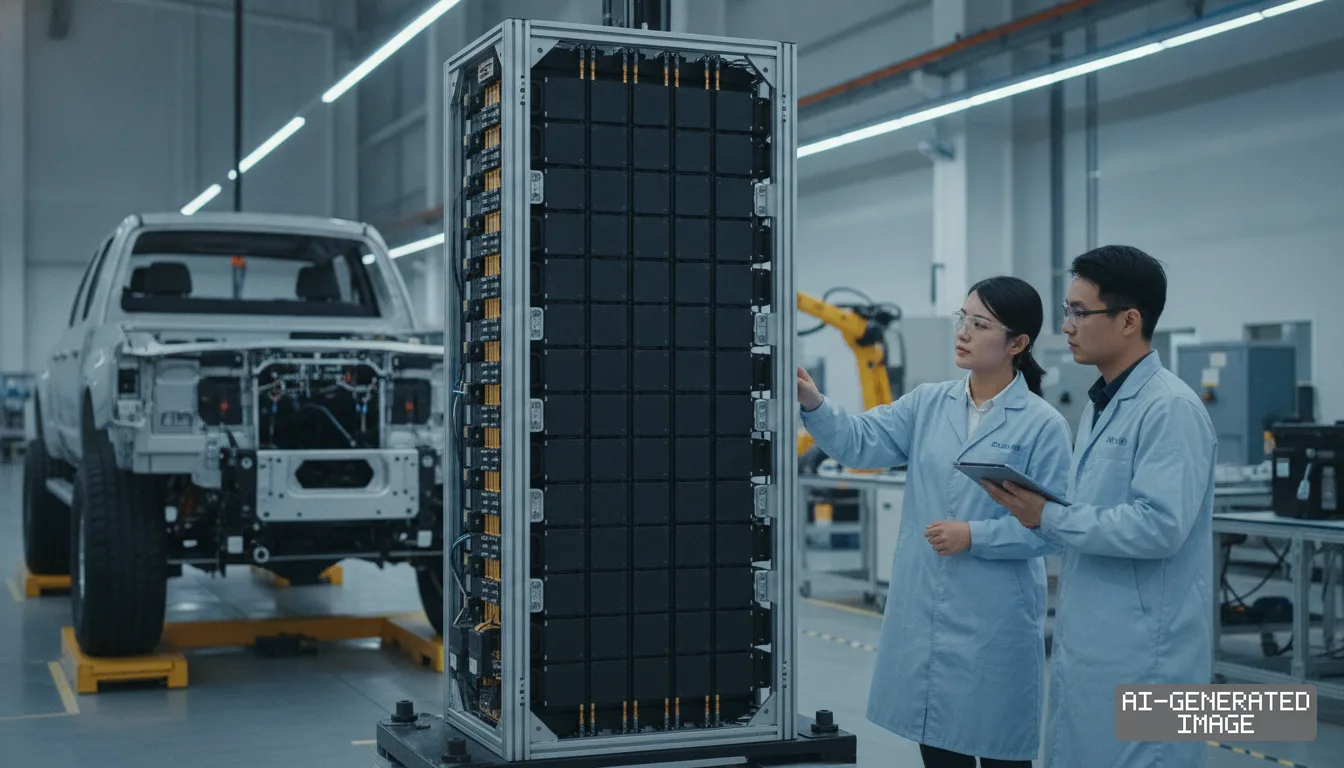
The vehicle houses Geely's Aegis Short Blade battery in 61.52-kilowatt-hour and 70.01-kilowatt-hour pack configurations. The cell chemistry supports a 12C charge multiplier, allowing high amperage without causing internal short circuits.
An artificial intelligence battery management system supervises current delivery at the terminal, Geely said. The algorithm creates customized charging profiles for individual vehicles to minimize heat generation and prolong battery life.
Initial indications of the megawatt program surfaced on April 29, 2026, during an analysis of Geely's first-quarter earnings. Financial media reported then that the carmaker was engineering the world's most powerful charger.
The announcement directly challenges BYD in the commercial rollout of megawatt-level passenger car charging. BYD launched its 1.5-megawatt Flash Charging platform on March 5, 2026, alongside its second-generation Blade battery.
BYD operates its Flash Charging stations with a 1,000-volt electrical architecture and 1,500 amperes of current. That platform refills a vehicle battery from 10% to 70% in five minutes.
BYD reported operating 10,000 Flash Charging stations across China by late August 2026, reaching that milestone six months after launch. The automaker plans to install 20,000 Flash Charging stations nationwide by December.
BYD has also converted conventional service stations into dedicated charging sites through a partnership with state refiner Sinopec. The sites adopt drive-through forecourt layouts modeled after traditional gasoline filling lanes.
To mitigate power grid strain, BYD pairs its dispensers with stationary energy storage systems. These storage units draw electricity steadily during off-peak hours and discharge rapidly during high-amperage vehicle charging sessions.
Geely uses its dedicated charging infrastructure subsidiary, Haohan Energy, to scale its proprietary network. Haohan Energy operated over 11,000 charging piles across 232 Chinese cities as of late August 2026.
Geely's 2.2-megawatt system adopts an energy-sharing power pool to balance local electricity demand. The system dynamically redistributes electrical loads among multiple dispensers as individual vehicle charging curves taper off.
Deploying multi-megawatt stations reflects a strategic shift across China's electric vehicle sector. Automakers are shifting capital from expanding battery pack sizes toward eliminating driver downtime at public chargers.
The transition to 2.2 megawatts brings light passenger cars into power bands once reserved for commercial transport. The international Megawatt Charging System standard was originally developed to recharge heavy-duty Class 8 freight trucks.
Commercial semi-truck chargers supply continuous loads between one and three megawatts to replenish large 600-kilowatt-hour packs. Applying equivalent power to passenger vehicles requires active liquid cooling inside cables to keep cords manageable.
Operating multi-megawatt public hubs places heavy peak loads on municipal power transformers. Grid operators in tier-one Chinese cities increasingly mandate on-site battery storage before approving connections for ultra-fast charging stations.
Chinese state planners have pushed national charging standardization to avoid proprietary network fragmentation. Regulatory agencies supervise direct-current protocols under national GB/T standards to guarantee cross-brand interoperability at highway stations.
Automakers in South Korea and Japan remain anchored to lower charging thresholds. South Korean manufacturers utilize 350-kilowatt direct-current systems, while public fast chargers in Japan rarely exceed 150 kilowatts.
Western charging station operators also trail China's megawatt deployment pace. Public fast-charging networks across North America and Europe are still deploying 400-kilowatt dispensers along long-distance freight and passenger transit corridors.
Geely has not filed formal regulatory disclosures with the Hong Kong stock exchange detailing capital expenditures for the chargers. The automaker has not confirmed whether the dispensers support commercial vehicle Megawatt Charging System connectors.
Published materials also omit data showing how long the system sustains peak 2.2-megawatt delivery before thermal throttling occurs. Geely has not announced a public deployment schedule for customer-accessible charging locations.
Geely will formally present the AI smart charging system in Hangzhou on Sept. 23, 2026. The event will also mark the commercial debut of the updated Galaxy E5 sport-utility vehicle.
Impact map
How this development propagates across the region and out to global buyers.
| Event | Korea | China | Japan | Global impact |
|---|---|---|---|---|
| Megawatt EV charging race | Hyundai Motor maintains 350 kW DC targets, assessing degradation risks of Chinese high-current cell chemistries | Geely and BYD deploy multi-megawatt stations, requiring on-site battery storage to shield municipal transformers | Toyota and Japanese utilities hold public DC stations below 150 kW to avoid distribution substation overhauls | Western charge point operators face widening hardware gap as Chinese OEMs standardize 1,500-ampere liquid-cooled cables |
In this story
- Companies
- Geely Automobile HoldingsBYD Company
- Tickers
- 0175.HK1211.HK
- Exposed
- State Grid Corporation of ChinaTesla
- Policy
- SubsidiesEconomic Security
- Impact
- CapexSupply ChainPricing
Track every Subsidies development → Track every Economic Security development →
Related briefings
- Korea Cuts EV Subsidies on Low Energy Density Cells, Squeezing LFP Imports Also on BYD Company, Tesla, Pricing
- Grid Storage Costs Diverge Across East Asia as Safety Rules and Balance of System Shape Pricing Also on BYD Company, Pricing
- BYD and Geely expand Southeast Asian assembly lines to build regional export hubs Also on BYD Company, Pricing
- Panasonic Energy opens Osaka battery hub for advanced cells Also on Tesla, Pricing
Sources
Primary documents
Reporting
Confidence: high — how we grade this
The documents behind this briefing are linked above. East Asia Brief produces its English text with AI assistance under human editorial review, and does not translate or republish other outlets' articles. See our methodology and AI policy. Spotted an error? Tell us.
The Morning Brief
What changed in Korean, Chinese and Japanese industry overnight — and what it means for your supply chain. One email, weekday mornings, US time. Free.
The Morning Brief is in preparation. Leave your address and we will write to you once — when the first issue is ready. Nothing before that.