CATL and Kuehne+Nagel agree on electric freight logistics
The partnership targets transport decarbonization in Europe, trials heavy-truck battery swapping in China and links energy storage to warehouse hubs.
Contemporary Amperex Technology Co., Limited and Swiss logistics provider Kuehne+Nagel agreed Sept. 26, 2026, to electrify European freight corridors and deploy heavy-duty battery-swapping networks.
The initiative addresses surging demand for commercial vehicle electrification. Global demand for electric truck batteries expanded by more than 75% in 2024 as freight operators tested zero-emission haulage.
The agreement combines CATL's cell manufacturing scale with Kuehne+Nagel's transport network. Both companies plan to overhaul logistics routes connecting component suppliers, battery assembly plants and automotive assembly lines.
The first operational phase focuses on electrifying CATL's inland freight flows across Europe. Electric trucks will replace diesel tractors on scheduled shuttle routes between production sites and regional customer warehouses.
CATL is expanding its manufacturing footprint across the European Union. The Chinese battery maker operates a 14 GWh cell factory in Arnstadt, Germany, and is completing a 100 GWh facility in Debrecen, Hungary.
The two European facilities supply lithium-ion cells and packs to automakers including BMW, Mercedes-Benz, Stellantis and Volkswagen. Road transport carries the majority of finished modules to vehicle assembly plants.
Kuehne+Nagel operates freight networks across close to 100 countries. The freight forwarding group employs roughly 88,000 people across more than 1,300 logistics sites worldwide.
The Swiss logistics group has committed to decarbonizing its fleet. The company aims to equip 60% of its owned commercial vehicle fleet with electric and low-emission drivetrains by the end of 2030.
Both partners structured the agreement around reducing Scope 3 indirect greenhouse gas emissions. Scope 3 emissions encompass upstream supply chain transport, contracted third-party haulage and downstream distribution operations.
Heavy-duty commercial vehicles generate a disproportionate share of road freight carbon output. Deploying battery-electric tractors on fixed shuttle runs provides predictable charging cycles and lowers freight emissions.
The agreement also establishes a commercial pilot project for heavy-duty electric trucks in China. That program will deploy commercial tractors operating on scheduled industrial corridors.
The Chinese pilot relies on CATL's proprietary Qiji Energy chassis-swapping platform. Qiji was developed specifically to serve long-haul commercial logistics routes and industrial port transfer lines.
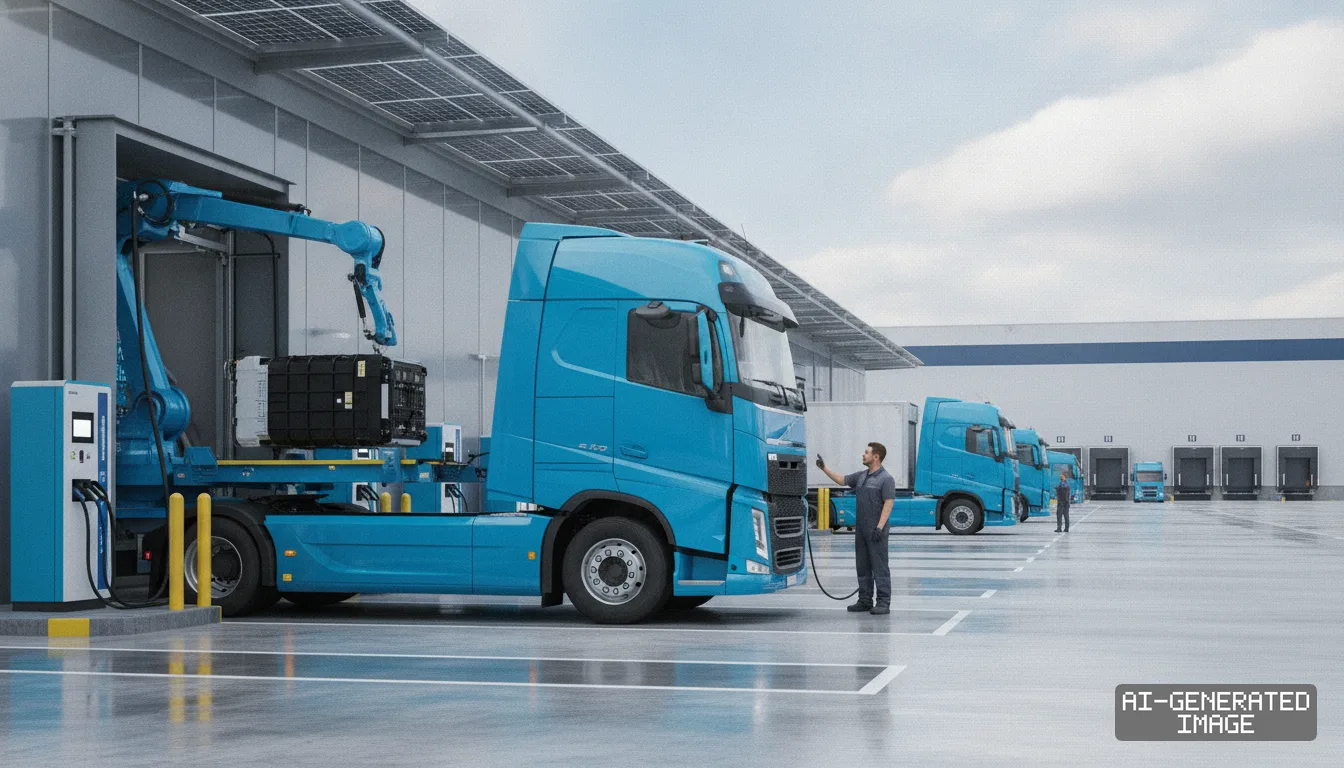
The system uses the No. 75 standardized battery swap block mounted beneath the truck chassis. Automated swap stations replace depleted blocks in roughly five minutes, matching diesel refueling speeds.
Chassis-based swapping lowers the vehicle center of gravity compared with rear-cabin battery packs. The design also expands cargo payload capacity on weight-sensitive highway freight routes.
CATL expanded its commercial battery-swapping position in August 2026. The battery producer acquired a 24.87% equity stake in Qiyuan Green Power for 2.56 billion yuan ($370 million).
Qiyuan operated more than 1,600 charging and swapping stations across 208 Chinese cities at the end of 2025. CATL is pairing that network with a target of 900 Qiji highway swap stations.
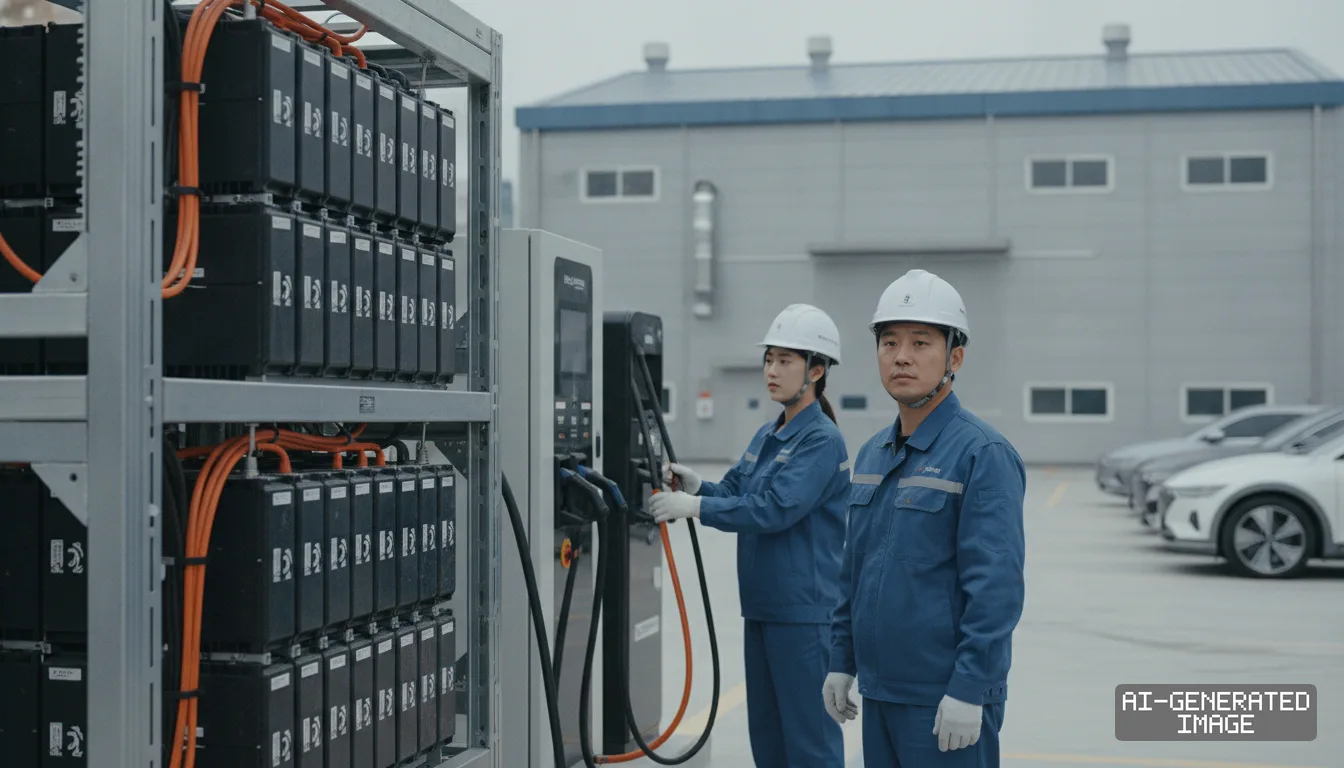
Beyond vehicle drivetrains, CATL and Kuehne+Nagel will install stationary battery energy storage systems at warehouse facilities. These battery banks store off-peak electricity to supply heavy commercial charging dispensers.
Logistics distribution parks face power grid limits when multiple heavy-duty trucks charge at the same time. On-site battery storage buffers grid connections and prevents expensive peak demand utility surcharges.
The agreement also includes joint work on battery recycling and aftersales technical support. Both companies plan to track battery health data across operational logistics cycles to coordinate secondary material recovery.
Managing battery transport requires specialized safety infrastructure. International regulations classify lithium-ion cells as Class 9 dangerous goods, requiring fire suppression protocols and temperature-controlled freight handling.
Standardizing freight containers and handling equipment protects batteries from mechanical shock and thermal stress. Dedicated handling procedures help freight operators reduce transit damage and warehouse insurance premiums.
High upfront vehicle purchase prices continue to slow commercial electric truck adoption. Separating battery ownership from the truck chassis through swapping reduces the initial capital expense for fleet carriers.
Shared charging infrastructure also mitigates financial risk for third-party subcontractors. Many freight forwarders rely on independent trucking partners who cannot finance private high-power depot chargers.
Akin Li, Executive President of CATL Overseas Business, said the partnership is structured to accelerate the energy transition and advance net-zero targets across international supply chains.
Søren Schmidt, Executive Vice President of Road Logistics at Kuehne+Nagel, said combining battery engineering with logistics management will advance operational solutions that reduce freight emissions.
The two companies plan to launch operational trials for the heavy-duty truck battery-swapping pilot in China before Dec. 31, 2026.
The memorandum does not state the capital expenditure, vehicle order numbers or commercial terms governing the European and Chinese rollout.
Impact map
How this development propagates across the region and out to global buyers.
| Event | Korea | China | Japan | Global impact |
|---|---|---|---|---|
| Commercial fleet electrification pact | LG Energy Solution and Samsung SDI face deeper European logistics integration by Chinese competitor | CATL expands commercial deployment of Qiji chassis-swapping platform across highway freight routes | Commercial truck makers Isuzu and Hino evaluate battery-swapping compatibility on regional export lines | Kuehne+Nagel accelerates 2030 target of 60% low-emission vehicles across 1,300 worldwide sites |
In this story
- Companies
- Contemporary Amperex TechnologyKuehne+Nagel
- Tickers
- 300750.SZ
- Exposed
- BMWMercedes-BenzStellantisVolkswagenQiyuan Green Power
- Policy
- Economic Security
- Impact
- Supply ChainCapexCost Structure
Track every Economic Security development →
Related briefings
- China Tightens Connected Vehicle Data Rules With Mandatory Local Sensor Scrubbing Also on BMW, Mercedes-Benz, Cost Structure
- BYD plans three European car plants to counter EU tariffs Also on Volkswagen, Stellantis
- BYD readies 300 kW Flash Charging for entry Seagull city car Also on Volkswagen, Cost Structure
- Posco Holdings starts direct lithium extraction test runs for Korean cathode lines Also on Stellantis, Cost Structure
Sources
Primary documents
Reporting
Confidence: high — how we grade this
The documents behind this briefing are linked above. East Asia Brief produces its English text with AI assistance under human editorial review, and does not translate or republish other outlets' articles. See our methodology and AI policy. Spotted an error? Tell us.
The Morning Brief
What changed in Korean, Chinese and Japanese industry overnight — and what it means for your supply chain. One email, weekday mornings, US time. Free.
The Morning Brief is in preparation. Leave your address and we will write to you once — when the first issue is ready. Nothing before that.