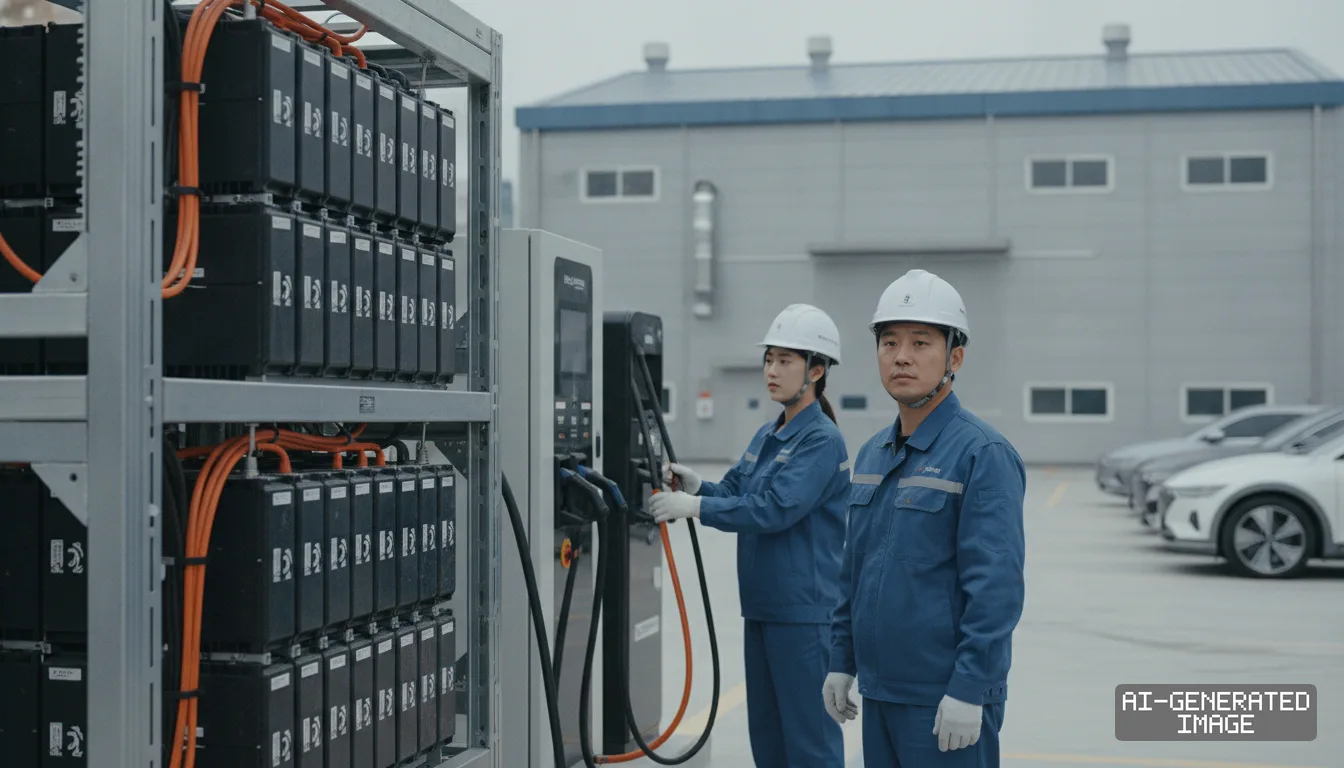
BYD Commits Over $1B to Brazil EV Manufacturing
The Chinese automaker's Sept. 25 pledge builds on a $1.1 billion first-phase plant already targeting 150,000 vehicles a year by late 2026.
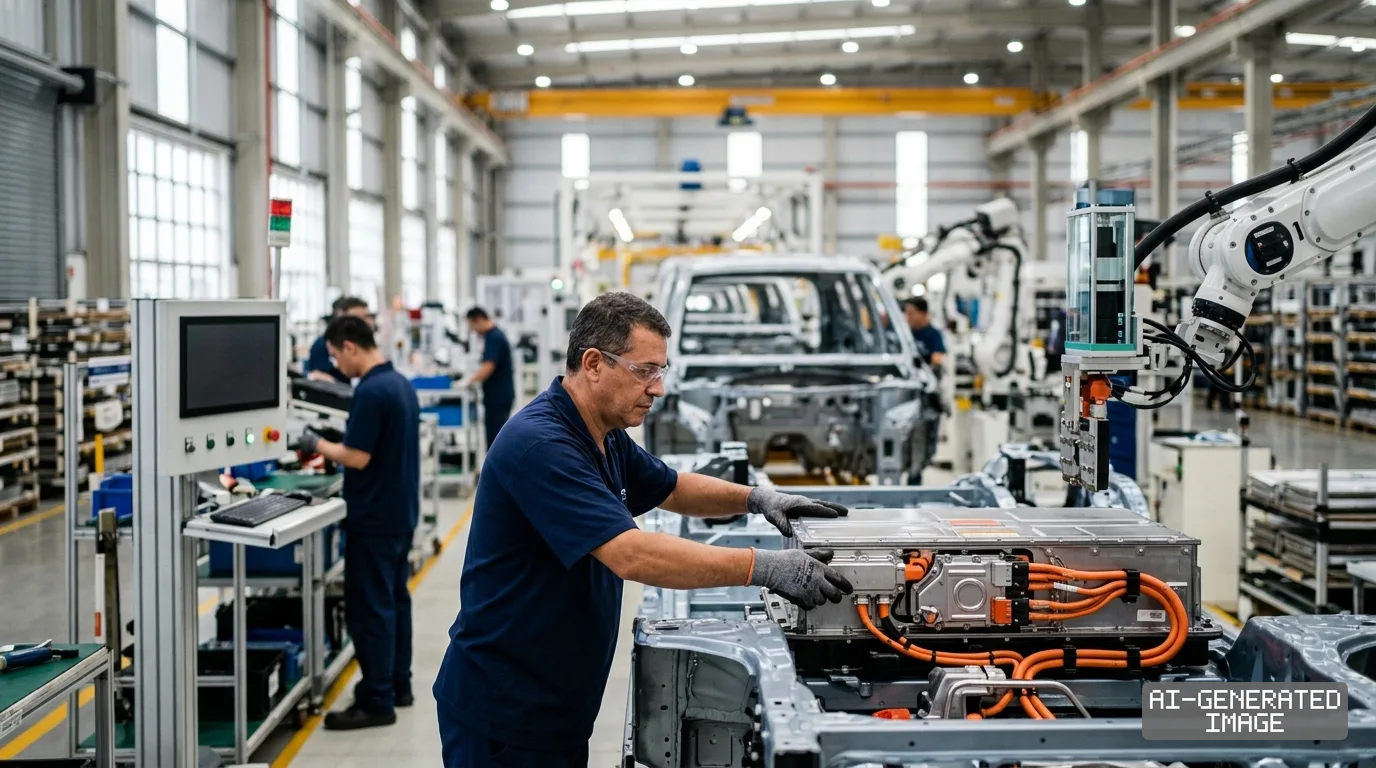
BYD said Sept. 25, 2026, it plans to invest more than $1 billion in Brazil to expand local vehicle manufacturing and build out its regional supply chain. The pledge extends a build-out already under way at the company's Brazilian manufacturing base rather than starting one from scratch.
BYD is China's largest electric-vehicle maker by sales. Brazil is Latin America's largest auto market, and the country applies import tariffs and local-content rules that have pushed foreign automakers to localize assembly rather than ship finished cars from China.
The first phase of that build-out totals 5.5 billion reais, or roughly $1.1 billion, according to trade publication Gasgoo. Core production stages — stamping, welding and painting — are nearly finished as part of that initial spending, Gasgoo reported.
Annual capacity at the site is expected to reach 150,000 vehicles by late 2026, Gasgoo reported, citing the project's build-out schedule. That would make it one of the larger single-site EV assembly operations a Chinese automaker has built outside China.
BYD's Brazilian base currently employs roughly 5,000 people, including about 2,300 BYD staff, with the remainder made up of construction and service contractors, according to the same report. The plant has been running on imported semi-knocked-down kits — partially assembled vehicle sets shipped in for final assembly locally — rather than fully local production.
That import-dependent model is set to change. BYD aims to raise the local content rate of its Brazilian-made vehicles to 50 percent by Jan. 1, 2027, according to Gasgoo. The target covers both BYD's own manufacturing steps and parts sourced from local suppliers, including tire makers.
Management has said the shift toward full localization is necessary for the plant's financial sustainability and to meet the local-content thresholds required for tariff-free exports within the Southern Common Market, the regional trade bloc known as Mercosur that groups Brazil, Argentina, Paraguay and Uruguay. Vehicles that fail to clear that threshold face duties when shipped to fellow Mercosur members.
For BYD, the exposure is direct and substantial: the $1.1 billion first phase and the 150,000-unit annual capacity target represent the company's largest confirmed manufacturing commitment in Latin America to date. No comparable BYD assembly project outside Asia has been reported at that scale.
The localization push also responds to Brazil's fuel mix. Brazilian automakers do not sell only battery-electric vehicles; nearly 90 percent of the country's car fleet runs on ethanol blends, a market condition that has shaped BYD's plans for hybrid and flex-fuel-compatible models built at the site, according to Gasgoo.
The move fits a pattern seen elsewhere among Chinese automakers building local assembly capacity in markets that combine tariffs on imported EVs with domestic-content requirements. BYD has pursued comparable localization strategies in other regions where similar rules apply, though the scale and terms of those projects differ by market and are governed by separate national rules.
For readers tracking Latin America's EV supply chain, the practical read is that Brazil's local-content and Mercosur export rules are now a direct input into BYD's capital spending decisions, not a side condition. A foreign automaker's ability to sell tariff-free across Mercosur increasingly depends on hitting a specific local-content percentage by a specific date, rather than on overall investment size alone.
The Jan. 1, 2027, deadline for the 50 percent local-content target is the near-term date that will determine whether BYD's Brazilian output qualifies for tariff-free Mercosur exports. That date sits just over three months after the Sept. 25 investment pledge.
Several details of the Sept. 25 announcement remain unconfirmed. Neither BYD nor Brazilian authorities have published a primary document specifying whether the more than $1 billion figure is incremental to the $1.1 billion first-phase spending already reported, or a restatement of it, and the scope of the new spending — additional assembly lines, battery-pack production or supplier-park construction — has not been detailed in public materials reviewed for this article.
In this story
- Companies
- BYD
- Tickers
- 002594.SZ
- Policy
- TariffsTrade & Industrial Policy
- Impact
- Supply ChainCapexOrder Book
Track every Tariffs development →
Related briefings
- Strong Won Cuts Samsung and SK hynix Profit Views by 21T Won Also on Trade & Industrial Policy
- BYD tests Ti7 in Canada with second-generation Blade battery Also on BYD, Tariffs, Order Book
- BYD plans three European car plants to counter EU tariffs Also on BYD, Tariffs
- China and South Africa advance battery mineral refining pact Also on BYD, Tariffs
Sources
Reporting
- BYD Increases Investment in Brazil — Gasgoo
- BYD Battery Production Ramps Up In Brazil - CleanTechnica
- BYD begins production in Brazil - Just Auto
- BYD opens massive Brazil plant, its biggest investment outside Asia — South China Morning Post
Confidence: medium — how we grade this
The documents behind this briefing are linked above. East Asia Brief produces its English text with AI assistance under human editorial review, and does not translate or republish other outlets' articles. See our methodology and AI policy. Spotted an error? Tell us.
The Morning Brief
What changed in Korean, Chinese and Japanese industry overnight — and what it means for your supply chain. One email, weekday mornings, US time. Free.
The Morning Brief is in preparation. Leave your address and we will write to you once — when the first issue is ready. Nothing before that.