Wacker Chemie keeps Tennessee plant open despite US tariffs
A Section 232 tariff order designed to shield domestic polysilicon is eroding orders at the German group's Charleston site by leaving imported components cheaper than local material.
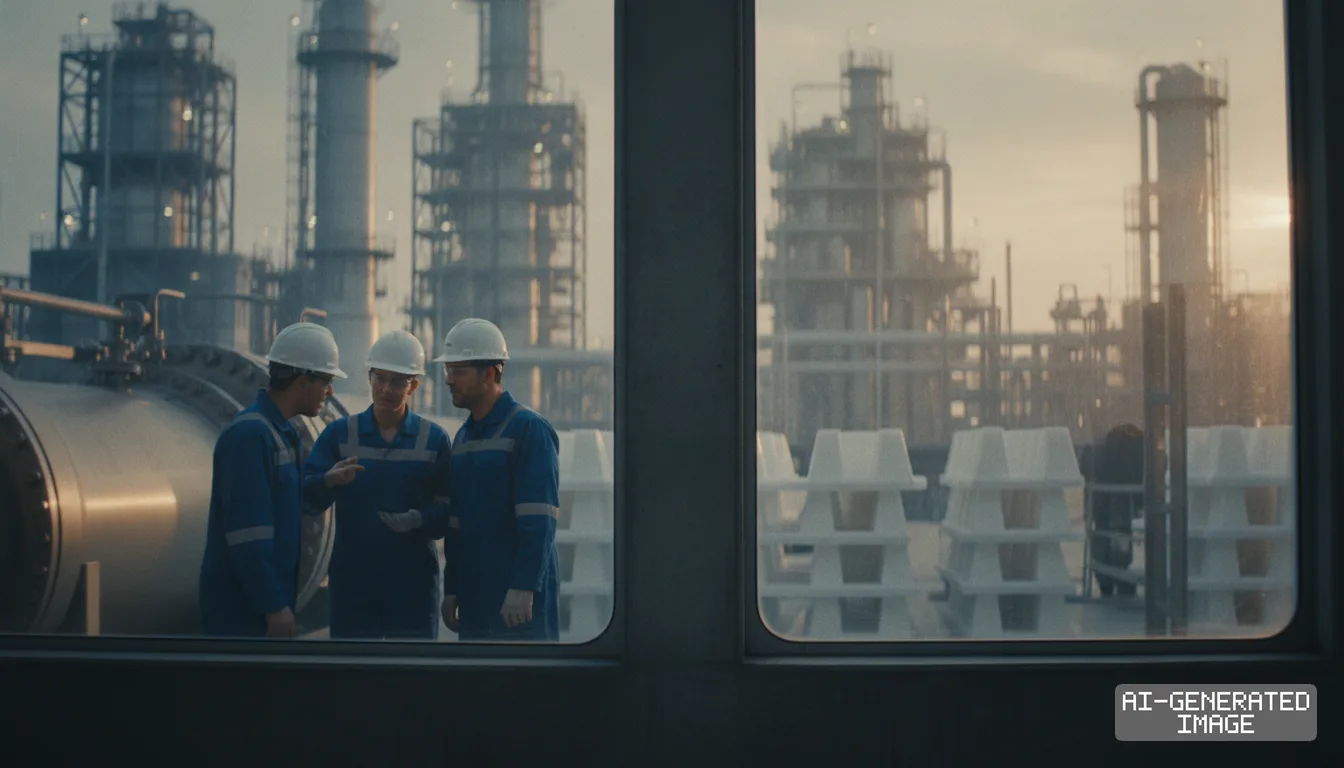
Wacker Chemie said Sept. 4 it had no plans to close its Charleston, Tennessee polysilicon facility, pushing back against reports that new US trade measures threatened the site.
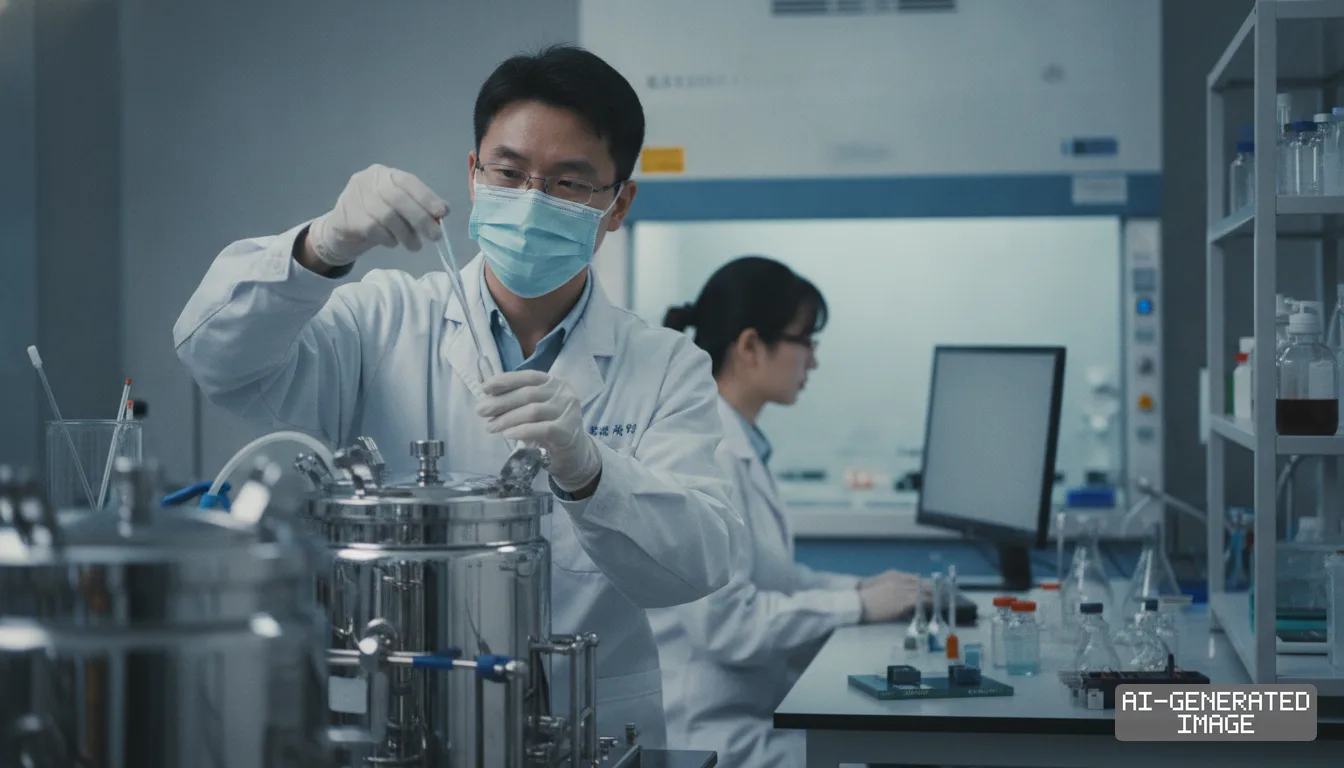
The German chemical producer operates the $2.5 billion plant in Bradley County, employing roughly 600 workers. The complex produces hyperpure polysilicon — ultra-refined silicon used in semiconductor wafers and solar power cells.
Market concerns intensified after industry reports indicated the facility lost its final two domestic buyers. Those accounts stated site management would weigh an operating suspension within weeks, citing unsustainable market dynamics.
Wacker Chemie did not file an ad hoc disclosure with European regulators or publish an investor relations update. Company spokespersons maintained that manufacturing continues as scheduled at the Tennessee complex.
Wacker Chemie conceded that current federal trade actions fail to bolster domestic raw material procurement. Company officials said the regulatory language inadvertently disadvantages American chemical processors rather than protecting domestic output.
The commercial pressure follows an executive order signed Aug. 6, 2026. The White House invoked Section 232 of the Trade Expansion Act of 1962 to restrict imports of polysilicon and derivative products.
Federal authorities established a minimum import price framework alongside an additional 15% tariff. The import restrictions take effect at 12:01 a.m. Eastern Time on Dec. 4, 2026.
The proclamation sets a price floor of $21 per kilogram for imported polysilicon. It establishes a minimum import price of $100 per kilogram for polysilicon ingots and wafers.
Downstream clean energy components face separate mandatory price floors under the trade directive. Imported solar cells must enter the country at $0.22 per watt, while imported solar modules require $0.38 per watt.
The order caps combined duties at 15% for imports from Japan, South Korea, Taiwan and European Union nations. Products originating in the United Kingdom face a 10% tariff ceiling under the rules.
The trade policy aims to shield domestic producers from discounted foreign supply. However, the regulatory structure creates unintended cost distortions across intermediate processing steps, trade attorneys and corporate planners said.
Polysilicon produced in the United States sells at roughly four times the price of Chinese material. Higher electricity rates, depreciation on capital equipment and lower production scale raise operating expenses for domestic facilities.
The federal order does not verify the raw material origin of polysilicon inside imported components. Foreign factories can process low-cost third-country polysilicon into wafers or cells without paying raw material penalties at US ports.
That gap leaves domestic component manufacturers exposed to wide cost disadvantages. Companies buying Charleston polysilicon absorb higher domestic feedstock expenses, while rivals import foreign wafers manufactured with cheaper raw supplies.
Confronting steep price penalties, domestic wafer processors suspended contracts for Charleston material. Buyers elected to import completed wafers and cells rather than purchasing high-cost domestic polysilicon, industry representatives said.
The cancellations isolate the Charleston facility from its domestic customer network. Without local wafer pulling operations purchasing raw polysilicon, the Tennessee plant cannot sell its high-purity output within the United States market.
Hyperpure polysilicon serves as the base chemical feedstock for crystalline ingots. Ingot producers melt and solidify the material before slicing it into thin wafers, which chip fabricators convert into integrated circuits.
Global wafer fabrication remains concentrated in East Asia. Manufacturers in Japan, South Korea, Taiwan and China control the vast majority of commercial ingot pulling and wafer cutting capacity across technology industries.
United States wafer pulling capacity remains scarce despite recent federal manufacturing grants. The absence of domestic wafering operations leaves American polysilicon refiners reliant on a narrow base of local commercial buyers.
The executive order assigned administrative oversight to Commerce Secretary Howard Lutnick. The Department of Commerce holds executive authority to revise minimum import prices if market distortions alter fair market benchmarks.
The proclamation allows trade officials to exempt allied countries that institute reciprocal price floors. Partner nations must establish equivalent minimum import prices against third-party exporters to qualify for tariff relief, the order said.
The policy also introduces an onshoring incentive program for qualifying industrial manufacturers. Eligible companies can import equipment and raw inputs duty-free if they break ground on domestic manufacturing plants by Jan. 20, 2029.
Those incentives provide minimal near-term relief for operational facilities such as Charleston. Existing plants carry current depreciation expenses without receiving targeted federal off-take guarantees or domestic procurement quotas.
Wacker Chemie declined to disclose the corporate identities of the two customers that halted procurement discussions. Company representatives said discussions with commercial partners and federal policymakers regarding trade definitions remain ongoing.
United States Customs and Border Protection begins enforcing the Section 232 minimum import prices and duty rates on Dec. 4, 2026, setting the next operational milestone for polysilicon supply chains.
Impact map
How this development propagates across the region and out to global buyers.
| Event | Korea | China | Japan | Global impact |
|---|---|---|---|---|
| Section 232 polysilicon rule | wafer export tariffs capped | component origin loophole | wafer tariff capped | US polysilicon stranded |
In this story
- Companies
- Wacker Chemie
- Tickers
- WCH.DE
- Policy
- Section 232TariffsEconomic Security
- Impact
- Supply ChainCost StructureCompliance
Track every Tariffs development → Track every Economic Security development →
Related briefings
- Commerce locks in Korean steel duties as mills press quota review Also on Tariffs, Compliance, Cost Structure
- EU puts China rare earth curbs on trade docket to cut deficit Also on Tariffs, Compliance, Cost Structure
- China waives African tariffs to lock in critical minerals Also on Tariffs, Compliance, Cost Structure
- Tesla buys China actuator parts for US Optimus robot factory Also on Tariffs, Compliance, Cost Structure
Sources
Primary documents
Reporting
Confidence: high — how we grade this
The documents behind this briefing are linked above. East Asia Brief produces its English text with AI assistance under human editorial review, and does not translate or republish other outlets' articles. See our methodology and AI policy. Spotted an error? Tell us.
The Morning Brief
What changed in Korean, Chinese and Japanese industry overnight — and what it means for your supply chain. One email, weekday mornings, US time. Free.
The Morning Brief is in preparation. Leave your address and we will write to you once — when the first issue is ready. Nothing before that.