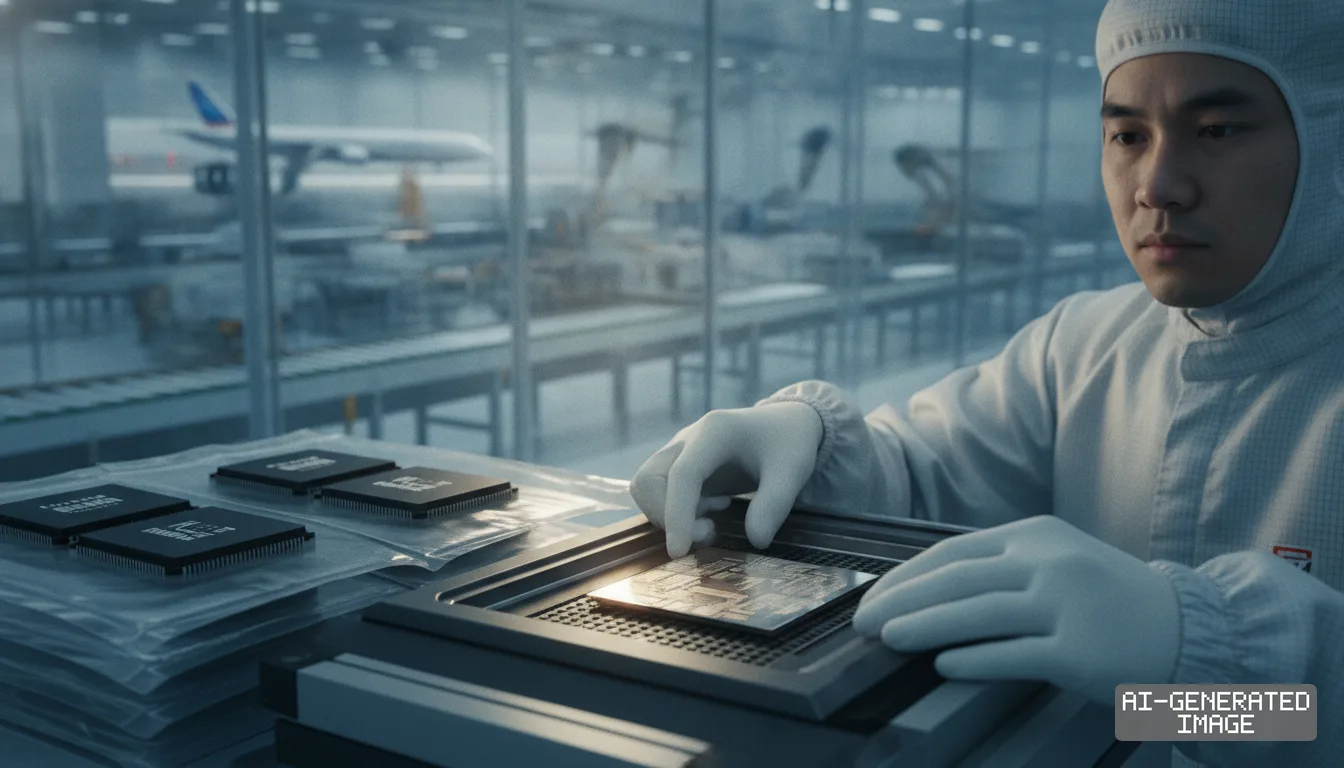
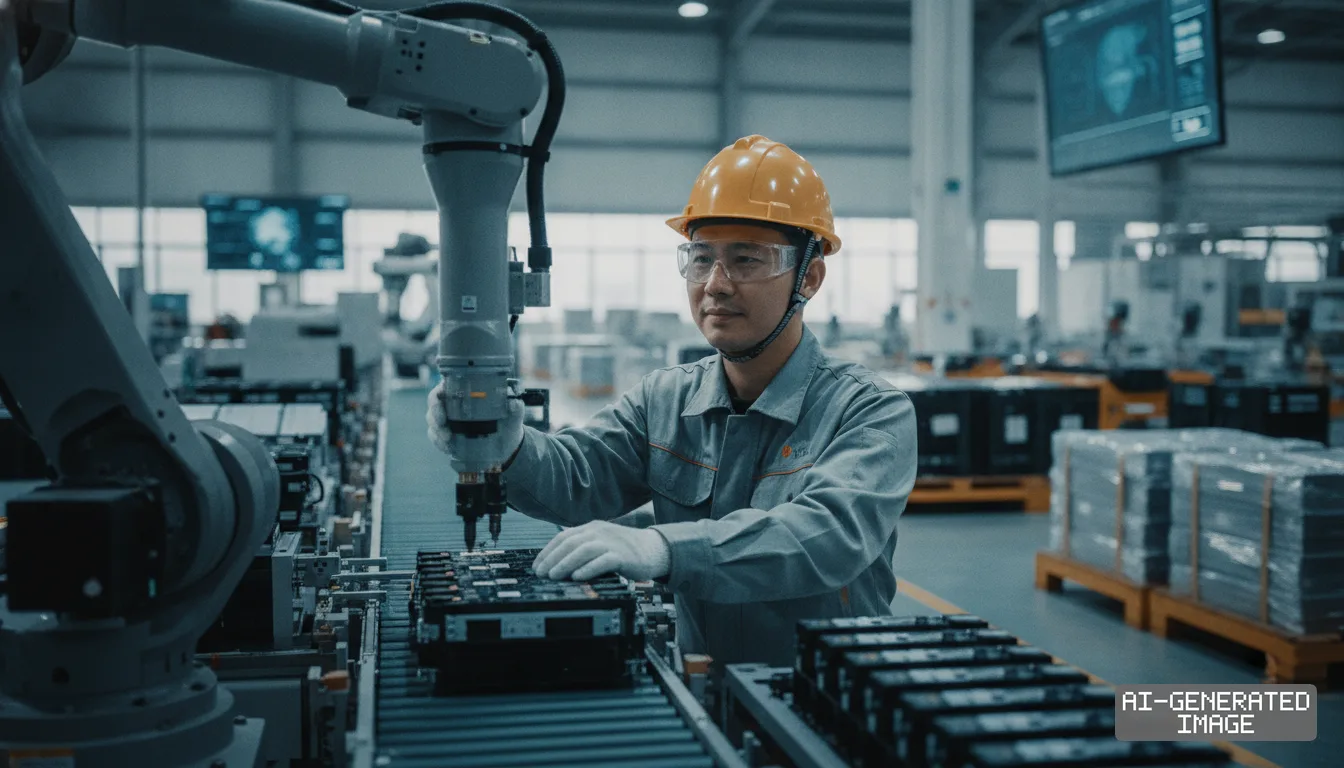
Vacant Chinese offices cleared by Commerce for Nvidia H200 sales
Physical checks at New Matrix and Maginfra found empty registered facilities despite formal export clearance for advanced server parts.
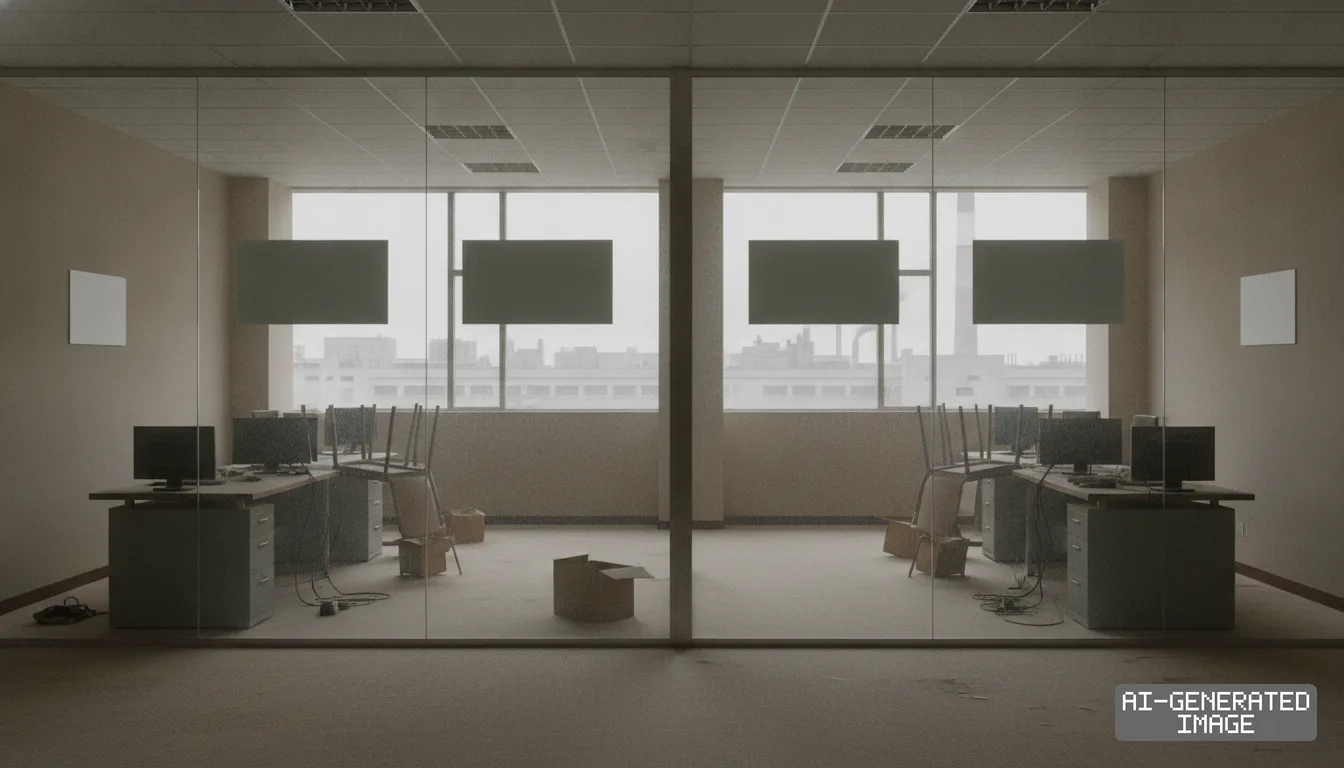
Corporate filings and physical registry inspections revealed Nov. 7, 2026, that two Chinese assemblers cleared by the U.S. Department of Commerce to handle Nvidia H200 accelerators operated from vacant offices.
The entities, New Matrix and Maginfra, received export authorizations under a regulatory framework where Nvidia drew less than 1% of its total datacenter revenue from China in the quarter ended July 2026.
Inspectors who visited the corporate registered addresses in China discovered deserted rooms with exposed wiring rather than operational server racks, industrial cleanrooms or active technical personnel, corporate records show.
New Matrix was incorporated 17 months ago in China. Corporate registry filings link its senior executive staff and controlling equity interests directly to Wise Road Capital, a private equity entity on the U.S. Entity List.
Maginfra maintains registered patent assignments and common management personnel with Inspur. The U.S. Department of Commerce previously placed Inspur on the Entity List due to documented support for Chinese military modernization programs.
The authorizations followed a significant policy revision issued by the Bureau of Industry and Security on Jan. 13, 2026, which took effect upon publication in the Federal Register on Jan. 15, 2026.
That regulation shifted the licensing standard for Nvidia H200 processors from a presumption of denial to case-by-case review. The rule required applicants to verify recipient security protocols and prevent diversion.
Under the January regulation, shipments must remain below a total processing performance cap of 21,000. Hardware must also complete independent testing inside the United States before receiving export clearance.
The disclosures follow a criminal indictment unsealed Nov. 20, 2025, by federal prosecutors in the U.S. District Court for the Middle District of Florida, targeting illegal chip transshipment schemes.
In that case, prosecutors charged four defendants with operating Janford Realtor LLC, a Tampa front entity, to execute a $3.89 million illicit procurement scheme supplying restricted Nvidia hardware to China.
Court records confirmed Janford Realtor never conducted real estate transactions. The firm acquired restricted computing equipment from Alabama-based electronics distributor Bitworks, routing 400 Nvidia A100 processors through transshipment points in Southeast Asia.
Federal agents intercepted subsequent consignments before delivery. The seized hardware included 10 Hewlett Packard Enterprise supercomputers containing Nvidia H100 accelerators and 50 standalone Nvidia H200 processors destined for Chinese end users.
The network utilized false paperwork, fraudulent invoices and intermediate holding companies in Malaysia and Thailand. The setup bypassed customs screening by disguising the true technical identity and final destination of the hardware.
The coexistence of domestic front entities and overseas paper assemblers highlights persistent enforcement gaps in Commerce Department vetting protocols. Screeners granted export permissions without verifying whether designated foreign facilities maintained operating machinery.
For Nvidia, which contracts Taiwan Semiconductor Manufacturing Co. to fabricate the H200 accelerator, tighter administrative scrutiny will complicate international distribution. Licensing reviews will delay pending hardware shipments destined for non-embargoed regional hubs.
The heightened regulatory friction extends directly to cloud infrastructure providers across Southeast Asia and the Middle East. Export control officials are expanding physical site visit mandates to verify compute capacity at commercial data centers.
Advanced memory suppliers that provide high-bandwidth memory for the H200 accelerator face expanded secondary compliance requirements. Exporters must now certify that subcomponents are not integrated into server platforms operated by unverified corporate entities.
Congressional oversight panels reviewing the pending AI OVERWATCH Act scheduled evidentiary hearings for late November 2026. Lawmakers have formally requested unredacted licensing files and applicant evaluations from the Bureau of Industry and Security.
The Commerce Department has not published an official revocation notice, and public filings do not settle the precise volume of H200 units delivered to New Matrix before investigators identified the site.
Federal prosecutors in Florida are advancing asset forfeiture proceedings against Janford Realtor bank accounts, while the Bureau of Industry and Security conducts compliance audits of all active Asian distribution licenses.
Impact map
How this development propagates across the region and out to global buyers.
| Event | Korea | China | Japan | Global impact |
|---|---|---|---|---|
| H200 shell company diversion | SK hynix and Samsung face tighter customer due diligence on high-bandwidth memory integration | Inspur and New Matrix face immediate licensing freezes and expanded Entity List enforcement | Component vendors and packaging tool providers face heightened KYC compliance across Southeast Asian hubs | Enterprise AI infrastructure operators absorb extended delivery timelines under enhanced Commerce Department vetting |
In this story
- Companies
- Nvidia
- Tickers
- NVDA
- Exposed
- InspurWise Road Capital
- Policy
- Export Controls
- Impact
- ComplianceSupply Chain
Track every Export Controls development →
Related briefings
- Congress scrutinizes Nvidia AI chip sales to secondary hubs Also on Nvidia, Export Controls, Compliance
- Nvidia defends $7.9B China sales as Jensen Huang resists wider curbs Also on Nvidia, Export Controls, Compliance
- Moonshot AI taps European cloud for 8,000 Blackwell chips Also on Nvidia, Export Controls, Compliance
- Nvidia halts H200 chip lines, shifting TSMC output to Rubin Also on Nvidia, Export Controls, Compliance
Sources
Primary documents
Reporting
Confidence: high — how we grade this
The documents behind this briefing are linked above. East Asia Brief produces its English text with AI assistance under human editorial review, and does not translate or republish other outlets' articles. See our methodology and AI policy. Spotted an error? Tell us.
The Morning Brief
What changed in Korean, Chinese and Japanese industry overnight — and what it means for your supply chain. One email, weekday mornings, US time. Free.
The Morning Brief is in preparation. Leave your address and we will write to you once — when the first issue is ready. Nothing before that.