US warns Ford over Chinese battery ties with CATL and Geely
Transportation Secretary Sean Duffy cited Marshall factory licensing and European joint ventures in an official letter as Ford shares fell 4.7% in New York trading.
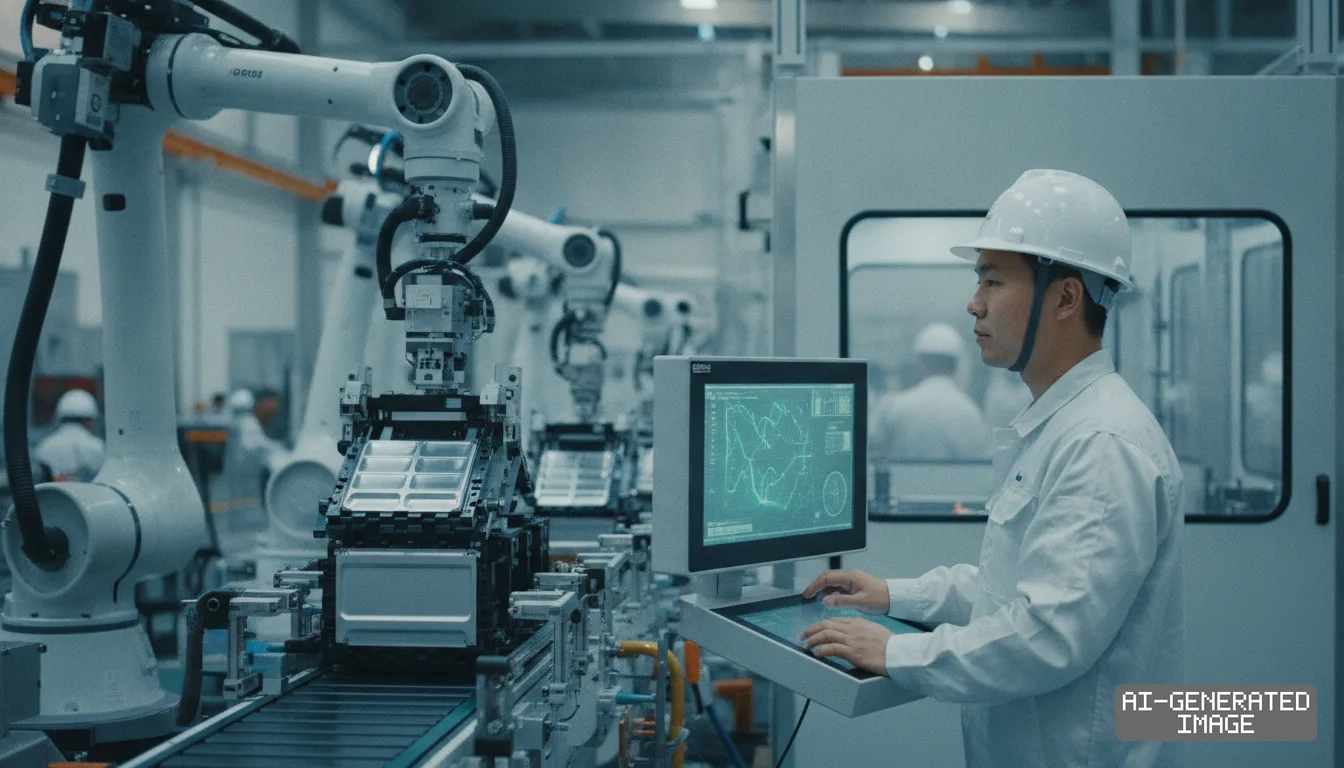
U.S. Transportation Secretary Sean Duffy warned Ford Motor on Sept. 8, 2026, that its technology and manufacturing partnerships with Chinese companies present severe national security risks.
In an official letter to Ford Chief Executive Jim Farley, Duffy expressed deep alarm over agreements linking the Dearborn automaker to Contemporary Amperex Technology, or CATL, and Zhejiang Geely Holding Group.
Ford shares dropped 4.7% on the New York Stock Exchange following reports of the warning letter on Tuesday afternoon, wiping out more than $1.8 billion in company equity value.
The company's recent strategic decisions paint a troubling picture of a foundational American brand actively intertwining its future with Chinese state-backed enterprises, Duffy wrote in the letter.
Federal scrutiny centers on Ford's licensing structure with CATL to manufacture lithium iron phosphate cells at a new facility in Marshall, Michigan.
Ford originally announced the Marshall project in February 2023 as a $3.5 billion investment, before later scaling back target employment to 1,700 workers as commercial electric vehicle adoption decelerated.
The automaker structured the plant under full domestic ownership to license CATL patents, attempting to navigate federal tax credit restrictions on foreign entities of concern.
Duffy noted that Ford recently expanded that licensed chemistry beyond passenger vehicles into grid-scale energy storage systems designed for utility operators and high-capacity data centers.
Expanding Chinese battery technology into data centers and electrical grid installations creates unacceptable vulnerabilities for critical domestic infrastructure, the Transportation Department said.
The letter also criticized a European manufacturing joint venture announced in July 2026 between Ford and Geely at Ford's vehicle assembly complex in Valencia, Spain.
The Valencia plant previously built passenger cars for European drivers, and Ford sought manufacturing partners to utilize idle factory capacity after retiring older combustion-engine lines.
That venture intends to assemble Ford- and Geely-branded passenger vehicles, sharing vehicle platforms and substantial engineering expenses across electric and hybrid powertrains.
Providing a Chinese automotive group with a production platform inside Western Europe undermines allied industrial supply chains and trade defenses, Duffy wrote in the letter.
The warning extended to exploratory discussions Ford held with BYD regarding electric vehicle batteries, as well as delays in shifting Lincoln Nautilus manufacturing to domestic American plants.
The Lincoln Nautilus luxury crossover is assembled in Hangzhou, China, by the Changan Ford joint venture and shipped to North American dealerships under existing import tariffs.
The intervention marks a hardening stance in Washington against corporate licensing structures designed to access Chinese green technology without direct Chinese equity ownership.
Lawmakers led by House Select Committee on the Chinese Communist Party Chairman John Moolenaar had previously questioned Ford over ongoing royalty streams and technical reliance on CATL.
Farley had pitched a framework where Chinese automakers could build cars in America through joint ventures controlled by domestic manufacturers, discussing the concept at the Detroit Auto Show.
The Transportation Department's public rebuke signals that federal regulators reject commercial models that integrate Chinese state-supported intellectual property into the domestic industrial base.
For Ford, the regulatory backlash complicates plans to cut manufacturing losses at its electric vehicle division, which depends on cheaper iron-based cells to lower vehicle retail prices.
Ford intended to install Marshall LFP batteries in a new mid-size electric pickup planned for 2027, targeting an entry price near $30,000 to undercut rival electric models.
South Korean battery makers including LG Energy Solution, Samsung SDI and SK On have developed alternative LFP and mid-nickel formulations, but production costs remain above Chinese benchmarks.
Western automakers including General Motors and Stellantis have similarly reassessed battery joint ventures to avoid compliance penalties and protect eligibility for federal manufacturing subsidies.
The Transportation Department warning reinforces pressure on global supply chains to decouple from Chinese materials, forcing vehicle manufacturers toward vetted suppliers in North America and allied nations.
Federal agencies review foreign battery procurement rules ahead of compliance filing deadlines on Dec. 31, 2026, when revised manufacturing credit rules take effect.
The Transportation Department has not posted a formal regulatory order on its public register, and Ford has not issued a written response or faced legal enforcement proceedings.
Impact map
How this development propagates across the region and out to global buyers.
| Event | Korea | China | Japan | Global impact |
|---|---|---|---|---|
| US regulatory warning on Chinese auto ties | LG Energy Solution and SK On see demand for non-FEOC LFP alternatives | CATL and Geely face barriers to monetizing technology in Western markets | Panasonic and Toyota joint venture shield US battery supply with domestic cells | Western automakers face higher battery costs as Chinese licensing options narrow |
In this story
- Companies
- Ford MotorCATLGeely
- Tickers
- F300750.SZ0175.HK
- Exposed
- BYDLG Energy SolutionSK On
- Policy
- Economic SecuritySubsidiesExport Controls
- Impact
- Supply ChainComplianceCapex
Track every Economic Security development → Track every Subsidies development → Track every Export Controls development →
Related briefings
- CATL Surpasses Korean Battery Trio in Markets Outside China Also on Ford Motor, SK On, BYD
- CATL widens global EV battery lead to 39.4% as Korean share slips Also on Ford Motor, SK On, BYD
- CATL develops tall pickup batteries to bypass US tariffs Also on Ford Motor, SK On, LG Energy Solution
- SK On signs 9 GWh US storage battery deal with NeoVolta Power Also on Ford Motor, SK On, Subsidies
Sources
Reporting
Confidence: medium — how we grade this
The documents behind this briefing are linked above. East Asia Brief produces its English text with AI assistance under human editorial review, and does not translate or republish other outlets' articles. See our methodology and AI policy. Spotted an error? Tell us.
The Morning Brief
What changed in Korean, Chinese and Japanese industry overnight — and what it means for your supply chain. One email, weekday mornings, US time. Free.
The Morning Brief is in preparation. Leave your address and we will write to you once — when the first issue is ready. Nothing before that.