CATL develops tall pickup batteries to bypass US tariffs
Tests conducted by American automakers show the Chinese supplier is targeting commercial trucks through technology licensing to navigate steep trade curbs.
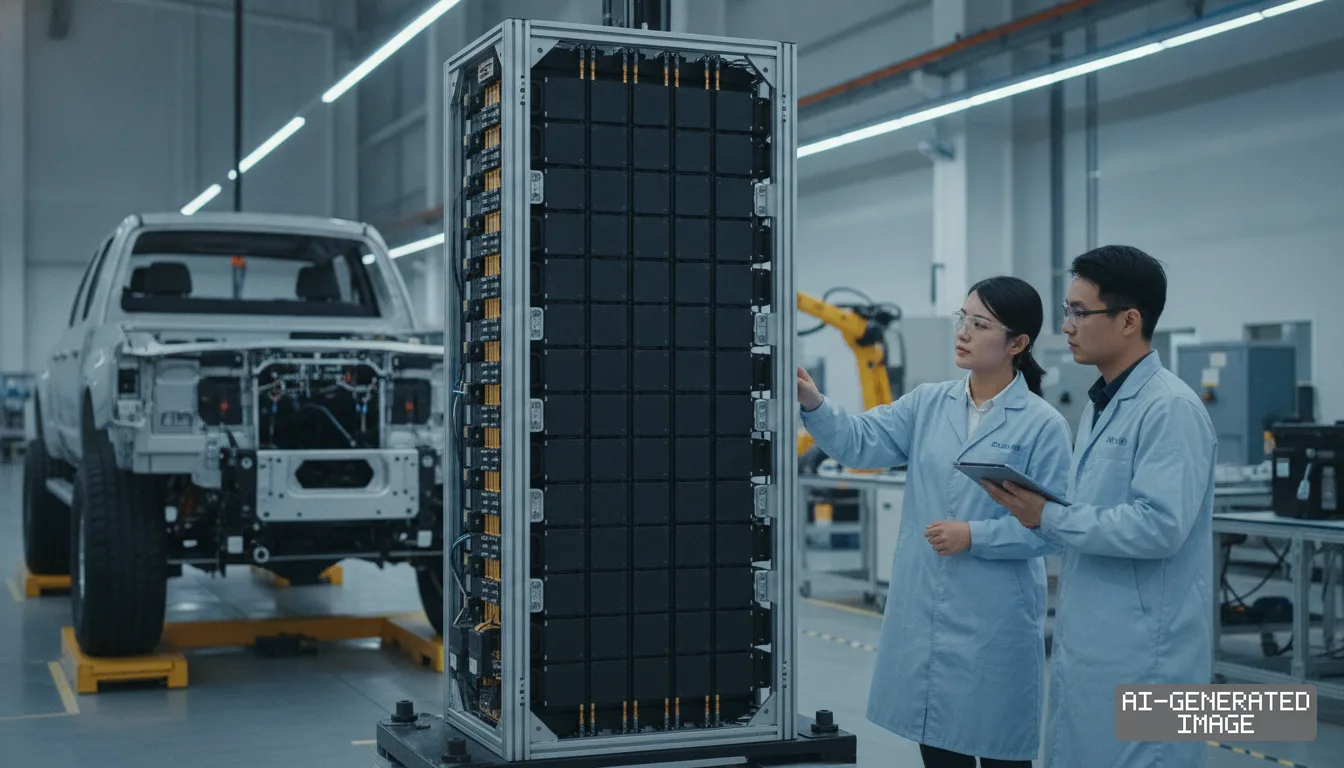
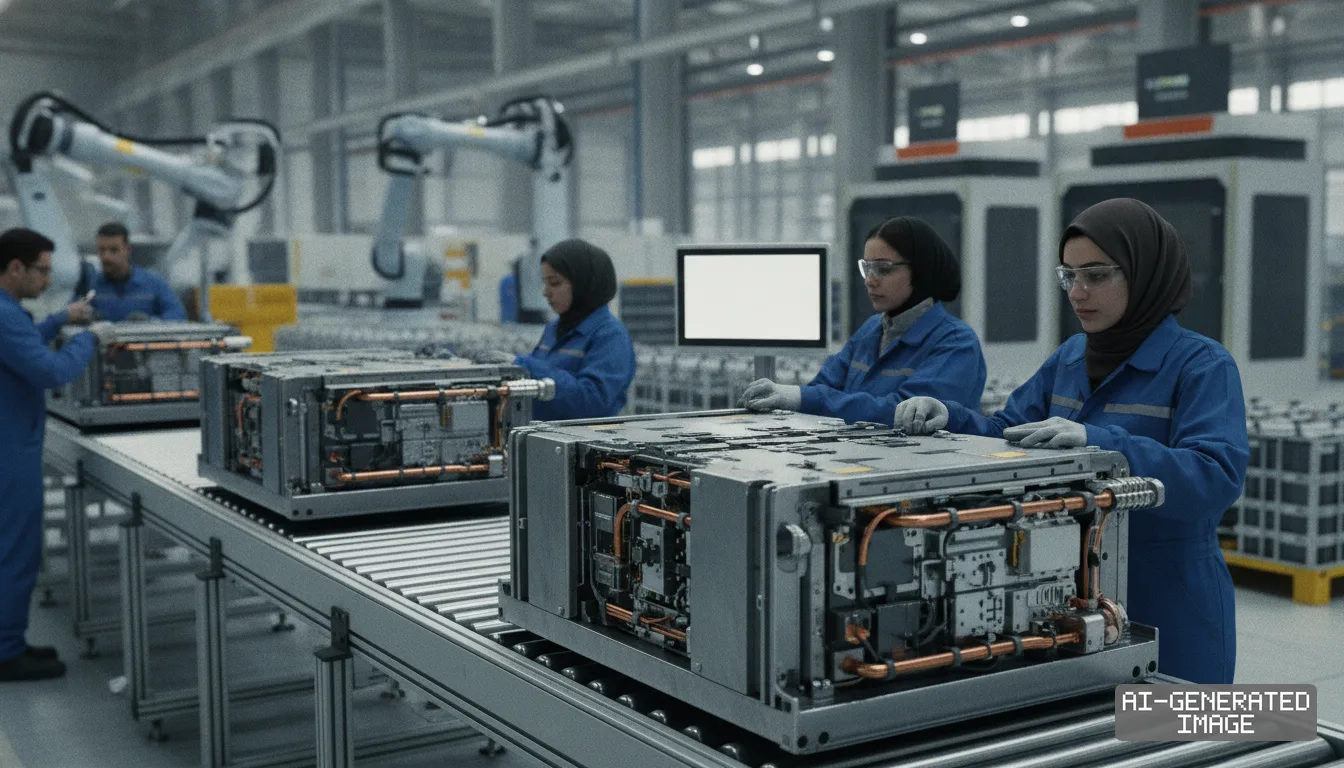
Contemporary Amperex Technology Co. developed a tall battery pack designed for American pickup trucks and completed testing with domestic carmakers on Sept. 20, 2026, advancing its overseas expansion.
The engineering push targets high-margin utility platforms in North America. Electric vehicle penetration in the United States remains under 10%, compared with 65% in China, according to Benchmark Mineral Intelligence.
Importing finished battery cells from China triggers a 100% tariff under Section 301 trade rules. Commercial truck fleets require heavy duty cycles that standard passenger car cells cannot sustain without losing range.
Zhu Lingbo, chief technology officer of CATL's international business unit, confirmed the testing in comments published Sunday. American carmakers evaluated the cells for power delivery, Zhu said.
The tall form factor gives trucks the vertical cell clearance needed to maximize pack capacity. Light trucks have higher ground clearance than sedans, allowing taller prismatic cells beneath the chassis.
Direct battery exports face strict exclusion from federal clean vehicle tax credits under foreign entity of concern rules. The supplier intends to use technology licensing rather than direct cell shipping to enter the country.
Licensing allows local manufacturers to build cells on domestic soil while CATL collects intellectual property fees. The approach keeps capital expenditure off the Chinese firm's balance sheet, Zhu said.
Ford Motor Co. established the precedent for this structure at its $2 billion battery plant in Marshall, Michigan. Ford wholly owns the 20 GWh site, while CATL licenses lithium iron phosphate chemistry.
The Michigan facility hired over 500 workers and began validating prismatic cells during summer manufacturing trials. Deliveries of those packs will supply midsize electric pickup trucks later this year, Ford said.
South Korean battery producers face immediate competitive exposure from Chinese licensing deals in the truck segment. LG Energy Solution, Samsung SDI and SK On hold multi-billion-dollar joint venture investments with American automakers.
South Korean manufacturers supply high-nickel cells that offer extensive range but cost more than lithium iron phosphate. A wider rollout of licensed Chinese chemistry threatens Korean order backlogs across commercial platforms.
CATL is simultaneously expanding its commercial footprint across European freight routes. The group unveiled its Tectrans II commercial vehicle modular platform at the IAA Transportation expo in Hanover on Sept. 14.
The Tectrans platform provides up to 1,000 kilometers of driving range for long-haul tractors, the company said. It delivers an energy density of 170 Wh/kg and supports megawatt charging to 80% capacity within 25 minutes.
The Chinese battery leader signed a memorandum of understanding with DHL Group to establish green transport corridors across Europe. That agreement pairs CATL hardware with fleet logistics across European highways.
Similar direct deployments remain impossible in the American market due to security scrutiny. Washington placed CATL on a Department of Defense list of alleged military-linked entities last year, an allegation CATL denies.
Executive Order 14420, signed Aug. 26, further tightens controls on foreign-linked hardware and digital management systems connected to American bulk power systems. Automakers must demonstrate that licensed production lines operate without unauthorized foreign data links.
Trade negotiations between Washington and Beijing create additional operating friction for cross-border automotive partnerships. A temporary truce covering bilateral tariffs approaches its formal expiry date in November 2026.
Zhu did not disclose which US automakers conducted the validation tests on the tall pickup battery. CATL has not published technical data sheets or licensing contracts for the proprietary commercial cell architecture.
Production scheduling for the new truck cells depends on licensing negotiations rather than Chinese factory schedules. Automakers must complete factory tooling and secure regulatory compliance clearances before opening commercial production lines.
CATL maintains separate factory construction projects in Hungary and Spain to supply passenger car manufacturers in continental Europe. Its North American strategy remains restricted to licensing agreements and technical service contracts.
The US Treasury Department continues to audit technology transfer contracts to ensure foreign entities do not exercise operational control over domestic plants. Ford is proceeding with pilot assembly runs under existing state permits in Michigan.
Impact map
How this development propagates across the region and out to global buyers.
| Event | Korea | China | Japan | Global impact |
|---|---|---|---|---|
| CATL pickup battery licensing push | LG Energy Solution and SK On face LFP price pressure on US light truck contracts | CATL monetizes proprietary cell engineering via royalties without direct capex | Commercial truck component suppliers navigate stricter FEOC digital rules | Fleet operators gain cheaper LFP options as pickup electrification lags below 10% |
In this story
- Companies
- Contemporary Amperex Technology
- Tickers
- 300750.SZ
- Exposed
- Ford MotorLG Energy SolutionSamsung SDISK On
- Policy
- TariffsSubsidies
- Impact
- Supply ChainPricingCompliance
Track every Tariffs development → Track every Subsidies development →
Related briefings
- US warns Ford over Chinese battery ties with CATL and Geely Also on Ford Motor, SK On, LG Energy Solution
- Tesla sweeps Canada EV import quota as Chinese makers wait Also on Ford Motor, Tariffs, Pricing
- SK On signs 9 GWh US storage battery deal with NeoVolta Power Also on Ford Motor, SK On
- CATL targets 2027 pilot output for all-solid-state batteries Also on SK On, Contemporary Amperex Technology, Samsung SDI
Sources
Reporting
Confidence: medium — how we grade this
The documents behind this briefing are linked above. East Asia Brief produces its English text with AI assistance under human editorial review, and does not translate or republish other outlets' articles. See our methodology and AI policy. Spotted an error? Tell us.
The Morning Brief
What changed in Korean, Chinese and Japanese industry overnight — and what it means for your supply chain. One email, weekday mornings, US time. Free.
The Morning Brief is in preparation. Leave your address and we will write to you once — when the first issue is ready. Nothing before that.