US Treasury expands China investment curbs to six sectors
The draft rule implements the COINS Act by restricting American capital in biotechnology, hypersonics and computing assets exceeding $50,000.

The U.S. Department of the Treasury proposed draft rules Oct. 23, 2026, restricting American outbound investments across six advanced technology sectors in China, adding biotechnology and hypersonics to existing chip controls.
The proposed framework implements Subtitle C of the Comprehensive Outbound Investment National Security Act, known as the COINS Act. Congress passed the legislation within the National Defense Authorization Act for fiscal year 2026.
The draft regulation targets equity transactions, joint ventures and greenfield projects exceeding a value of $50,000. Transactions above that monetary threshold trigger either mandatory notification or an outright prohibition depending on technical capability.
Congress originally mandated investment curbs on five sectors: semiconductors, artificial intelligence, quantum computing, supercomputing and hypersonic systems. The statute granted the Treasury Secretary administrative authority to add technologies that assist foreign military or surveillance programs.
Treasury Secretary Scott Bessent exercised that statutory authority to incorporate biotechnology into the screening system. The move marks the first major expansion of outbound capital controls beyond digital and hardware supply chains.
The restriction extends beyond mainland China, Hong Kong and Macau. The draft rules designate Russia, North Korea, Iran and Cuba as countries of concern subject to identical capital screening.
American investors face prohibitions on funding Chinese entities developing hypersonic propulsion, glide airframes and trajectory guidance sensors. Advanced supercomputing systems exceeding established computational performance floors face similar categorical transaction bans.
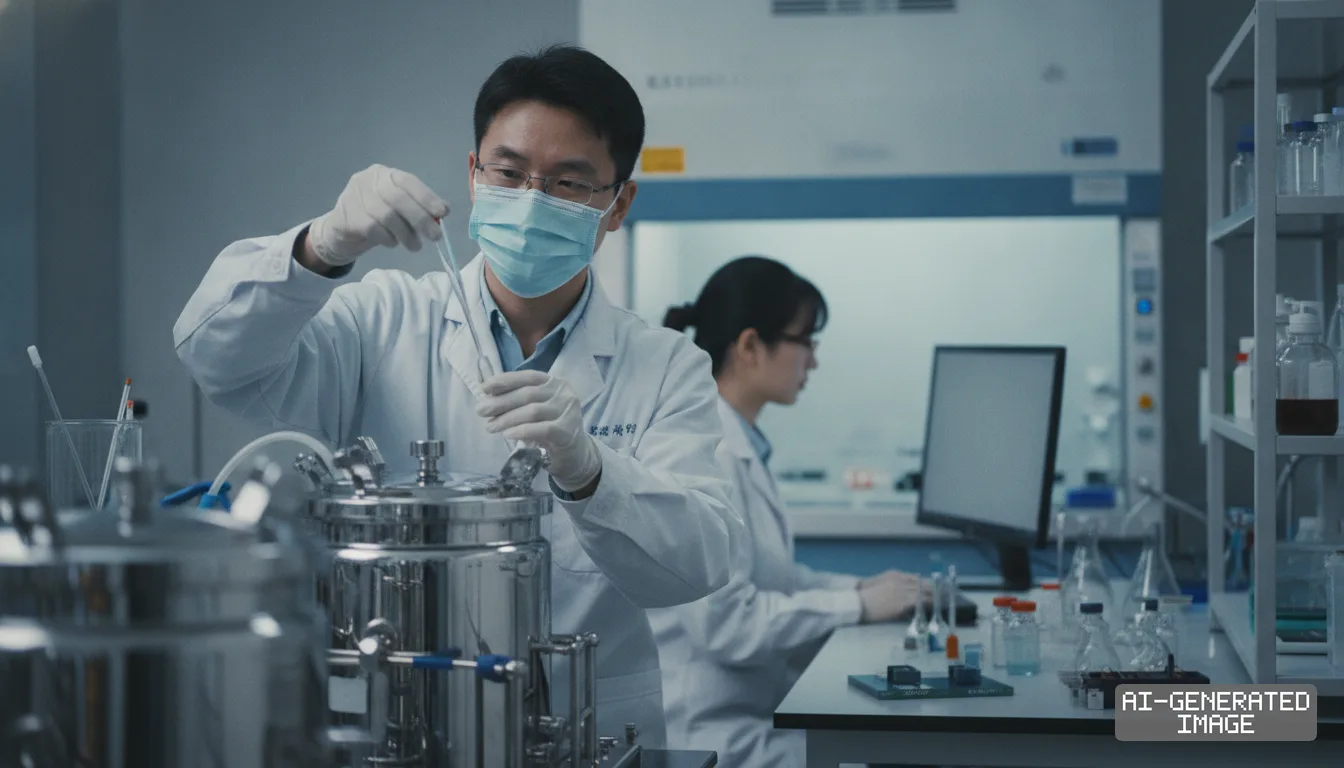
In the life sciences sector, the rules restrict investments involving biological design automation, genetic sequencing instruments and biomanufacturing facilities. Transactions involving brain-computer interfaces and automated discovery platforms require either formal notification or total disinvestment.
The draft regime also classifies select pharmaceutical compounds as prohibited technologies. Treasury officials cited dual-use risks where medical synthesis tools could assist biological defense programs or unauthorized pathogen engineering.
The rules apply to direct investments and indirect financing executed through controlled foreign entities. American general partners managing overseas funds must ensure their foreign subsidiaries comply with the notification standards.
Enforcement of outbound capital limits has already started under earlier executive authorities. Treasury imposed a $200,000 civil monetary penalty against Amidi, LLC in July 2026.
Amidi, the parent firm of Silicon Valley incubator Plug and Play Tech Center, incurred the penalty for an unnotified fund deployment into a Chinese artificial intelligence and robotics company. The case marked the first financial fine administered under the program.
Venture capital allocations between American funds and Chinese technology enterprises have fallen steadily since Washington launched outbound controls in August 2023. The initial restrictions took effect in January 2025 under Executive Order 14105.
The expansion to biotechnology introduces regulatory liability to cross-border life science syndicates. Regional industry associations expressed concern over the scope of the novel biopharma prohibitions.
Kendalle Burlin O'Connell, chief executive officer of MassBio, said maintaining access to global medical innovation while protecting domestic pipelines is critical for American patients and corporate competitiveness. The trade group represents over 1,600 life science organizations.
The draft rules exclude ordinary commercial operations, such as purchasing publicly traded equities or index funds, from coverage. Routine intellectual property licensing agreements and open-market distribution pacts also remain exempt.
The notice does not state explicit exemption standards for joint research and development contracts or collaborative commercialization partnerships between American pharmaceutical firms and Chinese drugmakers. Treasury officials asked industry participants to submit technical comments regarding how compound definitions should distinguish routine therapies from frontier dual-use applications.
Public comments on the proposed rulemaking close Dec. 7, 2026. The COINS Act establishes a statutory deadline requiring the Treasury Department to issue final implementing regulations by March 13, 2027.
Impact map
How this development propagates across the region and out to global buyers.
| Event | Korea | China | Japan | Global impact |
|---|---|---|---|---|
| COINS Act outbound investment draft rule | South Korean biotech and venture partners face stricter screening on joint Chinese R&D | Chinese life science startups lose direct American venture capital backing | Japanese corporate venture arms assess spillover liabilities in cross-border syndicates | Global private equity funds must ringfence US capital from Chinese dual-use assets |
In this story
- Companies
- AmidiLLC
- Exposed
- Plug and Play Tech Center
- Policy
- Investment ScreeningExport Controls
- Impact
- ComplianceSupply ChainCapex
Track every Export Controls development →
Related briefings
- China curbs tunnel boring machine exports under dual-use law Also on Export Controls, Compliance
- OpenAI abandons China chip curbs as Nvidia protects exports Also on Export Controls, Compliance
- China MOFCOM restricts AI model and chip IP export transfers Also on Export Controls, Compliance
- China curbs dredger component exports under dual-use control Also on Export Controls, Compliance
Sources
Primary documents
Reporting
Confidence: high — how we grade this
The documents behind this briefing are linked above. East Asia Brief produces its English text with AI assistance under human editorial review, and does not translate or republish other outlets' articles. See our methodology and AI policy. Spotted an error? Tell us.
The Morning Brief
What changed in Korean, Chinese and Japanese industry overnight — and what it means for your supply chain. One email, weekday mornings, US time. Free.
The Morning Brief is in preparation. Leave your address and we will write to you once — when the first issue is ready. Nothing before that.