Taiwan bans illicit AI chip exports to China under revised trade act
The Ministry of Economic Affairs will impose five-year prison terms on diverted servers, aligning local enforcement with Washington following illicit transshipments.
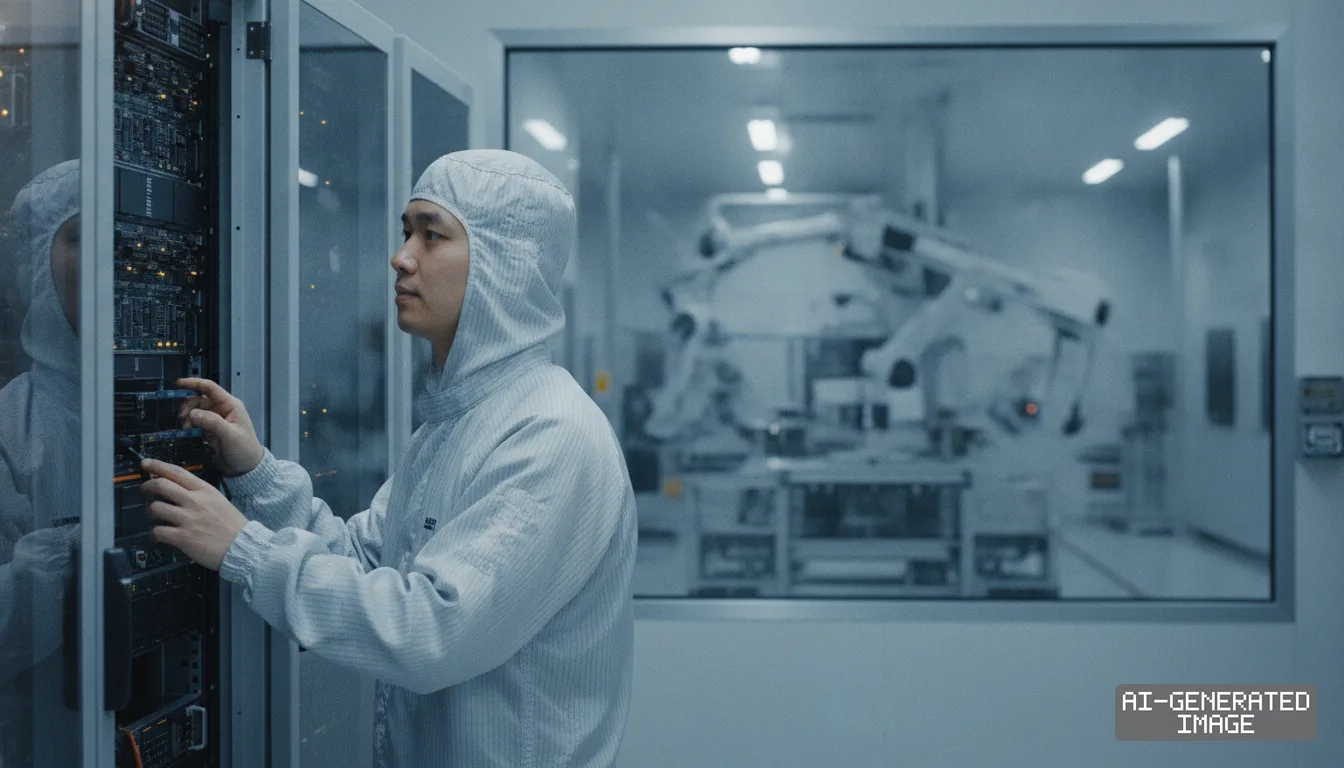
Taiwan's Ministry of Economic Affairs advanced plans on Oct. 20, 2026, to criminalize unauthorized exports of advanced artificial intelligence processors and computing servers to China under the Foreign Trade Act.
The statutory revisions introduce criminal penalties of up to five years in prison or fines of roughly $92,500. The proposal closes a structural gap that previously limited prosecutors to civil warnings or secondary charges.
Under current trade law, authorities possess no dedicated criminal offense to penalize shipments of advanced computing hardware diverted across the Taiwan Strait. Prosecutors have relied on criminal breach-of-trust and document-forgery charges.
The enforcement limits became evident during an August probe where Taiwanese prosecutors indicted nine individuals. That case involved 130 AI servers, of which 56 were intercepted while 74 reached Chinese buyers through falsified paperwork.
Economics Minister Kung Ming-hsin said the tighter controls fulfill commitments made under the US-Taiwan Agreement on Reciprocal Trade signed in February. The bilateral pact obligates Taipei to coordinate strategic technology safeguards with American export controls.
The policy shift targets a transshipment pipeline that has moved billions of dollars in restricted accelerators to mainland buyers. Intermediaries have exploited offshore distributors in Hong Kong and Southeast Asia to circumvent direct export barriers.
Taiwan Semiconductor Manufacturing Company faces minimal direct foundry revenue disruption because the manufacturer already complies with US extraterritorial rules. The company enforces American restrictions under the Foreign Direct Product rule.
TSMC generates roughly 11% of its net revenue from clients based in China, according to financial disclosures. The chipmaker limits its mainland business to non-restricted consumer and legacy semiconductor production runs.
Secondary compliance pressure will fall on server contract manufacturers. Taiwanese electronics assemblers produce more than 80% of global artificial intelligence servers, placing their global assembly networks under heightened regulatory scrutiny.
Enforcement scrutiny widened following investigations into international distribution networks linked to Super Micro Computer. The US Department of Justice previously indicted corporate officials over $2.5 billion in server hardware shipped through intermediate channels.
Taiwanese law enforcement authorities raided Super Micro's offices in Taipei in May. The raid formed part of a multi-jurisdiction investigation into server diversion routes handling advanced Nvidia computing processors.
Democratic Progressive Party legislator Chung Chia-pin spearheaded the legislative push by introducing a dedicated semiconductor clause. The measure provides customs officers with statutory authority to block suspected computing hardware shipments at domestic ports.
Trade officials designed the new export framework to eliminate the regulatory mismatch between Taipei and Washington. American export controls have treated unlicensed hardware diversions as federal crimes while Taiwan treated identical transshipments as civil infractions.
The ministry said the updated rules will apply objective performance metrics to identify restricted hardware. Computing systems exceeding specific processing thresholds will require formal export permits issued by trade regulators before leaving Taiwanese ports.
Local server assemblers have expanded their internal compliance divisions in response. Companies must verify corporate ownership structures across third-party procurement entities operating in Singapore, Malaysia and Thailand.
The regulatory review comes as Chinese state buyers seek alternative routes to acquire restricted high-bandwidth accelerators. Smuggling syndicates have frequently disguised server clusters as low-end networking equipment to bypass port customs inspections.
Contract manufacturers will bear additional costs to certify supply-chain documentation. Legal teams must obtain verified end-user declarations from foreign data center operators before fulfilling high-density server orders.
The Ministry of Economic Affairs has not published technical parameter thresholds defining controlled hardware, and official notices do not state whether the proposed rules will extend restrictions to standalone semiconductor design intellectual property.
The Legislative Yuan will take up the proposed amendments to the Foreign Trade Act during its current legislative session scheduled to conclude in December 2026.
Impact map
How this development propagates across the region and out to global buyers.
| Event | Korea | China | Japan | Global impact |
|---|---|---|---|---|
| Taiwan Foreign Trade Act AI chip amendment | Samsung and SK hynix face tighter screening on memory modules shipped through Taiwanese server assemblers | Server buyers face disrupted grey-market channels that previously bypassed US export limits | Tokyo Electron and packaging suppliers face stricter end-use verification for Taiwanese assembly hubs | Server ODMs absorb higher compliance audit costs across transshipment hubs in Southeast Asia |
In this story
- Companies
- Taiwan Semiconductor Manufacturing CompanySuper Micro Computer
- Tickers
- 2330.TWSMCI
- Exposed
- Nvidia
- Policy
- Export Controls
- Impact
- ComplianceSupply Chain
Track every Export Controls development →
Related briefings
- Taiwan targets AI server diversion to China with five-year prison terms Also on Super Micro Computer, Nvidia, Export Controls
- TSMC sees 3nm revenue overtake 5nm node on surge in AI accelerators Also on Taiwan Semiconductor Manufacturing Company, Nvidia
- SMIC narrows foundry gap with Samsung as Q2 sales surge 20% Also on Taiwan Semiconductor Manufacturing Company, Export Controls
- Samsung funds Texas chip labor with $22.8 million fab grant Also on Taiwan Semiconductor Manufacturing Company
Sources
Reporting
Confidence: medium — how we grade this
The documents behind this briefing are linked above. East Asia Brief produces its English text with AI assistance under human editorial review, and does not translate or republish other outlets' articles. See our methodology and AI policy. Spotted an error? Tell us.
The Morning Brief
What changed in Korean, Chinese and Japanese industry overnight — and what it means for your supply chain. One email, weekday mornings, US time. Free.
The Morning Brief is in preparation. Leave your address and we will write to you once — when the first issue is ready. Nothing before that.