China curbs Japan dual-use exports citing military buildup
Foreign Ministry remarks on Oct. 21 underscore Beijing's use of mineral leverage as Japanese manufacturers face depleted yttrium reserves and tighten dual-use compliance rules.
China's Ministry of Foreign Affairs said Oct. 21 that Beijing's export controls on strategic dual-use materials to Japan aim to curb Tokyo's remilitarization and ambitions to acquire nuclear weapons.
Spokesperson Mao Ning delivered the statement during a regular briefing in Beijing. The remarks responded to reports that Japan's domestic yttrium stockpiles have dropped to several months of consumption.
Japan previously sourced over 70% of its yttrium oxide from Chinese refiners. Critical mineral shipments fell sharply this year following administrative interventions, leaving Japanese industrial stockpiles at roughly three months of supply.
Tokyo asked Washington to urge Beijing to ease shipments of specialized rare earths, according to people familiar with the matter. Chinese customs data showed near-zero monthly volumes for several heavy rare earths.
Mao said China's commitment to maintaining global critical mineral supply chain security remains unchanged. She added that foreign governments must share responsibility for regional stability rather than escalating security tensions.
The diplomatic statement marks the formal security justification for trade restrictions implemented earlier this year. Beijing enacted the framework under the Export Control Law and the Regulations on Dual-Use Export Control.
The Ministry of Commerce issued Announcement No. 1 on Jan. 6, banning exports of all dual-use items to Japanese military end-users. The prohibition covers any entity deemed to enhance Japanese defense capability.
The measure marked a structural pivot in Chinese trade policy. Commerce officials replaced commercial tariff mechanisms with blanket security bans, targeting precision manufacturing, radar components and specialized metallurgical powders.
Regulators broadened enforcement on Feb. 24 through Announcements No. 11 and No. 12. The Ministry of Commerce introduced a two-tier screening framework comprising a Control List and a Watch List.
The Control List bars Chinese exporters and overseas intermediaries from transferring dual-use goods to designated entities. Mitsubishi Heavy Industries, whose defense contracts account for roughly 12% of total group revenue, faces strict bans.
Designated entities also include Mitsubishi Shipbuilding, which builds maritime vessels for the Japan Maritime Self-Defense Force. The shipyard relies on imported corrosion-resistant alloys and specialized optical ceramics.
The concurrent Watch List requires comprehensive end-user verification for each commercial transaction. The Ministry of Commerce automatically blocks license applications if shipments could enhance military production.
Subaru operates on the Watch List with its aerospace division, which generates about 5% of corporate revenue through aircraft components and Boeing subassemblies. The company must prove purely civilian end-use.
The Ministry of Commerce expanded both rosters on June 29 under Announcements No. 27 and No. 28. Regulators added 20 entities to each list, bringing the total Japanese listed cohort to 80.
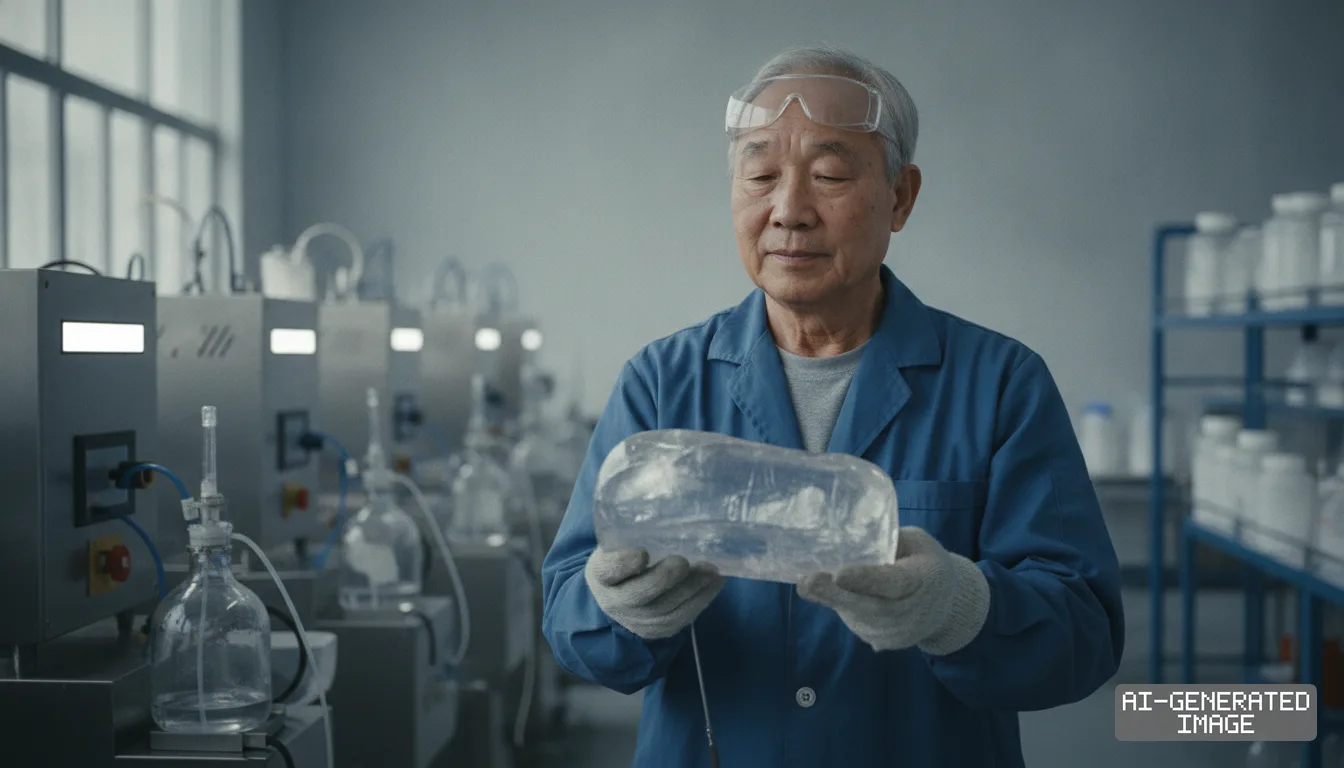
Yttrium plays an essential role in thermal barrier coatings for gas turbines and aerospace jet engines. Japanese component suppliers have struggled to qualify alternative non-Chinese refiners on short notice.
The mineral also serves as an additive in advanced semiconductor manufacturing equipment. Specialty ceramics made with yttrium protect etching chamber walls from plasma erosion during advanced wafer fabrication.
Chinese customs clearances for dysprosium and terbium oxides bound for Japan remained near zero through mid-2026. These heavy rare earths provide thermal stability in permanent magnets for electric vehicle drivetrains.
Commercial friction widened beyond minerals in early 2026. China initiated anti-dumping investigations into Japanese dichlorosilane, imposing provisional cash deposit rates of up to 99.2% on chemical exporters.
Article 28 of China's Dual-Use Regulations enforces extraterritorial reach. Overseas trading firms face Chinese administrative sanctions if they divert China-origin controlled commodities to blacklisted Japanese manufacturers.
Japanese procurement teams are exploring recycled scrap and alternate refiners across Australia and Southeast Asia. Heavy mineral qualification requires between six and 18 months of technical validation.
The G7 critical minerals working group meets in Washington on Nov. 16 to evaluate collective mineral stockpiling and establish shared procurement protocols for vulnerable member economies.
The ministry has not published a new administrative decree or an itemized schedule following the Oct. 21 briefing, and MOFCOM has not released port-level export release criteria.
Impact map
How this development propagates across the region and out to global buyers.
| Event | Korea | China | Japan | Global impact |
|---|---|---|---|---|
| China dual-use export curbs on Japan | Refiners face secondary screening on re-exported precursor chemicals | MOFCOM enforces strict end-user bans on 80 Japanese entities | Mitsubishi Heavy Industries and Subaru absorb supply delays on specialized alloys | G7 aerospace and chip tool makers face extended lead times on yttrium coatings |
In this story
- Companies
- Mitsubishi Heavy IndustriesSubaru
- Tickers
- 7011.T7270.T
- Exposed
- Boeing
- Policy
- Export Controls
- Impact
- Supply ChainComplianceCost Structure
Track every Export Controls development →
Related briefings
- US limits aircraft part licenses to China to counter mineral limits Also on Boeing, Export Controls, Compliance
- Chinese rare earth suppliers halt shipments to US customers Also on Boeing, Export Controls, Compliance
- Xi Jinping plans business delegation for Donald Trump summit Also on Boeing, Export Controls, Compliance
- China confirms reciprocal tariff talks with US on $30B trade Also on Boeing, Compliance, Cost Structure
Sources
Primary documents
Reporting
Confidence: high — how we grade this
The documents behind this briefing are linked above. East Asia Brief produces its English text with AI assistance under human editorial review, and does not translate or republish other outlets' articles. See our methodology and AI policy. Spotted an error? Tell us.
The Morning Brief
What changed in Korean, Chinese and Japanese industry overnight — and what it means for your supply chain. One email, weekday mornings, US time. Free.
The Morning Brief is in preparation. Leave your address and we will write to you once — when the first issue is ready. Nothing before that.