Tokyo and Frankfurt Hubs Launch Thailand Supply Corridor
The private capital pact links German engineering and Japanese manufacturing finance to diversify automotive supply chains away from China without tapping sovereign lending facilities.
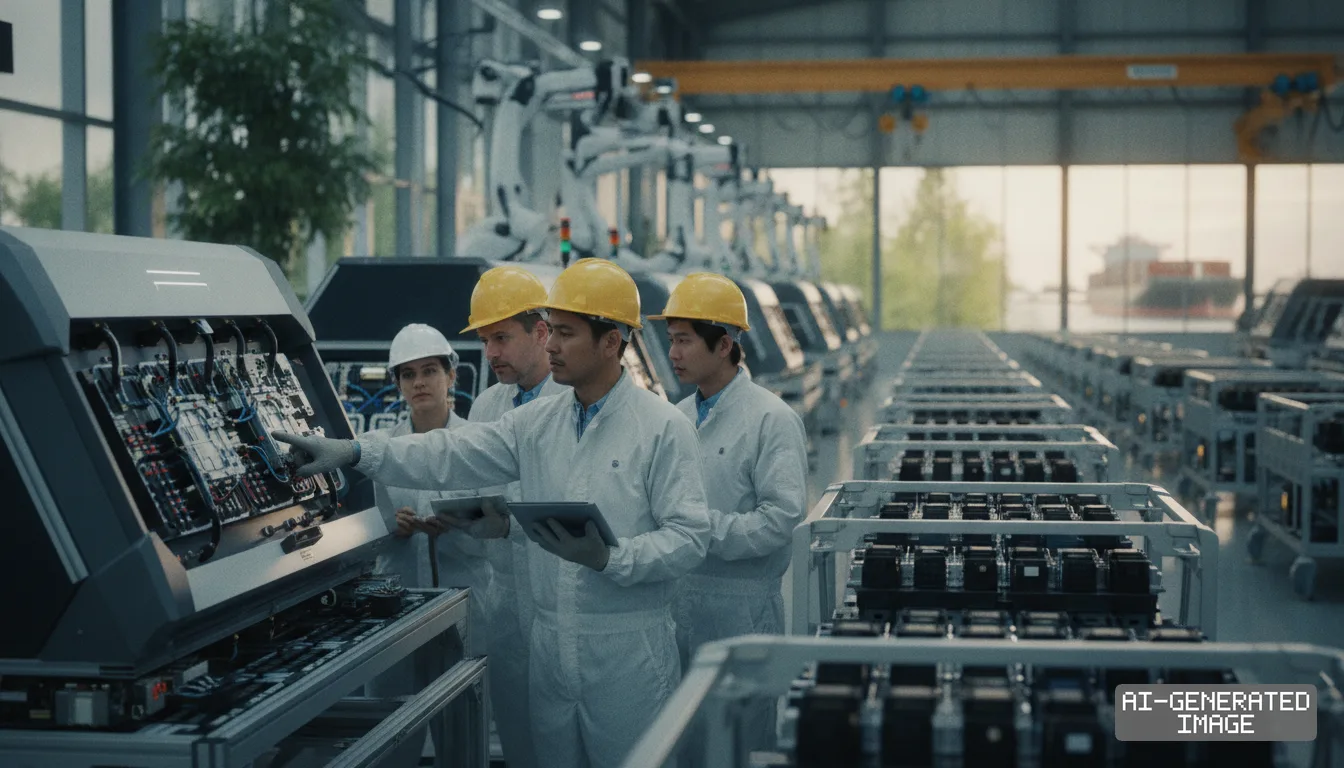
Frankfurt Main Finance and FinCity.Tokyo detailed terms for a trilateral investment corridor with Thailand on Oct. 21, 2026, directing private capital toward automotive, semiconductor and clean-energy supply chains across Southeast Asia.
The promotion agencies unveiled the framework following the Bangkok Declaration 2026, an initiative drafted with advisory firm Deloitte during international financial meetings in Thailand. The initiative seeks to link German engineering, Japanese industrial capital and Thai assembly infrastructure.
The corridor carries no sovereign capital quota, targeting an ecosystem where the Thailand Board of Investment approved $4.59 billion across 189 electric-mobility projects through August 2026. Battery cell manufacturing captured $2.64 billion, or 58% of that total.
Global manufacturers face concentrated supply risks in mainland China, where price competition and regulatory tensions have squeezed operating margins. Western and Japanese firms are turning to Southeast Asia to establish dual-sourcing hubs under a "China plus one" manufacturing strategy.
Thailand serves as Southeast Asia's primary automotive production base, with annual factory capacity exceeding two million vehicles. Japanese manufacturers built that network over five decades and still generate roughly 70% of the country's total automotive output.
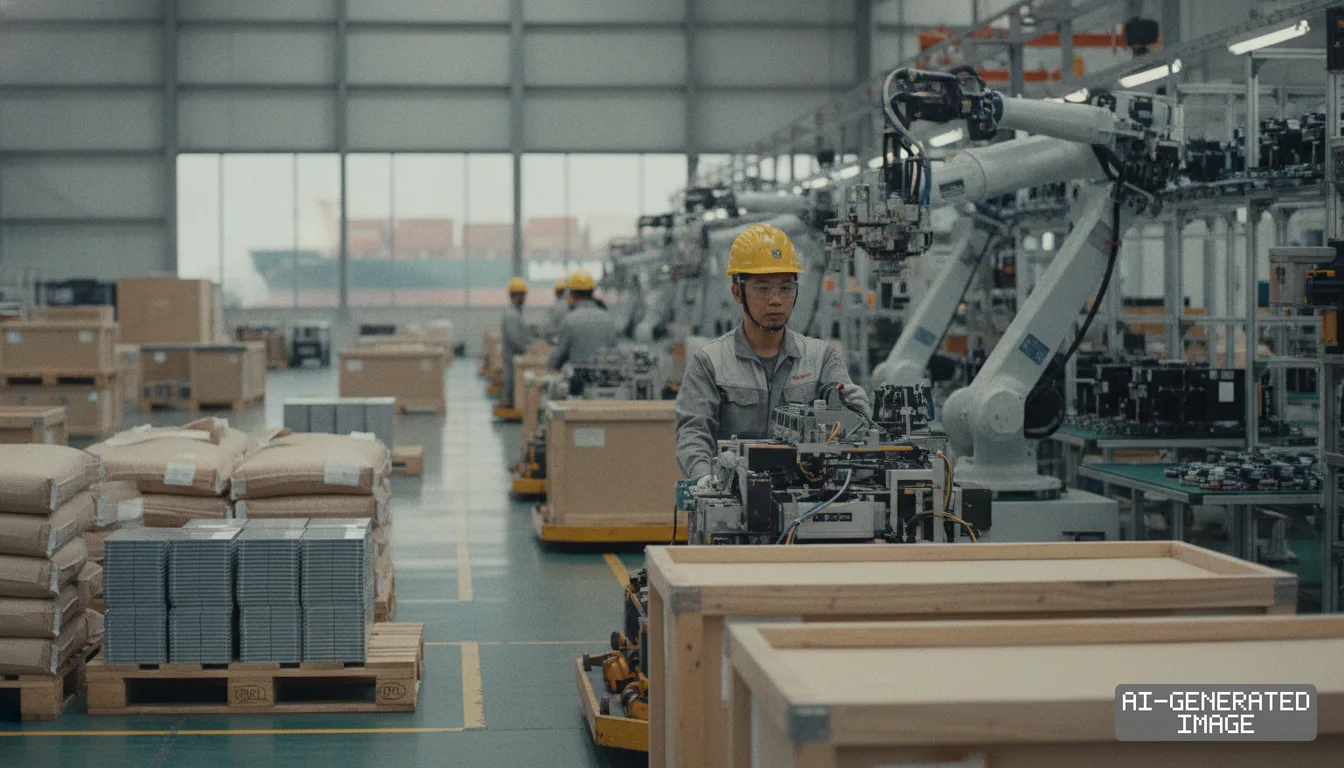
Four Japanese carmakers—Honda Motor, Mitsubishi Motors, Isuzu Motors and Mazda Motor—have committed a combined $1.53 billion to retool Thai assembly lines. Those investments finance robotics and automation lines designed to produce hybrid platforms and commercial electric trucks.
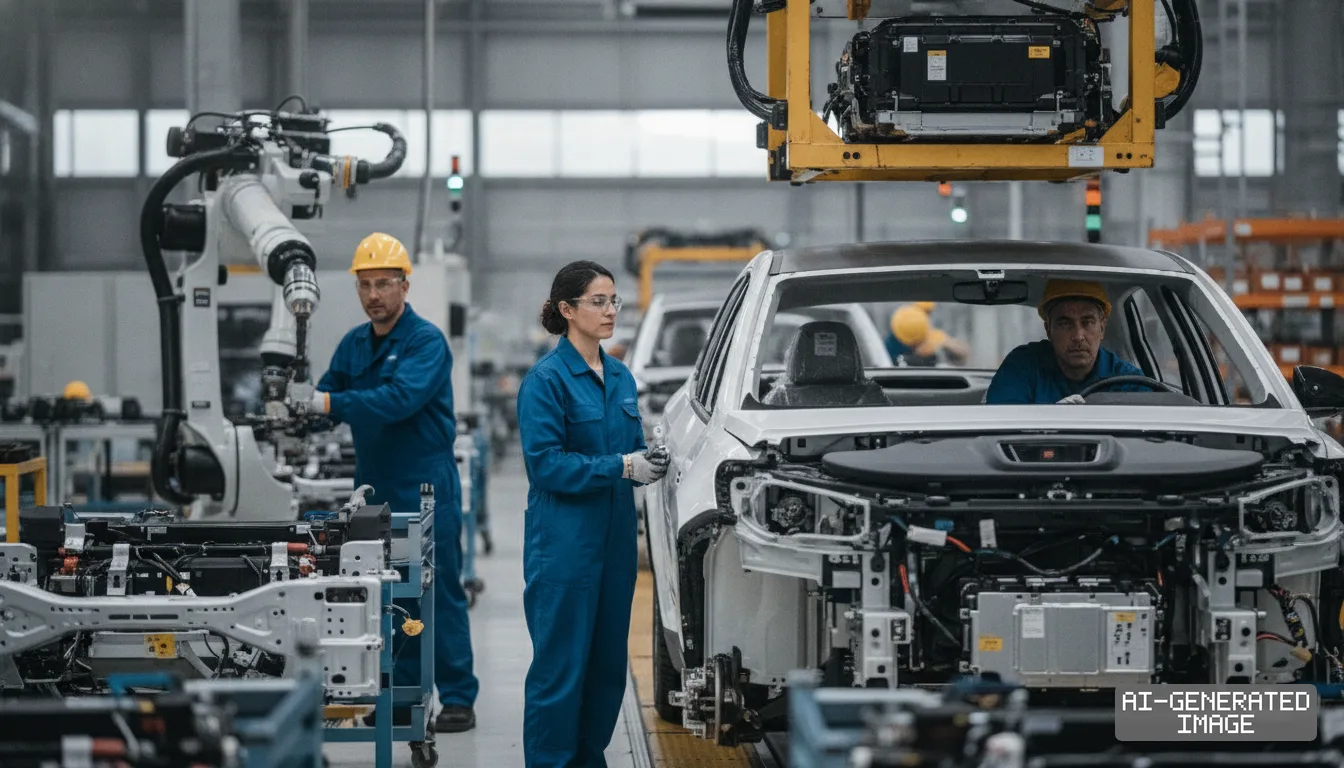
German automakers have expanded local manufacturing footprints to serve regional export markets. Mercedes-Benz produces vehicles at its Samut Prakan plant near Bangkok, making Thailand one of seven global locations assembling high-voltage traction batteries for its flagship electric sedans.
BMW has pursued a parallel manufacturing expansion in the country. The German luxury brand built an automated high-voltage battery facility in Rayong, integrating imported European battery management systems with localized aluminum enclosures and chassis components.
That established European and Japanese supply network faces rapid disruption from Chinese electric-vehicle manufacturers. Chinese brands have captured roughly 85% of Thailand's pure electric-car market, backed by aggressive pricing and rapid factory construction across the Eastern Economic Corridor.
Chinese electric-vehicle assemblers rely heavily on proprietary in-house component networks rather than local procurement. BYD, which operates a 32-billion-baht ($900 million) assembly plant in Rayong, sources about 75% of its components internally, squeezing external suppliers.
That vertically integrated procurement model has curtailed order volumes across Thailand's 710 domestic tier-one automotive parts makers. Local component producers face declining demand for traditional exhaust systems, transmissions and stamped metal parts as combustion-vehicle volumes drop.
The trilateral declaration argues that decades of lean "just-in-time" supply chains must yield to "just-in-case" resilience. Maintaining redundant inventory, establishing multi-country sourcing and upgrading factory tooling require sustained private funding rather than state aid alone, the text said.
Public budgets cannot shoulder the financial burden of restructuring global supply routes, Hessen Finance Minister R. Alexander Lorz said in Bangkok. Capital markets must mobilize private equity and institutional debt to finance industrial modernization, Lorz said.
Thailand must upgrade domestic supplier capabilities to remain competitive against regional manufacturing rivals, former Bank of Thailand Governor Tarisa Watanagase said. Integrating European technical designs with Japanese factory automation will help local suppliers move up the value ladder, Watanagase said.
The Bangkok Declaration outlines five core priorities to guide corridor investments: capital mobilization, supply-chain vulnerability mapping, trilateral corridor formation, capital-market stability and permanent trilateral coordination. The framework emphasizes blended finance to absorb early-stage commercial risk.
Beyond passenger vehicles, the framework targets critical component bottlenecks including semiconductor packaging, power electronics and industrial automation. Regional plants remain heavily dependent on China for more than 70% of processed battery chemicals and rare-earth motor magnets.
Regulatory friction complicates cross-border integration among the three economies. Divergent carbon-accounting rules between the European Union and Southeast Asian jurisdictions create reporting hurdles, while uneven local-content rules across ASEAN trade pacts slow component standardization, project coordinators said.
The Bangkok Declaration does not state whether the initiative will receive formal loan guarantees from Germany's Federal Ministry for Economic Affairs and Climate Action or Japan's Ministry of Economy, Trade and Industry, and organizers have not published a committed fund size or capital disbursement schedule.
The corridor working group plans to convene follow-up consultations in Tokyo in December 2026 to review candidate manufacturing and clean-technology co-financing projects.
Impact map
How this development propagates across the region and out to global buyers.
| Event | Korea | China | Japan | Global impact |
|---|---|---|---|---|
| Germany-Japan-Thailand investment corridor | Hyundai expands local EV assembly, competing directly with Chinese and Japanese marques | BYD and state-backed EV makers face structured private financing counterweight in ASEAN | Honda, Isuzu and Mitsubishi safeguard $1.53 billion Thai manufacturing retooling program | Automotive supply chains accelerate just-in-case dual-sourcing across Southeast Asia |
| Germany-Japan-Thailand investment corridor | Hyundai expands local EV assembly, competing directly with Chinese and Japanese marques | BYD and state-backed EV makers face structured private financing counterweight in ASEAN | Honda, Isuzu and Mitsubishi safeguard | — |
| Germany-Japan-Thailand investment corridor | Hyundai expands local EV assembly, competing directly with Chinese and Japanese marques | BYD and state-backed EV makers face structured private financing counterweight in ASEAN | Honda, Isuzu and Mitsubishi safeguard $1.53 billion Thai manufacturing retooling program | Automotive supply chains accelerate just-in-case dual-sourcing across Southeast Asia |
In this story
- Companies
- Frankfurt Main FinanceFinCity.Tokyo
- Exposed
- Honda MotorMitsubishi MotorsIsuzu MotorsMazda MotorMercedes-BenzBMWBYD
- Impact
- Supply ChainCapexCost Structure
Related briefings
- Japan certifies $2.4 billion in battery subsidies to lock in solid-state cell capacity Also on Mazda Motor
- Chinese EV Makers Build 26 EU Plants to Bypass 27% Tariffs Also on Mercedes-Benz, BMW, BYD
- CATL and Kuehne+Nagel agree on electric freight logistics Also on Mercedes-Benz, BMW, Cost Structure
- China Tightens Connected Vehicle Data Rules With Mandatory Local Sensor Scrubbing Also on Mercedes-Benz, BMW, Cost Structure
Sources
Reporting
Confidence: medium — how we grade this
The documents behind this briefing are linked above. East Asia Brief produces its English text with AI assistance under human editorial review, and does not translate or republish other outlets' articles. See our methodology and AI policy. Spotted an error? Tell us.
The Morning Brief
What changed in Korean, Chinese and Japanese industry overnight — and what it means for your supply chain. One email, weekday mornings, US time. Free.
The Morning Brief is in preparation. Leave your address and we will write to you once — when the first issue is ready. Nothing before that.