Nvidia halts H200 exports to China, closing $2.4B channel
Third-quarter licensed Hopper sales reached $2.4 billion, or 2.2% of data center revenue, before the company removed the category from forecasts.
Nvidia halted shipments of its H200 artificial intelligence processors to China on Nov. 18, 2026, ending shipments under a bilateral licensing window established earlier this year.
Interim Chief Executive Officer Colette Kress confirmed the halt during the company's fiscal third-quarter earnings call. The company has removed all licensed Hopper architecture revenue from its future sales outlook.
Third-quarter shipments of licensed Hopper data center products to China reached $2.4 billion for the period ended Oct. 25. That volume represented 2.2% of Nvidia’s $107.6 billion in total quarterly data center revenue.
The shipment cutoff closes a channel created when the U.S. Department of Commerce eased export restrictions in January. Under that arrangement, Washington reviewed export permits on a case-by-case basis.
Approved processors were routed through the United States to face technical inspection and a 25% tariff. The mechanism had permitted 10 Chinese cloud operators, including Alibaba Group, Tencent Holdings and ByteDance, to purchase batches of the Hopper accelerator.
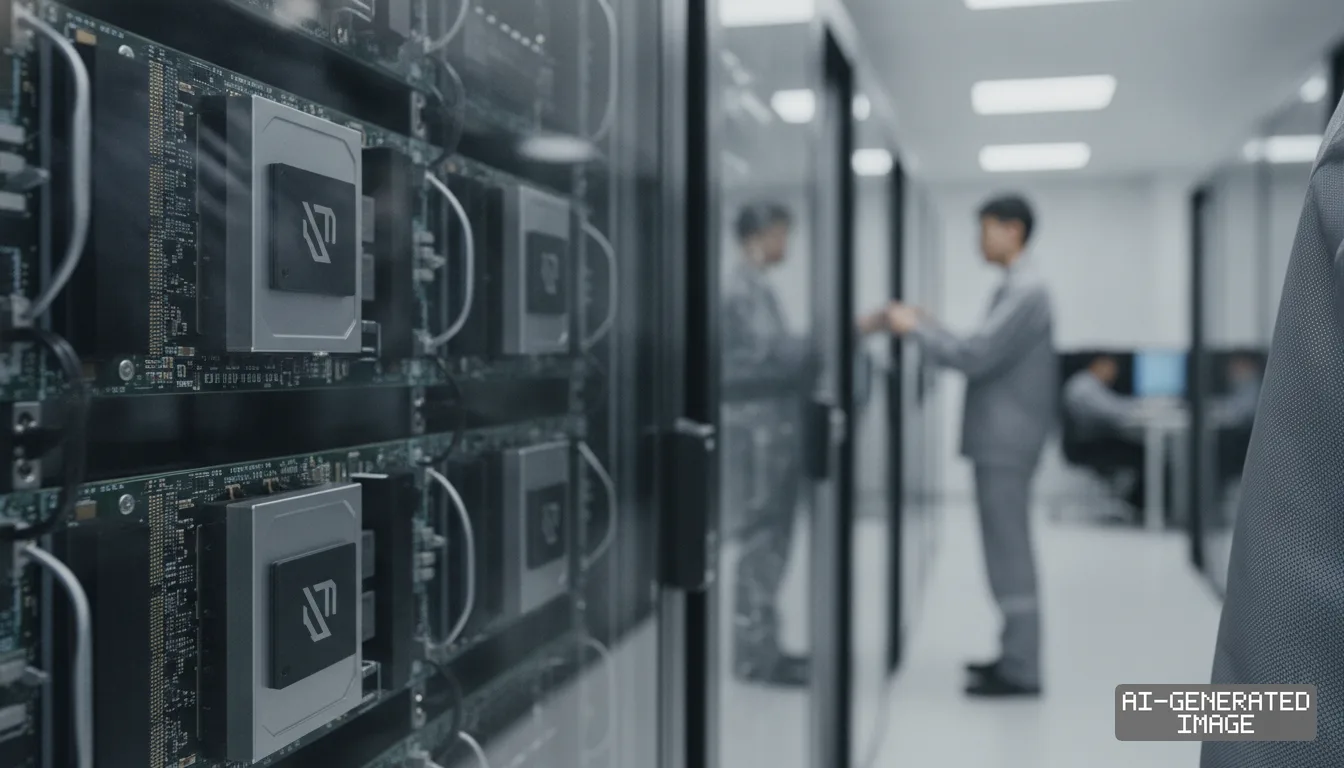
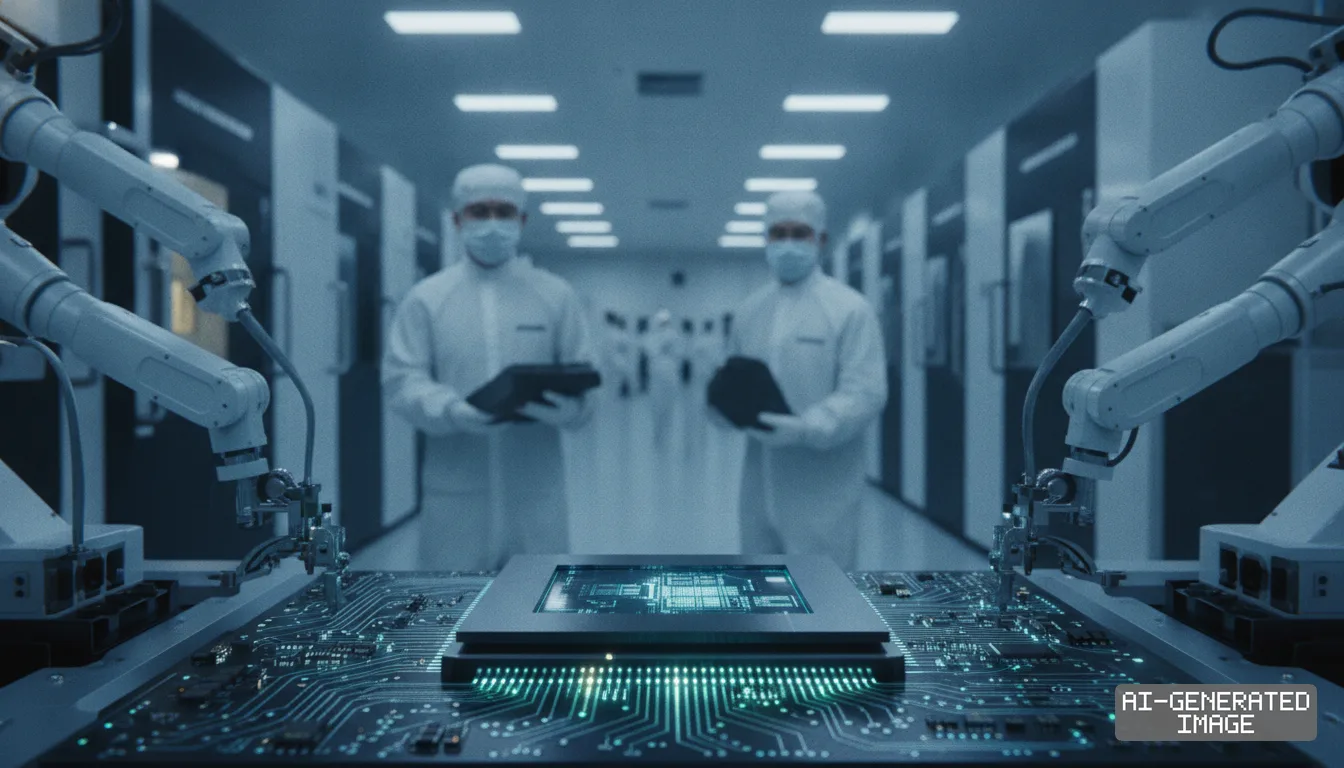
The H200 combines Hopper architecture graphics units with 141 gigabytes of high-bandwidth memory. Taiwan Semiconductor Manufacturing Co. fabricates the silicon on custom 4-nanometer foundry nodes in Taiwan.
Nvidia did not state whether the shipment halt is permanent, and regulatory filings did not disclose whether the decision followed a formal license revocation by the U.S. government.
The policy shift follows new restrictions introduced Nov. 16 by the U.S. Commerce Department’s Bureau of Industry and Security. The agency issued an interim final rule targeting remote computing arrangements in third countries.
The regulation mandates prior export licenses for shipping advanced chips to data centers that provide remote computational capacity to Chinese customers. It also imposed destination-based license requirements for shipments to Singapore, Malaysia, Thailand, Indonesia and Brazil.
Those five transshipment hubs had handled intermediate server assembly and cloud hosting for Chinese technology enterprises. The measure closed secondary pathways that permitted Chinese developers to rent advanced processing clusters abroad.
Nvidia also announced Nov. 17 that its board of directors established a national security and export controls oversight committee. The internal panel monitors compliance with international trade controls and cross-border distribution channels.
The suspension leaves Chinese cloud platforms without an authorized pathway to acquire high-bandwidth accelerators from American chip designers. Washington already bans the export of Nvidia’s newer Blackwell and Rubin processor architectures to mainland entities.
Chinese hyperscalers must now shift accelerator procurement toward domestic hardware makers. Huawei Technologies represents the primary domestic supplier through its Ascend series accelerators.
The Ascend 910B and Ascend 910C processors provide compute alternatives for training large language models. Domestic foundries face manufacturing constraints in scaling output of high-bandwidth memory and advanced packaging substrates.
Alibaba and Tencent previously held allocations for thousands of imported H200 boards. The sudden halt forces those platform operators to rebuild their infrastructure roadmaps around heterogeneous compute clusters and domestic silicon.
Industry analysts expect the closure of official import channels to raise secondary spot market prices for existing server hardware. Undelivered inventories stored in transit hubs face uncertain customs resolution.
Roughly 600,000 H200 accelerators remained staged in Hong Kong bonded warehouses awaiting import clearance before the announcement. The status of those units remains undetermined as trade compliance teams review transit documentation.
Nvidia raised overall fiscal fourth-quarter sales guidance despite the loss of Chinese data center revenue. Demand across North American hyperscalers for Blackwell platform servers absorbed the factory capacity previously reserved for Hopper lines.
The Bureau of Industry and Security specified that its remote computing rule takes effect upon formal publication in the Federal Register.
Impact map
How this development propagates across the region and out to global buyers.
| Event | Korea | China | Japan | Global impact |
|---|---|---|---|---|
| Nvidia H200 China export halt | SK hynix redirects HBM3E packaging allocations from Hopper to North American Blackwell orders | Alibaba and Tencent accelerate adoption of Huawei Ascend 910 processors | Tokyo Electron reports delayed deliveries of inspection tools tied to legacy packaging lines | Secondary spot market premiums for existing AI accelerators rise across Southeast Asian hubs |
| Nvidia H200 China export halt | SK hynix redirects HBM3E packaging allocations from Hopper to North American Blackwell orders | Alibaba and Tencent accelerate adoption of Huawei Ascend 910 processors | Tokyo Electron reports delayed deliveries of inspection tools tied to legacy packaging lines | Secondary spot market premiums for existing AI accelerators rise across Southeast Asian hubs |
In this story
- Companies
- Nvidia
- Tickers
- NVDA
- Exposed
- Taiwan Semiconductor Manufacturing Co.Alibaba GroupTencent HoldingsHuawei Technologies
- Policy
- Export Controls
- Impact
- Supply ChainOrder BookCompliance
Track every Export Controls development →
Related briefings
- Xi Jinping plans business delegation for Donald Trump summit Also on Tencent Holdings, Alibaba Group, Nvidia
- China exempts overseas AI model APIs from draft export rules Also on Tencent Holdings, Alibaba Group, Export Controls
- China curbs exports of 40 AI, solar and biotech technologies Also on Tencent Holdings, Export Controls, Compliance
- XPeng Scales Humanoid Robot Line with Electric Vehicle Parts in 2026 Also on Tencent Holdings
Sources
Primary documents
Reporting
Confidence: high — how we grade this
The documents behind this briefing are linked above. East Asia Brief produces its English text with AI assistance under human editorial review, and does not translate or republish other outlets' articles. See our methodology and AI policy. Spotted an error? Tell us.
The Morning Brief
What changed in Korean, Chinese and Japanese industry overnight — and what it means for your supply chain. One email, weekday mornings, US time. Free.
The Morning Brief is in preparation. Leave your address and we will write to you once — when the first issue is ready. Nothing before that.