Korea secures Poland and Croatia freight hubs for battery supply
A 500 billion won public fund backed the purchase of a 164,574-square-meter warehouse site in Wroclaw as Seoul works to expand its network from 14 to 40 centers by 2030.
South Korea's Ministry of Oceans and Fisheries said Nov. 22, 2026, that state-backed entities acquired and planned logistics hubs in Poland and Croatia to shield battery supply networks.
The initiative deploys a 500 billion won ($360 million) public-private investment fund to secure vital freight routes across Eastern Europe. The ministry intends to expand its network of state-supported overseas logistics centers from 14 to 40 by 2030.
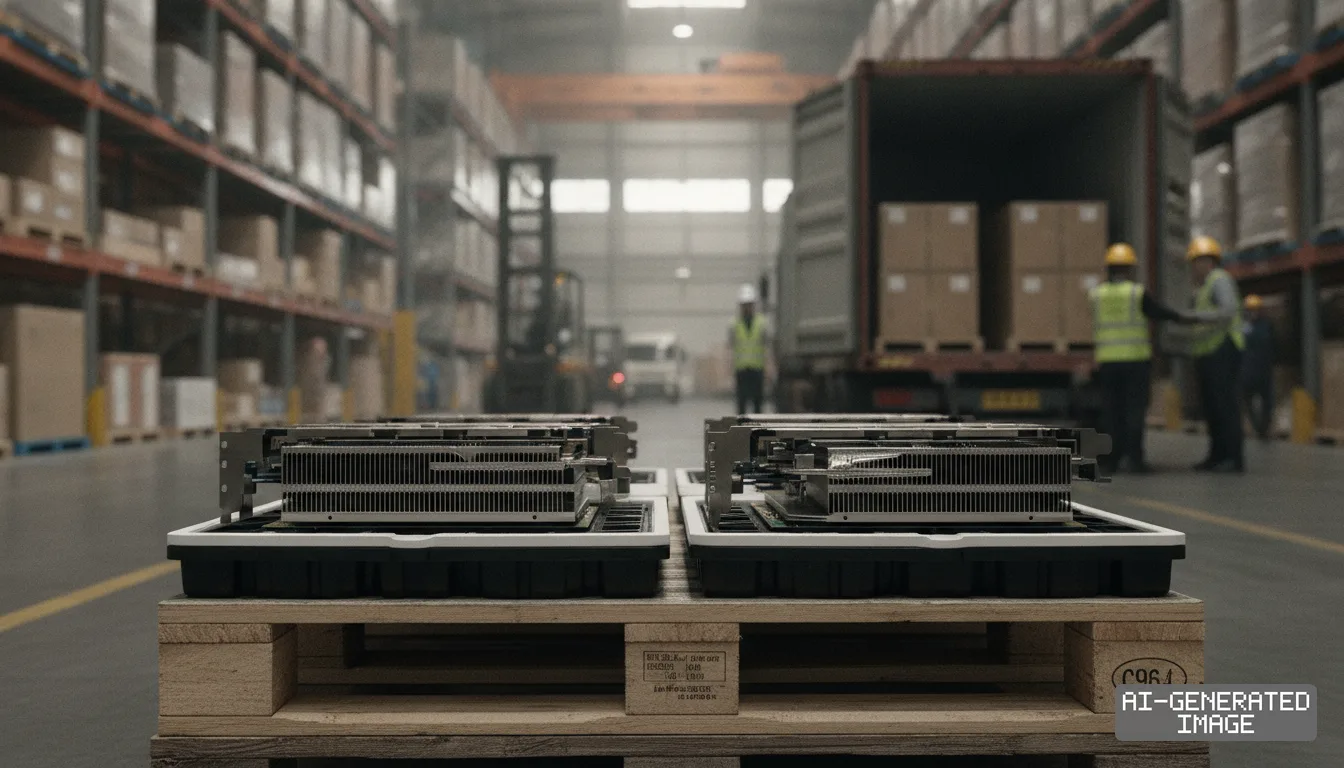
In Poland, state-run Korea Ocean Business Corporation finalized the purchase of the Wrocław Campus II logistics center on Nov. 4. The complex provides 164,574 square meters of warehouse space across a 347,417-square-meter parcel of land.
The newly acquired Wrocław hub contains 312 docking bays and 908 commercial parking spaces, according to the ministry notice. Construction of the facility reached completion earlier this year.
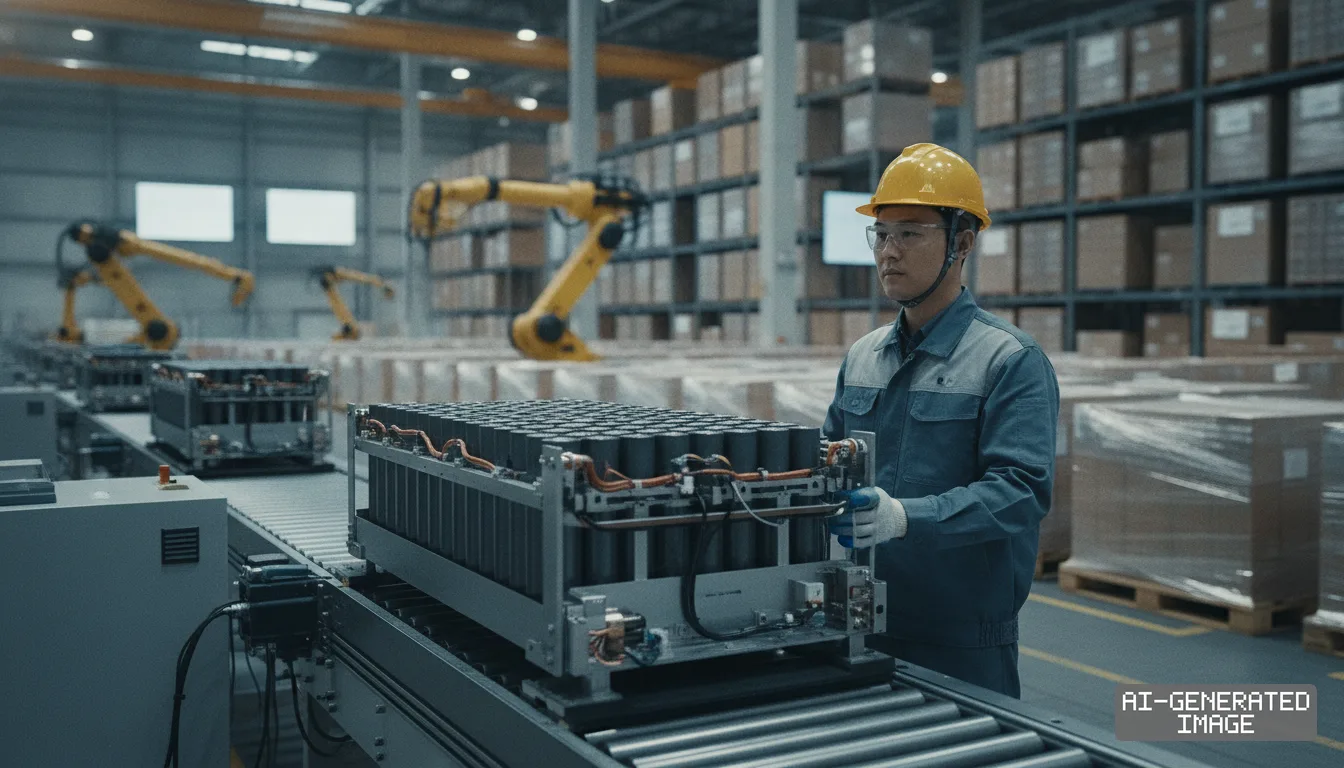
The Polish site sits adjacent to major Korean manufacturing hubs, including LG Energy Solution's electric vehicle battery complex in Biskupice Podgórne. LG Energy Solution operates roughly 70 gigawatt-hours of annual cell production capacity at the nearby facility.
Korean logistics companies previously operated inside the Wrocław facility under commercial lease agreements. The state fund purchase converts vulnerable leased space into permanent, publicly supported terminal capacity to protect exporters from rent volatility.
The Wrocław hub occupies a strategic transport juncture near the borders of Germany and the Czech Republic. The location enables direct cargo transfers to central European automotive assembly plants and battery module factories.
Capital for the Polish acquisition came through the Global Logistics Supply Chain Investment Blind Fund. The state-backed vehicle targets logistics properties to support Korean manufacturing and shipping operations in overseas markets.
The oceans ministry and Korea Ocean Business Corporation seeded the fund with 200 billion won in 2024. Officials injected 150 billion won during 2026 and plan a second 150 billion won allocation in early 2027.
In Croatia, a consortium of public agencies and private operators will build a dedicated logistics facility to serve southern European trade lanes. The site occupies 17,709 square meters within the Kukuljanovo industrial park behind the Port of Rijeka.
The planned Rijeka facility will feature 8,919 square meters of gross floor area upon completion. The terminal will serve as a customs clearinghouse and distribution node for Asian goods entering European maritime trade lanes.
Domestic freight specialist E2E Logistics Solution holds a 40% operating equity stake in the Croatian joint venture. State-operated Busan Port Authority and Korea Overseas Infrastructure and Urban Development Corporation each hold 30% equity stakes.
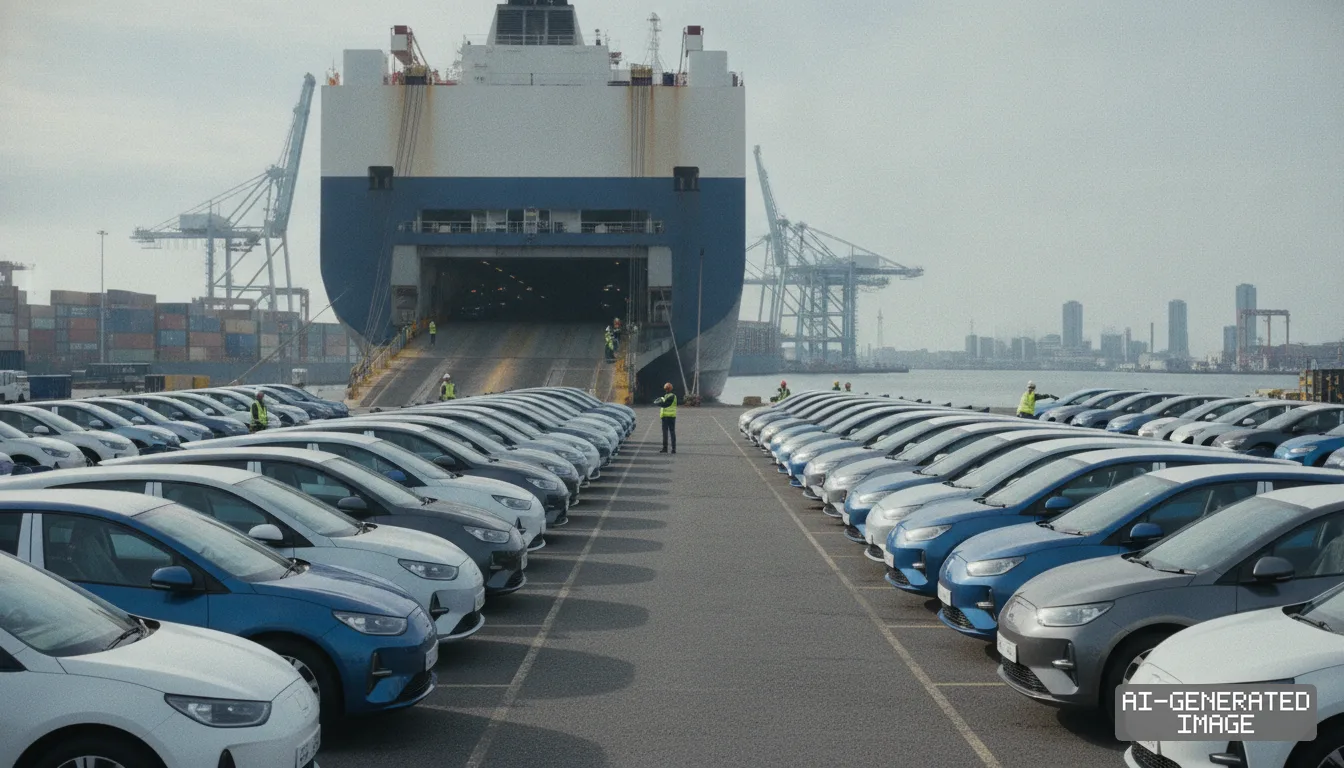
The Port of Rijeka provides a direct maritime access point to Central and Eastern European industrial regions via the Adriatic Sea. Vessels calling at Rijeka bypass northern European ports, reducing sailing distance from Asian manufacturing centers.
Shipping containers routed through the Adriatic corridor typically reach central European factory floors several days faster than cargoes passing through Rotterdam or Antwerp. The route avoids congested rail and canal links in Western Europe.
The Mediterranean access point helps Korean battery suppliers manage shipments of chemical precursors, cathode materials and precision manufacturing machinery. Faster transit schedules lower inventory holding costs and reduce disruption risks during peak production periods.
The public-private investment model pairs state capital with mid-tier logistics companies to share financial exposure. The structure allows mid-sized logistics specialists like E2E Logistics Solution to manage regional infrastructure without funding full land acquisitions alone.
The Ministry of Oceans and Fisheries manages similar public logistics centers in the Netherlands, Spain, Indonesia and the United States. Expanding into Eastern Europe addresses regional bottlenecks caused by rising localized manufacturing across the European automotive belt.
Strict European Union supply chain reporting standards and battery traceability regulations require predictable component deliveries. Establishing dedicated state-backed warehouse capacity helps Korean parts suppliers meet tight assembly schedules set by European automakers.
The ministry notice does not disclose the purchase price for Wrocław Campus II and has not published the total construction budget for the Rijeka facility.
Busan Port Authority, KIND and E2E Logistics Solution will formally sign the Croatian investment joint venture agreement on Nov. 23, 2026. Consortium partners plan to break ground on the Kukuljanovo site in the first half of 2027.
The Croatian logistics hub is scheduled to open for commercial operations in the first half of 2028. The Ministry of Oceans and Fisheries will review further European logistics expansion proposals in late 2027.
Impact map
How this development propagates across the region and out to global buyers.
| Event | Korea | China | Japan | Global impact |
|---|---|---|---|---|
| Eastern European logistics hub expansion | LG Energy Solution protects supply lines for ~70 GWh of Polish cell capacity | European buyers maintain dual-sourcing options alongside Chinese cell imports | Panasonic faces entrenched Korean logistics footprint across Central European auto corridors | Automotive supply chains gain faster Adriatic transit via Port of Rijeka |
In this story
- Companies
- LG Energy SolutionE2E Logistics
- Tickers
- 373220.KS
- Policy
- Subsidies
- Impact
- Supply ChainCapex
Track every Subsidies development →
Related briefings
- LG Energy Solution and Samsung SDI lift factory run rates on ESS Also on LG Energy Solution, Subsidies
- LG Energy Solution pivots Polish EV battery plant toward ESS Also on LG Energy Solution, Subsidies
- Korea and Canada link battery supply chains to bypass China minerals Also on LG Energy Solution, Subsidies
- Ford ships its first CATL-licensed LFP cells from $3B Michigan site Also on LG Energy Solution, Subsidies
Sources
Primary documents
Reporting
Confidence: high — how we grade this
The documents behind this briefing are linked above. East Asia Brief produces its English text with AI assistance under human editorial review, and does not translate or republish other outlets' articles. See our methodology and AI policy. Spotted an error? Tell us.
The Morning Brief
What changed in Korean, Chinese and Japanese industry overnight — and what it means for your supply chain. One email, weekday mornings, US time. Free.
The Morning Brief is in preparation. Leave your address and we will write to you once — when the first issue is ready. Nothing before that.