UK keeps 10% Chinese EV tariff, breaking with Brussels import wall
Prime Minister Andy Burnham kept the baseline tariff intact as Chinese brands secured 16% of British battery-electric registrations in 2026.
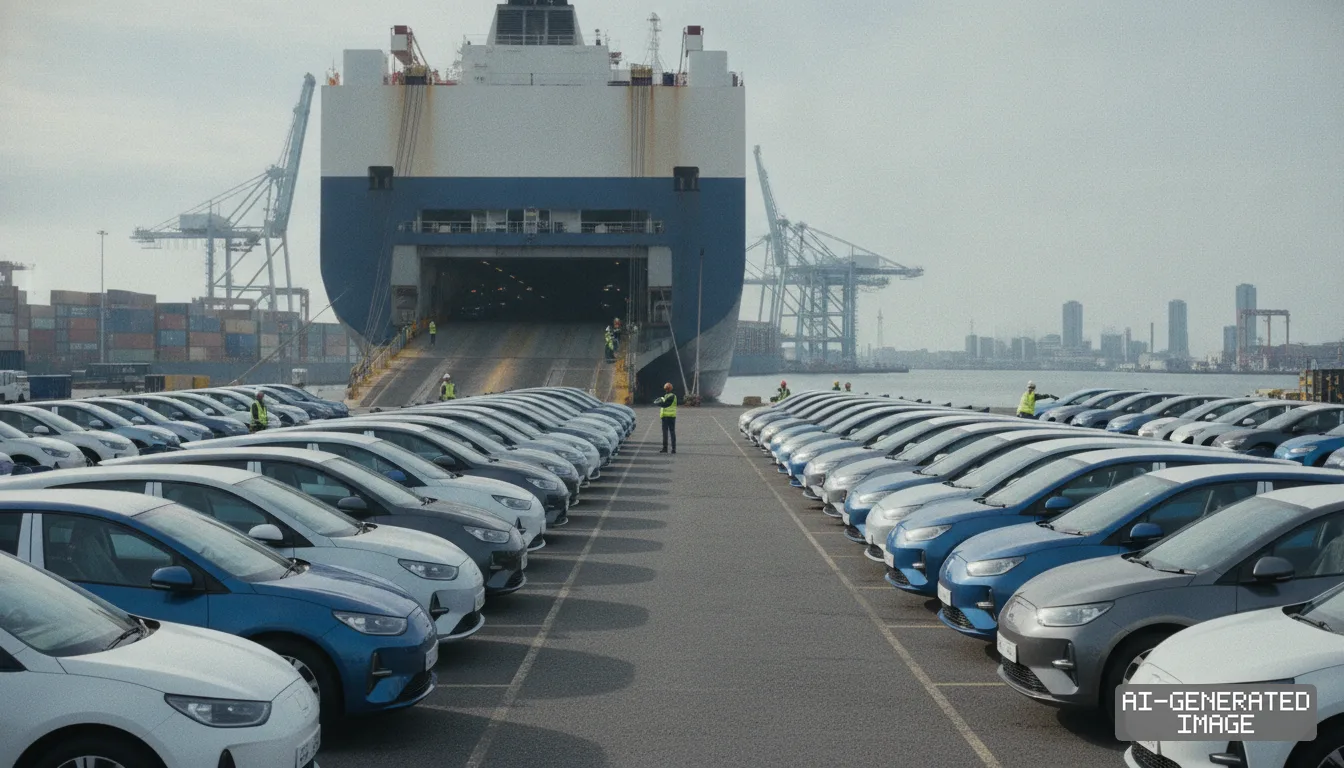
British Prime Minister Andy Burnham refused on Nov. 21, 2026, to match the European Union's punitive tariffs on Chinese electric vehicles, maintaining Britain's 10% baseline import duty on imported cars.
The decision leaves Britain outside the trade wall erected by Brussels, where countervailing duties against Chinese battery-electric cars reach 45%. The tariff gap creates an opening for lower-cost imports into the British market.
London prioritized household living costs and clean transport targets over trade alignment with the bloc. Chinese brands accounted for 16% of all new battery-electric vehicle registrations in Britain during the summer of 2026.
European negotiators pushed Burnham at the Brussels summit to raise import taxes in exchange for industrial concessions. The bloc is preparing strict Made in Europe rules that require 70% of vehicle components to originate within member states.
Britain sought exemptions for domestic parts suppliers from those local content thresholds. British vehicle makers ship over half of their output across the English Channel, an automotive trade corridor valued at €80 billion annually.
Brussels signaled that British component manufacturers would lose access to European subsidy schemes without trade defense alignment. European officials warned that Britain could turn into an unregulated entry point for subsidized Chinese automotive imports.
Chinese carmakers have expanded rapidly across British forecourts without tariff barriers. SAIC Motor's MG brand and BYD dominate that segment, with BYD delivering more than 51,000 passenger vehicles in Britain over the past calendar year.
Chinese electric models frequently undercut comparable European vehicles by £8,000 ($10,400) at retail. That price differential has pushed leasing fleets and retail motorists toward Chinese platforms while depressing residual values across Europe.
Raising tariffs carried immediate operational risks for British vehicle exporters. British manufacturers including Jaguar Land Rover feared direct retaliation from Beijing, which could close China's premium automotive market to British assembly lines.
British trade policy requires domestic manufacturers to file formal injury applications before opening countervailing investigations. The Trade Remedies Authority has not received an anti-subsidy petition from domestic carmakers to penalize Chinese electric vehicles.
The decision also reflects Burnham's administrative history before entering Downing Street in July 2026. During his tenure as mayor of Greater Manchester, Burnham oversaw municipal transit electrification while resisting blanket bans on overseas commercial technology.
Municipal procurement records show Manchester balanced foreign equipment with domestic manufacturers. Greater Manchester's franchised Bee Network procured 293 electric buses from Northern Ireland builder Wrightbus and roughly 500 vehicles from Scotland-based Alexander Dennis.
Wrightbus supplied 125 additional battery-electric buses to Greater Manchester depots earlier this year under a £66 million transport program. The bus builder relies on domestic supply lines for its zero-emission double-deckers.
The UK Department for Business and Trade has not published whether it will open a separate anti-subsidy inquiry into Chinese electric vehicles, and Greater Manchester Combined Authority records show no November 21 notice awarding fleet contracts to Chinese suppliers.
The divergence on Chinese tariffs tests the broader trade reset negotiated in Brussels on Nov. 20. Burnham secured agricultural and carbon trading concessions from the European Commission while leaving automotive disputes unresolved.
Continental manufacturers such as Volkswagen and Stellantis operate under high tariffs, forcing price adjustments across the Channel. European auto trade groups warned that regulatory divergence threatens integrated assembly networks that cross borders several times.
Automotive executives in London said matching the European tariff would raise the average purchase price of an electric car by several thousand pounds. Consumer groups lobbied Downing Street to protect affordable zero-emission mobility during an ongoing cost-of-living squeeze.
Chinese manufacturers are investing directly in British retail footprints and charging networks. BYD and SAIC Motor have broadened their dealer partnerships to secure long-term distribution across England, Wales and Scotland.
British component suppliers face a difficult transition as European manufacturers adjust their supply chains. The Society of Motor Manufacturers and Traders urged ministers to negotiate technical exemptions before European procurement exclusions take effect.
Legislation implementing the broader Brussels summit agreements enters the British Parliament on Nov. 26, 2026, under the Cutting Costs Bill. The draft focuses on veterinary checks and energy market linkage rather than vehicle tariffs.
The European Commission and Downing Street set a six-month deadline to settle outstanding trade disputes and university tuition rules. Stricter rules of origin governing cross-Channel electric vehicle trade take effect in January 2027.
Impact map
How this development propagates across the region and out to global buyers.
| Event | Korea | China | Japan | Global impact |
|---|---|---|---|---|
| UK EV tariff divergence | Hyundai and Kia face stiffer price competition against untariffed Chinese EVs in the UK | BYD and SAIC preserve low-tariff access to Britain, which takes 16% of EV sales | Nissan Sunderland plant faces potential cross-Channel component certification hurdles | European automakers absorb cost penalties while UK market bifurcates from EU trade policy |
In this story
- Companies
- BYDSAIC MotorWrightbus
- Tickers
- 002594.SZ600104.SS
- Exposed
- Alexander DennisJaguar Land Rover
- Policy
- TariffsLocal Content Rules
- Impact
- PricingSupply ChainOrder Book
Track every Tariffs development → Track every Local Content Rules development →
Related briefings
- BYD targets UK coach market to sidestep European car tariffs Also on Alexander Dennis, BYD, Tariffs
- UK weighs tariffs on Chinese electric cars to protect EU supply ties Also on Jaguar Land Rover, BYD, Tariffs
- BYD secures Australian import approval for Ti 7 hybrid SUV Also on Jaguar Land Rover, BYD, Pricing
- Dutch court bans BYD Ti7 across EU, citing Land Rover design claim Also on Jaguar Land Rover, BYD, Order Book
Sources
Reporting
Confidence: medium — how we grade this
The documents behind this briefing are linked above. East Asia Brief produces its English text with AI assistance under human editorial review, and does not translate or republish other outlets' articles. See our methodology and AI policy. Spotted an error? Tell us.
The Morning Brief
What changed in Korean, Chinese and Japanese industry overnight — and what it means for your supply chain. One email, weekday mornings, US time. Free.
The Morning Brief is in preparation. Leave your address and we will write to you once — when the first issue is ready. Nothing before that.